Diners Club: the first modern credit card
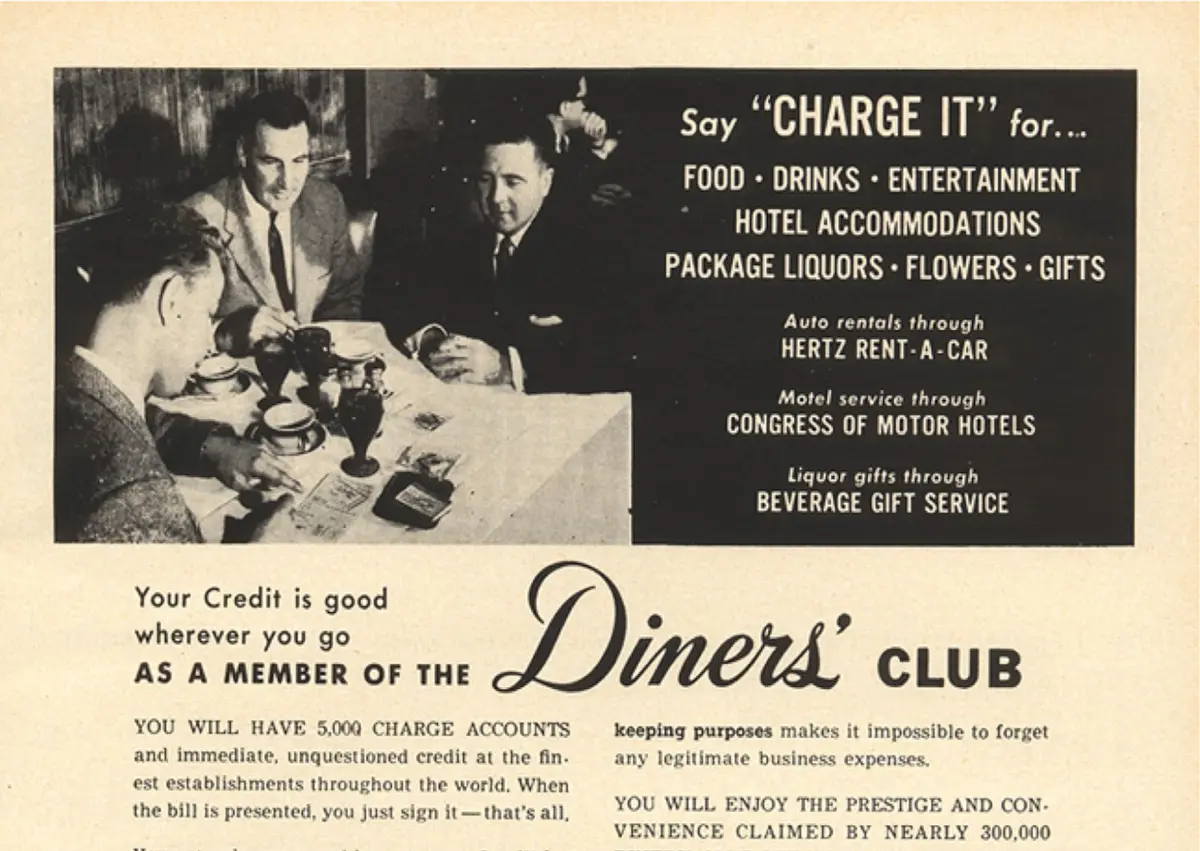
“In February 1950 Frank McNamara's Diners' Club let members sign for meals at New York restaurants and pay one bill a month: the first card honoured by many businesses across a city, then a country.”
On February 8, 1950, Frank McNamara, who ran a small New York loan company, the Hamilton Credit Corporation, finished lunch at Major's Cabin Grill, a steak house on West 33rd Street next door to the Empire State Building, and paid without money: he signed the bill and showed a small cardboard card. With his lawyer and partner, Ralph Schneider, he had founded the Diners' Club, a 'club' whose members could sign for meals at any restaurant that belonged to it and receive one bill a month from the club, to be paid in full. The club paid the restaurants and kept a fee of about 7 per cent of each bill. The restaurants accepted because the card brought them salesmen, executives and other diners on expense accounts, who spent more freely when they were not limited to the cash in their pockets. The company still calls that meal 'the First Supper'.
It started small and grew fast. The first cards went free to a few hundred people, friends and businessmen, some of them slipped under office doors in the Empire State Building, where the club had its office; at the end of March The New York Times counted more than twenty restaurants in the plan. By June Variety reported 55 restaurants and night clubs, from Leon and Eddie's to the Hotel Roosevelt, and by the autumn the club was advertising that any man or woman could apply for a card that worked in some hundred places in New York, Chicago and other cities. Members soon paid a fee of a few dollars a year. The first year cost the club about $300,000, but in 1951 it took over Dine and Sign, a similar plan in Los Angeles run by Alfred Bloomingdale, grandson of the department-store founder, passed 40,000 members and ended the year in profit. In 1952 McNamara, convinced that Americans would stay wary of living on credit, sold his half of the company to Schneider and Bloomingdale. By December the club claimed some 100,000 members and had signed up hotels and clubs in London. McNamara died in 1957, aged 40.
Credit itself was old. Department stores had long kept charge accounts for good customers, and in the 1930s and 1940s many gave them a metal Charga-Plate, first made in 1928, to print their names on sales slips; oil companies and hotel chains issued their own cards from the 1920s. In 1947 a Brooklyn banker, John Biggins, started a 'Charg-It' plan that let his bank's customers charge purchases at the shops in the two blocks around it, which the industry's historian Lewis Mandell counts as the first true universal card. But each of these worked only at the business that issued it, or within a few streets. The Diners' Club was the first such card on a large scale, issued by an outside company and honoured by many unrelated businesses across a city and then a country, which is why Britannica calls it the first universal credit card. Strictly, it was a charge card, not a credit card in today's sense: the whole bill had to be paid each month, and the club earned its money from the merchants' fee and the members' dues, not from interest.
Even its founding story is uncertain. The tale of McNamara finding at a business dinner in 1949 that he had forgotten his wallet, and calling his wife to come and pay, was in Newsweek by January 1951 and the company still tells it; but Matty Simmons, the club's first press agent, later wrote that the scene never took place, and Alfred Bloomingdale told Mandell that he, McNamara and Schneider had worked out the plan over lunch at Major's in 1949.
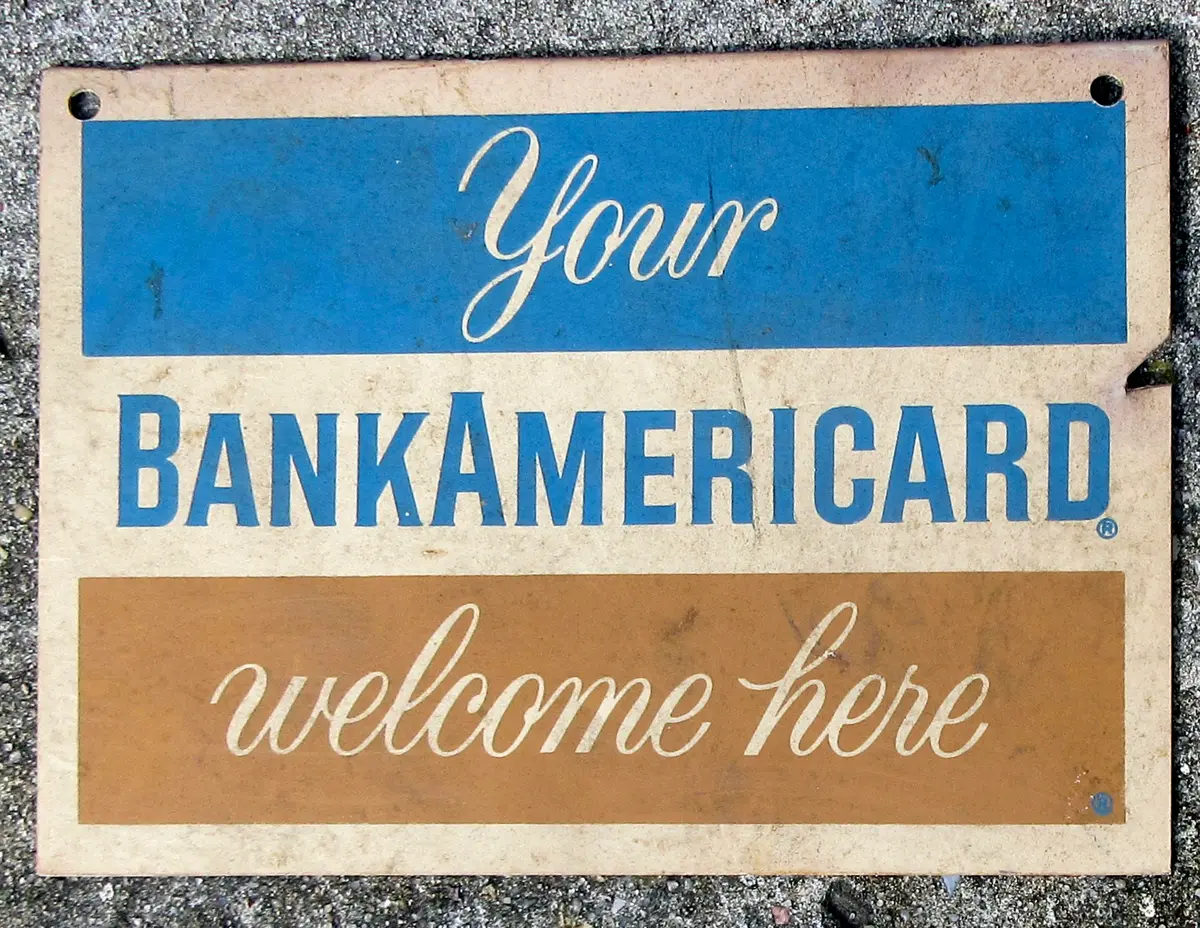
Others soon built on the idea. American Express launched its own charge card on October 1, 1958, and that autumn Bank of America mailed 60,000 BankAmericards to people in Fresno, California: a bank card that let customers pay over time, with interest. That revolving credit, not the pay-in-full rule, became the industry's business; BankAmericard was renamed Visa in 1976-77, and a network of rival banks founded in 1966 grew into Mastercard. The Diners' Club card itself turned from cardboard to plastic in the 1960s, the decade in which an IBM engineer, Forrest Parry, fixed a magnetic stripe to a plastic card. What lasts from 1950 is the company in the middle, which signs up both cardholders and merchants, pays the one, collects from the other and charges the seller a fee. Historians such as Louis Hyman stress that it grew out of an older web of store credit and consumer debt rather than one man's flash of inspiration; but the Diners' Club was the first to make one card work across a city, then a country and soon other continents.
What happened
- 1950
At Major's Cabin Grill on West 33rd Street, Frank McNamara signs for his lunch with a small cardboard Diners' Club card, his partner Ralph Schneider at the table (and, by his own later account, the young press agent Matty Simmons): the company's 'First Supper'.
Major's Cabin Grill, 33 West 33rd Street: the 'First Supper' of February 8, 1950, next door to the Empire State BuildingThe New York Times notes 'Diners Club credit cards' on its food page as a new way to say 'charge it': members sign their bills in more than twenty New York restaurants and receive one bill. On the same page the club advertises the card from its office in the Empire State Building as 'ideal for business firms'.
Empire State Building, 350 Fifth Avenue: the Diners' Club's office from 1950Variety's front page reports that the card now works in 55 New York restaurants and night clubs, among them Leon and Eddie's, Le Ruban Bleu, the Penthouse Club and the Hotel Roosevelt; owners say patrons spend more freely without cash, and the club is considering Chicago and Los Angeles.
The club advertises in The New York Times that any man or woman, 'executive or employe', can apply by mail or telephone for a 'master credit card' good at a hundred places in the New York area, Chicago and other cities, with one statement a month: Diners' Club, Empire State Building, BRyant 9-2160.
Empire State Building, 350 Fifth Avenue: the Diners' Club's office from 1950By the end of its first calendar year the card is honoured in New York, Chicago, Boston, Philadelphia, Miami and Los Angeles, members number in the tens of thousands (the accounts range from 10,000 to 35,000), and the year has cost the club about $300,000.
- 1951
Newsweek's 'Dining on the Cuff' tells how McNamara, halfway through his coffee, found he had no money with him: the forgotten-wallet story is in print within a year of the first meal.
By the end of 1951 Alfred Bloomingdale's Dine and Sign of Los Angeles has merged into the Diners' Club, which runs a billing office there under him; the club passed 40,000 members by its first birthday and ends the year in profit.
- 1952
McNamara, doubting that Americans will ever take to living on credit, sells his half of the company to Ralph Schneider and Alfred Bloomingdale and gives up the presidency.
Variety reports a Los Angeles theatre selling its tickets on the Diners Club card and puts the club's membership at some 100,000.
Variety reports that the club now covers the British Isles: members can sign their bills at London's Astor Club, Bagatelle, Dorchester Hotel, Grosvenor House and Piccadilly, and at the Colony Club in Barbados.
The Dorchester, Park Lane, London: among the first places in Britain to take the card (Variety, December 24, 1952)