BankAmericard: the card that became Visa
“In September 1958 Bank of America mailed 60,000 unasked-for credit cards to Fresno; licensed to other banks from 1966 and handed to them in 1970, the BankAmericard was renamed Visa in 1976-77.”
On September 18, 1958, Bank of America, the San Francisco bank with branches all over California, launched the BankAmericard in Fresno, a farm city in California's Central Valley. It did not wait for anyone to apply: in a single mailing, which the industry still calls 'the Drop', it sent about 60,000 plastic cards to the households of Fresno that banked with it. More than 300 local shops had already agreed to take the card. The holder could buy at any of them up to a limit of a few hundred dollars and then choose, each month, to pay the whole bill without interest or to pay part of it and borrow the rest at 18 per cent a year. The shop received its money at once from the bank, less a fee of 6 per cent. The plan came from the bank's small Customer Services Research Group under Joseph P. Williams, who had studied the charge accounts of Sears and the Mobil oil company. Fresno was chosen because 45 per cent of its families already banked with Bank of America, and because a failure there would hurt the bank less than one in San Francisco.
The bank soon threw its caution away. Fearing that a rival was about to launch a card of its own, it mailed cards to its customers all over California, and within thirteen months some two million cards were out and more than 20,000 merchants took them. Then the bills came in. About 22 per cent of the accounts fell behind, against about 4 per cent on ordinary loans; thieves stole cards from the mail, and some merchants made up sales below the limit at which they had to telephone the bank. The bank admitted a loss of $8.8 million in the first fifteen months, and the journalist Joseph Nocera later put the true figure nearer $20 million. Williams resigned in December 1959. The bank tightened its controls, wrote an apology to its customers, and by May 1961 the card was making money, a fact it kept quiet for years so that other banks would stay away.
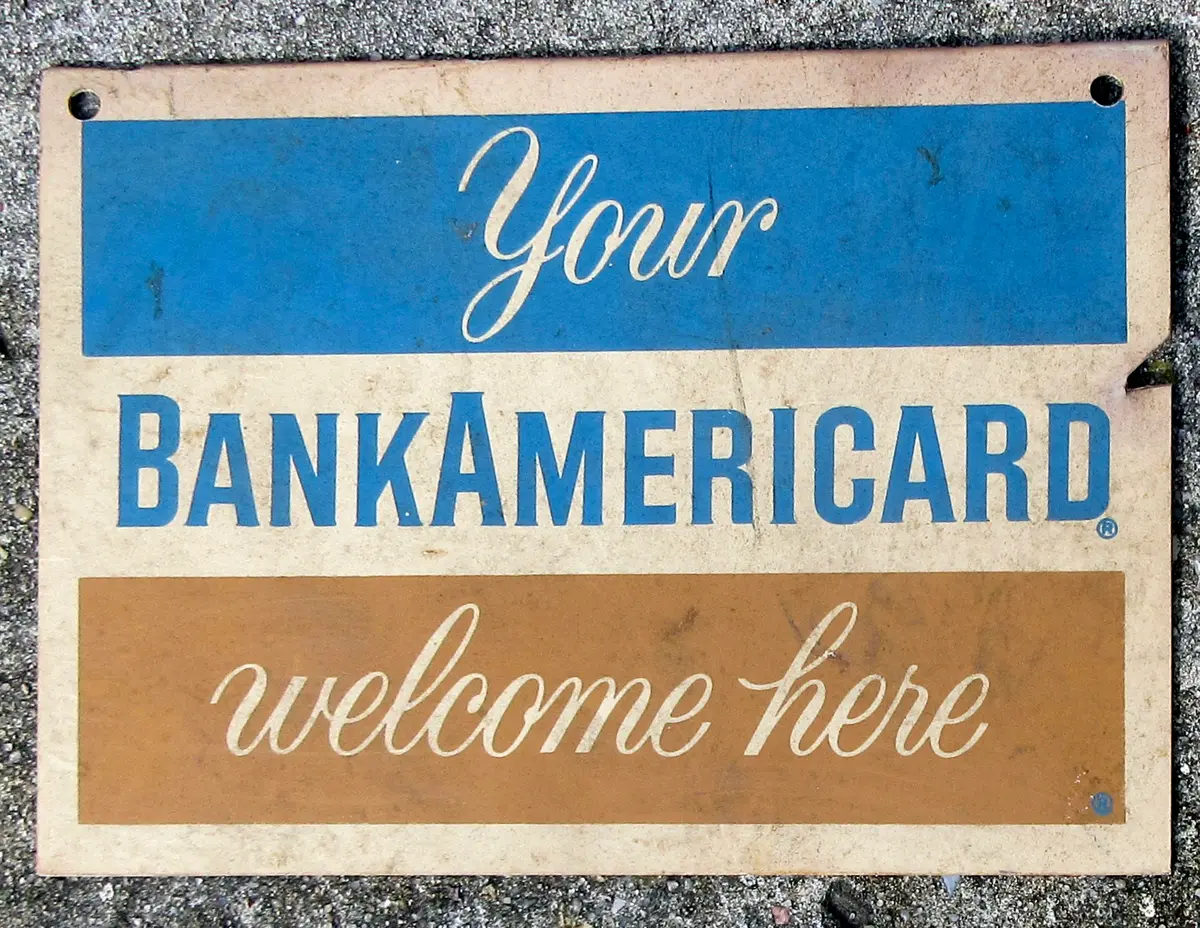
American law did not let a bank open branches in other states, so in 1966 Bank of America began to license the card to banks elsewhere, which paid a fee and a share of their revenue and issued BankAmericards under the same blue, white and gold bands; Barclays in Britain became the first licensee abroad, as Barclaycard. In the same year rival banks formed the Interbank Card Association, whose cards took the name Master Charge in 1969 and MasterCard in 1979. Banks of every size now mailed cards that nobody had asked for, losses and fraud grew, and Congress held hearings on unsolicited cards in 1967. On October 26, 1970, an amendment to the Truth in Lending Act banned the mailing of credit cards to people who had not asked for them and limited a cardholder's loss on a stolen card to $50.
The licensing system itself almost broke down. Payments between banks were slow and full of disputes, and at a meeting of the licensees in Columbus, Ohio, in October 1968 a manager from a Seattle bank, Dee Hock, was put in charge of a committee to find a remedy. His answer was to take the card away from Bank of America altogether. In 1970 the licensees formed National BankAmericard Inc. (NBI), a company owned by its member banks, with Hock as president; Bank of America became one member among many. NBI built its own computer networks for approving and clearing payments, and in 1974 a sister body, Ibanco, took over the card outside the United States. Because many foreign banks would not issue a card carrying another bank's name, NBI's board chose a new name in May 1976: Visa, a word that reads the same in many languages. NBI became Visa U.S.A. and Ibanco Visa International, and from 1977 the new cards, still with the blue, white and gold bands, replaced the old ones.
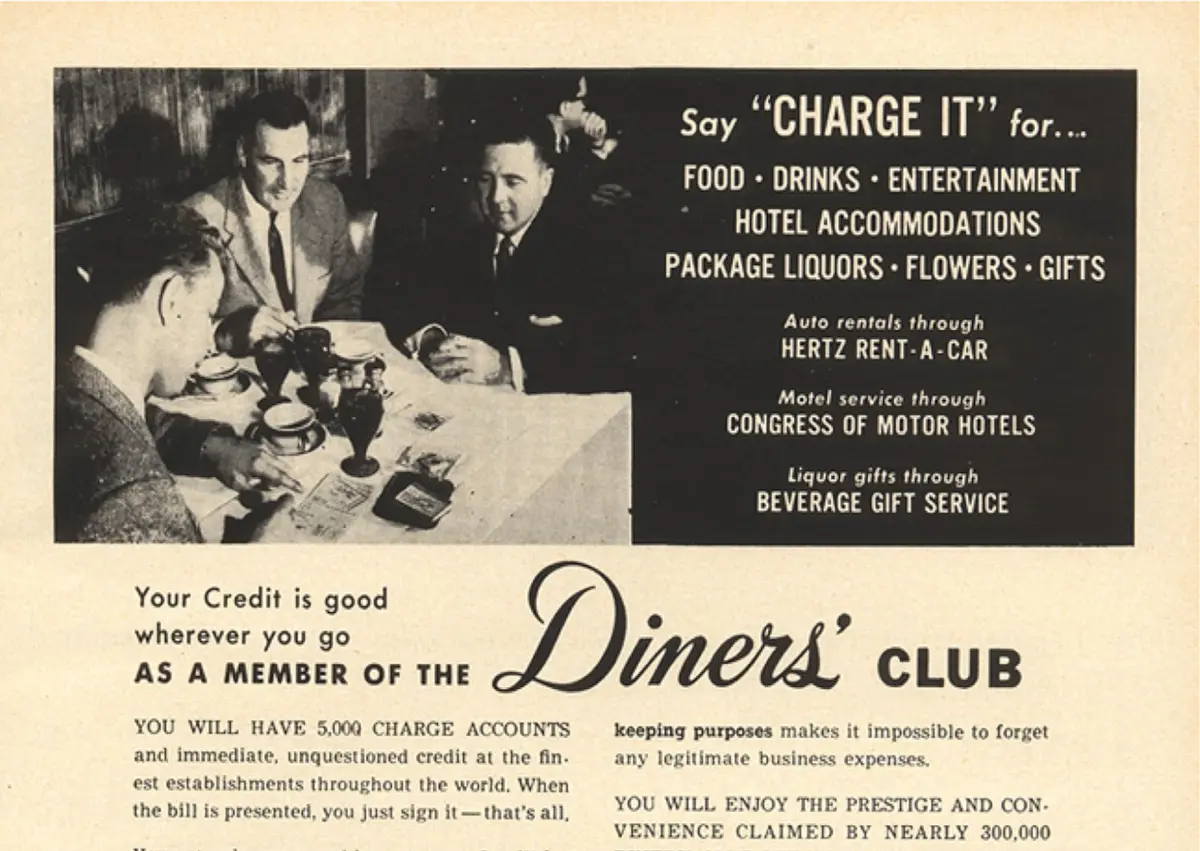
The BankAmericard is the ancestor of the credit card most people carry today. The Diners Club had shown in 1950 that one card could be accepted by many businesses, but its bill had to be paid in full; Bank of America joined that idea to revolving credit, the right to pay over time with interest, and offered it to ordinary families rather than travelling businessmen. Its rules, a monthly bill with a grace period, a credit limit, a fee paid by the merchant and a sign in the shop window, became the rules of the industry. And the organization Hock built from its licensees, a network that does not lend money itself but carries payments between thousands of banks that compete with each other, is today's Visa.
What happened
- 1958
Bank of America launches the BankAmericard in Fresno: about 60,000 cards go by mail, unrequested, to the households that bank with it, and more than 300 Fresno shops have signed up to take them.
Fresno: Bank of America's office on Fulton Street (the Bank of Italy building of 1918), in the city of the first drop, September 18, 1958Within months the bank drops its caution: hearing that a rival plans a card of its own, it starts sending BankAmericards to its customers across California; Chase Manhattan launches its own card in New York toward the end of the year.
- 1959
Thirteen months after the drop some two million BankAmericards are out in California and more than 20,000 merchants accept them.
With 22 per cent of accounts behind on payments, fraud spreading and an admitted loss of $8.8 million in fifteen months, Joseph Williams resigns; the bank tightens its controls and writes an apology to its customers.
- 1961
The BankAmericard makes a profit for the first time; the bank keeps the news to itself so that the bad publicity of 1959 will keep competitors away.
- 1962
Chase Manhattan, unable to win over New York's department stores, sells its card business; the buyer is Joseph Williams, the BankAmericard's designer.
- 1966
Barred from opening branches outside California, Bank of America begins to license the BankAmericard to banks in other states through its BankAmericard Service Corporation, for a fee of $25,000 and a royalty; Barclays becomes the first licensee abroad and launches Barclaycard in Britain.
Banks left out of the BankAmericard system form the Interbank Card Association, a national network of regional bank-card groups; its cards will carry the name Master Charge from 1969 and MasterCard from 1979.
- 1967
The House Committee on Banking and Currency opens two days of hearings on 'Unsolicited Bank Credit Cards', as banks mail millions of cards and losses from fraud rise.
- 1968
A Federal Reserve report on bank credit cards counts nearly 200 card banks, more than 5 million active accounts and $633 million of credit outstanding, with BankAmericard and Interbank as the two national systems.
At a stormy meeting of BankAmericard licensees in Columbus, Ohio, over the chaos of payments between banks, Dee Hock of the National Bank of Commerce in Seattle proposes a review of the whole system and is put in charge of it. By now there are 254 licensee banks, 6 million cardholders and 155,000 merchants in 17 states.
Columbus, Ohio: the licensees' meeting of October 1968 at which Dee Hock took charge of reforming the system- 1970
Bank of America gives up control of the card: the licensees form National BankAmericard Inc. (NBI), a for-profit, non-stock membership corporation owned by its member banks, with Dee Hock as president; the bank becomes one member among many.
Sausalito: the Alta Mira Hotel, where Hock and three licensee bankers worked out the principles of the new organization, NBIPublic Law 91-508 amends the Truth in Lending Act: no credit card may be issued except on request, and a cardholder's liability for a lost or stolen card is limited to $50.
- 1973
NBI's computer system for authorizing card payments, BASE, goes into limited service from its new data center in San Mateo, replacing telephone calls between banks.
San Mateo: NBI's data center, where the BASE authorization system went into service in April 1973- 1974
Ibanco, a sister corporation of the foreign licensees with Hock as president, is organized to run the BankAmericard outside the United States.
- 1976
NBI's board approves a new name for the card and the organization, Visa; Ibanco's board follows in August. In June NBI lets its members issue Master Charge cards too.
NBI announces that BankAmericard will become Visa, worldwide.
- 1977
Ibanco becomes Visa International and NBI Visa U.S.A.; members are given six months to change their shop signs and two years to reissue the cards, which now carry 'VISA' in the white band.
Editor & Publisher reports an $8.2 million advertising campaign for the new Visa cards, which some 44 million cardholders are to receive, and a San Francisco agency's suit claiming it had offered NBI the name in 1973.
Citibank, one of the Master Charge banks now allowed in, mails Visa applications across the whole country; the old BankAmericard issuers hurry to reissue their cards, and by early 1978 Visa has passed Interbank in sales volume.