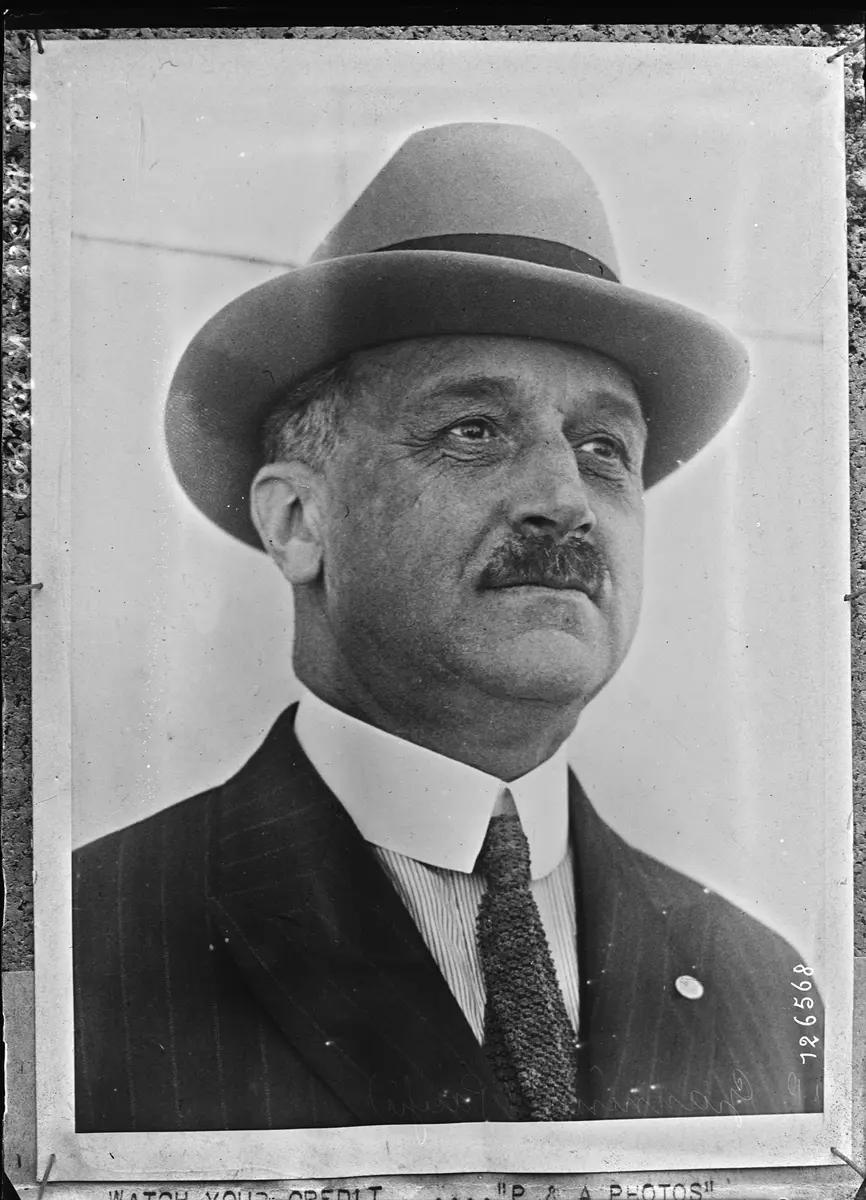
A. P. Giannini
“Son of Italian immigrants, he opened the Bank of Italy in San Francisco in 1904, lent to ordinary people after the 1906 fire and grew it, branch by branch, into Bank of America, the world's largest bank.”
Amadeo Peter Giannini, always called A. P., was the San Francisco banker who believed that ordinary people were worth lending to. In 1904 he opened the Bank of Italy in a former saloon in North Beach, the city's Italian quarter, to serve the fishermen, shopkeepers and workers whom the big banks ignored. He grew it, town by town, into the first bank in the United States with branches across a whole state, and then into Bank of America, which after the Second World War was the largest commercial bank in the world. He made loans of $25, advertised, and walked the streets asking immigrants to move their savings from under the mattress into his bank.
He was born on 6 May 1870 in the Swiss Hotel in San Jose, California, the son of Luigi and Virginia Giannini, immigrants from near Genoa. When he was seven his father was shot dead by a farm worker in a quarrel over a dollar or two of wages. His mother married Lorenzo Scatena, a teamster who became a wholesale fruit and vegetable dealer in San Francisco, and A. P. left school at about thirteen to work for him on the waterfront. He was a born trader: he bought crops from farmers up and down the valleys, became a partner while still a young man, and married Clorinda Cuneo, the daughter of a rich North Beach property owner. At 31 he sold his share of the business and retired, saying that he did not want to be rich.
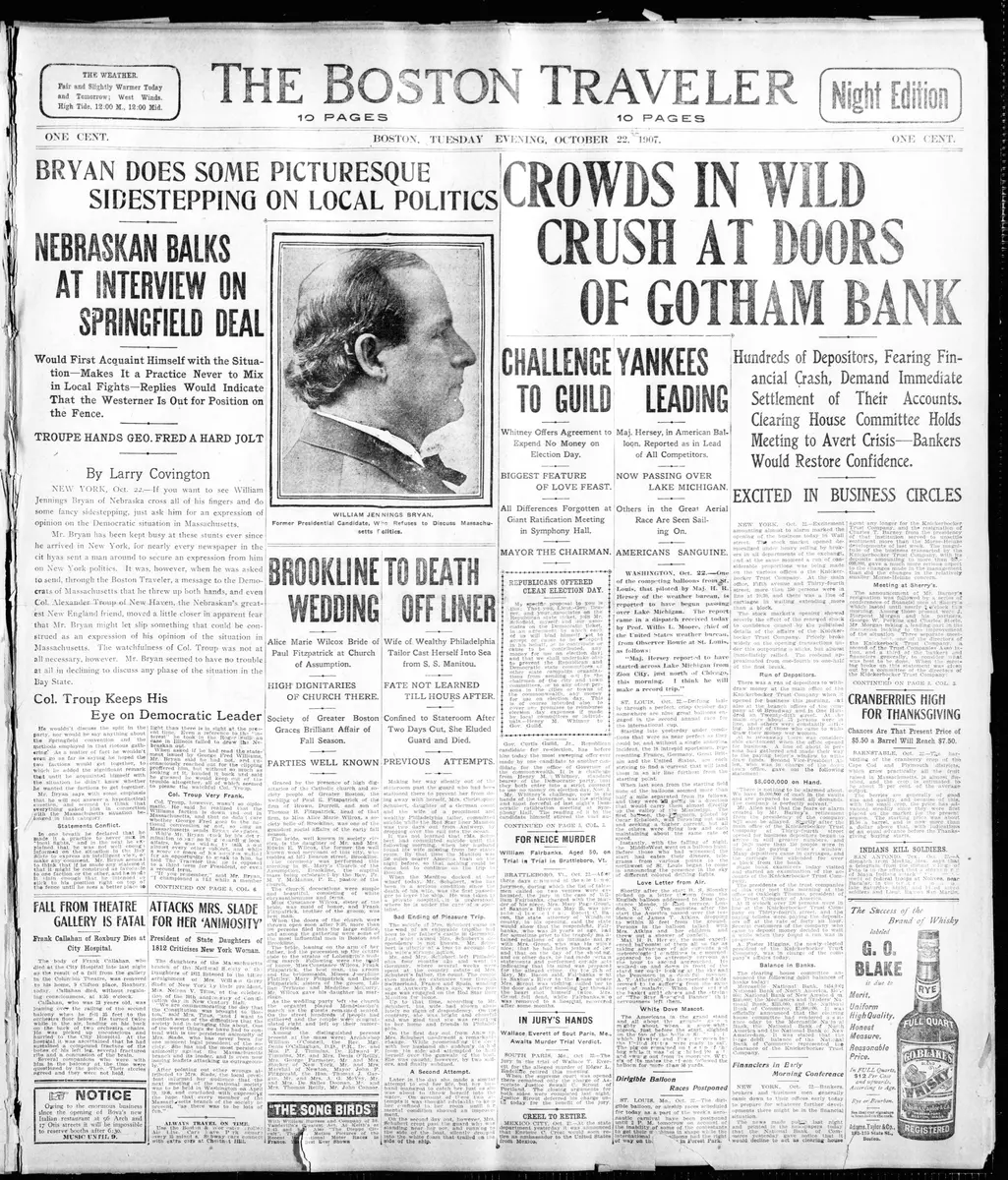
His father-in-law died in 1902 and A. P. took his seat on the board of a small North Beach bank. When the other directors refused to make small loans to working people, he left with five of them and founded his own bank. The great earthquake of 18 April 1906 made his name. As the fire spread toward his office he loaded the bank's gold, cash and records onto two produce wagons, hid them under fruit and took them to his house in San Mateo. While the ruins still smoked he lent money from a plank desk on the Washington Street wharf and from his brother's house, so that North Beach was among the first parts of the city to rebuild. In the panic of 1907 he had stored up gold and paid it out to every depositor who asked.
From 1909, when California first allowed it, he bought small local banks and turned them into branches, keeping their local staff and advisers; by 1918 the Bank of Italy had 24 branches, and in 1927 it became a national bank with some 275 offices. In 1928 he put his banks under a holding company, Transamerica, and in 1930 they took the name Bank of America. He then retired, but when his successor, the Wall Street banker Elisha Walker, began to sell off parts of the group in the Depression, Giannini came back and won a proxy fight in February 1932. His bank financed California's farms, the film studios, the Golden Gate Bridge and wartime industry, and quarrelled for years with federal regulators who thought it too big.
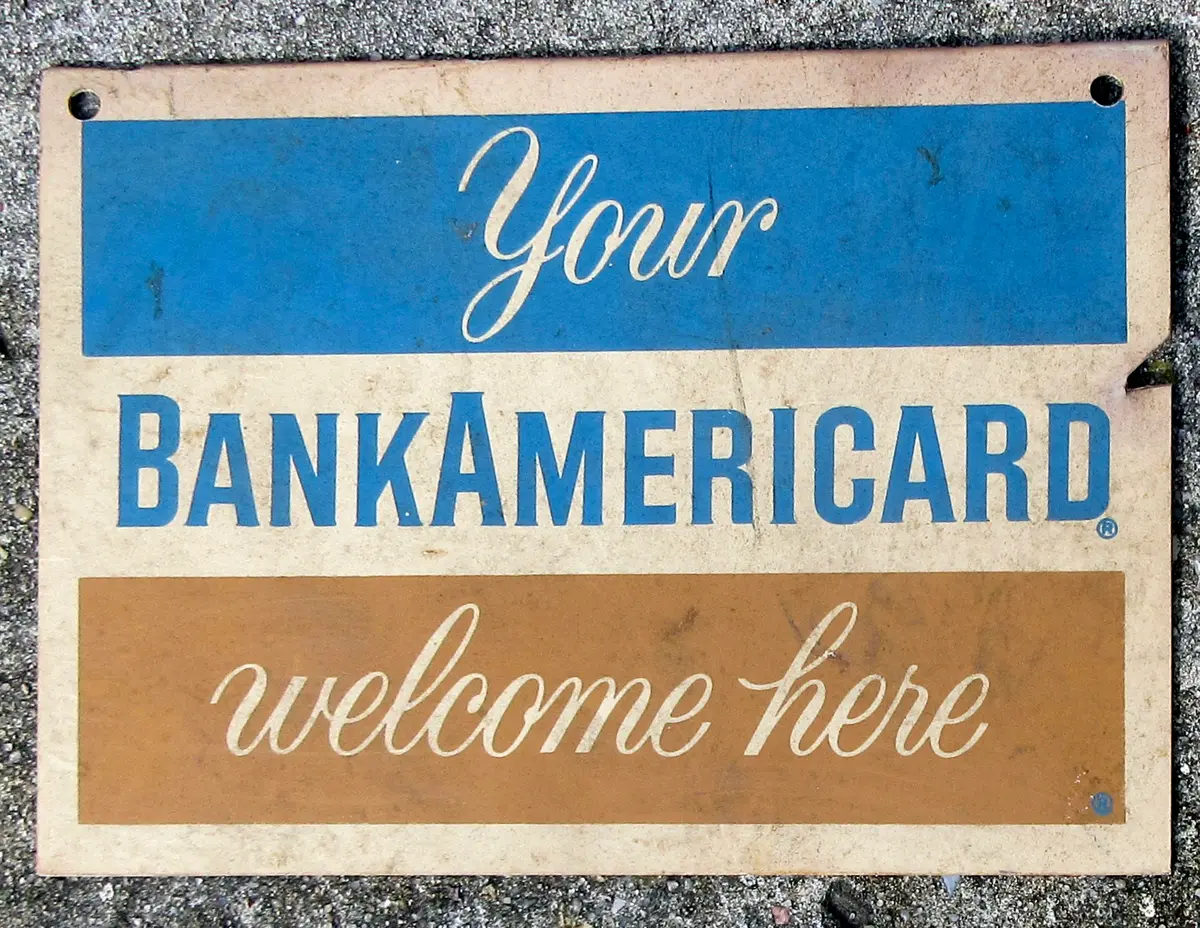
Giannini died at his home in San Mateo on 3 June 1949, aged 79, leaving a fortune of only about $500,000; he had given much away, including the $1.5 million that founded the Giannini Foundation of Agricultural Economics at the University of California. His idea, that a bank should serve the many small customers rather than the few large ones and could do so safely across a wide territory, shaped modern retail banking. After his death his bank launched the BankAmericard, the card that became Visa.
What happened
- 1870
Amadeo Peter Giannini is born in the Swiss Hotel in San Jose, California, the son of Luigi and Virginia Giannini, immigrants from near Genoa who keep the hotel.
San Jose: born on 6 May 1870 in the Swiss Hotel on North Market Street; the Bank of Italy's first branch outside San Francisco opened here in 1909- 1877
His father, now a farmer near San Jose, is shot dead by a farm hand in a quarrel over wages of a dollar or two; his mother soon marries Lorenzo Scatena, a teamster.
- 1882
The family moves to San Francisco, where Scatena works for a produce firm and within a year starts his own, L. Scatena & Co., on the waterfront.
- 1883
After the eighth grade and a few months at Heald's Business College, A. P., about thirteen, goes to work full time for his stepfather's fruit and vegetable business.
- 1887
At seventeen he buys crops on his own judgment on trips through the Sacramento Valley; a gamble on that year's pears is said to have earned the firm $50,000.
- 1889
Scatena makes him a partner in the firm with a one-third share, later raised to a half.
- 1892
He marries Clorinda Agnes Cuneo, daughter of Joseph Cuneo, one of the richest property owners in North Beach.
- 1901
At 31 he sells his half of L. Scatena & Co. to employees for $100,000 and retires: 'I don't want to be rich.'
- 1902
Joseph Cuneo dies without a will, leaving some $500,000; the family asks A. P. to manage the estate, and he takes Cuneo's seat on the board of the Columbus Savings and Loan Society in North Beach.
- 1904
After the Columbus board refuses to seek small borrowers, Giannini and five other directors, among them his stepfather, resign and incorporate the Bank of Italy under California law.
The Bank of Italy opens in a former saloon on the northwest corner of Montgomery Avenue and Washington Street, North Beach. Giannini tells the first messenger, 'Vic, you may now open the front door.'
- 1906
- 5:12 a.m.
The great earthquake strikes. Giannini comes in from San Mateo, reaches the bank about noon with the fire a block away, loads its cash, gold and records onto two wagons from his old produce firm, covers them with fruit and vegetables and takes them to his house, Seven Oaks, in San Mateo.
San Mateo: 'Seven Oaks', his home from before 1906, where he hid the bank's money after the earthquake and where he died on 3 June 1949 Nine days after the earthquake, while the big banks stay shut, the Bank of Italy reopens at his brother's house, 2745 Van Ness Avenue, and lends from a plank desk on the Washington Street wharf to people who want to rebuild.
The bank moves into temporary quarters at 632 Montgomery Street in the Montgomery Block, close to its burned first office, and buys a site at Clay and Montgomery streets for a building of its own.
Montgomery Block, 628-632 Montgomery Street, San Francisco: the Bank of Italy's temporary quarters after the fire, from May 1906- 1907
When the panic of 1907 reaches San Francisco, the Bank of Italy, which has been storing gold since early in the year, pays its depositors in gold coin throughout while other banks limit payments.
- 1908
The Bank of Italy's new head office at 552 Montgomery Street, designed by F. T. Shea under Giannini's eye, opens to the public. That year he hears Lyman Gage and Woodrow Wilson praise branch banking at a bankers' meeting.
Bank of Italy Building, 552 Montgomery Street, San Francisco: his head office from 17 August 1908 to June 1921, where the branch system was built- 1909
California's new banking law takes effect, letting a bank open branches beyond its home city if the state superintendent of banks agrees.
On Columbus Day the directors approve the first branch outside San Francisco, in San Jose, made by buying the Commercial and Savings Bank there and keeping its local people: the model for every branch that follows.
San Jose: born on 6 May 1870 in the Swiss Hotel on North Market Street; the Bank of Italy's first branch outside San Francisco opened here in 1909- 1913
The Bank of Italy enters Los Angeles by buying the Park Bank and the City and County Bank.
- 1918
With 24 branches and more than $93 million in resources, the Bank of Italy is the first statewide branch-banking system in the United States.
- 1919
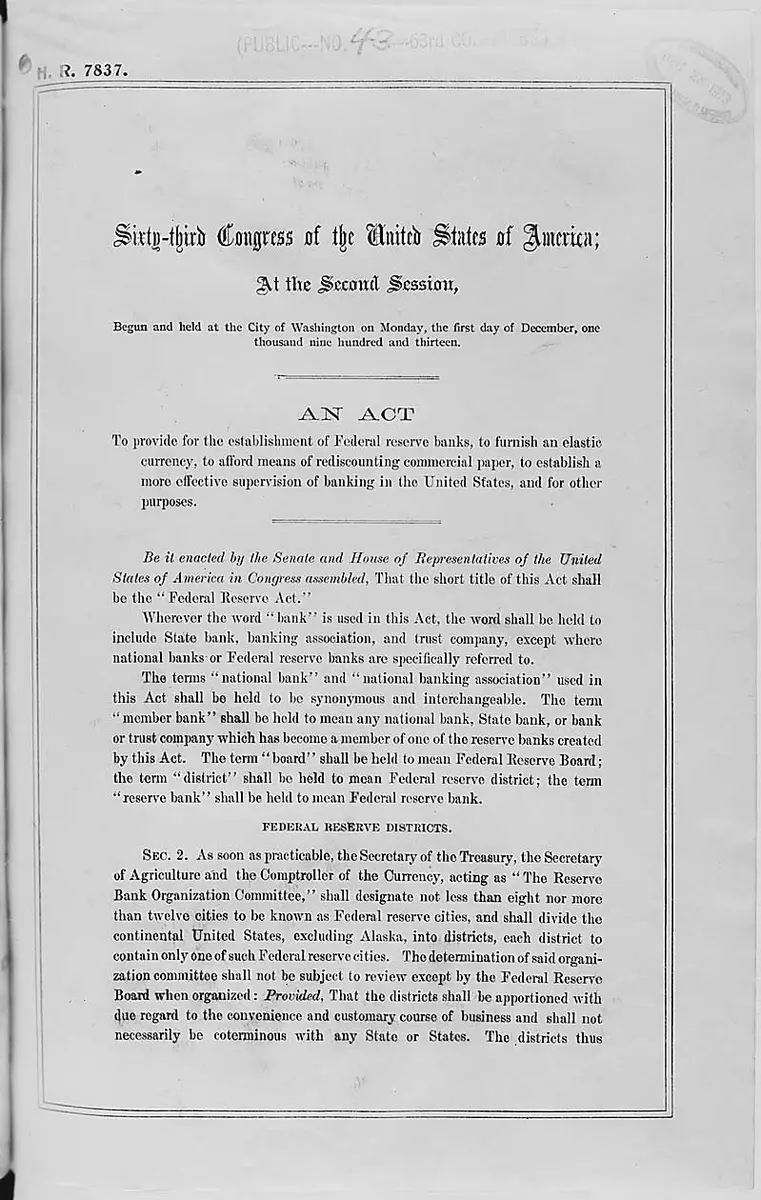
The Bank of Italy joins the Federal Reserve System, on condition that it opens no new branches without the Board's approval; the Bancitaly Corporation, chartered in New York, buys into banks in New York and Italy.
A syndicate led by the Bank of Italy's bond department takes $5,570,000 of Hetch Hetchy water bonds, the largest municipal bond sale in San Francisco's history.
- 1921
Giannini opens the doors of the new head office at Market, Powell and Eddy streets for three days of open house; it starts business on 30 June.
- 1922
Giannini and his wife leave San Francisco on the Southern Pacific's 'Lark' for a journey to Europe by way of New York, where he visits the group's banks.
- 1927
Days after the McFadden Act takes effect, the Bank of Italy absorbs the Liberty Bank of America and opens as a national bank, the Bank of Italy National Trust and Savings Association, with 275 offices in 156 towns.
- 1928
Giannini has the Bancitaly Corporation give $1.5 million to the University of California for the Giannini Foundation of Agricultural Economics.
He tells stockholders that Transamerica Corporation has been incorporated in Delaware earlier in the month as a holding company for the Bank of Italy, Bancitaly and their affiliates, including the Bank of America of New York bought that year.
- 1930
Giannini retires as president of Transamerica; Elisha Walker of Blair & Co. becomes chairman and his son L. M. Giannini president.
The Bank of Italy merges with the Bank of America of California and takes the name Bank of America National Trust and Savings Association, with 438 offices in 243 California cities.
- 1931
Alarmed that Walker's board plans to sell off the group's holdings and cut the banks loose, Giannini comes out of retirement and, as 'Associated Transamerica Stockholders', writes to all shareholders asking for their proxies.
- 1932
When no one else will finance the Golden Gate Bridge in the Depression, Giannini tells its engineer Joseph Strauss, 'We'll take the bonds,' and Bank of America buys $6 million of them.
At Transamerica's annual meeting in Wilmington, Delaware, Giannini wins the proxy fight with 15,371,578 votes out of 24,153,900; Walker does not attend. Nine days later the new board elects Giannini chairman; he serves without pay.
- 1939
Giannini, chairman of Transamerica, is in Washington with his son as the corporation's lawyers go to court to limit an inquiry by the Securities and Exchange Commission.
- 1941
Bank of America moves its head office to a twelve-storey building at 300 Montgomery Street; in the war years it lends heavily to California's shipyards and aircraft plants, up to $40 million to Henry Kaiser's companies.
- 1945
With 493 branches and more than $5 billion in assets, Bank of America passes Chase National as the largest commercial bank in the world.
- 1948
The Board of Governors of the Federal Reserve System charges Transamerica under the Clayton Act with building a banking monopoly in five western states.
- 1949
Giannini dies of a heart attack at his home in San Mateo, aged 79, leaving an estate of about $500,000. He is buried at Holy Cross Cemetery in Colma.
San Mateo: 'Seven Oaks', his home from before 1906, where he hid the bank's money after the earthquake and where he died on 3 June 1949