Rei Kawakubo
“The Tokyo designer who put holes, lumps and black into fashion in Paris in 1981 and has started every season from nothing since.”
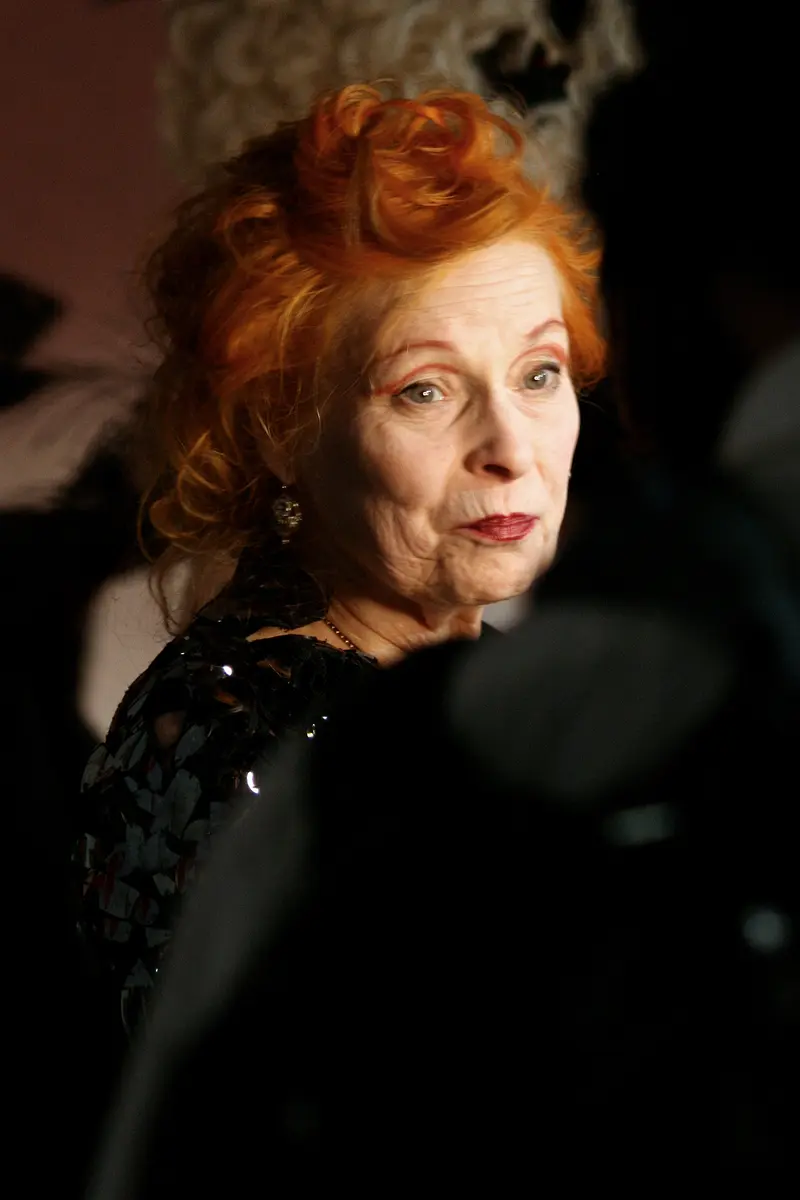
Rei Kawakubo is the Japanese designer who founded Comme des Garçons ('like some boys') and spent half a century making clothes that do not try to flatter the body. She has no training in making clothes. Her work is black, torn, padded, asymmetric or bridal white; each season starts, she says, from nothing, and she gives it a title and no explanation. She no longer calls them clothes but 'objects for the body', and Britannica counts her among the most influential designers of the late 20th century.
She was born in Tokyo on 11 October 1942, the oldest child and only daughter of a Keio University administrator, and studied the history of aesthetics at Keio from 1960 to 1964. She worked in the advertising department of the textile maker Asahi Kasei, went freelance as a stylist in 1967, and began to make her own clothes when she could not find what the photo shoots needed. She founded Comme des Garçons in 1969 and incorporated it in 1973. By 1980 it had about 150 franchised shops in Japan. She brought it to Paris in April 1981, showing next to Yohji Yamamoto; the black, loose, unfinished clothes shocked French critics, who called them 'post-atomic' and 'Hiroshima chic'.
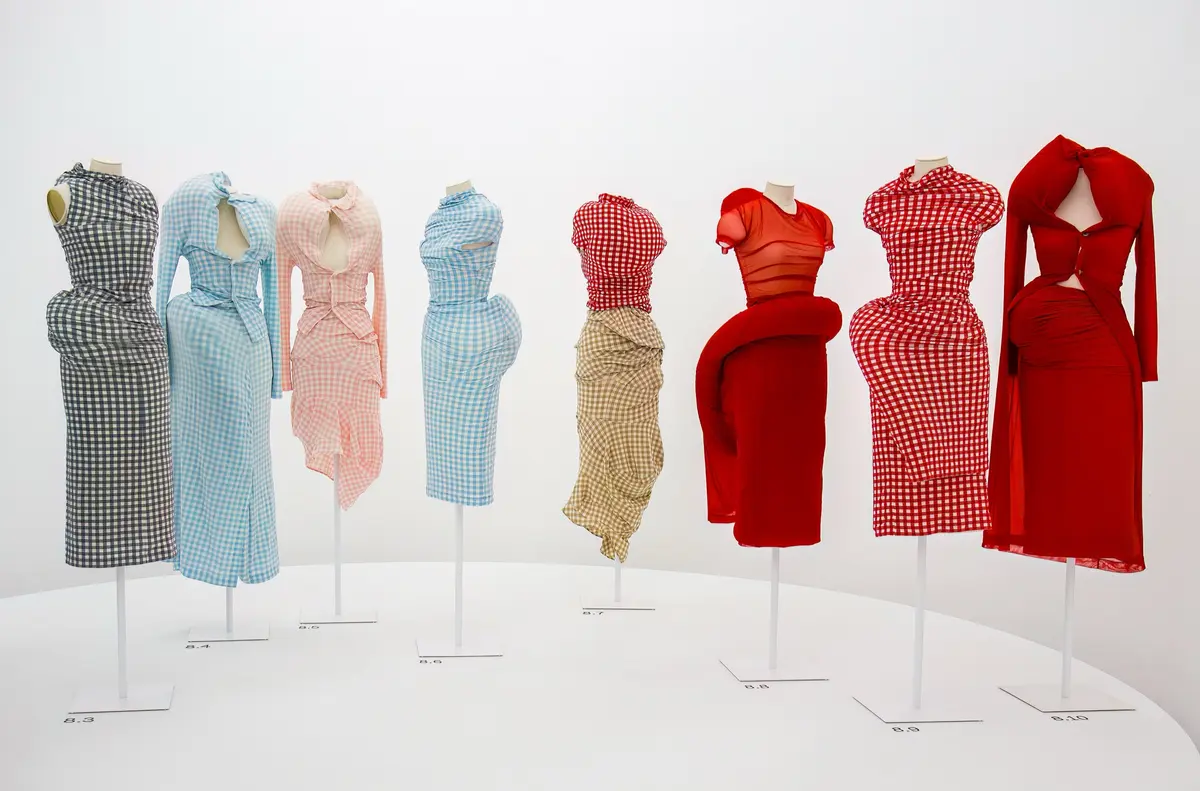
In the years that followed she kept breaking her own rules. Her 1982 knitted sweaters with holes, the patched and charcoal-dyed clothes of Spring 1983, and the padded gingham 'lumps and bumps' of Spring 1997 each overturned what a dress should do for the body. She treats everything around the clothes as part of the work: the shops, catalogues, magazine and shows. Her husband Adrian Joffe, whom she married in 1992, runs the business. Comme des Garçons also became a seller of other people's work: the 'guerrilla stores' of 2004, Dover Street Market (London, 10 September 2004; Tokyo 2012; New York 2013), the Play line with its heart logo (2002), and partnerships with brands such as Converse and Nike.
In 2017 the Metropolitan Museum of Art's Costume Institute gave her a solo show, 'Art of the In-Between', the first for a living designer since Yves Saint Laurent in 1983; she designed its white galleries and the museum put around 140 of her pieces in them. She designed the costumes for the Vienna State Opera's Orlando in 2019, and in May 2026 she showed an installation of recent work at an art fair in New York. She is 83, lives in Tokyo, and still presents collections in Paris every season.
What happened
- 1942
Rei Kawakubo is born in Tokyo, the eldest of three children and the only daughter; her father is an administrator at Keio University.
Tokyo: where she was born on 11 October 1942, grew up as the eldest child and only daughter of a Keio University administrator, studied at Keio (1960–64), worked at Asahi Kasei and lives today- 1960
She enrols at her father's university, Keio, and takes a degree in the history of aesthetics, a course that covers Asian and Western art; she never studies fashion.
- 1964
She graduates the year Tokyo hosts the Olympics, leaves home without telling her parents where she is going, and takes a job in the advertising department of Asahi Kasei, a maker of acrylic fibre; her boss lets her scout props and costumes for photo shoots. (Gale dates the job to 1964–66.)
- 1967
After about three years at Asahi Kasei she goes freelance as a stylist, a rare job in Japan at the time; when she cannot find clothes for a shoot, she starts to design them.
- 1969
She founds Comme des Garçons ('like some boys') in Tokyo, making youthful sportswear that she sells through shops such as Belle Boudoir in the Ginza, with a few assistants in a rented office. She has said she simply liked the French sound of the name.
- 1973
The business is incorporated as a company.
- 1975
She launches the Comme des Garçons women's collection in Tokyo and opens her first shop in Minami-Aoyama, with a first catalogue the same year. (Britannica puts the first store in 1973; see qa.uncertain.)
Minami-Aoyama, Tokyo: the district of her first shop (1975), her studio and company headquarters (5-11-5 Minamiaoyama), and the Aoyama shops of the 1990s - 1978
She adds a menswear line, Homme, and designs the autumn–winter 1978–79 collection around textiles of her own making, with contrasting textures and cotton quilting: the NGV calls it her turning point, the first collection made from original cloth.
- 1980
By now the company has about 150 franchised shops across Japan, 80 staff and sales of about $30 million a year; her black-clad followers are known in Tokyo as 'the crows'.
- 1981
In 1981 she also adds the Tricot and Robe de Chambre womenswear lines and opens her first Paris boutique. (Wikipedia dates the boutique to 1982; see qa.uncertain.)
Kawakubo shows in Paris for the first time, at a small show in the InterContinental Hotel, alongside Yohji Yamamoto: oversized, asymmetric clothes, mostly black, with raw seams. Time says the critics called them 'post-atomic' and 'Hiroshima chic'; the press had never seen black worn by day or clothes that did not flatter the body.
Place Vendôme, Paris: the home of the company's Paris offices and showroom, in the city where she has shown every season since April 1981- 1982
Her second Paris season, the collection for autumn–winter 1982–83 (called Holes by the NGV and Destroy by Britannica and the New Yorker), is shown with models in war-paint stamping down to a drum, in torn, loose black clothes. Parts of the press call it 'Hiroshima's revenge'; Britannica says the media named the look 'postatomic' and 'Hiroshima chic'.
The 'Lace' sweater: black sweaters knitted on machines set to make holes and dropped stitches, so that they look slashed or like cobwebs. Gale calls it 'lace' knitwear of 1982, 'an attack on lingering Victorianism'; the V&A's 1999 gallery label for its 1982 jumper (T.167-1985, given by the designer) calls it the famous black 'lace' sweater. Peter Lindbergh photographs it in Paris that year.
Spring–summer 1983, Patchworks and X: shown on the official ready-to-wear calendar, clothes of patches dyed in shades of black ink (made from the charcoal used in Japanese calligraphy), with exposed seams, frayed edges and unfinished shapes. The NGV does not give the day of the show; spring shows were held in the autumn of the year before.
- 1983
She opens her first shop in the United States, on the third floor of the Henri Bendel department store in New York.
- 1986
The Pompidou Centre in Paris shows 'Mode et Photo, Comme des Garçons', her first major museum show.
- 1987
The Fashion Institute of Technology in New York shows 'Three Women: Madeleine Vionnet, Claire McCardell and Rei Kawakubo'; in the same year Adrian Joffe, born in South Africa and ten years younger, joins the company.
- 1988
She launches Six (for 'sixth sense'), a large twice-yearly magazine of art, photographs and ideas that replaces the catalogues; eight issues come out before the last in 1991.
- 1992
She marries Adrian Joffe at the city hall in Paris, wearing a black skirt and a plain white shirt; he becomes president and chief executive of Comme des Garçons International and her translator.
- 1995
Her menswear show includes baggy striped pyjamas that some critics compare to concentration-camp uniforms, as the 50th anniversary of the liberation of Auschwitz is marked; she apologises for any offence and withdraws the line.
- 1996
Late in the year she shows Body Meets Dress—Dress Meets Body for spring–summer 1997: dresses of gingham stretch nylon with pads of goose down sewn in at back, shoulder and hip. Critics call it 'lumps and bumps', 'tumour' or 'Quasimodo'; she says it shows the 'actual' rather than the 'natural' body.
- 1997
Merce Cunningham's 40-minute dance Scenario, with costumes taken from Body Meets Dress, opens at the Brooklyn Academy of Music: Cunningham 'saw beauty' in the pieces.
- 1998
The anti-perfume Odeur 53 is launched: a blend of 53 smells that nobody would recognise, such as burnt rubber and nail polish. (Perfumes began in 1993 or 1994; see qa.uncertain.)
- 1999
The Chelsea shop in New York opens: a space-age shop by the architects Future Systems (completed 1998 as AL_A records) whose entrance is hidden in an old brick arch; Gale says it tells visitors 'if you aren't in the know, then don't bother'.
- 2000
Harvard University's Graduate School of Design gives her its Excellence in Design award.
- 2001
Beyond Taboo, autumn–winter 2001–02: man-tailored jackets overlaid with brassieres and corsets, a collection Nippon.com counts among the most blatant expressions of her transgressive iconoclasm.
- 2002
The Play line starts, with a small red heart with two eyes by the Polish-born artist Filip Pagowski as its logo: Britannica and AnOther both date Play to 2002, and it grows into a globally popular casual line known by its heart (Nippon.com).
- 2004
The first 'guerrilla stores' open, in Berlin: bare, short-lived shops set away from the smart streets and closed after a year. Britannica credits Kawakubo and Joffe with inventing the pop-up shop trend.
Dover Street Market opens at 17–18 Dover Street, London: Comme des Garçons takes the ground floor and invites other designers, young and established, to take the rest, which she calls 'beautiful chaos'.
17–18 Dover Street, Mayfair, London: the first Dover Street Market, opened on 10 September 2004 (it moved to Haymarket in 2016)- 2008
Bad Taste, autumn–winter 2008–09: nylon and polyester used on purpose, with punk and fetish touches, laced black leather and white tulle ruffles; 'there's value in bad taste', she says in 2008.
- 2009
A Comme des Garçons Play version of the Converse Chuck Taylor goes on sale (the earliest date found for the shoe; Nike is another partner; the NGV holds a Comme des Garçons Nike Shox of spring–summer 2019).
- 2011
White Drama, spring–summer 2012: white crochet, satin cage skirts, lace flowers and wadding; the Met shows it under 'Past/Present/Future' and 'Birth/Marriage/Death'.
- 2012
Dover Street Market's second shop opens, in the Ginza district of Tokyo.
- 2013
A third Dover Street Market opens, in New York.
- 2014
Blood and Roses, spring–summer 2015: red and white clothes printed with a red splatter pattern, red ribbons and rosettes, in the collection the Met files under 'War/Peace'; Nippon.com says the season showed her disdain of war.
- 2015
Ceremony of Separation, autumn–winter 2015: dresses and coats of white lace and chiffon, black wool and velvet, embroidered with gold, about departures and loss; the Met files it under 'Life/Loss'.
- 2016
Dover Street Market London reopens in a new, much larger home at 18–22 Haymarket, the Grade II listed former Burberry headquarters, about three times the size of the Dover Street shop.
- 2017
The Future of Silhouette, autumn–winter 2017–18: padded, bulging dresses, shown here in the NGV's records as plain 'prototypes' and 'looks'.
The Costume Institute's 'Rei Kawakubo/Comme des Garçons: Art of the In-Between' opens at the Met (gala on Monday 1 May), with about 140 womenswear pieces from the early 1980s on in nine pairs of opposites. It is the first Costume Institute show on a living designer since Yves Saint Laurent in 1983; she designs the white galleries herself.
The Metropolitan Museum of Art, Fifth Avenue, New York: the Costume Institute's 'Rei Kawakubo/Comme des Garçons: Art of the In-Between', 4 May to 4 September 2017- 2019
Her costumes for Olga Neuwirth's opera Orlando, after Virginia Woolf, are seen at its world premiere at the Vienna State Opera.
- 2025
At 82 she titles her autumn–winter 2025–26 collection 'To hell with war'.
- 2026
Comme des Garçons is the centrepiece of the Independent art fair at Pier 36, New York (14–17 May): a site-specific structure of rebar designed by Kawakubo with about twenty 'semi-unique' garments of recent years, her first presentation at a New York art fair.