OpenAI is founded
“OpenAI was founded in December 2015 as a nonprofit lab to build safe AI for all; the cost of computing made it a capped-profit company in 2019 and a public benefit corporation under its nonprofit in 2025.”
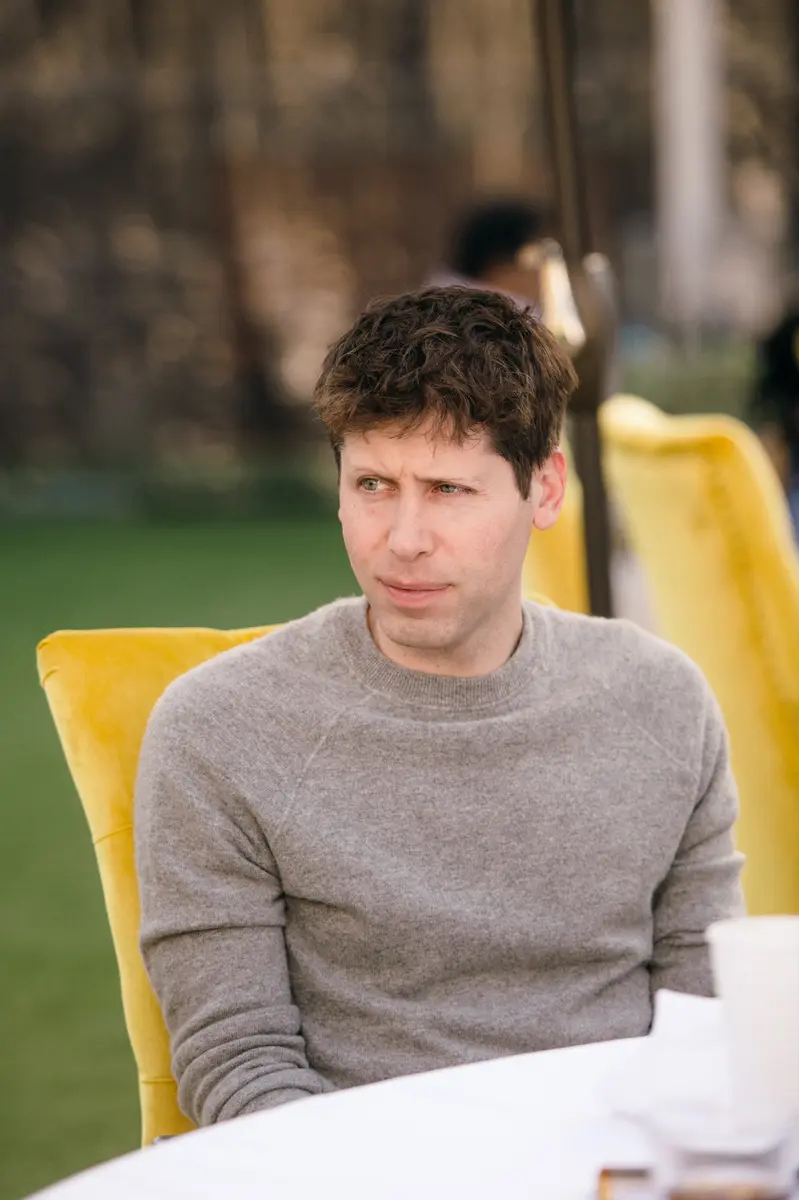
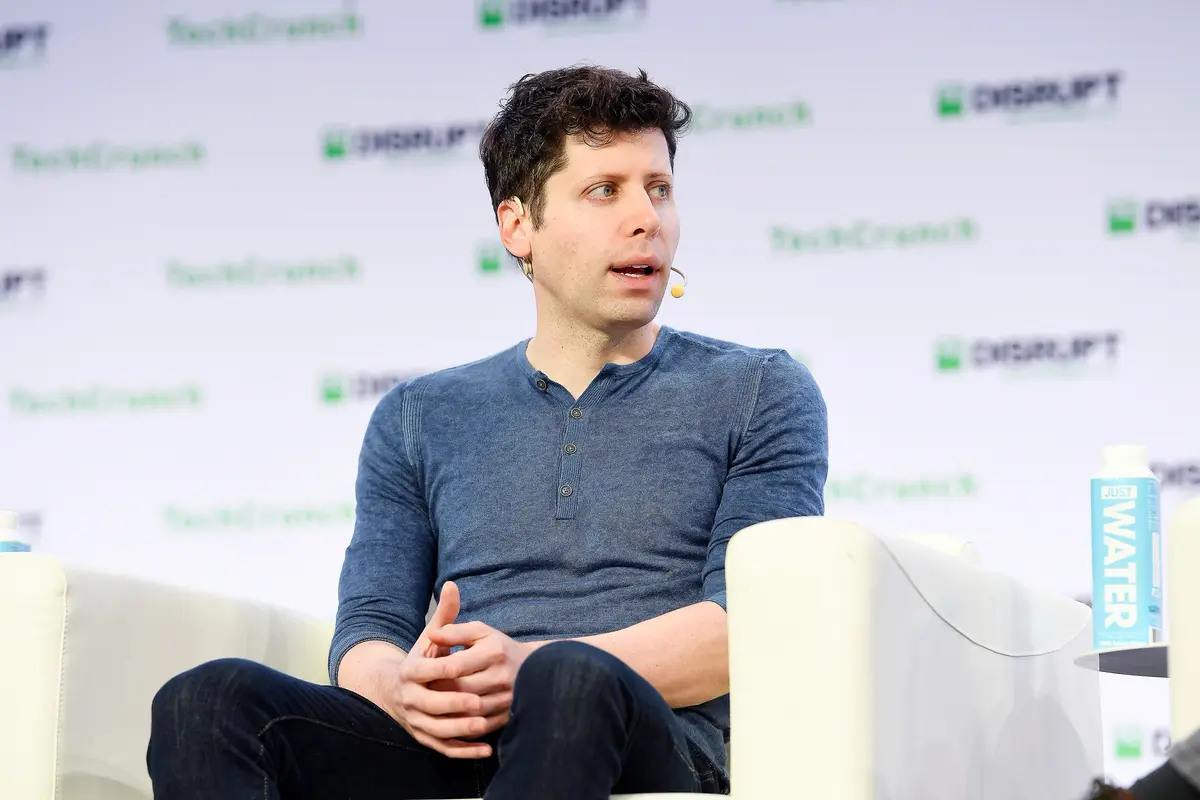
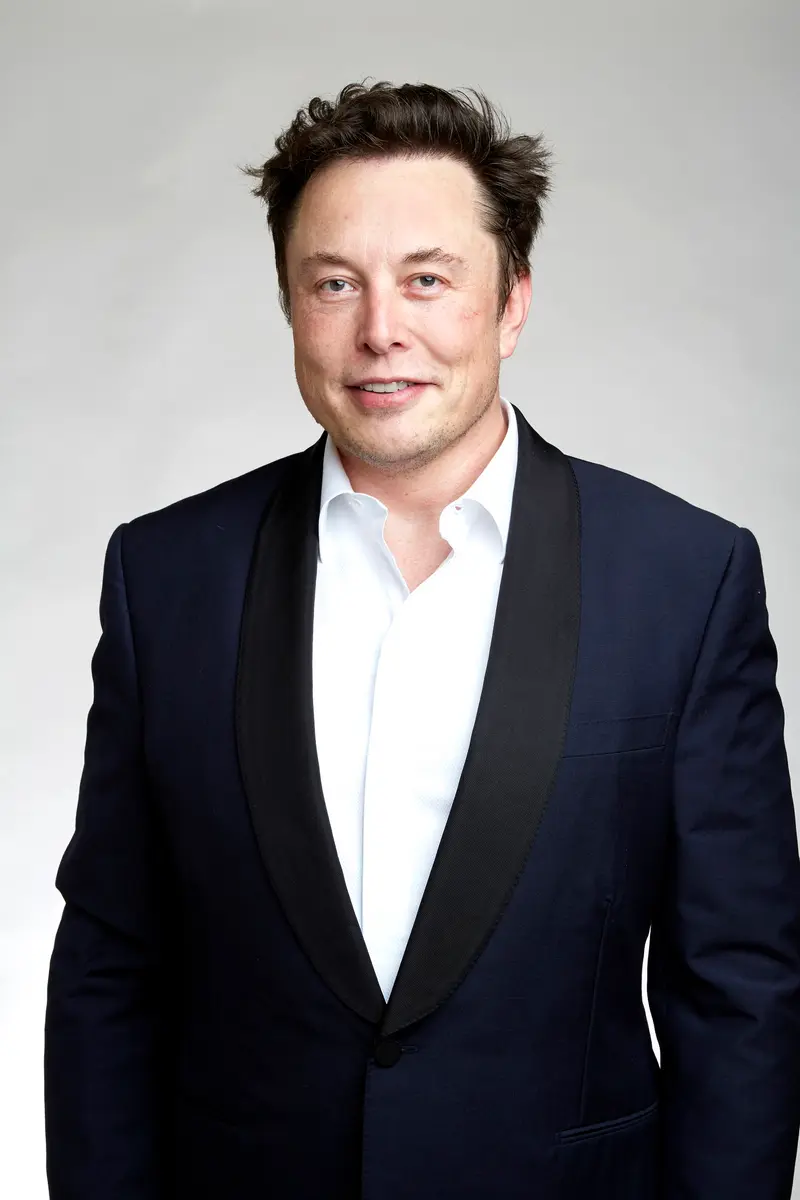
OpenAI began as a worry about Google. In May 2015 Sam Altman, the president of the start-up school Y Combinator, wrote to Elon Musk that someone other than Google should build human-level artificial intelligence first, and proposed a lab whose technology would 'belong to the world' through a nonprofit. That summer, at a dinner at the Rosewood hotel in Menlo Park, Altman and Musk met young researchers including Ilya Sutskever of Google Brain and Greg Brockman, the chief technology officer of the payments company Stripe. Brockman left Stripe to build the lab and Sutskever left Google to lead its research. OpenAI, Inc. was incorporated in Delaware as a nonprofit on 8 December 2015 and announced on 11 December, with Altman and Musk as co-chairs. Its goal was to make AI benefit 'humanity as a whole, unconstrained by a need to generate financial return'.
The announcement said its backers had committed $1 billion, a figure Musk had pushed for so the lab would not sound 'hopeless' next to Google and Facebook. Far less arrived. The nonprofit's tax returns show contributions of $13.8 million in 2016, $33.2 million in 2017 and $49.9 million in 2018, and OpenAI later said it had raised less than $45 million from Musk and more than $90 million from other donors in all. The first researchers worked in Brockman's apartment in San Francisco's Mission District. They released free tools such as OpenAI Gym (2016) and taught programs to play the video game Dota 2: in August 2017 a bot beat the professional player Dendi at the game's world championship in Seattle.
The research showed that progress depended on ever larger amounts of computing power, which meant billions of dollars a year. In 2017 the founders discussed adding a for-profit company but could not agree on who would control it; by OpenAI's account Musk wanted majority control or a merger with Tesla, while Musk later said he had been misled about the nonprofit's purpose. He left the board in February 2018. In March 2019 OpenAI created OpenAI LP, a 'capped-profit' company still governed by the nonprofit's board, in which the first investors could earn at most 100 times their money. In July 2019 Microsoft invested $1 billion and became OpenAI's cloud provider and main commercial partner, and it invested again in 2021 and in January 2023, by many billions more.
The money paid for the models that made OpenAI famous: GPT-3 and the paid API in 2020, ChatGPT in November 2022 and GPT-4 in 2023. Some researchers, led by Dario Amodei, had left at the end of 2020 to found Anthropic. On 17 November 2023 the nonprofit board removed Altman as chief executive, saying he had not been 'consistently candid' with it. Almost all of the staff threatened to leave and Microsoft offered to hire them; twelve days later Altman was back, under a new board. Musk sued in 2024, accusing Altman and Brockman of turning a charity into a business. OpenAI replied with old emails showing that Musk himself had wanted a for-profit company. After a year of talks with the attorneys general of Delaware and California, OpenAI finished its restructuring on 28 October 2025. The nonprofit, renamed the OpenAI Foundation, controls a public benefit corporation, OpenAI Group PBC, and holds a stake then valued at about $130 billion; Microsoft holds about 27 percent. In May 2026 an advisory jury in Oakland found that Musk had sued too late.
OpenAI matters because it turned a research lab into one of the most valuable companies in the world without giving up, on paper, its nonprofit control. Its story is the long test of whether a charity's mission can steer a business that needs hundreds of billions of dollars, and its crises, from the board's revolt to the courtroom, made that question public. The products themselves, ChatGPT and GPT-4, belong to the wider AI boom.
What happened
- 2015
Sam Altman, president of Y Combinator, writes to Elon Musk that if humanity cannot be stopped from building AI, 'it would be good for someone other than Google to do it first', and proposes a 'Manhattan Project' for AI whose technology would belong to the world through a nonprofit. Musk answers: 'Probably worth a conversation.'
Altman sends Musk a detailed plan: the lab's mission would be 'to create the first general AI and use it for individual empowerment', with safety 'a first-class requirement' and the technology owned by a foundation.
At a dinner in a private room of the Rosewood hotel in Menlo Park, Altman and Musk meet researchers including Ilya Sutskever of Google Brain, Dario Amodei and Greg Brockman of Stripe. They agree that a lab to make AI beneficial should be a nonprofit at the cutting edge of research; the next day Brockman starts working on it full-time.
Rosewood Sand Hill, Menlo Park: the hotel on Sand Hill Road where Altman, Musk, Brockman, Sutskever and others dined in the summer of 2015 and agreed the lab was worth startingAltman proposes a board of himself, Musk and Sutskever for 'YC AI, which will be a Delaware non-profit'. Musk replies that it should be independent of Y Combinator and that 'the structure doesn't seem optimal': 'probably better to have a standard C corp with a parallel nonprofit'.
Musk tells Brockman and Altman to announce a bigger number than the $100 million they had planned, 'to avoid sounding hopeless' next to Google and Facebook: 'I think we should say that we are starting with a $1B funding commitment… I will cover whatever anyone else doesn't provide.'
OpenAI, Inc. is incorporated in Delaware as a nonprofit 'not organized for the private gain of any person', to fund research on artificial intelligence and open-source the technology 'when applicable'.
OpenAI is announced as 'a non-profit artificial intelligence research company', 'unconstrained by a need to generate financial return', with Sutskever as research director, Brockman as CTO, seven more founding researchers and Altman and Musk as co-chairs. Musk, Altman, Brockman, Reid Hoffman, Jessica Livingston, Peter Thiel, Amazon Web Services, Infosys and YC Research have committed $1 billion.
- 2016
The researchers begin work in Brockman's apartment in San Francisco's Mission District, buying their first whiteboards on the day.
OpenAI releases the public beta of OpenAI Gym, a free toolkit for comparing reinforcement-learning programs on tasks from Atari games to simulated robots.
Nvidia's chief executive Jen-Hsun Huang hand-delivers the first DGX-1, an 'AI supercomputer in a box' with the computing power of 250 servers, to OpenAI in San Francisco and signs it to 'Elon & the OpenAI team'.
The Internal Revenue Service recognises OpenAI, Inc. as a tax-exempt 501(c)(3) charity. Its first tax return shows $13.8 million of donations for 2016, far below the billion announced.
OpenAI releases Universe, a thousand games and websites in which an AI program can use a computer as a person does, by watching the screen and working a virtual keyboard and mouse.
- 2017
On the main stage of The International, Dota 2's world championship in Seattle, OpenAI's bot beats the professional player Dendi in a best-of-three one-on-one match; it had learned the game only by playing against itself.
KeyArena (today Climate Pledge Arena), Seattle: The International 2017, where OpenAI's Dota 2 bot beat Dendi on 11 August 2017During talks about adding a for-profit company, 'Open Artificial Intelligence Technologies, Inc.' is registered in Delaware as a benefit corporation. OpenAI says Musk created it and wanted majority equity, board control and the chief executive's job; the talks fail.
- 2018
OpenAI announces new donors and that Musk will leave its board, citing a possible conflict with Tesla's AI work; he will 'continue to donate and advise'. The board is now Brockman, Sutskever, Holden Karnofsky and Altman.
OpenAI publishes its Charter: its 'primary fiduciary duty is to humanity', and if a safety-conscious rival comes close to general AI first, OpenAI will stop competing and help it.
About a hundred staff and their families gather for an offsite; OpenAI, L.P. has quietly been formed in Delaware in September, under the name SummerSafe, L.P.
Musk writes to Sutskever and Brockman that OpenAI's chance of staying relevant to Google's DeepMind is '0%. Not 1%.' without dramatic change: 'This needs billions per year immediately or forget it.'
- 2019
OpenAI creates OpenAI LP, a 'capped-profit' company controlled by the nonprofit's board, to raise billions for computing power and staff. Returns for the first investors are capped at 100 times their money; anything above goes to the nonprofit.
- 11:30 a.m.
At OpenAI Five Finals in San Francisco, a team of five bots beats OG, the reigning Dota 2 world champions, in two straight games, the first AI to beat world champions at an esports game.
Microsoft invests $1 billion in OpenAI. OpenAI will move its work onto Microsoft's Azure cloud, the two will build AI supercomputers together, and Microsoft becomes its preferred partner for selling new AI technologies.
Microsoft's headquarters, Redmond, Washington: the partner that invested $1 billion in 2019 and many billions more from 2021- 2020
OpenAI launches its API, its first commercial product: businesses can pay to use its new language models, GPT-3 among them, through a 'text in, text out' interface.
Microsoft takes an exclusive licence to GPT-3, which was trained on its Azure supercomputer.
OpenAI announces that Dario Amodei, its vice-president of research, is leaving with 'a handful of OpenAI colleagues' to start a new project; it becomes Anthropic.
- 2022
OpenAI releases ChatGPT as a free research preview; its spread makes OpenAI a household name (the AI boom entry tells this story).
- 2023
Microsoft announces 'a multiyear, multibillion dollar investment', its third after 2019 and 2021, and becomes OpenAI's exclusive cloud provider.
OpenAI releases GPT-4, its most capable model, to paying users and developers (see event-gpt-4-is-released).
Altman testifies to a Senate Judiciary subcommittee in Washington and asks Congress to license the most powerful AI systems.
Dirksen Senate Office Building, Washington: Altman's testimony to the Senate Judiciary subcommittee, 16 May 2023Altman, Demis Hassabis and Dario Amodei meet Prime Minister Rishi Sunak in Downing Street.
10 Downing Street, London: Altman, Hassabis and Amodei meet Prime Minister Sunak, 24 May 2023At OpenAI's first developer conference, DevDay, in San Francisco, Microsoft's Satya Nadella joins Altman on stage: 'We love you guys!'
SVN West, 10 South Van Ness Avenue, San Francisco: OpenAI's first DevDay, 6 November 2023, with Satya Nadella on stageThe nonprofit's board of Sutskever, Adam D'Angelo, Tasha McCauley and Helen Toner removes Altman as chief executive, saying he 'was not consistently candid in his communications with the board'. Mira Murati becomes interim chief executive; Brockman, removed as chairman, quits later that day.
The board names Emmett Shear interim chief executive, and Nadella announces that Altman and Brockman will join Microsoft to lead a new AI research team; almost all of OpenAI's staff threaten to follow them.
Altman returns as chief executive under a new initial board of Bret Taylor (chair), Larry Summers and Adam D'Angelo; Sutskever leaves the board, Microsoft gets a non-voting observer and an independent review of the events is promised.
- 2024
Answering Musk's lawsuit, filed in a California court the week before, OpenAI publishes his old emails and says that he had wanted it to merge with Tesla or to control it himself.
Musk sues Altman, Brockman, OpenAI and Microsoft in federal court in California, claiming they turned a charity he funded into a business.
Delaware's attorney general opens a review of OpenAI's plan to convert its nonprofit into a for-profit public benefit corporation.
OpenAI's board publishes its plan to turn the for-profit arm into a Delaware public benefit corporation with ordinary shares.
- 2025
Judge Yvonne Gonzalez Rogers refuses Musk's request for a preliminary injunction to stop the conversion, and the case goes on towards trial.
OpenAI announces $40 billion of new funding at a valuation of $300 billion, led by SoftBank; ChatGPT has 500 million weekly users.
After talks with the attorneys general of Delaware and California, OpenAI announces that the nonprofit will keep control of the company.
OpenAI completes its recapitalisation. The nonprofit, now the OpenAI Foundation, controls OpenAI Group PBC and holds equity worth about $130 billion; Microsoft holds about 27 percent. Delaware's attorney general issues a statement of no objection and California's says it will not go to court, after securing commitments on safety and the charity's assets.
1515 Third Street, Mission Bay, San Francisco: OpenAI's headquarters at the time of the 2025 recapitalisation- 2026
Jury selection opens the trial of Musk v. Altman before Judge Gonzalez Rogers in Oakland, with Altman and Brockman in court.
Ronald V. Dellums Federal Building, Oakland: the federal court where Musk v. Altman was tried in April and May 2026The jury returns its verdict: Musk's claims were brought too late. The judge, for whom the verdict is advisory, says she agrees and dismisses them; Musk's lawyers speak of an appeal.
Ronald V. Dellums Federal Building, Oakland: the federal court where Musk v. Altman was tried in April and May 2026The court appoints a mediator, and conditionally a special master, for the claims still open in the case, including OpenAI's counterclaims against Musk.