Sam Altman
“The St. Louis-raised entrepreneur who ran Y Combinator and since 2019 has led OpenAI, maker of ChatGPT; fired by its board in November 2023, he was reinstated within days.”
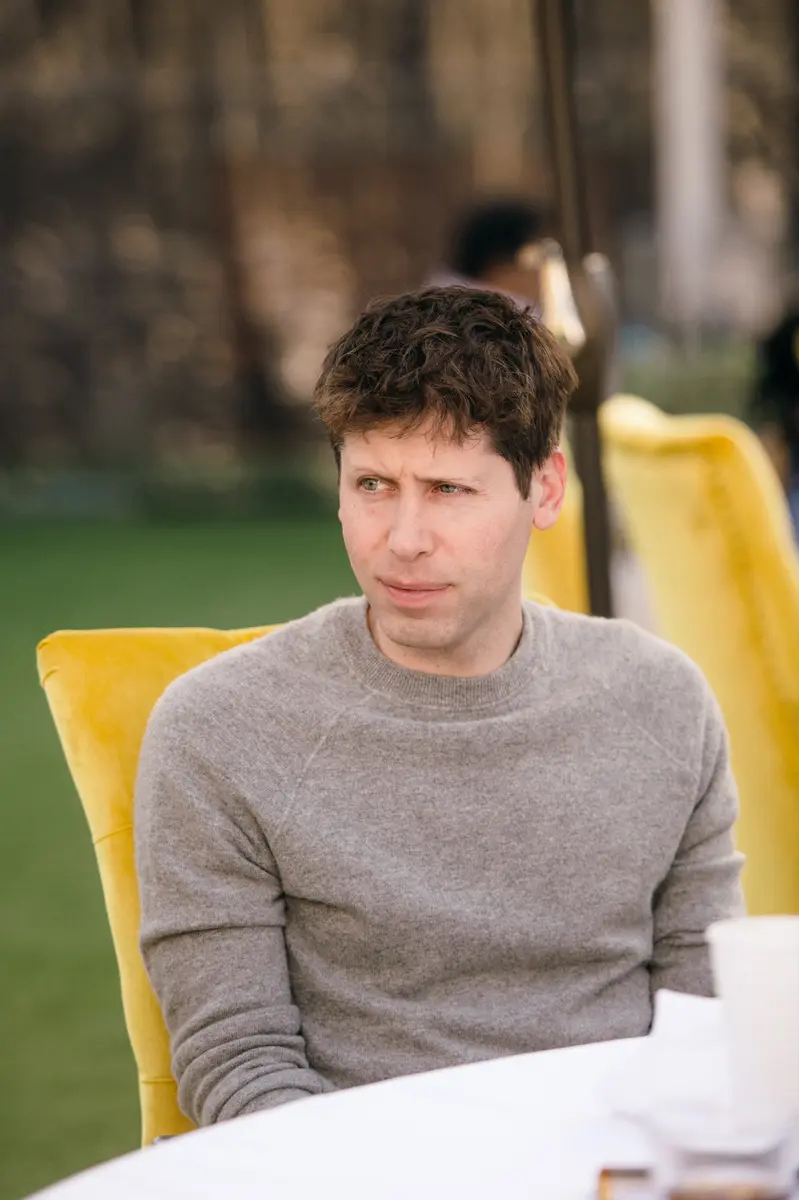
Sam Altman (Samuel Harris Altman, born 1985) is the American entrepreneur and investor who has led OpenAI, the company behind ChatGPT, since 2019. Before that he founded the location-sharing app Loopt in Y Combinator's first batch of start-ups and, from 2014 to 2019, was president of Y Combinator itself, the Silicon Valley programme that funds young companies. Since ChatGPT's launch at the end of 2022 he has been the best-known public face of the AI boom: he has testified to the US Senate, met heads of government on several continents and briefed the UN Security Council. He is also one of its most debated figures. In November 2023 OpenAI's own board removed him for not being 'consistently candid' with it, and then, after almost the whole staff threatened to leave, brought him back within days.
He was born in Chicago on 22 April 1985 and grew up in the suburbs of St. Louis. When he was eight his parents bought him a Macintosh LC II, which he later called 'a literal dividing line' in his life: he taught himself to program and spent nights online in the attic of the family home. At John Burroughs School, a private school, he came out as gay as a teenager and spoke to a school assembly in support of gay students. He studied computer science at Stanford, played a lot of poker, and left after two years. In 2005, at nineteen, he joined the first batch of start-ups funded by Y Combinator with Loopt, a phone app that showed users where their friends were. Loopt raised money from Sequoia, signed deals with mobile carriers and was shown on stage at Apple's developer conference in 2008, but it never won many users. In March 2012 the banking company Green Dot bought it for about 43 million dollars.
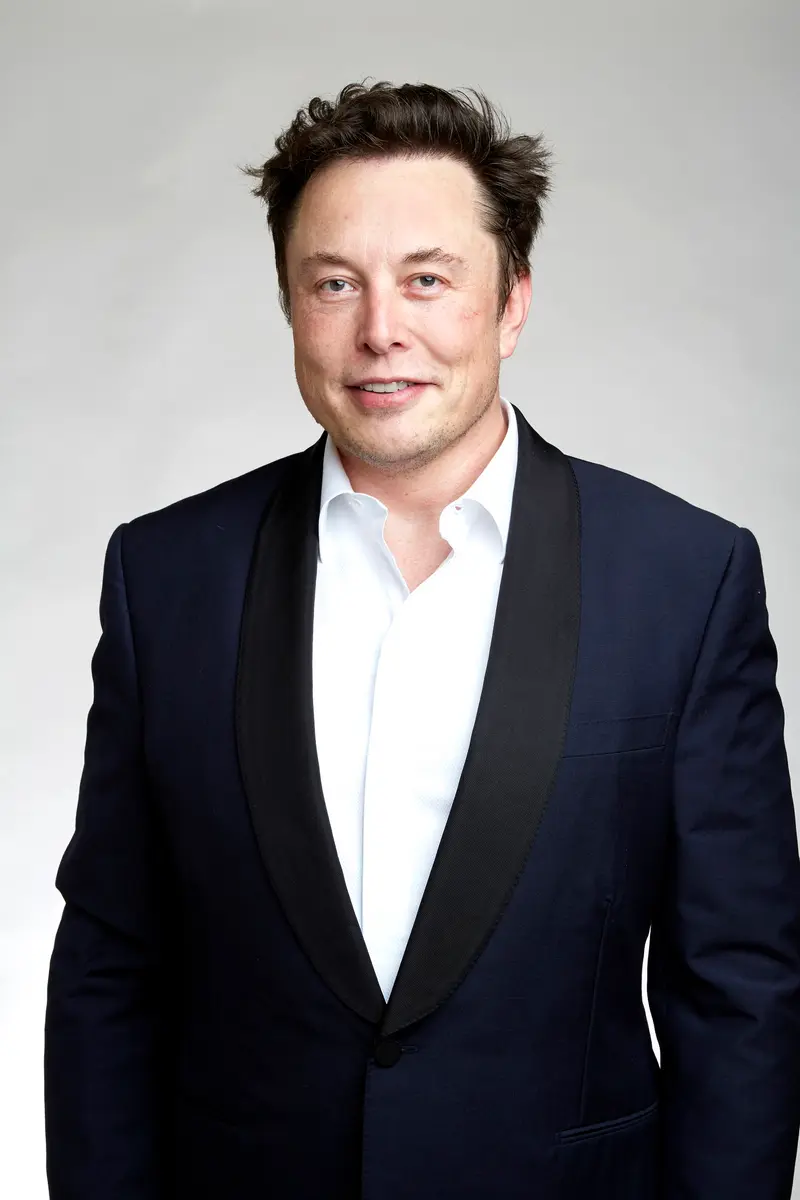
Paul Graham, Y Combinator's co-founder, had long called Altman the founder he quoted most on 'strategy or ambition', and in February 2014 he made him president. Altman grew the programme to batches of more than 200 companies, opened a free online Startup School and a nonprofit research lab, and invested on his own account in the fusion company Helion and the nuclear-fission company Oklo, which he chaired from 2015. In 2015 he wrote that superhuman machine intelligence was 'probably the greatest threat to the continued existence of humanity'. That May he proposed to Elon Musk a nonprofit AI lab to rival Google, and in December 2015 the two became co-chairs of the newly announced OpenAI. In March 2019 he handed his duties at Y Combinator to other partners and became chief executive of OpenAI's new 'capped-profit' company, which soon took billions of dollars from Microsoft.
After ChatGPT he travelled widely and asked governments for rules: in May 2023 he told a Senate subcommittee that a new agency should license the most capable AI systems. Two years later, asked by another committee about an EU-style process of prior approval, he said it 'would be disastrous'. In 2019 he had also co-founded Tools for Humanity, whose Worldcoin project (later named World) scans people's irises with a silver 'Orb' to give them a proof of being human online; data regulators in Spain and Germany acted against it. His removal in November 2023 ended with a new board, and a review by the law firm WilmerHale found 'a breakdown in trust' between him and the old board but said his conduct 'did not mandate removal'. He later called the affair 'a big failure of governance by well-meaning people, myself included'. In January 2025 he stood beside President Trump to announce Stargate, a plan to spend up to 500 billion dollars on data centres for OpenAI, and in October 2025 OpenAI finished turning its business into a public benefit corporation still controlled by its nonprofit.
His life reads as digital from the start: he had his own computer at eight, came of age with the Internet boom, calls himself 'a child of the Internet revolution', and has spent his whole career in software, from a phone app to one of the most widely used AI services in the world. His story raises the questions of the AI age: whether a few companies should build such powerful systems, how they should be governed and paid for, and whether their leaders can be trusted with the power that comes with them. Those questions followed him in 2026. A man threw a firebomb at his house in April; a jury in May found Musk's lawsuit against him and OpenAI brought too late; and in September he told the UN Security Council that the moment 'calls for extreme care'.
What happened
- 1985
Samuel Harris Altman is born in Chicago. As a young boy he moves with his family to the suburbs of St. Louis.
Chicago, Illinois: Altman was born here on 22 April 1985- 1993
When he is eight his parents buy him a Macintosh LC II, 'a literal dividing line' in his life. In the attic of the family's brick house he stays up at night teaching himself to program and exploring the early Internet.
John Burroughs School, Ladue, in suburban St. Louis: the private school he attended while growing up in the St. Louis suburbs, where he got his first computer at eight - 2003
After John Burroughs School, where as a teenager he came out as gay and spoke to a school assembly in support of gay students, he enters Stanford to study computer science.
Stanford University, California: he studied computer science here from about 2003 and left after two years to run Loopt - 2005
At nineteen he leaves Stanford after two years and joins the first batch of start-ups funded by Paul Graham's new Y Combinator with Loopt, a phone app that lets friends share their locations.
- 2008
At Apple's developer conference in San Francisco, Loopt is shown in Steve Jobs's keynote as one of the first apps for the iPhone's coming App Store.
- 2012
Green Dot, a prepaid-card and banking company, agrees to buy Loopt for 40 million dollars in cash plus up to 3.4 million more; Altman joins Green Dot as an executive vice-president. The same year he starts a venture fund, Hydrazine Capital, with his brother.
- 2014
Paul Graham announces that Altman, 'one of the smartest people I know', will become president of Y Combinator from the next batch.
He announces a personal investment in reddit, whose founders had been in YC's first batch with him.
- 2015
In a blog post he calls the development of superhuman machine intelligence 'probably the greatest threat to the continued existence of humanity'.
He writes to Elon Musk that it would be good for someone other than Google to build advanced AI first, and proposes a nonprofit lab (the founding itself is told in event-openai-is-founded).
He launches YC Research, a nonprofit lab inside Y Combinator, pledging 10 million dollars of his own money.
OpenAI is announced as a nonprofit research company with Altman and Musk as co-chairs. The same year he becomes chairman of Oklo, a start-up designing small nuclear-fission plants.
- 2017
At the GLAAD Gala in San Francisco, Nancy Pelosi presents him with the Ric Weiland Award for LGBTQ inclusion in the tech industry.
- 2019
Y Combinator announces that he is becoming its chairman and handing his day-to-day duties to other partners, to spend more time on OpenAI. YC has by then funded about 1,900 companies.
335 Pioneer Way, Mountain View: Y Combinator's headquarters while he was its president, 2014 to 2019OpenAI creates OpenAI LP, a 'capped-profit' company under the nonprofit's board, with Altman as its chief executive.
- 2021
In the essay 'Moore's Law for Everything' he predicts that AI will shift wealth from workers to owners of capital and proposes an 'American Equity Fund' that would tax large companies and land and pay a share to every adult.
With Churchill Capital he co-founds AltC Acquisition Corp., a listed shell company of which he is chief executive; it will later take Oklo public.
He invests more in the fusion company Helion, which he first backed in 2014, as Helion announces a 500 million dollar fundraise.
- 2022
OpenAI releases ChatGPT as a free research preview; within months Altman is the best-known face of AI (the launch is told in period-ai-boom).
- 2023
He is among the AI chief executives received by Vice President Kamala Harris at the White House; President Biden joins the meeting.
- 10:00 a.m.
He testifies to the Senate Judiciary subcommittee on privacy and technology, calling AI a possible 'printing press moment' and proposing 'a new agency that licenses any effort above a certain scale of capabilities': 'if this technology goes wrong, it can go quite wrong'.
Dirksen Senate Office Building, Washington: he testified in Room 226 on 16 May 2023 On a tour of capitals in the spring of 2023 he meets Prime Minister Rishi Sunak in Downing Street with Demis Hassabis and Dario Amodei.
Worldcoin, the project of Tools for Humanity, which he co-founded in 2019 and chairs, goes live: people who let a silver 'Orb' scan their irises get a World ID, a private proof that they are a unique human, and tokens.
OpenAI's nonprofit board removes him as chief executive, saying he 'was not consistently candid in his communications with the board'. He learns of it on a video call in a hotel room in Las Vegas.
Microsoft's chief executive Satya Nadella announces that Altman and Greg Brockman will join Microsoft to lead a new AI research team, as most of OpenAI's staff threaten to follow them.
He returns as OpenAI's chief executive under a new initial board chaired by Bret Taylor: 'I am returning to OpenAI as CEO.'
- 2024
Spain's data-protection agency orders Tools for Humanity to stop collecting iris scans in Spain; in December the Bavarian authority finds breaches of European data law and orders stored iris codes deleted.
A review by the law firm WilmerHale finds 'a breakdown in trust' between him and the old board, but that his conduct 'did not mandate removal'. The board expresses 'full confidence' in him and he rejoins it.
Oklo, which he chairs, begins trading on the New York Stock Exchange after merging with his AltC.
In the essay 'The Intelligence Age' he writes that superintelligence may arrive 'in a few thousand days'.
- 2025
In 'Reflections' he calls his firing 'a big failure of governance by well-meaning people, myself included', and says OpenAI is turning its aim to superintelligence.
At the White House he joins President Trump, Masayoshi Son and Larry Ellison to announce Stargate, a company meant to invest up to 500 billion dollars in AI data centres for OpenAI in the United States.
He speaks at TED2025 in Vancouver about ChatGPT, AI agents and superintelligence.
He resigns as chairman and director of Oklo.
- 10:02 a.m.
Before the Senate Commerce Committee he tells of his St. Louis childhood ('I am a child of the Internet revolution') and calls an EU-style prior-approval regime for AI 'disastrous'.
He and Jony Ive, Apple's former design chief, announce that Ive's company io is joining OpenAI to build new AI devices.
OpenAI completes its restructuring: the nonprofit, renamed the OpenAI Foundation, controls a public benefit corporation, OpenAI Group PBC, of which he remains chief executive.
- 2026
At the India AI Impact Summit in New Delhi he meets Prime Minister Narendra Modi.
Before dawn a man throws a Molotov cocktail at his house; it bounces off and no one is hurt. That day he posts a photo of his family, saying 'the fear and anxiety about AI is justified' and that he is 'not proud of handling myself badly' with the old board. On 13 April the FBI says a Texas man faces charges.
In Oakland the jury in Musk v. Altman finds that Musk brought his claims too late, and the court dismisses them.
- 3:00 p.m.
With Dario Amodei he briefs the UN Security Council in New York on the risks of AI: 'we could lose control of the future to AI', he warns, and 'this moment calls for extreme care'.