The Berlin Wall falls
“On the night of 9 November 1989 a botched announcement and the crowds it sent to the crossings opened the Berlin Wall after 28 years: the clearest sign that the Cold War was ending.”
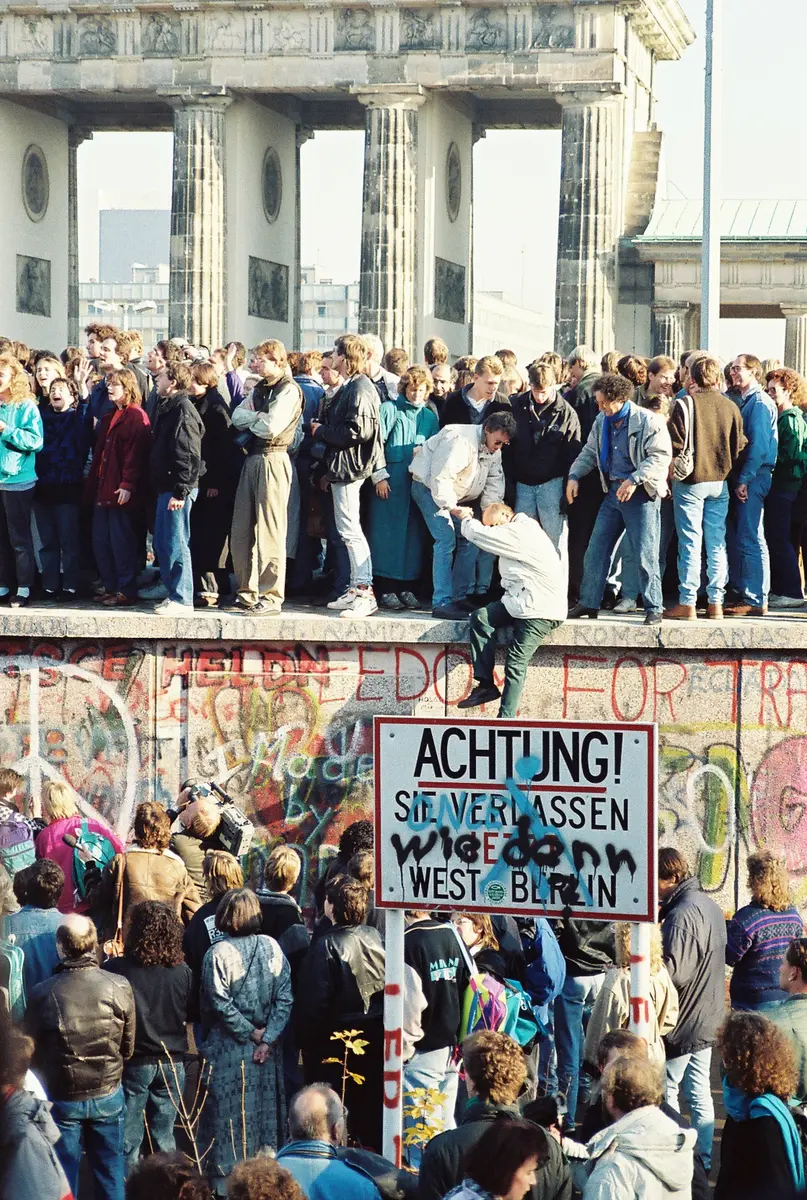
On the night of 9 November 1989 the Berlin Wall, which had shut East Berliners in since August 1961, was opened, not by a decision of East Germany's rulers but by a muddle and a crowd. At the end of a press conference broadcast live, the ruling party's spokesman, Günter Schabowski, read out new rules that let East Germans travel abroad, West Berlin included. Asked when they took effect, he leafed through his papers and said that, as far as he knew, it was 'immediately, without delay'. West German radio and television spread the news, and thousands of East Berliners went to the crossings. At Bornholmer Straße, at about half past eleven, the officer in charge stopped checking passports and let the crowd through; by midnight every crossing in the city was open, and soon people from both sides were dancing on top of the Wall at the Brandenburg Gate.
The Wall fell because East Germany could no longer hold on to its people. Mikhail Gorbachev had made it clear that Soviet tanks would no longer rescue the communist governments of Eastern Europe, and the East German economy was close to collapse. In the night of 10 to 11 September 1989 Hungary opened its border with Austria to East Germans, and tens of thousands left that way or through the West German embassies in Prague and Warsaw. Those who stayed took to the streets: on 9 October 70,000 people marched through Leipzig and the security forces, ready to stop them, did nothing; Erich Honecker was pushed out on 18 October; on 4 November hundreds of thousands filled East Berlin's Alexanderplatz. The new leaders drafted easier travel rules to let off the pressure, but Schabowski, who was handed the text only at half past five that afternoon, announced them as if they applied at once.
No order came to stop the crowds by force, and Moscow let it happen: the Soviet foreign minister, Eduard Shevardnadze, called it a matter for the East Germans alone, and the 350,000 Soviet soldiers in the country stayed in their barracks. On the weekend that followed, more than a million East Germans a day crossed into West Berlin and queued at the banks for 100 marks of 'welcome money', and new gaps were cut through the Wall, at Potsdamer Platz on 12 November and at the Brandenburg Gate, opened by the West German chancellor Helmut Kohl and the East German prime minister Hans Modrow, on 22 December. The communist governments of Eastern Europe fell one after another, and when George Bush and Gorbachev met at Malta in December, they 'buried the Cold War at the bottom of the Mediterranean', as one of Gorbachev's aides put it. On 13 June 1990 the official demolition of the Wall began on Bernauer Straße, and on 3 October 1990, less than a year after the night at Bornholmer Straße, East Germany joined the Federal Republic and Germany was one country again.
The Wall had stood for 28 years: a barrier of concrete, fences and watchtowers about 155 kilometres long around West Berlin, at which at least 140 people died. Its opening without a shot became the picture of the end of the Cold War and of a revolution made by ordinary people rather than by armies or summits. In 1987 Ronald Reagan had stood in front of it and called on Gorbachev to 'tear down this wall'; in the end it was East Berliners who walked through it, and souvenir hunters who chipped it away with hammers and chisels. Little of it is left: a stretch with its death strip at the Berlin Wall Memorial on Bernauer Straße, and the East Side Gallery, the stretch that 118 artists from 21 countries painted in 1990.
What happened
- 1989
In the night Hungary opens its border with Austria to East Germans, without asking Moscow; tens of thousands drive west through Austria in the weeks that follow.
In Prague the West German foreign minister, Hans-Dietrich Genscher, tells the thousands of East Germans sheltering in the West German embassy that they may leave; sealed trains carry them west across East Germany.
Lobkowicz Palace, Prague, the West German embassy: thousands of East Germans sheltered here until they were let go on 30 September 1989East Germany celebrates its 40th anniversary with Gorbachev as its guest; that evening the police break up protests in East Berlin with blows and mass arrests.
In Leipzig 70,000 people march peacefully for reform; the security forces, trained to break up the march, do not move.
St Nicholas Church, Leipzig: the Monday demonstrations set off from the prayers for peace held here; 70,000 marched on 9 October 1989Erich Honecker is forced out and Egon Krenz becomes party leader; the demonstrations keep growing.
Between 250,000 and 500,000 people rally on East Berlin's Alexanderplatz for free speech, a free press and free assembly; Günter Schabowski, one of the speakers, is booed.
Alexanderplatz, East Berlin: between 250,000 and 500,000 people rallied here for free speech on 4 November 1989- 6:53 p.m.
Near the end of a press conference broadcast live, Schabowski reads out new rules that let East Germans travel abroad, through West Berlin too; asked when they take effect, he answers: 'immediately, without delay'.
The East German International Press Centre, then Mohrenstraße, today Anton-Wilhelm-Amo-Straße 36: Schabowski's press conference of 9 November 1989 - 7:05 p.m.
The AP news agency flashes 'GDR opens border'; West German television leads its evening news with it, and East Berliners begin gathering at the crossings, where the guards have no orders.
- 11:30 p.m.
At Bornholmer Straße, with thousands pushing at the gate, the officer in charge, Lieutenant-Colonel Harald Jäger, stops all checks and opens the barrier; by midnight every crossing in the city is open.
Bösebrücke, Bornholmer Straße crossing: the first gate in the Wall to open, at about 11:30 p.m. on 9 November 1989 Moscow calls the events a matter for East Germany alone, and the 350,000 Soviet soldiers in the country stay in their barracks.
- 1:00 a.m.
Thousands climb onto the Wall at the Brandenburg Gate and dance on it; the first 'wall peckers' start hacking at it with hammers and chisels, and the Kurfürstendamm parties until morning.
Brandenburg Gate: Berliners danced on the Wall here from the night of 9–10 November; it opened as a crossing on 22 December 1989 - 12:45 p.m.
East Germans on their first visit to the West queue at West Berlin's banks for 100 marks of 'welcome money'.
On the Saturday more than a million East Germans pour into West Berlin through the crossings, Checkpoint Charlie among them, and new gaps open in the Wall at Eberswalder Straße and Schlesische Straße.
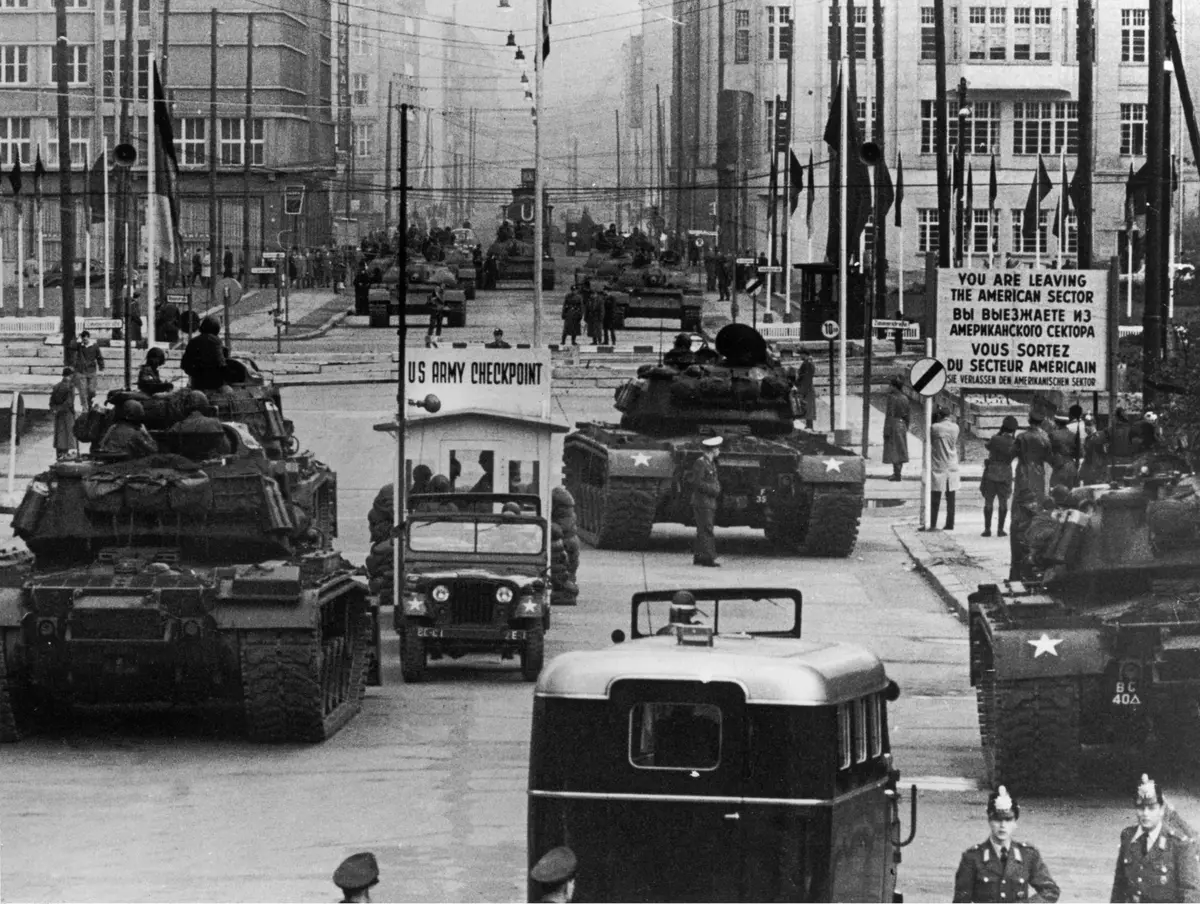
Checkpoint Charlie, Friedrichstraße: the Allied crossing, through which East Berliners drove into the West in the days after the openingA crossing opens at Potsdamer Platz, once the heart of Berlin's traffic, and East Germany's defence minister announces on television that the order to shoot is abolished.
Potsdamer Platz: a new crossing cut through the Wall here opened on 12 November 1989Bush and Gorbachev meet at Malta, with Germany's future as the main topic; one of Gorbachev's aides later says they buried the Cold War at the bottom of the Mediterranean.
Pieces of the Wall, chipped off by souvenir hunters since November, become best-selling Christmas presents around the world.
In the night East German border troops lift out sections of the Wall beside the Brandenburg Gate to build a crossing for people on foot.
Brandenburg Gate: Berliners danced on the Wall here from the night of 9–10 November; it opened as a crossing on 22 December 1989Helmut Kohl and Hans Modrow open the Brandenburg Gate crossing in the rain; two days later West Germans may visit the East without a visa.
Brandenburg Gate: Berliners danced on the Wall here from the night of 9–10 November; it opened as a crossing on 22 December 1989- 1990
The official demolition of the Wall begins on Bernauer Straße; the border command for central Berlin orders every border installation in the inner city removed by the end of the year.
Berlin Wall Memorial, Bernauer Straße: the official demolition of the Wall began on this street on 13 June 1990; a stretch with its death strip is kept here