Cold War
“Forty years of American–Soviet rivalry held short of war by the bomb, from Truman's pledge in 1947 to the Soviet flag coming down on Christmas Day 1991.”
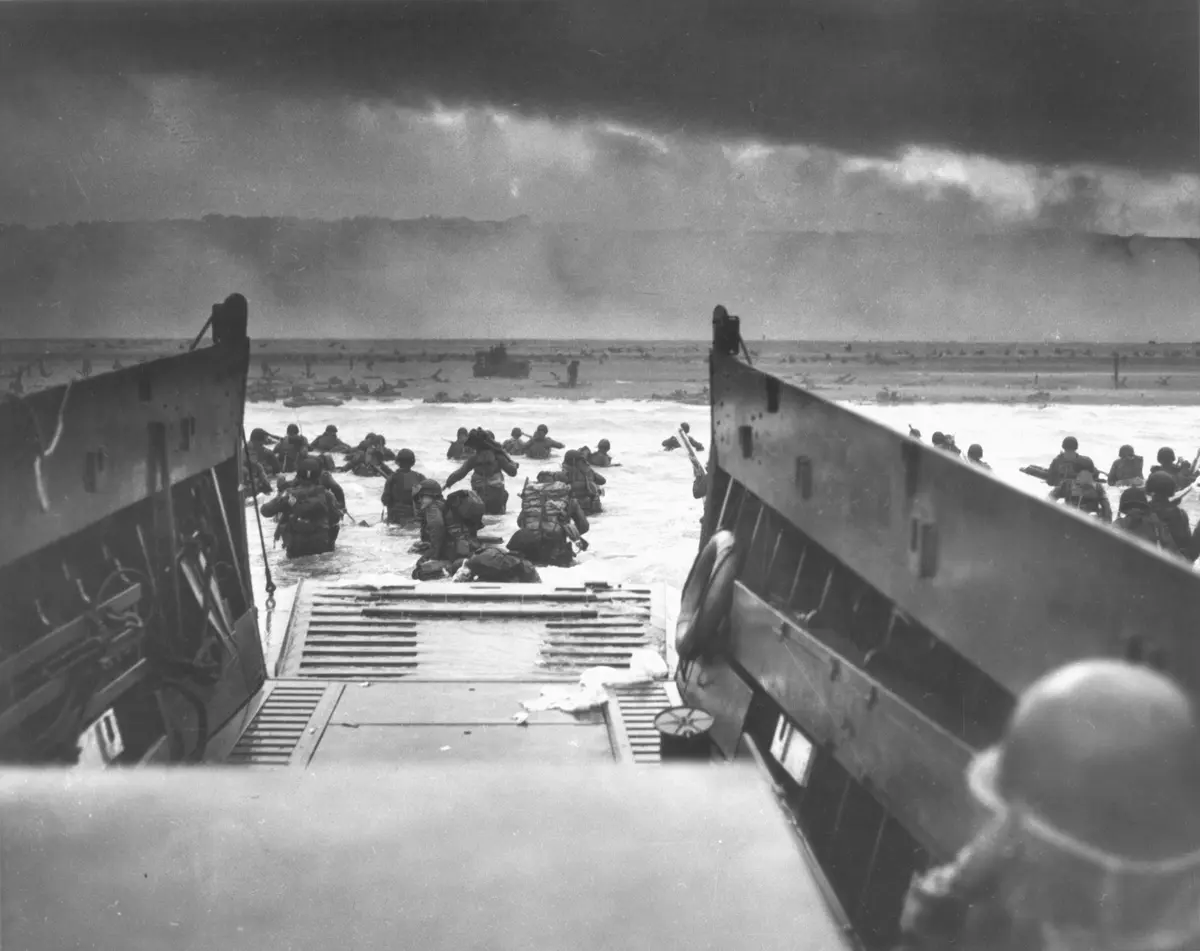
The Cold War was the forty-year confrontation between the United States and the Soviet Union, and between the capitalist and communist worlds they led, that followed their joint victory in 1945. It was 'cold' because the two never fought each other directly: both had nuclear weapons after 1949, and a war between them would have destroyed both. Instead they competed everywhere else, in alliances, arms, spies, propaganda, science and space, and fought through others in Korea, Vietnam, Afghanistan, Africa and Latin America.
It began as the wartime alliance broke over Europe. Stalin installed communist governments in the countries his army occupied; Churchill called the line across the continent an iron curtain. In March 1947 President Truman promised to support any country resisting communism, and in June the Marshall Plan offered American money to rebuild Western Europe. When the Soviets blockaded West Berlin in 1948 the Western allies supplied it by air for eleven months. NATO was founded in 1949, the Soviet Union tested its first atomic bomb that August, China went communist in October, and in June 1950 North Korea invaded the South: three years of war and some three million dead, ending where it began.
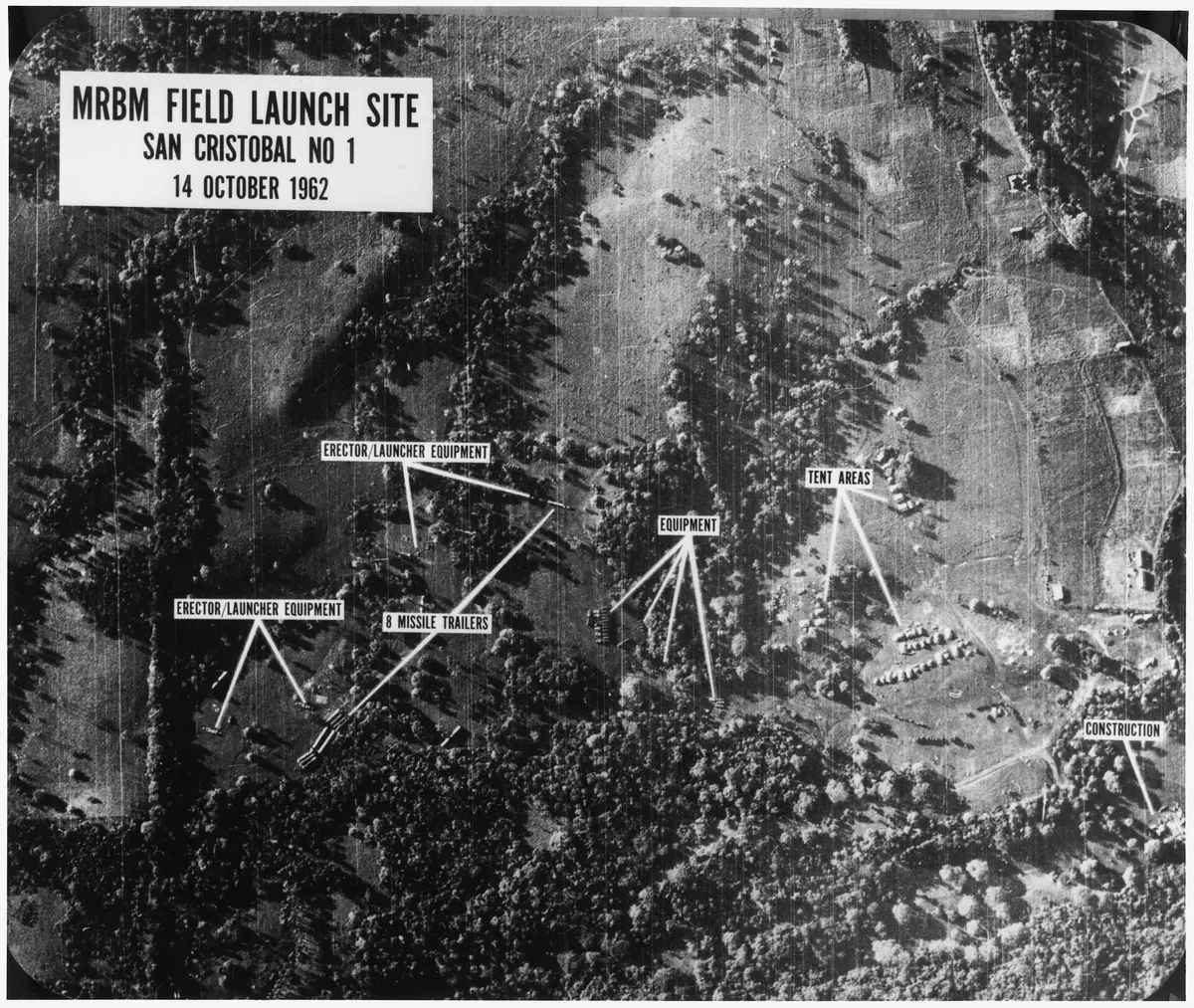
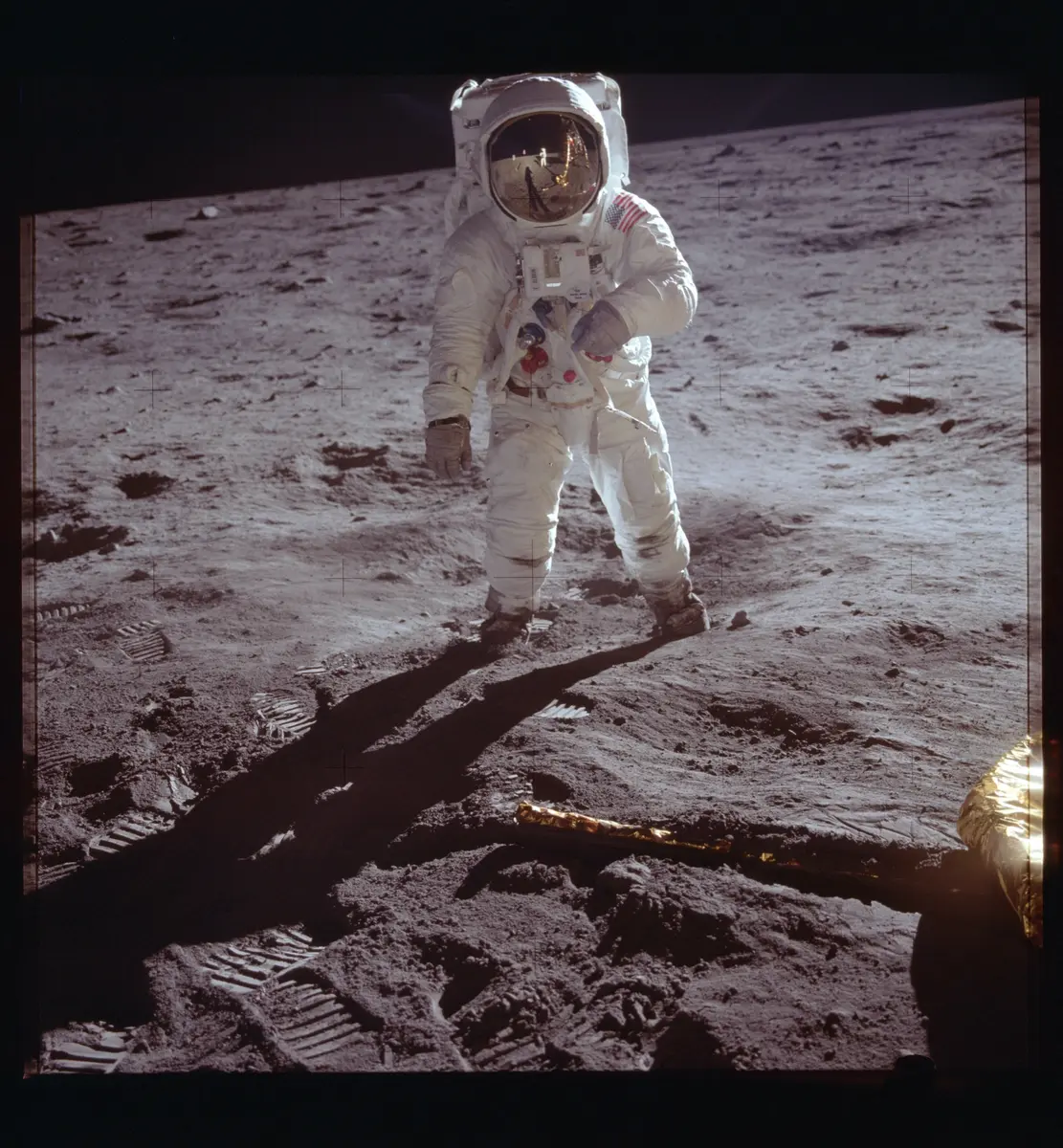
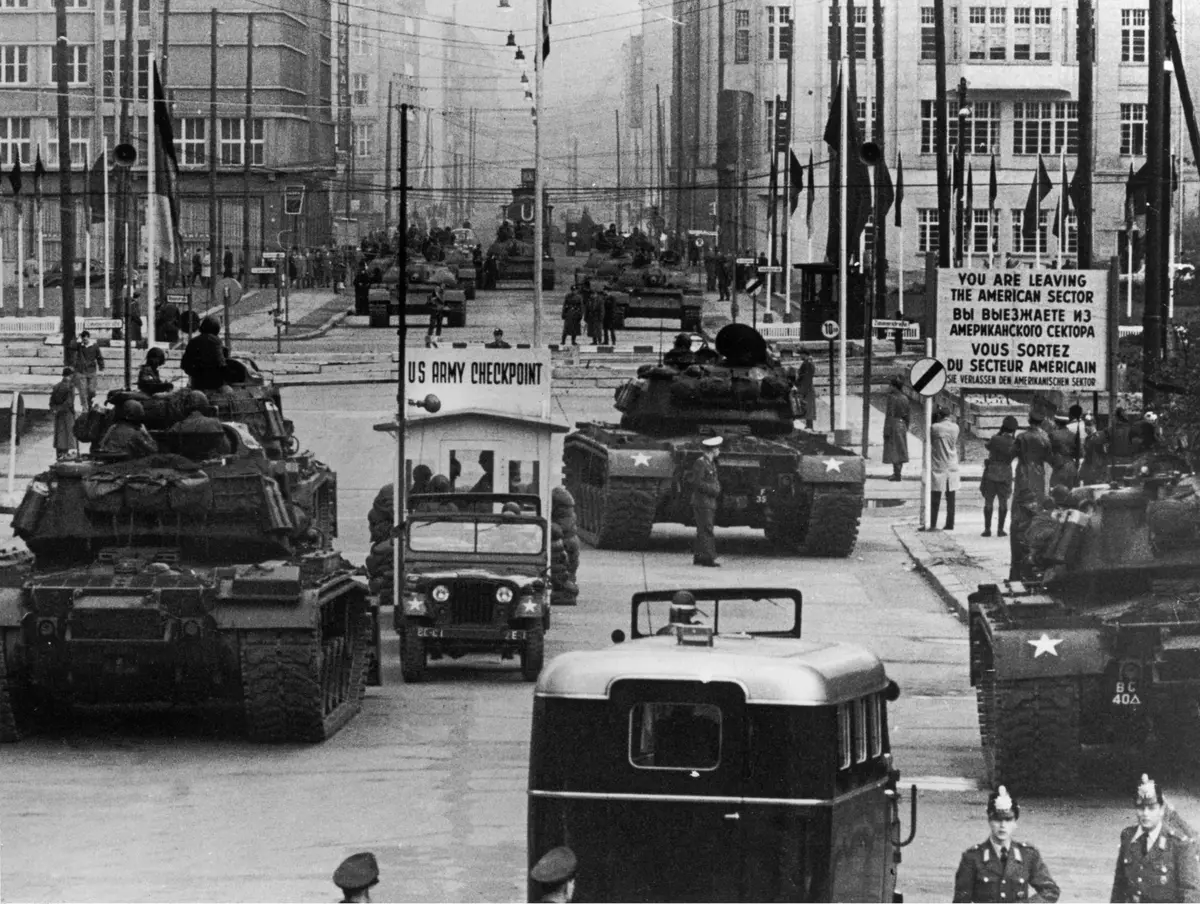
The 1950s and 1960s were the dangerous years. The two sides built thousands of hydrogen bombs and the missiles to deliver them; the Soviets launched Sputnik in 1957 and the first man into space in 1961, and the Americans answered with the Moon. East Germany walled off West Berlin in August 1961, and in October American and Soviet tanks faced each other at Checkpoint Charlie. In October 1962 the discovery of Soviet missiles in Cuba brought the world closer to nuclear war than it has ever been; Khrushchev withdrew them after thirteen days. The United States then sank itself into Vietnam, and the Soviet Union crushed the Prague Spring in 1968. A period of détente in the 1970s brought arms-control treaties and Nixon in Beijing, and ended when the Soviets invaded Afghanistan in December 1979.
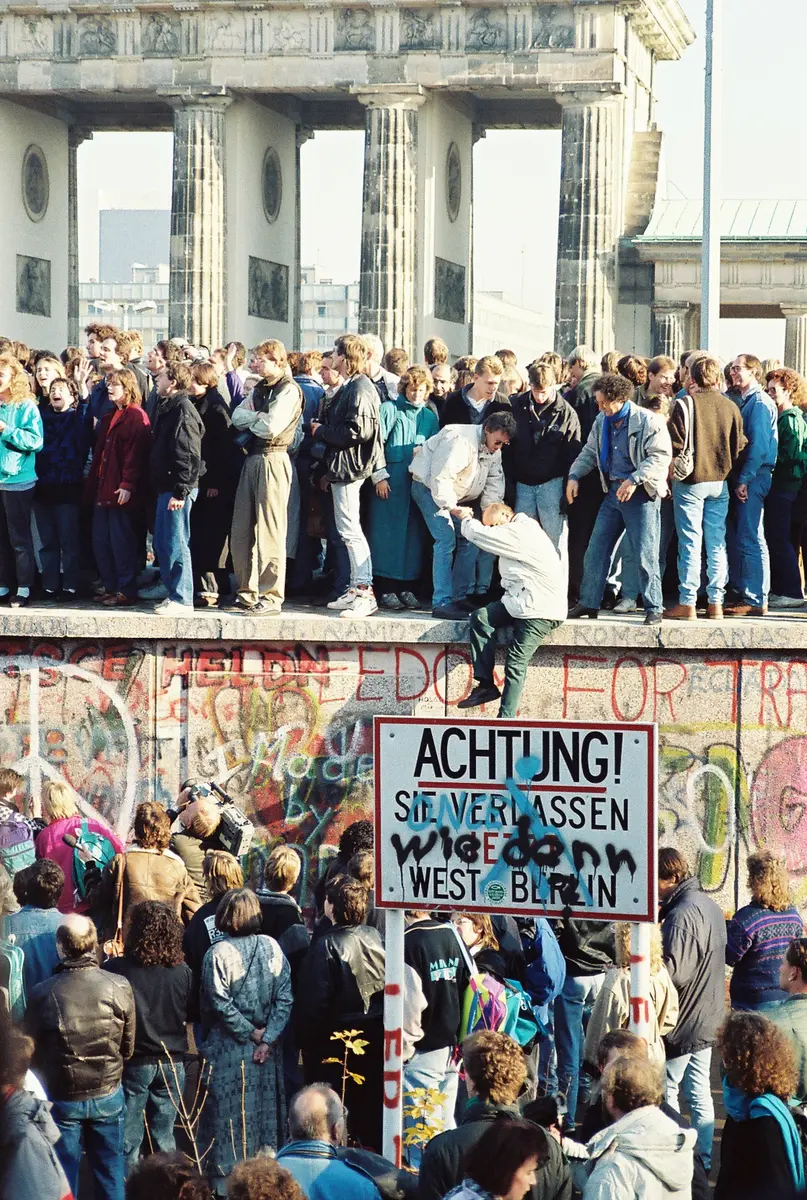
Reagan rearmed and called the Soviet Union an evil empire; then Mikhail Gorbachev, in power from 1985, set out to reform it and to end the arms race. The two men came close to abolishing nuclear weapons at Reykjavik in 1986 and signed the first treaty to scrap a whole class of them in 1987. Gorbachev let Eastern Europe go: in 1989 Poland voted out the communists, Hungary opened its border, and on November 9 the Berlin Wall fell. Germany reunited in 1990. On December 25, 1991, the Soviet flag came down over the Kremlin and the Soviet Union ceased to exist.
The Cold War shaped half a century: the division of Germany and Korea, the wars in Vietnam and Afghanistan, the space race, the nuclear arsenals that still exist, NATO and the European Union, decolonisation fought over by both sides, and a culture of spies and bomb shelters. It ended without the war everyone had prepared for, leaving the United States as the only superpower and Russia with a grievance that has not gone away.
What happened
- 1947
Truman asks Congress to support Greece and Turkey against communism: the Truman Doctrine, the usual start of the Cold War.
At Harvard, Secretary of State Marshall offers American money to rebuild Europe; the Soviet Union forbids its satellites to accept it.
- 1948
The Soviets blockade West Berlin; the Western allies fly in food and coal for eleven months until the blockade is lifted.
Tempelhof Airport, Berlin: the main field of the airlift of 1948 to 1949- 1949
Twelve countries sign the North Atlantic Treaty in Washington; in August the Soviet Union tests its first atomic bomb, and in October China becomes communist.
- 1950
North Korea invades the South; the United States and the United Nations fight for it, China joins the North, and three years of war end at the line where it started.
Panmunjom: the armistice of the Korean War was signed here in 1953, and the line still runs through it- 1955
The Soviet Union and its satellites form the Warsaw Pact, the answer to NATO and to West Germany's rearmament.
- 1957
Sputnik, the first satellite, goes up from a Soviet rocket that can reach America; the space race begins.
- 1961
East Germany seals the border around West Berlin overnight and builds the Wall; in October American and Soviet tanks face each other at Checkpoint Charlie.
Checkpoint Charlie, Berlin: American and Soviet tanks faced each other here in October 1961- 1962
A U-2 photographs Soviet missile sites in Cuba; after thirteen days of crisis Khrushchev agrees to remove them and Kennedy secretly promises to remove American missiles from Turkey.
Bay of Pigs, Cuba: the failed American-backed invasion of 1961, a year before the missile crisis- 1968
Warsaw Pact armies invade Czechoslovakia and end the Prague Spring.
- 1975
North Vietnamese tanks drive through the gates of the presidential palace in Saigon; America's longest war is lost.
- 1979
The Soviet Union sends its army into Afghanistan; détente is over, and the war lasts nine years.
- 1986
Reagan and Gorbachev meet at Reykjavik and come within a sentence of agreeing to abolish all nuclear weapons.
Höfði, Reykjavik: Reagan and Gorbachev's summit of October 1986- 1987
They sign the INF Treaty in Washington, the first to abolish a whole class of nuclear missiles.
- 1989
East Germany opens the Berlin Wall; within weeks every communist government in Eastern Europe has fallen or is falling.
Berlin Wall Memorial, Bernauer Strasse: the longest surviving stretch of the wall that divided the city from 1961 to 1989- 1991
Gorbachev resigns and the Soviet flag is lowered over the Kremlin for the last time; the Soviet Union is dissolved the next day.
The Kremlin, Moscow: the Soviet flag came down here on December 25, 1991