Majapahit
“Java's last Hindu-Buddhist empire, founded in 1293 out of the Mongol invasion and at its height under Hayam Wuruk and Gajah Mada, whose claimed sway over the islands modern Indonesia counts as its precedent.”
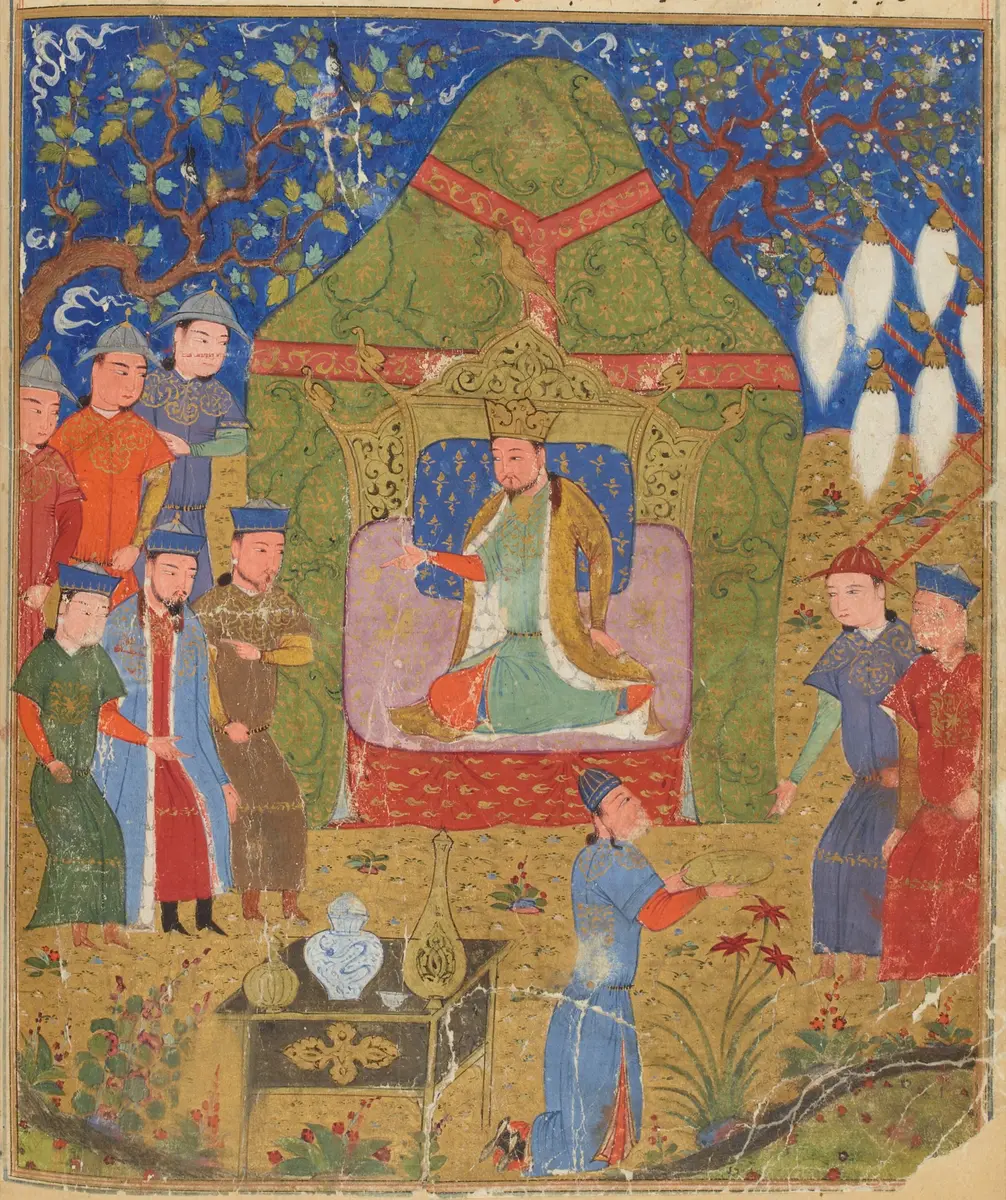
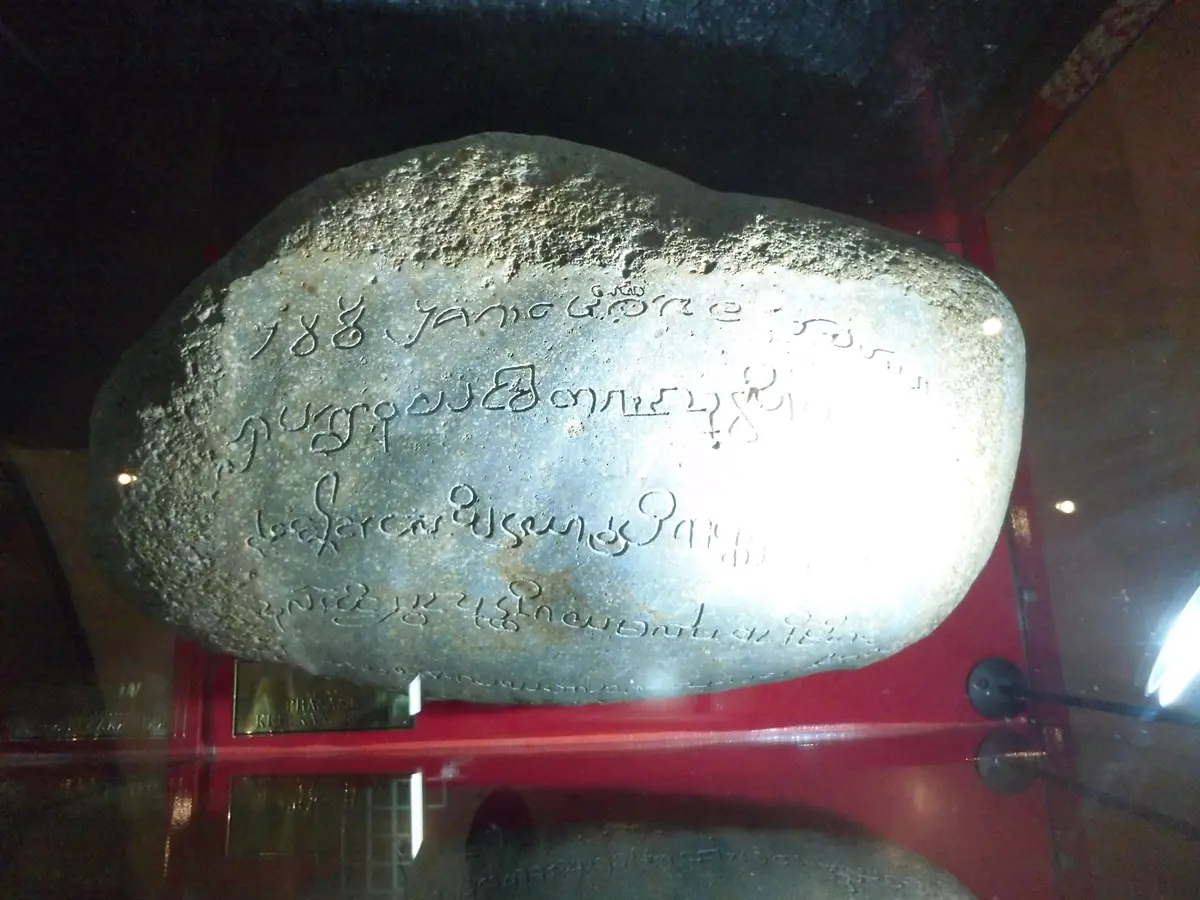
Majapahit was the last of Java's Hindu-Buddhist kingdoms and the one Indonesians remember as their first great state. It began in 1293, when a prince called Raden Wijaya turned a fleet that Kublai Khan had sent to punish Java into the instrument of his own rise: he joined the Mongols to destroy the usurper who had killed his father-in-law, the king of Singhasari, then drove them back to their ships and was crowned king in his new capital in the Brantas valley. The city, named Majapahit after the bitter maja fruit, lay at Trowulan near today's Mojokerto: a spread of brick walls, gates, canals and bathing pools that the court poet Prapanca described in 1365, and the only city of Indonesia's classical age whose site can still be seen.
Its peak came in the fourteenth century under Queen Tribhuwana, her son Hayam Wuruk, who ruled from 1350 to 1389, and their prime minister Gajah Mada. Gajah Mada is said to have sworn not to enjoy 'palapa' until he had brought the Nusantara, the islands between, under Majapahit; he conquered Bali in 1343 and sent fleets to Sumatra, Borneo and the eastern islands. Prapanca's poem, the Desawarnana or Nagarakretagama, lists some ninety-eight tributaries from Sumatra to New Guinea. Historians still argue over what that meant: a real empire, or a ring of ports that sent tribute to a rich court as they also sent it to China, while Majapahit's direct rule reached only Java, Madura and Bali. Its wealth is not in doubt. Javanese rice, the pepper of Sumatra and the spices of the Moluccas passed through its ports, its great junks carried the trade of the eastern seas, and its kings exchanged envoys with China, Champa, Cambodia and Siam.
The decline began with the deaths of Gajah Mada in 1364 and Hayam Wuruk in 1389. A war between the western and eastern courts in 1404 to 1406 loosened the kingdom's grip on the outer islands and killed 170 men of a Chinese mission, for which the Ming emperor demanded 60,000 taels of gold. Trade shifted to Malacca and to the Muslim ports of Java's north coast. In 1478, the year of the chronogram 'sirna ilang kertaning bumi', the capital at Trowulan fell and the court withdrew to Daha, near Kediri; the Portuguese who reached Java in 1513 still found a Hindu king there. In 1527 the sultanate of Demak took Daha, and the last of Majapahit's priests, artisans and nobles crossed to Bali, where their religion lives on.
Its legacy is Indonesia itself. The nationalists of the twentieth century took Majapahit's claimed reach as the precedent for one state across the archipelago; the national motto, Bhinneka Tunggal Ika, 'unity in diversity', comes from the Sutasoma, a poem of Hayam Wuruk's court; the country's first satellite was named Palapa after Gajah Mada's oath, and the great university at Yogyakarta bears his name. At Trowulan the gates and pools stand among teak and sugar cane, the deified statues of its kings and queens are in the National Museum in Jakarta, and the terracotta faces of its townspeople sit in museums from Cleveland to Singapore.
What happened
- 1293
The year before, Jayakatwang of Kediri had rebelled against Kertanagara, the king of Singhasari who refused Kublai Khan tribute and maimed his envoy, and killed him; the king's son-in-law Raden Wijaya escaped to Madura, submitted to the usurper, and was given the forest of Tarik to clear, where he founded the settlement he named Majapahit after the bitter maja fruit. As the year opens, the Mongol fleet is at sea.
Candi Singosari, Malang: Kertanagara's memorial temple at the old capital of SinghasariThe Mongol fleet sent by Kublai Khan, 20,000 to 30,000 men by the History of Yuan, has landed at Tuban to punish a king already dead; Wijaya joins it against Jayakatwang, and the allies take the capital Daha after a day's battle.
Kediri (Daha): Jayakatwang's capital, taken in 1293, and the last seat of Majapahit's kings after 1478Wijaya turns on his allies: he ambushes the Mongol escort sent to collect his tribute, attacks their camp, and the fleet sails for China on May 31 with Jayakatwang's head and its generals in disgrace.
Tuban: the port where the Mongol fleet landed in 1293Wijaya is crowned at Majapahit as Kertarajasa Jayawardhana, on the 15th of Karttika 1215 Saka by the Pararaton's reckoning; the date is kept as the kingdom's birthday.
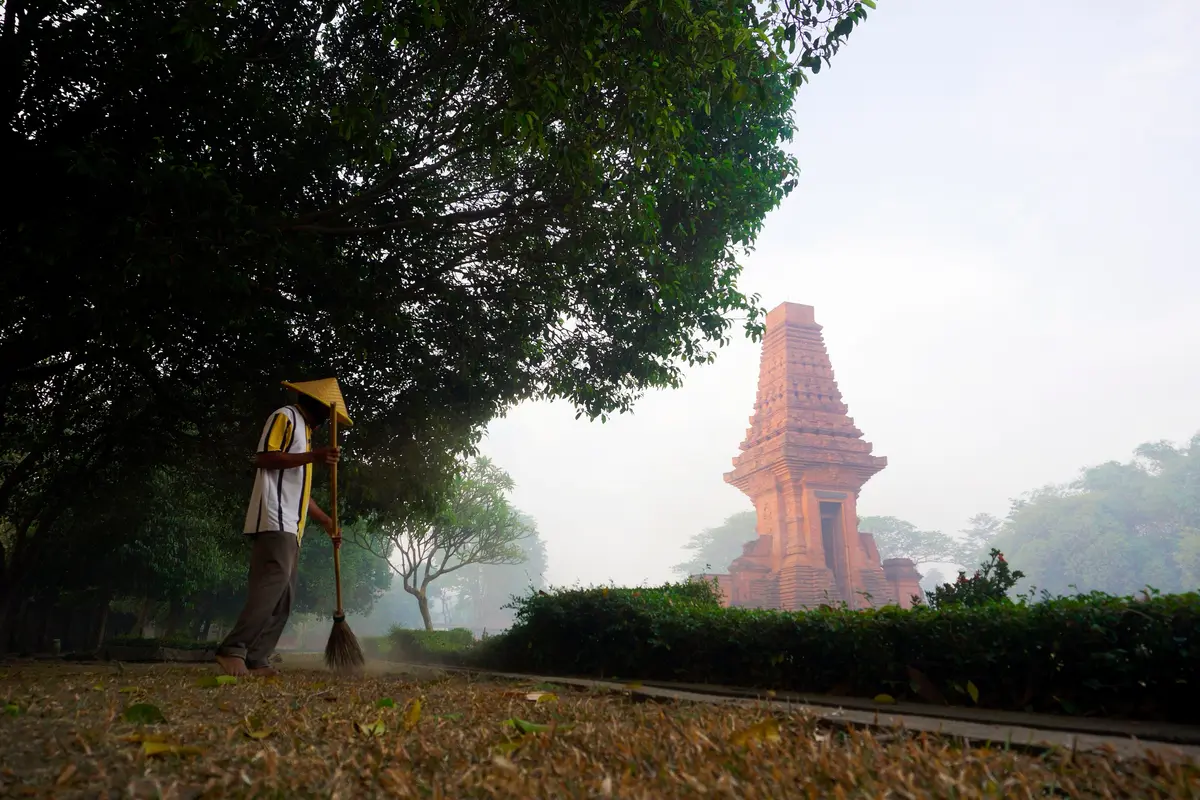
Bajang Ratu gate, Trowulan: the capital of Majapahit, founded in 1293 and lost in 1478- 1309
Kertarajasa dies and is buried at Simping near Blitar as the god Harihara; his son Jayanagara inherits a kingdom of rebellious captains, and in 1319 the revolt of Kuti drives him from the capital until a young guard officer, Gajah Mada, hides him and brings him back.
Candi Simping (Sumberjati), Blitar: the burial temple of Raden Wijaya, where his Harihara statue stood - 1328
Jayanagara is murdered by his physician Tanca during an operation; Gajah Mada kills the physician on the spot. The dead king's half-sister Tribhuwana Wijayatunggadewi takes the throne on behalf of her mother, the Buddhist nun Gayatri.
- 1331
After crushing the revolt of Sadeng in eastern Java, Gajah Mada is made prime minister, mapatih, and swears before the council that he will not enjoy 'palapa' until the islands of the Nusantara are Majapahit's; the ministers who laugh are removed.
- 1343
Gajah Mada's expedition conquers Bali, whose kings ruled from Bedahulu; the island will keep Majapahit's religion after Java has lost it.
Goa Gajah, Bedulu, Bali: the seat of the Balinese kingdom conquered in 1343 - 1350
Tribhuwana steps down on her mother's death and her son Hayam Wuruk, sixteen years old, becomes king as Rajasanagara, leaving the government to Gajah Mada at the height of his power.
- 1357
The king of Sunda brings his daughter to the market field of Bubat, north of the capital, to marry Hayam Wuruk; Gajah Mada demands that she be handed over as a token of submission, and the Sundanese party dies fighting on the field. The affair, told only in later chronicles, is remembered as the Sundanese grievance against Java to this day.
- 1364
Gajah Mada dies, in circumstances the sources leave dark; Hayam Wuruk divides his offices among four ministers rather than trust one man with them again.
- 1365
The court poet Prapanca finishes his Desawarnana, 'description of the districts', later called the Nagarakretagama: a eulogy of Hayam Wuruk's realm that describes the brick-walled capital, the king's progress through East Java and his visits to Penataran, and lists some ninety-eight dependencies from Sumatra to New Guinea.
Candi Penataran, Blitar: the state temple of Majapahit, main temple built 1323 to 1347 - 1389
Hayam Wuruk dies after thirty-nine years; his nephew and son-in-law Wikramawardhana succeeds, disputed by the king's son by a concubine, Bhre Wirabhumi, who holds the eastern court.
- 1407
Envoys of the 'Western king' Wikramawardhana come before the Ming emperor to admit that his troops killed 170 men of a Chinese mission caught in the war in which he destroyed the eastern court (1404–06); he is to pay 60,000 liang of gold. In December 1408 his envoys bring 10,000 and the emperor cancels the rest; two months earlier Zheng He has been sent to Java again.
- 1478
The year of the chronogram 'sirna ilang kertaning bumi', 1400 Saka: the capital at Trowulan falls to a rival branch of the dynasty under Girindrawardhana, the court withdraws to Daha near Kediri, and Demak on the north coast stops sending tribute.
Kediri (Daha): Jayakatwang's capital, taken in 1293, and the last seat of Majapahit's kings after 1478 - 1513
The Portuguese apothecary Tomé Pires, visiting Java from Malacca, finds the old Hindu kingdom still ruled from Daha by its king and the powerful Patih Udara, while the Muslim lord of Demak is the real power of the coast; his pilot Francisco Rodrigues draws the first European chart of Java.
- 1527
Demak's army takes Daha; the last Hindu kingdom of Java is gone, and its courtiers, priests and craftsmen cross to Bali, where its gods, scripts and dances live on.
The Great Mosque of Demak: the sultanate that took Daha in 1527 and ended Majapahit