Mongol Empire
“The steppe empire Genghis Khan founded in 1206, which his grandsons stretched from Korea to Hungary and which split into four khanates before the Ming drove the last khan from China in 1368.”
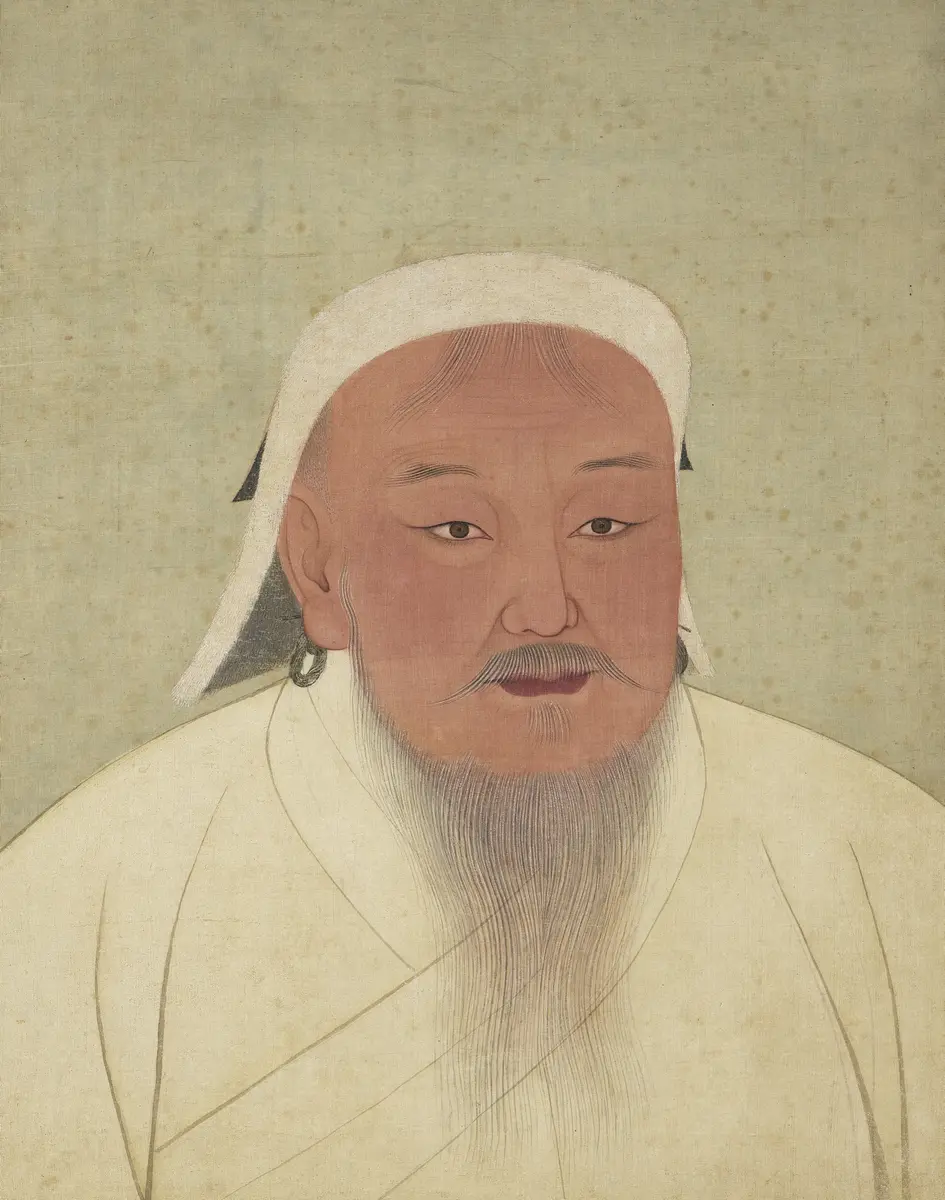
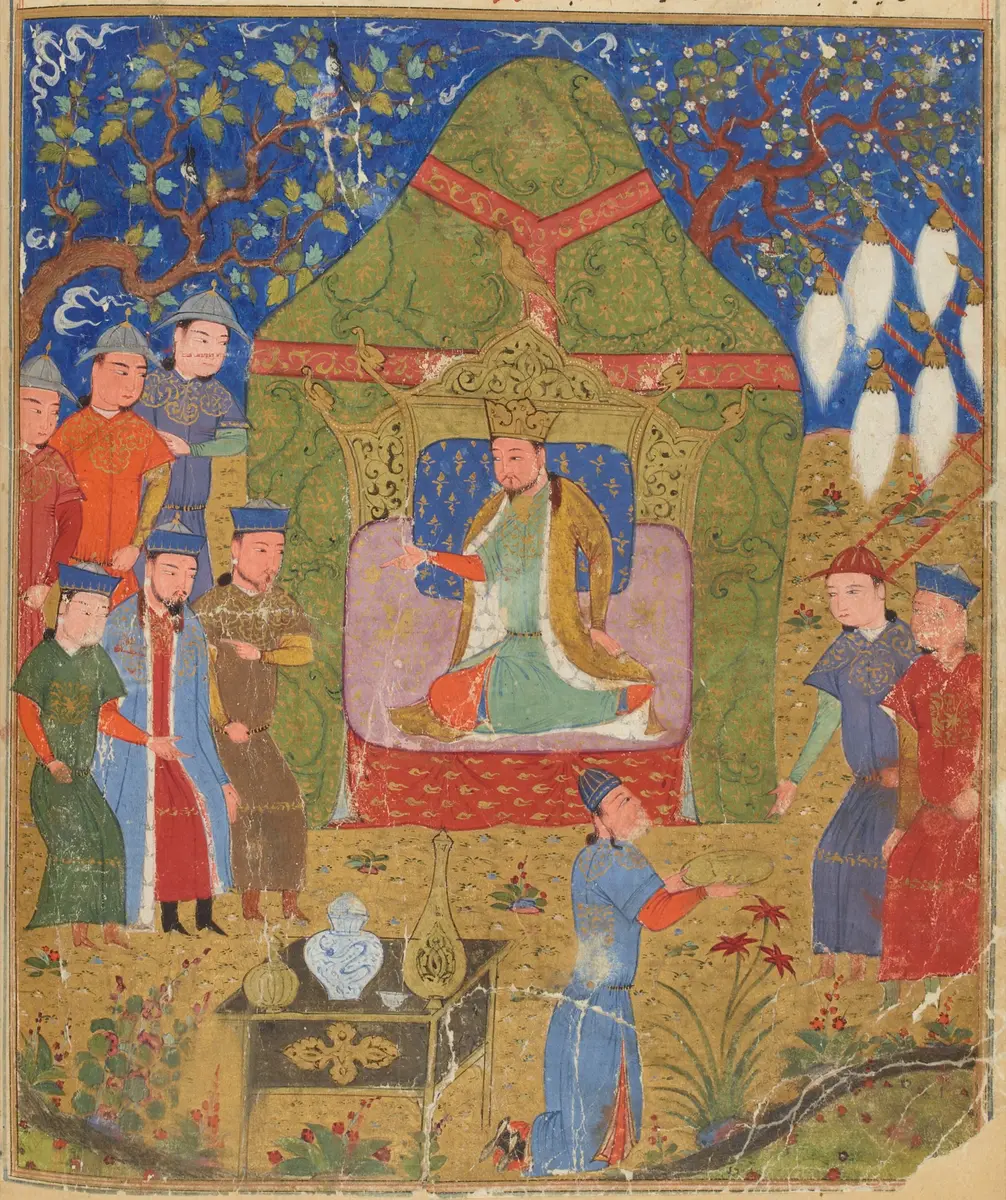
The Mongol Empire was the largest land empire the world has seen, built in two generations by the herding peoples of the Mongolian steppe. In 1206 an assembly of the tribes on the Onon River proclaimed a chief named Temüjin as Genghis Khan, and he turned the quarrelling clans into one rigidly disciplined army under his family. Mongol warfare rested on fast horsemen who shot from the saddle, on spies and a messenger service, and on terror: a city that surrendered was spared, a city that resisted was destroyed, and its engineers were taken to build siege machines for the next campaign. Genghis led his armies against the Tangut kingdom of Xi Xia and the Jin empire of northern China, whose capital at Beijing fell in 1215, and in 1219 against the Khwarazm empire of Central Asia, whose cities Bukhara, Samarkand and Urgench were sacked. When he died in 1227 the Mongols ruled from the Caspian Sea to the China Sea.
His sons and grandsons went further. Ögedei, elected great khan in 1229, finished the Jin in 1234, built a walled capital at Karakorum and sent his nephew Batu west: between 1237 and 1240 the Mongols burned the cities of Russia, and in April 1241, within two days, they destroyed a Polish and German army at Legnica and the Hungarian army at Mohi, before Ögedei's death called them home. Under Möngke, great khan from 1251, his brother Hülegü took Baghdad in 1258 and put the last Abbasid caliph to death, until the Mamluks of Egypt stopped the Mongols at Ain Jalut in 1260; another brother, Kublai, carried the war into the Song empire of southern China. At its height the empire covered some 23 million square kilometres, from the Pacific to the Danube and the Persian Gulf.
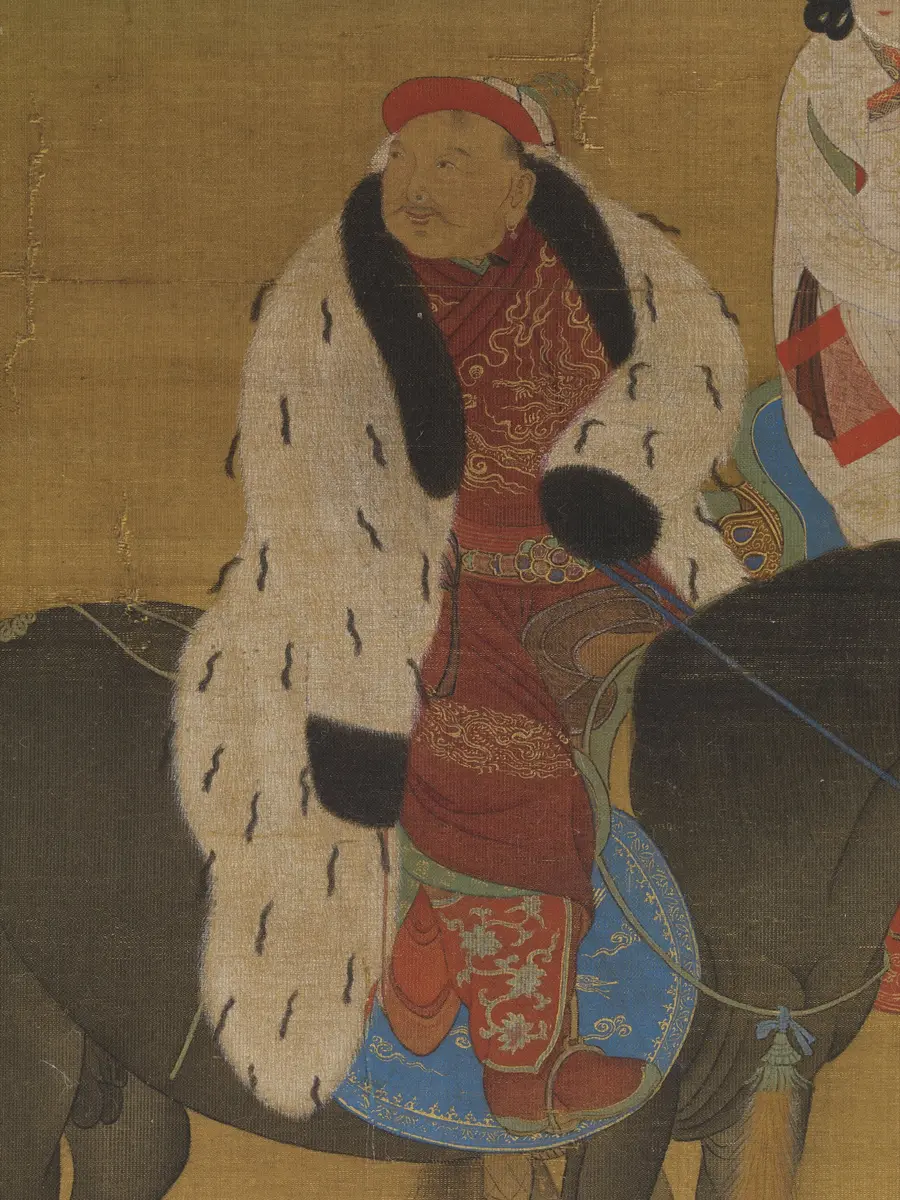
It was too big for one family. When Möngke died in 1259, Kublai and his brother Ariq Böke were each proclaimed great khan, and after four years of civil war the empire came apart into four states: the Golden Horde on the steppe north of the Black Sea and the Caspian, the Chagatai khanate in Central Asia, the Ilkhanate in Persia, and Kublai's own realm, which he named the Yuan dynasty in 1271. Kublai completed the conquest of China in 1279, the first conqueror from the steppe to rule all of it, but his fleets failed against Japan in 1274 and 1281 and against Java in 1293. After him the Yuan court was weakened by family feuds and boy emperors, the paper money lost its value, and rebellions spread through the Chinese countryside; in 1368 a rebel leader of peasant birth, Zhu Yuanzhang, founded the Ming dynasty and drove the last Yuan emperor out of Beijing and back to the steppe. The Ilkhanate had already fallen apart in the 1330s and 1340s; the Golden Horde held Russia until the fifteenth century.
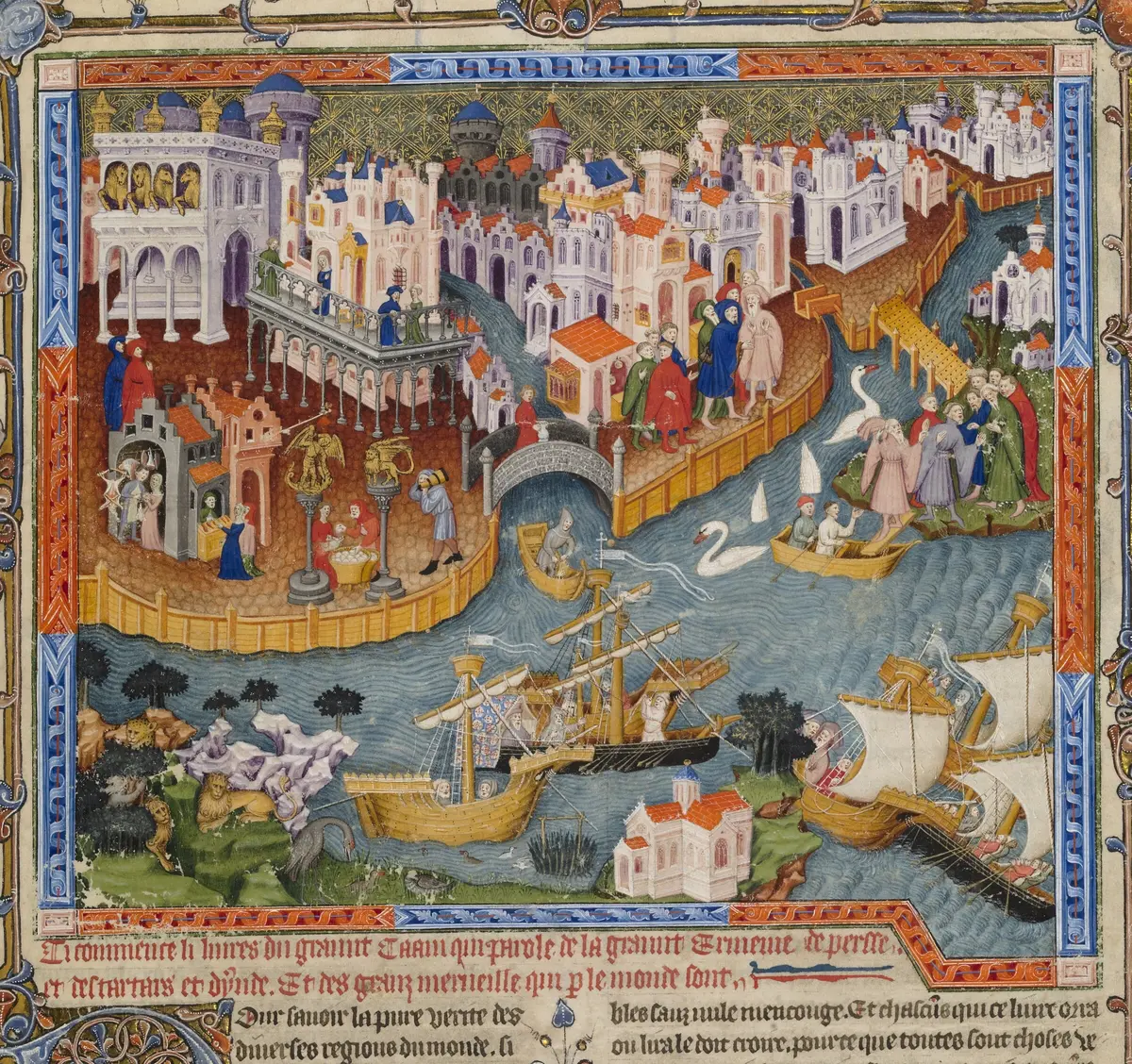
The conquests killed millions and ruined the irrigated oases of Central Asia for centuries, but the peace that followed, which historians call the Pax Mongolica, opened the roads of Eurasia. Envoys carrying the khan's tablet changed horses at relay stations across the continent, and merchants, missionaries and travellers such as William of Rubruck and Marco Polo went from Europe to the Mongol courts and came back to describe them. Goods, techniques and ideas moved along the same roads, and so, in the 1340s, did the plague that became the Black Death. Rashid al-Din's history of the world, written for the Ilkhans, and the Yuan court's paintings are among the empire's monuments; in Mongolia today Genghis Khan is honoured as the founding father of the nation.
What happened
- 1206
An assembly of the steppe tribes on the Onon River proclaims Temüjin, who has defeated the Kereit, the Naiman and his old friend Jamukha, as Genghis Khan, ruler of all the Mongols.
The upper Onon River: where the assembly of 1206 proclaimed Temüjin Genghis Khan - 1215
After a long blockade the Jin capital Zhongdu, today's Beijing, surrenders and is sacked; the Jin emperor has fled south to Kaifeng, and all of China north of the Yellow River is lost to the Mongols.
Khanbaliq (Dadu), now Beijing: the Jin capital Zhongdu taken in 1215, Kublai's capital from 1272, lost to the Ming in 1368 - 1220
The shah's governor at Otrar has massacred a Mongol trade caravan; Genghis answers with his whole army and takes and burns Bukhara, then Samarkand. Urgench falls in 1221, and Khwarazm's cities and canals are left in ruins.
Bukhara: taken and burned by Genghis Khan in 1220; the Kalyan minaret survived - 1227
Genghis Khan dies during the war against the Tangut kingdom of Xi Xia, which is destroyed; he is buried in secret, by tradition on or near the sacred mountain Burkhan Khaldun.
Burkhan Khaldun: the sacred mountain of the young Temüjin, on or near which he is said to be buried- 1229
After two years of regency an assembly elects Genghis's third son Ögedei great khan, as his father wished, passing over the elder Chagatai.
- 1235
With the Jin dynasty finished at Kaifeng the year before, Ögedei walls Karakorum on the Orkhon and builds a palace there: the Mongols have a fixed capital for the first time.
Karakorum: the capital Ögedei walled in 1235, beside which Erdene Zuu monastery was built from its stones in 1585 - 1240
Batu's western campaign, begun in 1236, has destroyed Volga Bulgaria and the Russian cities one by one, sparing only Novgorod; now Kyiv falls, and resistance in Rus' ends.
Kyiv: sacked by Batu's army in December 1240- 1241
At Legnica in Silesia a Mongol column crushes the Polish and German knights of Duke Henry II, who is killed; the victors parade his head before the town.
Legnica: the battlefield of April 9, 1241, where Duke Henry II of Silesia fellTwo days later Subutai destroys the army of King Béla IV of Hungary at Mohi on the Sajó; the king flees to Croatia. News of Ögedei's death on December 11 brings the Mongols back east in 1242, and they never return.
Mohi: the battlefield by the Sajó where the Hungarian army was destroyed in April 1241- 1258
Hülegü, sent west by his brother Möngke, great khan since 1251, has destroyed the Assassins' castles and besieged Baghdad; the caliph surrenders, the city is sacked, and on February 20 the last Abbasid caliph is put to death, rolled in a carpet and trampled, as the story goes.
Baghdad: the Abbasid caliphs' capital, taken and sacked by Hülegü in February 1258- 1260
Möngke has died in August 1259 at a siege in Sichuan; Kublai has an assembly at Shangdu elect him great khan, while his brother Ariq Böke is proclaimed at Karakorum. Four years of civil war follow, and the empire never again has one master.
Shangdu (Xanadu): Kublai's summer capital, where he was elected great khan on May 5, 1260At Ain Jalut in Galilee the Mamluks of Egypt destroy the army Hülegü left in Syria under Kitbuqa; Egypt is saved, and the Mongol advance in the west is stopped for good.
Ain Jalut: where the Mamluks of Egypt stopped the Mongols on September 3, 1260- 1271
Kublai gives his realm the Chinese dynastic name Great Yuan; the next year he makes the new city he is building at Beijing, Dadu, called Khanbaliq by the Mongols, his capital.
Khanbaliq (Dadu), now Beijing: the Jin capital Zhongdu taken in 1215, Kublai's capital from 1272, lost to the Ming in 1368- 1274
Kublai's first fleet, Mongol, Chinese and Korean troops in Korean ships, has landed at Hakata Bay on Kyushu; after a day's battle with the samurai the invaders re-embark, and a storm wrecks many of their ships.
Hakata Bay: the stone wall the samurai built in 1276 against the second invasion- 1279
At Yamen in the Pearl River delta the Yuan fleet destroys the last Song fleet; the minister Lu Xiufu leaps into the sea with the boy emperor, and Kublai rules all of China, the first conqueror from the steppe to do so.
Yamen: the sea battle of March 19, 1279 that ended the Song dynasty- 1281
A second, far larger invasion is held off at Hakata Bay for weeks by the stone wall and the samurai; then a typhoon, the kamikaze or divine wind, wrecks the fleet at anchor.
Hakata Bay: the stone wall the samurai built in 1276 against the second invasion- 1293
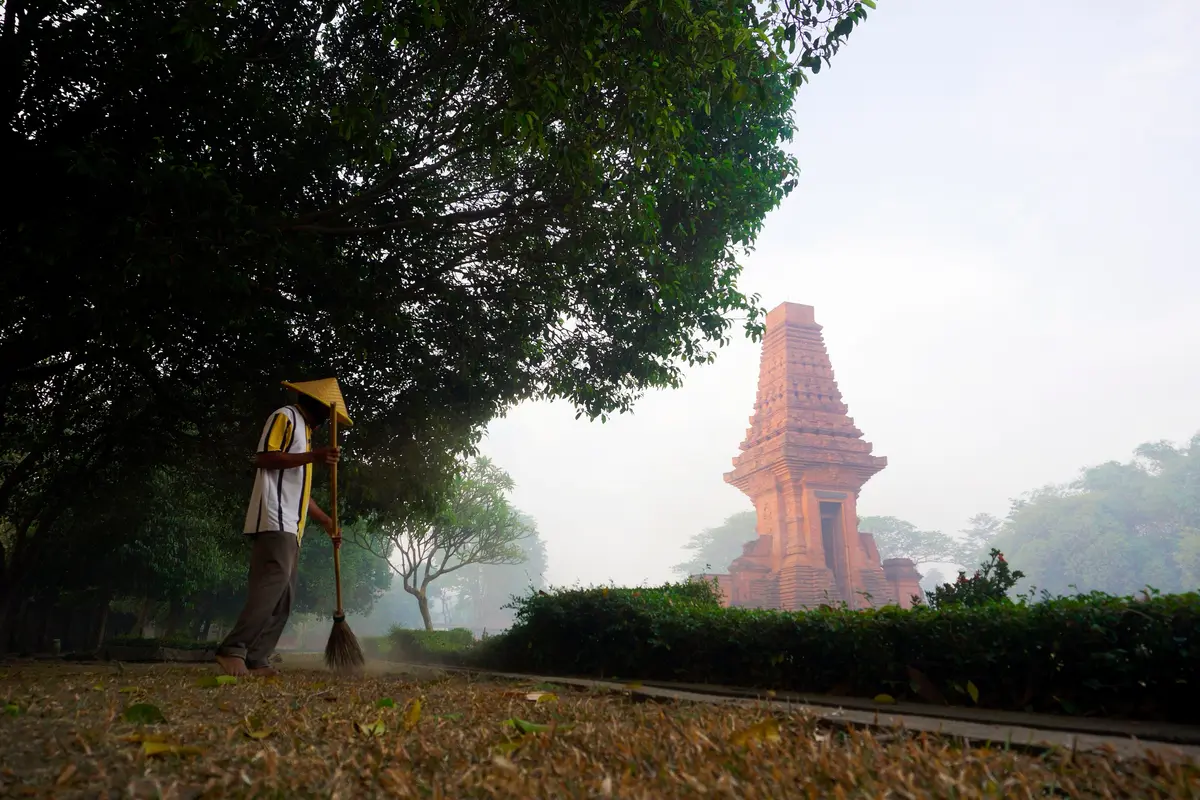
Kublai's fleet sent to punish King Kertanagara of Java finds him already dead; his son-in-law Raden Wijaya uses the Yuan army to defeat the usurper, then turns on it and drives it out, and founds the kingdom of Majapahit.
- 1294
Kublai dies at seventy-eight and is buried in Mongolia; his grandson Temür follows him in China, and the Golden Horde, the Chagatai khanate and the Ilkhanate go their own ways, acknowledging the Yuan emperor in name only after a peace in 1304.
- 1346
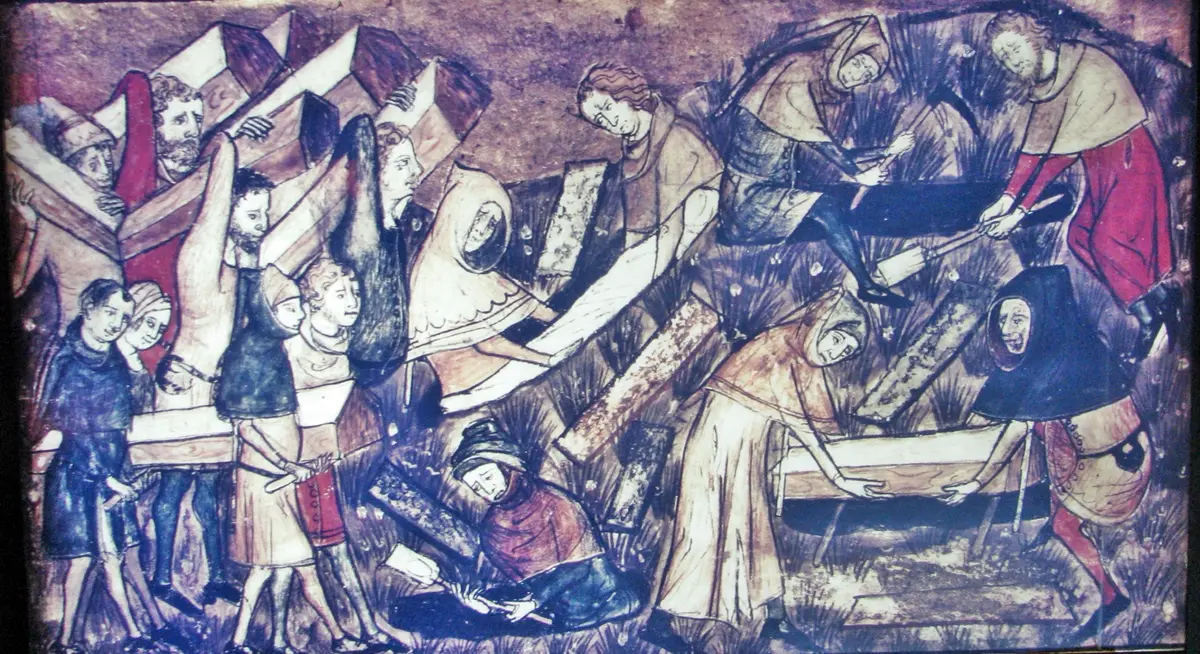
The Golden Horde's khan Janibeg, besieging the Genoese port of Caffa in the Crimea for the second time, gives up when plague breaks out in his army; a Genoese account says the Mongols threw the dead into the city, and ships from the Black Sea carry the Black Death to the Mediterranean in 1347.
Caffa (Feodosia): the Genoese port in the Crimea that Janibeg's Golden Horde besieged in 1345–46, when plague broke out - 1368
Zhu Yuanzhang, a peasant who rose through the rebellions of the 1350s, proclaims the Ming dynasty and sends his armies north; the last Yuan emperor, Toghon Temür, flees from Dadu to the steppe, and Mongol rule in China is over.
Khanbaliq (Dadu), now Beijing: the Jin capital Zhongdu taken in 1215, Kublai's capital from 1272, lost to the Ming in 1368