The Black Death
“The plague of 1347 to 1351 that killed about a third of Europe, some 25 million people, and set the pattern for every pandemic since.”
The Black Death was the plague that swept Europe between 1347 and 1351 and killed, by the usual estimate, a third of its people, some 25 million, a greater share than any war or epidemic before it. It was caused by the bacterium Yersinia pestis, which lives in rodents and passes to people through the bite of their fleas; in its pneumonic form it also spreads from person to person through the air. DNA taken from plague burial grounds across Europe, among them the emergency cemetery of 1348 to 1349 at East Smithfield in London, has settled the old question of what the disease was. People at the time called it the great mortality or simply the pestilence; the name Black Death came centuries later.
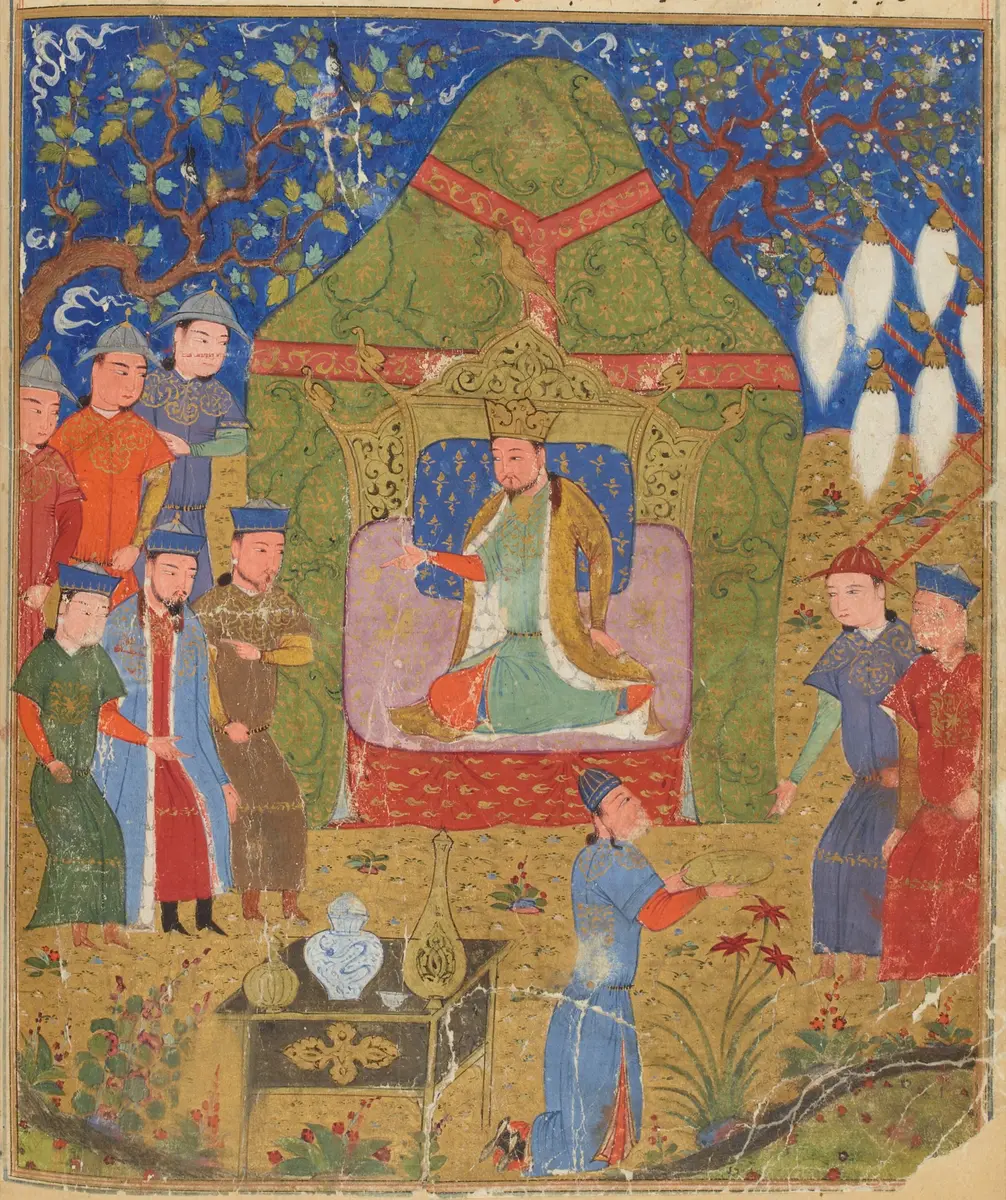
It broke out in Central Asia in the 1330s and moved west along the trade routes of the Mongol world. In 1346 it struck the army of the Golden Horde besieging Caffa, the Genoese trading port in the Crimea, and in 1347 Genoese galleys from the Black Sea carried it to Messina in Sicily. By January 1348 it was in Genoa, Venice, Pisa and Marseille; by June in France, Spain and England, where it came ashore at Melcombe in Dorset; in 1349 it crossed Germany, the Low Countries and Scandinavia; it reached Moscow in 1353. Bubonic plague killed half or more of those it infected within days, the pneumonic form nearly all, and in crowded towns half the population could die: Florence fell from more than 100,000 people to about 50,000.
No one knew the cause. The medical faculty of Paris blamed a conjunction of the planets, preachers the anger of God, most people a poisoned air. Venice and Florence set up health boards in April 1348 to remove the sick and the dead and to bar travellers from infected places, the beginning of quarantine. Bands of flagellants walked from town to town whipping themselves in penance. Jews were accused of poisoning the wells and murdered in hundreds of communities, two thousand of them at Strasbourg in February 1349, although Pope Clement VI declared from Avignon that they could not be the cause, since they died of it like everyone else. In Florence, Giovanni Boccaccio opened his Decameron with a description of the dying city that has never been bettered.
With so many dead, land was cheap and workers were scarce, and the survivors asked for more. Wages rose; lords and governments tried to hold them down, in England with the Ordinance of Labourers of 1349 and the Statute of Labourers of 1351, and the anger this bred fed later risings such as the Peasants' Revolt of 1381. Rents fell, serfdom weakened in western Europe, and art turned to death, in the Triumph of Death and the Dance of Death. Historians still argue over how deep the break went; Richard Evans calls the economic effects severe, but not necessarily negative.
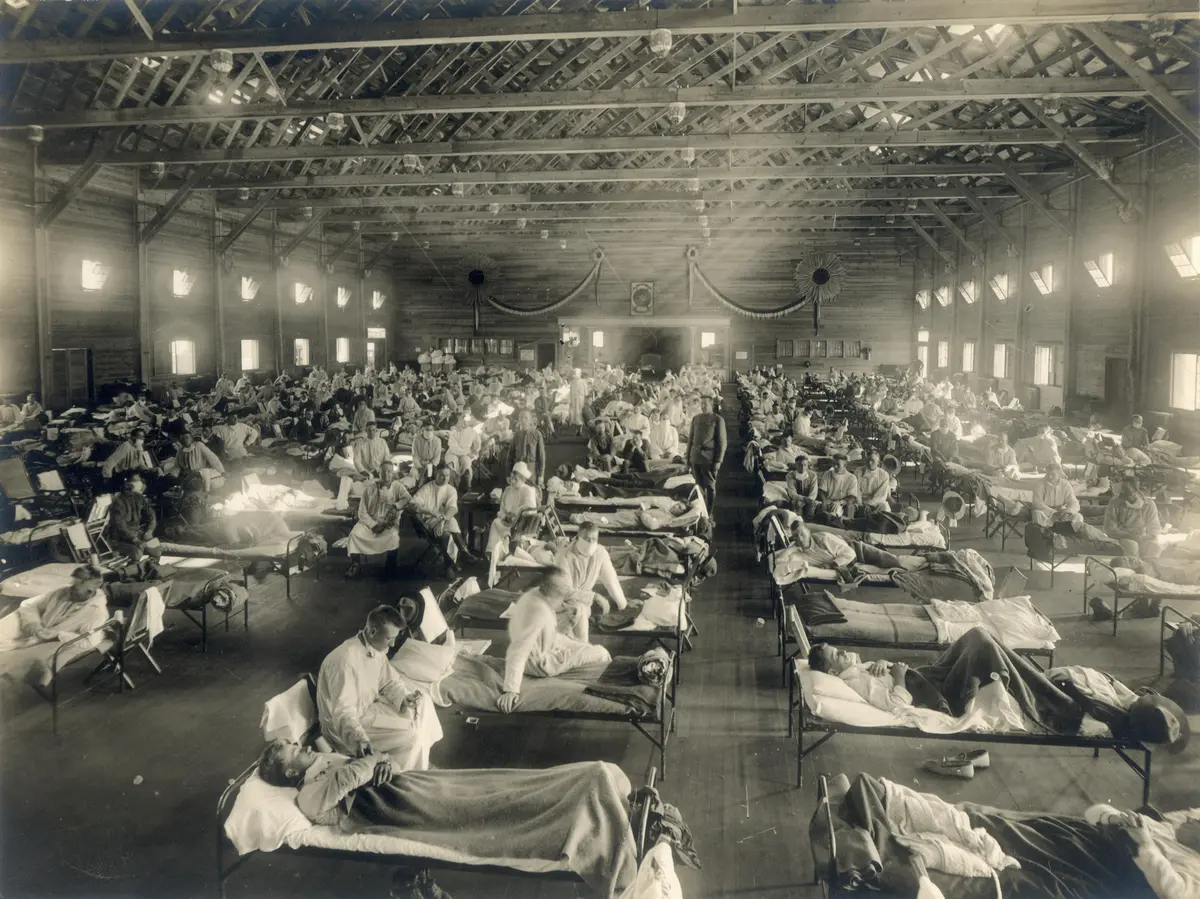
The plague did not go away. It returned to Europe every generation or so for three centuries, in what historians call the second pandemic, to London in 1665, Marseille in 1720 and Messina, where it had first landed, in 1743. The answers Europe invented in 1348, health boards, quarantine, the closing of gates, and the habit of blaming outsiders, have come back with every epidemic since, and every pandemic, from the Spanish flu of 1918 to COVID-19, is still measured against it.
What happened
- 1347
The plague, out of Central Asia since the 1330s, has reached the Black Sea and struck the Golden Horde's army besieging the Genoese port of Caffa; in the summer Genoese galleys sail for home.
Caffa (Feodosia), Crimea: the Genoese port besieged by the Golden Horde in 1346, where the plague reached Europe's tradersTwelve Genoese galleys put in at Messina and the plague spreads across Sicily: the first place in western Europe to be struck.
Messina, Sicily: the first port in western Europe to be struck, in October 1347, and the last, in 1743- 1348
Galleys from Caffa reach Genoa and Venice; Pisa follows a few weeks later, opening the way into northern Italy, and at the end of the month a galley driven from Italy brings the plague to Marseille.
With the dying in their streets, Venice and Florence set up health boards to clear away the sick and the dead and to bar travellers from infected places: the beginning of quarantine. Boccaccio sets the Decameron in Florence this spring.
Florence: Boccaccio's city, which lost about half its people and set up one of the first health boards in April 1348Shortly before Midsummer Day a ship from Gascony brings the plague to Melcombe in Dorset, the first place in England; by the autumn it is in London.
Melcombe (Weymouth), Dorset: where the plague came ashore in England, in June 1348Pope Clement VI, who stays at Avignon through the plague, issues the first of two bulls (the second on 26 September) declaring that the Jews cannot be its cause, since they die of it like everyone else.
The Palace of the Popes, Avignon: Clement VI stayed through the plague here and defended the Jews in two bulls of 1348- 1349
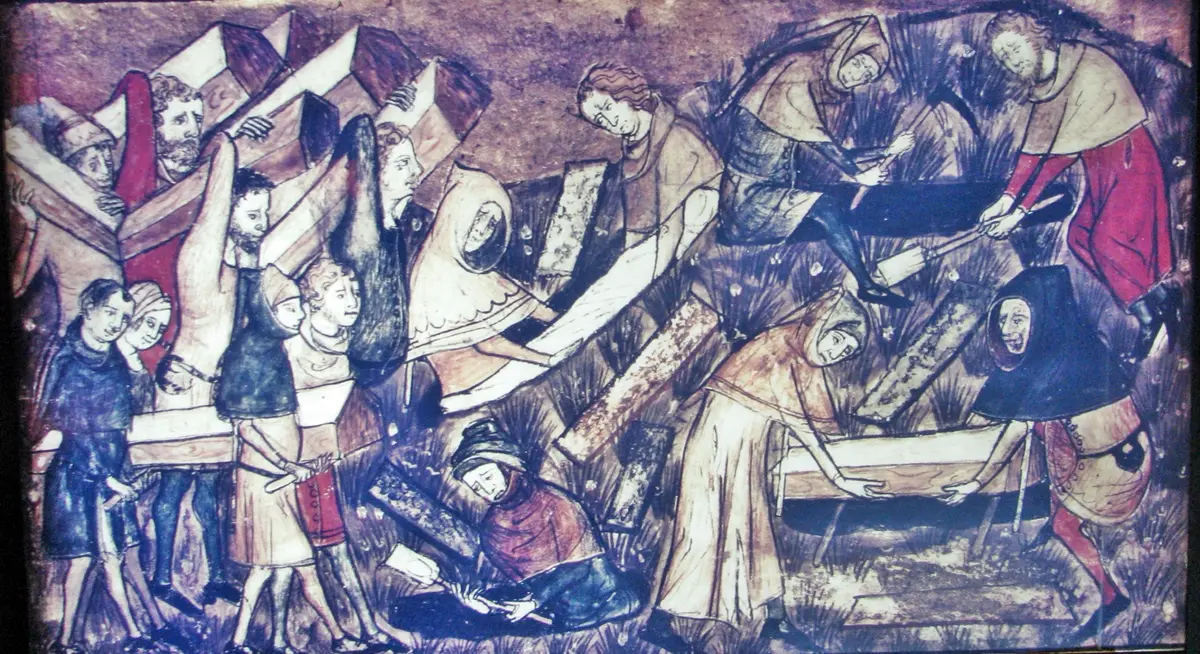
Through 1349 the plague crosses Germany, the Low Countries and Scandinavia, where a ship carries it to Bergen; at Tournai the abbot Gilles li Muisis records the burials.
Tournai: the town of the abbot Gilles li Muisis, whose chronicle pictures the burials and the flagellants of 1349At Strasbourg the whole Jewish community, some 2,000 people, is burned, one of hundreds of massacres of Jews blamed for the plague.
Strasbourg: where the Jewish community, some 2,000 people, was burned on 14 February 1349, blamed for the plagueIn England Edward III's Ordinance of Labourers orders wages held at their level before the plague, as the survivors ask for more.
On the feast of the Assumption about two hundred flagellants from Bruges arrive at Tournai, whipping themselves in penance; processions like theirs cross the Low Countries and Germany this year.
Tournai: the town of the abbot Gilles li Muisis, whose chronicle pictures the burials and the flagellants of 1349- 1351
The great mortality ebbs in western Europe. England turns the wage freeze into the Statute of Labourers, and the pope's agents are said to have counted 23,840,000 dead in Christian Europe. The plague moves on to Russia, reaching Moscow in 1353, and will come back for three centuries.