The Renaissance
“Europe's 'rebirth' of the art and learning of Greece and Rome, from about 1400 to 1600: born in Florence, it gave the world perspective, humanism, Leonardo and Michelangelo.”
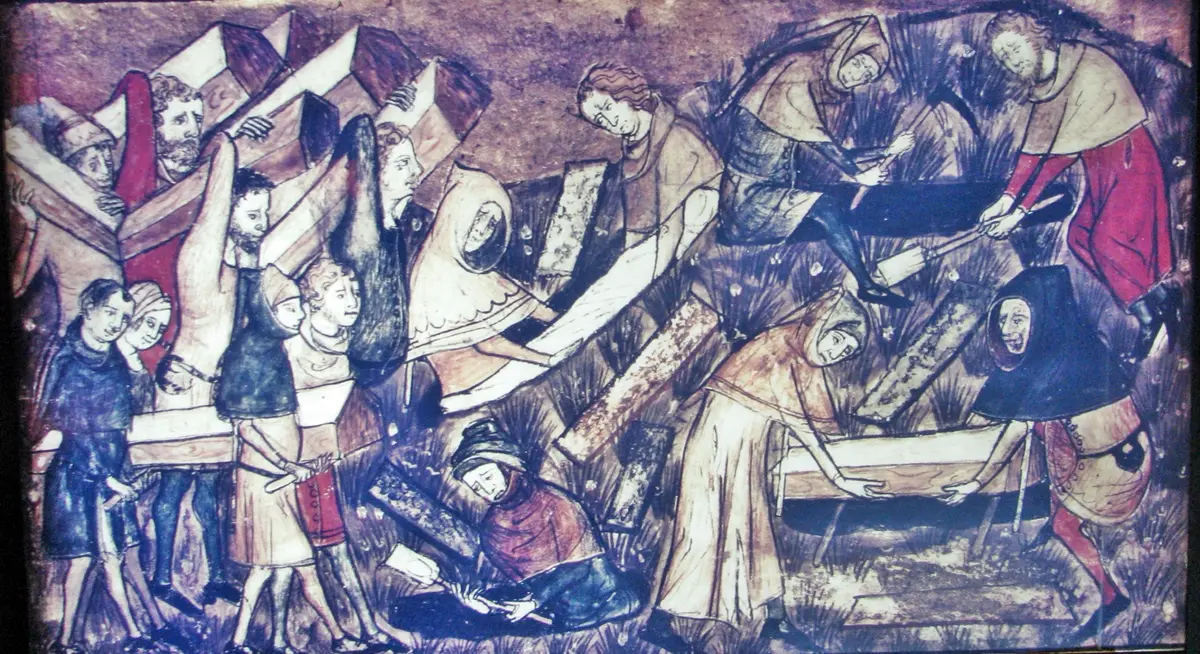
The Renaissance, French for 'rebirth', is the name for the two centuries, roughly 1400 to 1600, in which Europe's artists and scholars set out to revive the art and learning of ancient Greece and Rome, and made something new in the attempt. It began in the city-states of Italy, Florence above all, where the poets Petrarch and Boccaccio had already laid the foundations of humanism in the fourteenth century: the close study of classical texts, and the conviction that human beings and their powers were worth studying for their own sake. The humanists called the thousand years behind them the Middle Ages; the word for what followed, rinascita, was first used by the painter and writer Giorgio Vasari in 1550.
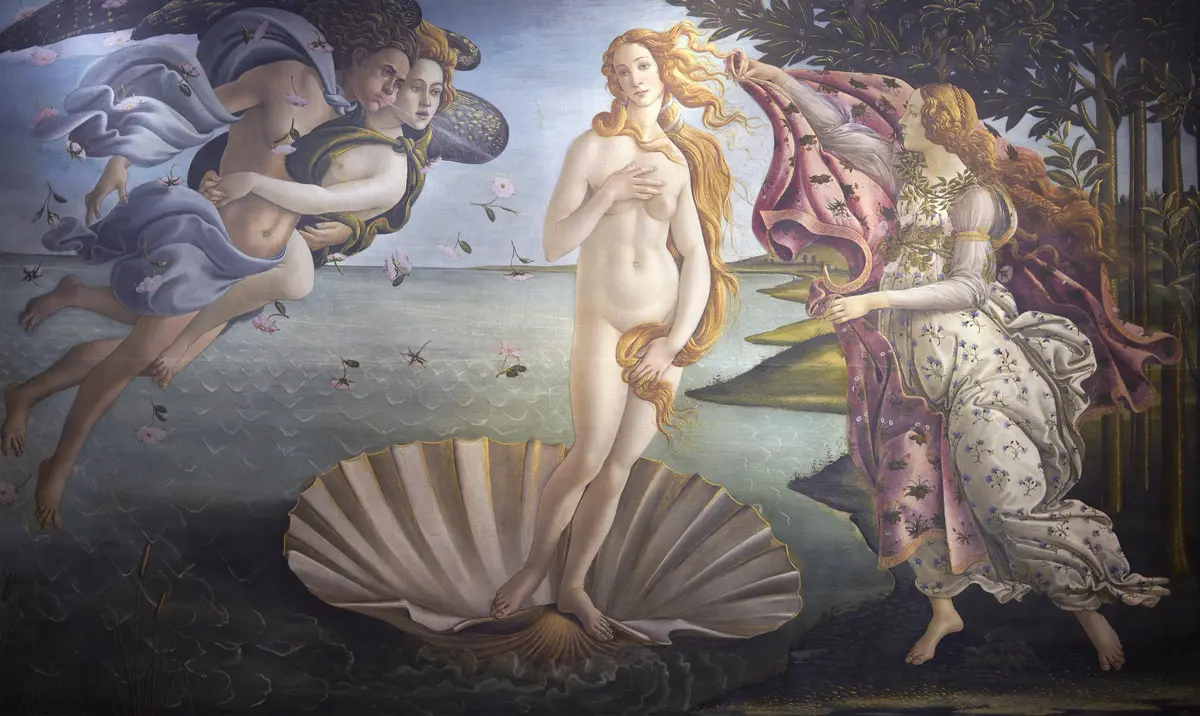
Florence had the money, the rivalries and the civic pride for it. In 1401 the city held a competition for new bronze doors for its Baptistery; Lorenzo Ghiberti won, and his rivals Filippo Brunelleschi and Donatello went to Rome to study its ruins. Back home Brunelleschi raised over the cathedral the largest dome built since antiquity, and Masaccio painted figures standing in space built on the rules of perspective. Merchant and banking families, chief among them the Medici, paid for the palaces, churches and pictures, and a painter like Sandro Botticelli could paint the goddess Venus as easily as the Virgin. North of the Alps, in Bruges, Jan van Eyck was doing as much with oil paint, and after about 1455 the printing press carried the rediscovered classics across Europe.
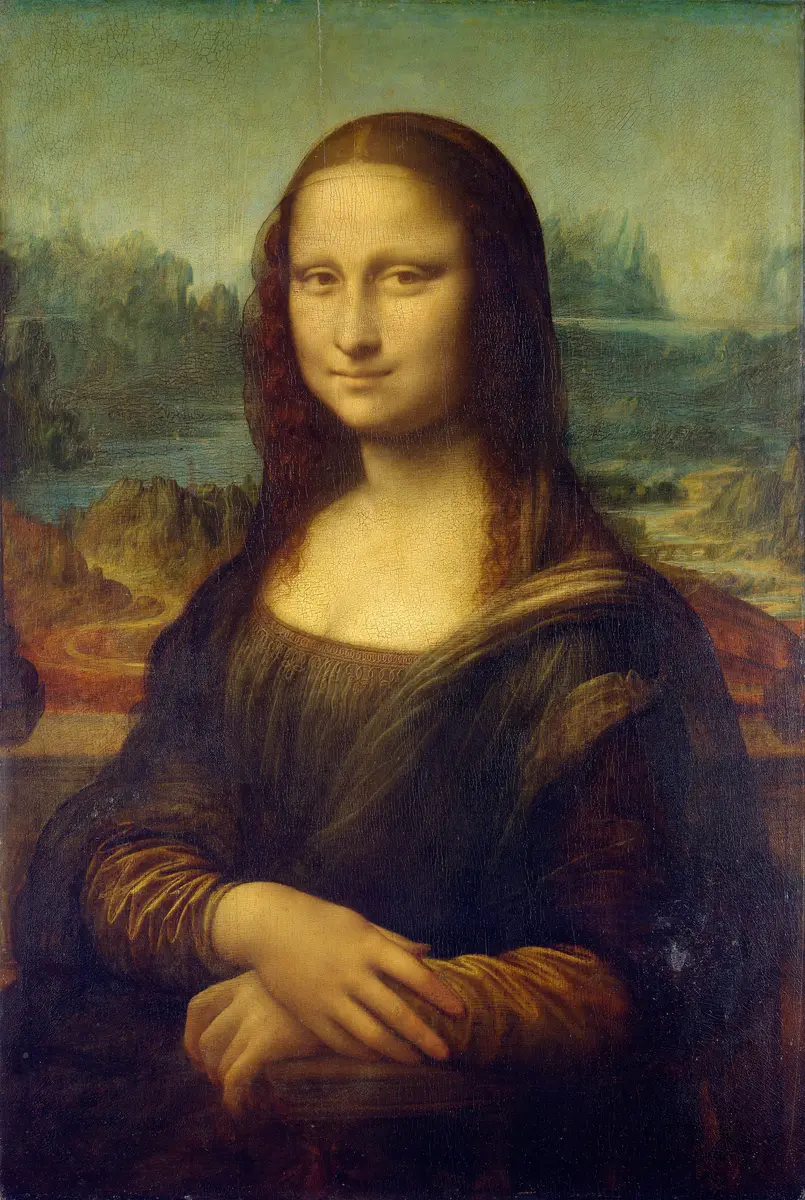
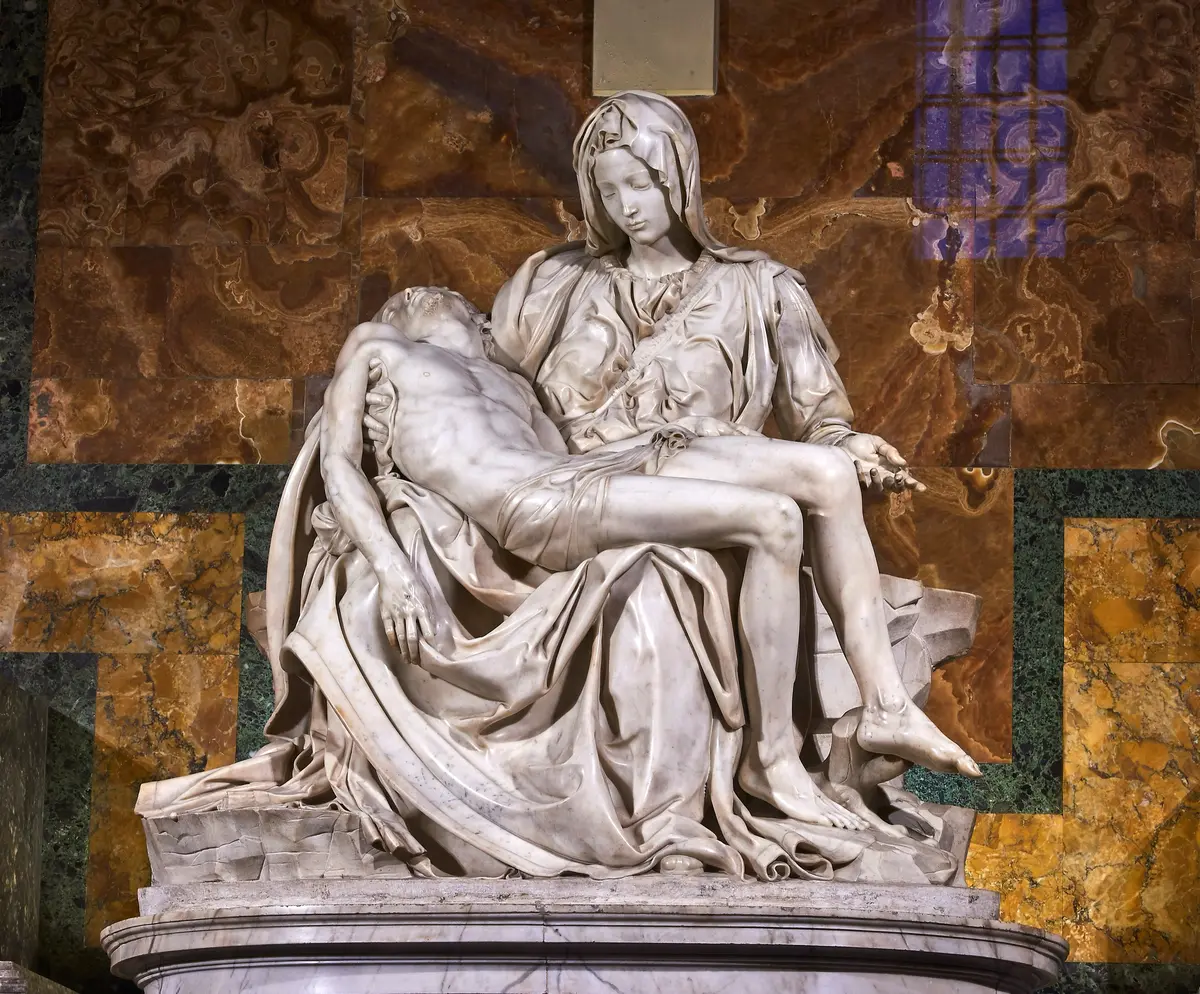
The High Renaissance, from the 1490s to the 1520s, belonged to a handful of men: Leonardo da Vinci, who painted the Last Supper in Milan and the Mona Lisa and filled notebooks with machines, anatomy and the proportions of the human body; Michelangelo, who carved the David for the Florentine republic and painted the ceiling of the Sistine Chapel for Pope Julius II; and Raphael, whose School of Athens set Plato and Aristotle in a Roman hall. Art was treated as a branch of knowledge, built on observation and mathematics, and the ideal of the 'Renaissance man', able to do all things, came from this world.
The Italian Renaissance was ended by war. The French invasion of 1494 began more than sixty years of fighting over Italy, and on 6 May 1527 the unpaid troops of the emperor Charles V sacked Rome, which Britannica takes as the end of the Renaissance as one period in Italy. Elsewhere it ran on into the sixteenth century: the humanist Erasmus and his readers helped spark the Reformation, and in 1543 Vesalius's anatomy and Copernicus's book on the heavens were printed in the same year. By 1600 the Reformation, the Counter-Reformation and the new styles that followed had taken its place.
Much of what Europe and the world now take for granted comes from it: pictures built on perspective, the artist as a genius rather than a craftsman, schools that teach the classics and the humanities, the habit of reading old texts critically and checking them against nature, which led on to the Scientific Revolution. Its paintings fill the Uffizi, the Louvre and the Vatican, and the names of a few Florentines are still the shorthand for genius.
What happened
- 1401
Florence holds a competition for new bronze doors for its Baptistery. Lorenzo Ghiberti wins; the losers, Brunelleschi and his friend Donatello, go to Rome to study the ancient ruins.
Florence Cathedral: Brunelleschi's dome, built 1420 to 1436, beside the Baptistery with Ghiberti's doors - 1420
Brunelleschi begins the dome of Florence Cathedral, the largest raised since antiquity, built without a wooden frame to hold it up.
Florence Cathedral: Brunelleschi's dome, built 1420 to 1436, beside the Baptistery with Ghiberti's doors - 1427
Around this year Masaccio paints the Holy Trinity in Santa Maria Novella, a chapel that seems to open into the wall: perspective, worked out by Brunelleschi, in a painting.
- 1434
In Bruges, Jan van Eyck paints the Arnolfini Portrait, the Northern Renaissance's answer in oil paint.
Bruges: where Jan van Eyck painted the Arnolfini Portrait in 1434, the centre of the Northern RenaissanceCosimo de' Medici, banker, comes back from a year's exile and leads Florence from behind the scenes for thirty years, paying for churches, palaces and libraries.
- 1436
Pope Eugene IV consecrates Florence Cathedral under its finished dome, on the first day of the Florentine year.
Florence Cathedral: Brunelleschi's dome, built 1420 to 1436, beside the Baptistery with Ghiberti's doors- 1440
In the 1440s Donatello casts his bronze David, a nude hero in the manner of ancient statues.
The Bargello, Florence: the museum of Renaissance sculpture, with Donatello's bronze David - 1455
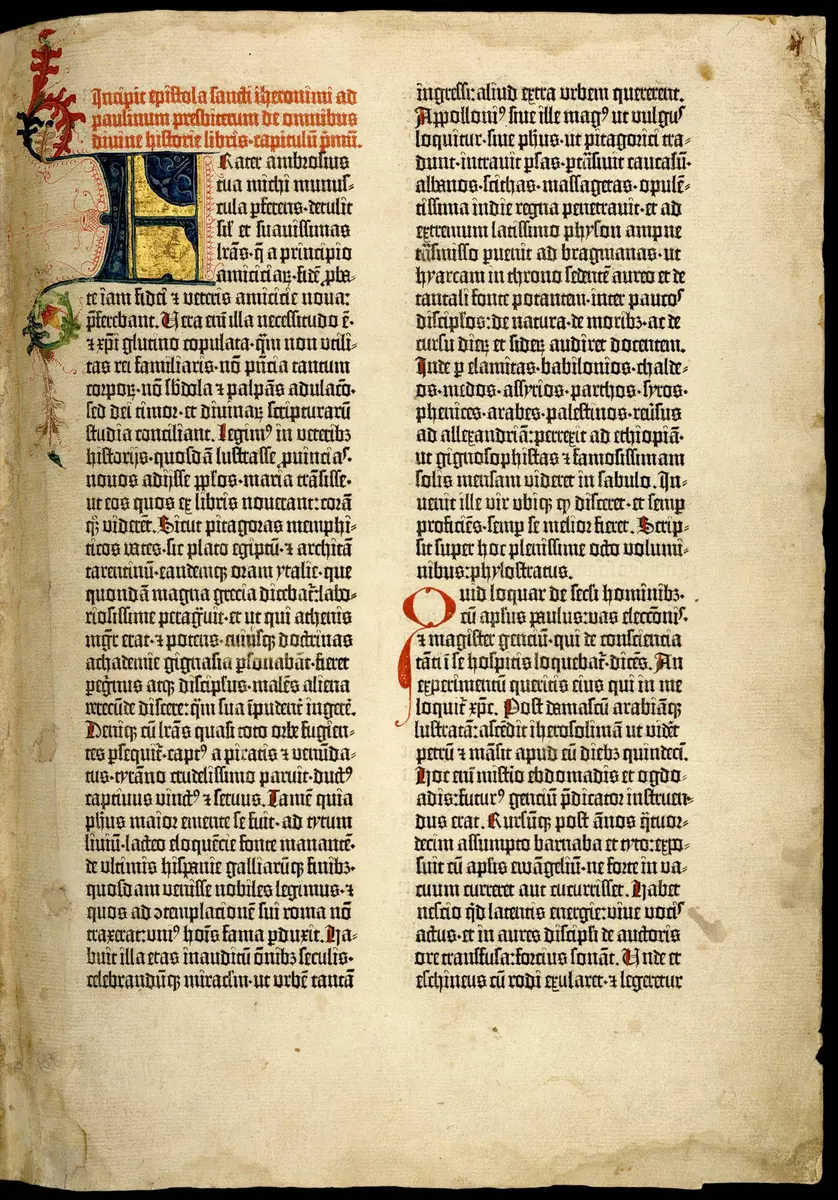
Gutenberg's Bible is finished at Mainz; within decades printing carries the classical texts the humanists had recovered to every part of Europe.
- 1469
Lorenzo de' Medici, twenty, takes over the family's leadership of Florence; his circle will include Verrocchio, Botticelli, Leonardo and the young Michelangelo, who lives in his house.
- 1472
Around this time Piero della Francesca paints the Duke and Duchess of Urbino in profile, like figures on a Roman medal.
Urbino: the court of Duke Federico da Montefeltro, painted by Piero della Francesca, and Raphael's birthplace - 1485
About this year Botticelli paints the Birth of Venus, probably for a member of the Medici family.
The Uffizi, Florence: built for the Medici's offices, now the gallery of Botticelli, Piero della Francesca and Leonardo - 1490
In Milan, Leonardo draws the Vitruvian Man, the human body measured by the rules of a Roman architect.
- 1494
Two years after Lorenzo's death, Charles VIII of France invades Italy, the Medici are driven out of Florence and the Italian Wars begin.
- 1495
Leonardo begins the Last Supper on the refectory wall of Santa Maria delle Grazie in Milan; he works on it until about 1498.
Santa Maria delle Grazie, Milan: Leonardo painted the Last Supper on its refectory wall, about 1495 to 1498 - 1498
The friar Savonarola, who had preached against the city's luxury and burned its 'vanities', is executed in the Piazza della Signoria.
Palazzo Vecchio and the Piazza della Signoria: the seat of the republic, where Savonarola was executed in 1498 and Michelangelo's David stood from 1504- 1500
In Nuremberg, Albrecht Dürer paints himself facing the viewer, the artist as a genius.
Nuremberg: the city of Albrecht Dürer, who carried the Italian Renaissance over the Alps - 1503
Leonardo begins the portrait of Lisa Gherardini, the Mona Lisa, in Florence; he keeps working on it for years and takes it to France.
The Louvre, Paris: the Mona Lisa, which Leonardo took to France, where he died in 1519 - 1504
Michelangelo's marble David, carved from a single block since 1501, is set up before the Palazzo Vecchio as the emblem of the republic.
Palazzo Vecchio and the Piazza della Signoria: the seat of the republic, where Savonarola was executed in 1498 and Michelangelo's David stood from 1504 - 1511
In the Vatican, Raphael finishes the School of Athens, Plato and Aristotle among the thinkers of antiquity.
- 1512
Michelangelo finishes the ceiling of the Sistine Chapel, begun in 1508 for Pope Julius II.
The Sistine Chapel, Rome: Michelangelo painted its ceiling for Pope Julius II from 1508 to 1512 - 1513
Out of office and out of Florence, Niccolò Machiavelli writes The Prince.
- 1519
Leonardo da Vinci dies at Clos Lucé near Amboise, in the service of the king of France.
- 1527
The unpaid troops of the emperor Charles V sack Rome: for Britannica, the end of the Renaissance as one period in Italy.
- 1543
Vesalius's anatomy, the Fabrica, is printed in Basel in June, the same year as Copernicus's book putting the Sun at the centre: the Renaissance turning into science.
- 1550
Giorgio Vasari publishes his Lives of the artists, telling how the arts were reborn from Giotto to Michelangelo; the word rinascita appears for the first time in this sense.
- 1564
Michelangelo, the last of the giants, dies in Rome at 88 and is buried in Florence.