Leonardo da Vinci
“The painter of the Mona Lisa and the Last Supper who filled thousands of notebook pages with anatomy, flight and machines: the model of the Renaissance 'universal man'.”
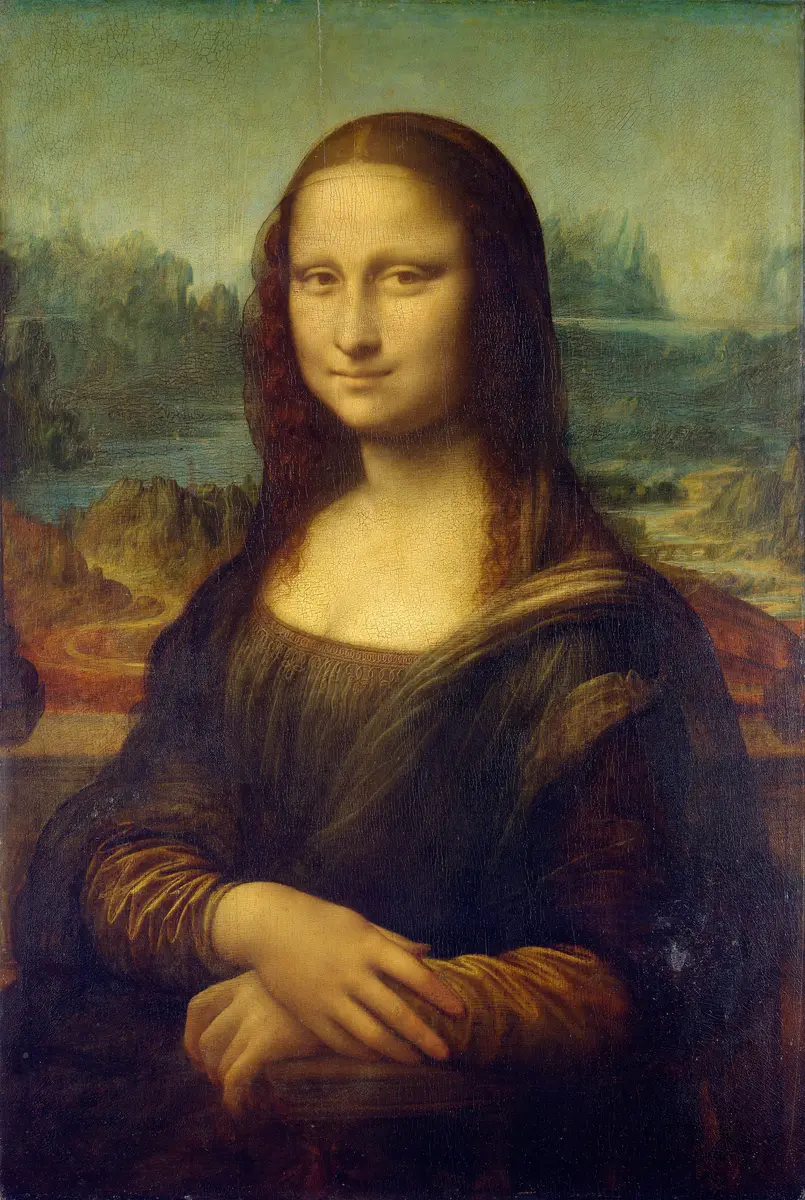
Leonardo da Vinci was an Italian painter, draughtsman, sculptor, architect and engineer, and for most people the very picture of the 'Renaissance man' who could do everything. Fewer than twenty surviving paintings are accepted as his, and several of them are unfinished, yet two of them, the Last Supper in Milan and the Mona Lisa in Paris, are among the best-known pictures in the world. Beside them he filled thousands of notebook pages, written from right to left in mirror script, with studies of anatomy, water, the flight of birds, machines, rocks, plants and light. Most of this stayed unpublished, and much of it unknown, for centuries.
He was born on 15 April 1452 at Anchiano, a hamlet in the olive groves near the Tuscan hill town of Vinci. He was the illegitimate son of Ser Piero, a Florentine notary, and Caterina, a young peasant woman; his grandfather Antonio wrote the birth down in an old notary's register of the family. Leonardo grew up in his father's family with only a basic schooling in reading, writing and arithmetic. At about fifteen he was apprenticed to Andrea del Verrocchio, whose workshop in Florence taught painting, sculpture and mechanical skills alike. He joined the painters' guild in 1472, painted the Annunciation and the angel in his master's Baptism of Christ, and in 1481 took on a large Adoration of the Magi for the monks of San Donato a Scopeto, which he left unfinished when he went to Milan.
In Milan he served Duke Ludovico Sforza from 1482 until 1499. He had offered himself above all as a military engineer, and the court listed him as 'painter and engineer of the duke'. He staged court festivals, advised on buildings, fortifications and canals, painted the Virgin of the Rocks and the portrait of Cecilia Gallerani known as the Lady with an Ermine, and drew the Vitruvian Man. For twelve years he worked on a giant bronze horse in honour of Francesco Sforza, founder of the dynasty: the clay model went on show in 1493, but the metal was turned into cannon. From 1495 to 1498 he painted the Last Supper on the refectory wall of Santa Maria delle Grazie. When the French took Milan in 1499, he left with his friend the mathematician Luca Pacioli.
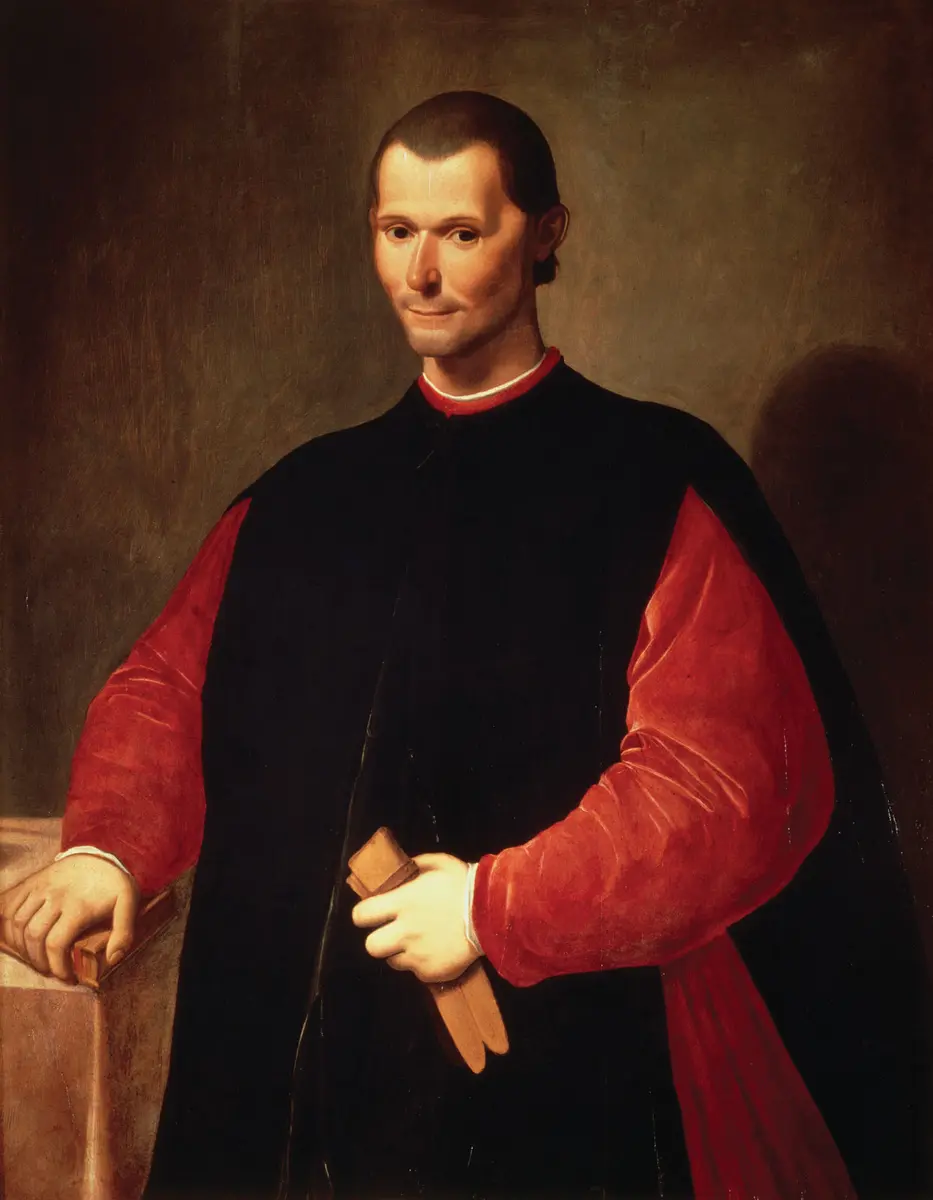
For the next sixteen years he went where patrons called him. In 1502 he served the feared Cesare Borgia as military architect, mapping his towns, and met Niccolò Machiavelli at his court. Back in Florence in 1503 he began the portrait of Lisa del Giocondo, the Mona Lisa, and a huge Battle of Anghiari for the council hall of the Palazzo Vecchio, opposite a battle scene by the younger Michelangelo; neither wall painting was finished. He dissected bodies in the hospital of Santa Maria Nuova and studied the flight of birds and the movement of water. From 1506 he worked again in Milan for its French governors, studied anatomy with the Pavia professor Marcantonio della Torre and took in a young nobleman, Francesco Melzi, as pupil and companion. In 1513 he moved to Rome, where Giuliano de' Medici, the pope's brother, gave him rooms in the Belvedere but no great commission followed.
At the end of 1516, aged 64, he crossed the Alps to the young King Francis I of France, who gave him the manor of Cloux, now Clos Lucé, beside the royal château at Amboise, a pension and the title of first painter, engineer and architect to the king. He brought the Mona Lisa, the Virgin and Child with Saint Anne and Saint John the Baptist with him and kept working on them. He died at Cloux on 2 May 1519 and left his notebooks and drawings to Melzi; a great part of the drawings has been in the English Royal Collection since the seventeenth century, and the paintings he took to France are in the Louvre. Giorgio Vasari's Lives of 1550 made him the founder of the High Renaissance, and his fame as the universal genius has never faded.
What happened
- 1452
Born at Anchiano near Vinci, the illegitimate son of the notary Ser Piero and a young peasant woman, Caterina; his grandfather Antonio writes the birth down in the family's old notary register.
Anchiano, near Vinci: the farmhouse held by tradition to be his birthplace, where he was born on 15 April 1452- 1467
At about fifteen his father apprentices him to Andrea del Verrocchio in Florence, whose workshop teaches painting, sculpture and mechanical skills.
- 1472
He is accepted into the Florentine painters' guild, the Compagnia di San Luca, but stays in Verrocchio's workshop; the Annunciation dates from these years.
- 1473
He dates a pen drawing of a Tuscan valley landscape to the feast of Santa Maria della Neve: his earliest dated work.
- 1475
By about now he has painted the kneeling angel, and probably the river landscape, in Verrocchio's Baptism of Christ.
- 1478
His first independent commission: an altarpiece for the chapel of Saint Bernard in the Palazzo della Signoria. He never begins it.
Palazzo Vecchio, Florence: the city where he trained under Verrocchio and worked until 1482 and again from 1500 to 1506; in the palace's council hall he began the Battle of Anghiari- 1481
The monks of San Donato a Scopeto commission an Adoration of the Magi, to be finished within thirty months; he is still at work on it in September, but it stays unfinished.
- 1482
He moves to Milan, having offered himself to Ludovico Sforza above all as a military engineer; he will serve the duke for seventeen years.
- 1483
With the brothers Ambrogio and Evangelista de Predis he signs the contract for an altarpiece for the Confraternity of the Immaculate Conception: the Virgin of the Rocks.
- 1489
Around this year he paints Cecilia Gallerani, the duke's mistress, with an ermine, the Lady with an Ermine.
- 1490
Around this year he draws the Vitruvian Man, the body measured by the rules of a Roman architect.
- 1493
The clay model of his giant horse for the monument to Francesco Sforza goes on show for the marriage of Bianca Maria Sforza to the Emperor Maximilian; the bronze set aside for it is later made into cannon.
- 1495
He begins the Last Supper on the refectory wall of Santa Maria delle Grazie; it takes him until 1498.
Santa Maria delle Grazie, Milan: he painted the Last Supper on its refectory wall from 1495 to 1498, during his seventeen years at the Sforza court - 1499
Soon after the French take Milan and Ludovico falls, he leaves the city with the mathematician Luca Pacioli.
- 1500
After a stop in Mantua he is in Venice, where he advises the government to flood the land against a Turkish raid; then back to Florence, where the Servite friars give him lodgings.
- 1502
He enters the service of Cesare Borgia as military architect and engineer, travels his lands for ten months and draws town plans like that of Imola; at Borgia's court he meets Machiavelli.
- 1503
By October, a Florentine official notes, he has begun a portrait of Lisa del Giocondo: the Mona Lisa. The same year Florence commissions a battle painting for the council hall.
- 1504
He sits on the committee that decides where Michelangelo's David should stand.
Palazzo Vecchio, Florence: the city where he trained under Verrocchio and worked until 1482 and again from 1500 to 1506; in the palace's council hall he began the Battle of AnghiariHis father, Ser Piero da Vinci, dies in Florence.
- 1505
He paints the Battle of Anghiari on the wall of the council hall in the Palazzo Vecchio, opposite Michelangelo's Battle of Cascina; his experiments with paint fail and the mural is never finished.
Palazzo Vecchio, Florence: the city where he trained under Verrocchio and worked until 1482 and again from 1500 to 1506; in the palace's council hall he began the Battle of AnghiariHe fills a small notebook on how birds fly and how a man might fly: the Codex on the Flight of Birds.
- 1506
The French governor of Milan, Charles d'Amboise, asks Florence to let him come to Milan; the Battle of Anghiari is left behind.
- 1508
He settles in Milan in the service of the French; around now he finishes the second version of the Virgin of the Rocks, and the young nobleman Francesco Melzi becomes his pupil and companion.
- 1511
Working with the Pavia anatomist Marcantonio della Torre, he dissects and draws the human body, among the drawings the foetus in the womb.
- 1513
With the French driven out of Milan, he leaves for Rome with Melzi and Salai; Giuliano de' Medici, brother of Pope Leo X, gives him rooms in the Belvedere.
The Belvedere, Vatican: his rooms in Rome from 1513 to 1516, given him by Giuliano de' Medici- 1516
At sixty-four he crosses the Alps to Francis I with Melzi and his servant, bringing the Mona Lisa, the Saint Anne and Saint John, and settles at Cloux, near the royal château of Amboise.
Clos Lucé, Amboise: the manor of Cloux, his home from 1516 and where he died on 2 May 1519; he was buried at the royal château nearby - 1517
Cardinal Luigi of Aragon visits him at Cloux and is shown three paintings; the cardinal's secretary notes that his right hand is paralysed.
Clos Lucé, Amboise: the manor of Cloux, his home from 1516 and where he died on 2 May 1519; he was buried at the royal château nearby- 1518
Francis I very probably buys the Mona Lisa and Saint John the Baptist, which stay in Leonardo's hands until his death.
- 1519
He makes his will, naming Francesco Melzi his executor and the heir of his drawings, manuscripts and painter's tools.
Clos Lucé, Amboise: the manor of Cloux, his home from 1516 and where he died on 2 May 1519; he was buried at the royal château nearbyHe dies at Cloux, aged sixty-seven. Vasari tells that he died in the king's arms, but Francis I was at Saint-Germain-en-Laye. He is buried in August in the church of Saint-Florentin at the château.
Clos Lucé, Amboise: the manor of Cloux, his home from 1516 and where he died on 2 May 1519; he was buried at the royal château nearby