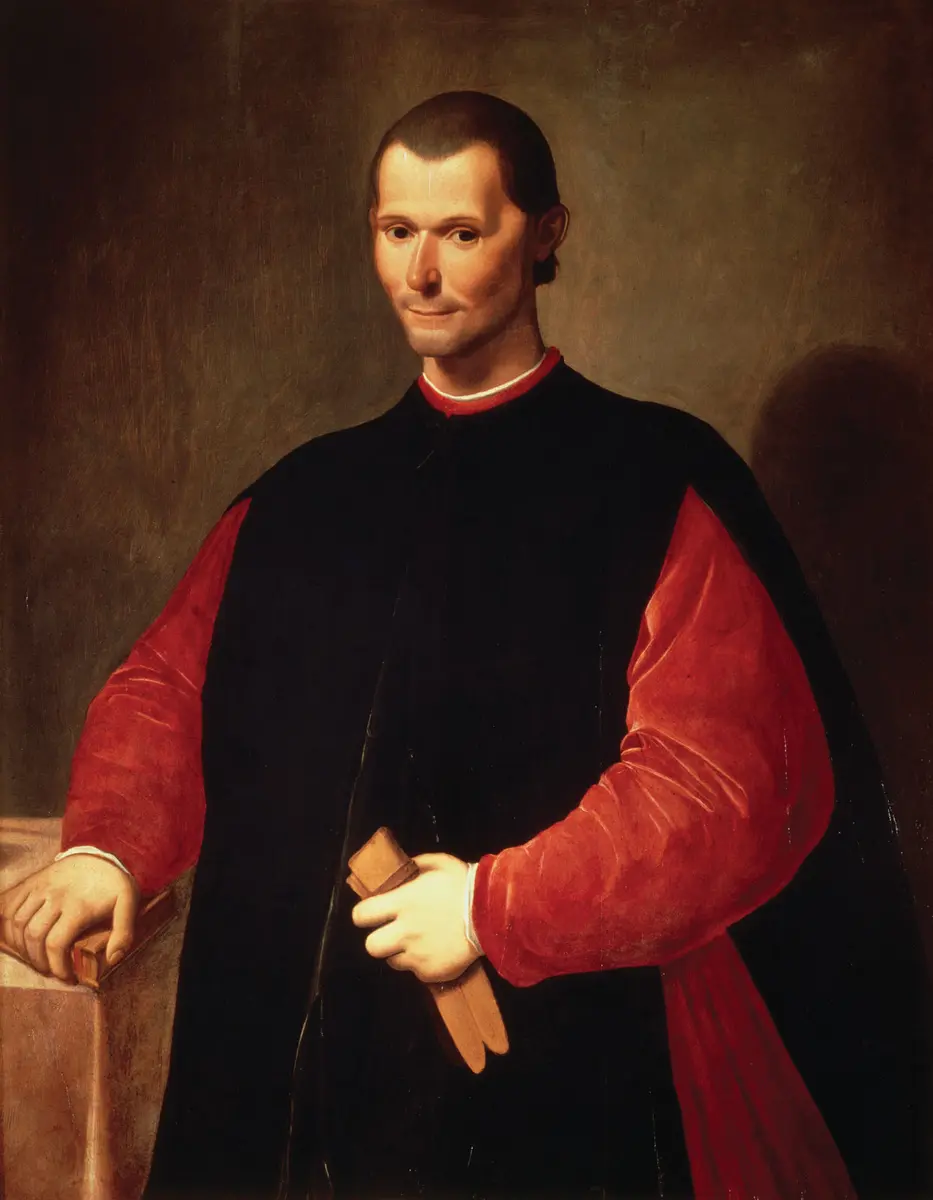
Machiavelli
“The Florentine diplomat whose short book The Prince (1513) told rulers to learn how not to be good, and made 'Machiavellian' a word for cunning.”
Niccolò Machiavelli was the Florentine civil servant, diplomat and writer whose short book The Prince, written in 1513 and printed in 1532, is probably the most famous book on politics ever written. It tells a new ruler to look at the 'effectual truth' of how people really behave rather than at how they ought to behave, to learn how not to be good when necessity demands it, and to rely on fear rather than love to hold his subjects. That advice made his name a byword for scheming and deceit, 'Machiavellian'. Yet he also wrote the Discourses on Livy, a long defence of free republics modelled on ancient Rome, and many scholars see him as the founder of modern political science, which studies power as it is rather than as it should be.
He was born in Florence on 3 May 1469 into an old family; his father Bernardo, a doctor of law, was too poor and too deep in debt to hold office, but he owned books, and the boy received a humanist education in Latin and the Roman historians. In 1494 the Medici were driven out of Florence, and for four years the friar Girolamo Savonarola dominated the city; Machiavelli went to hear him preach. Soon after Savonarola was hanged and burned in front of the Palazzo Vecchio in May 1498, the 29-year-old Machiavelli, with no known training in the chancery, was put at the head of the republic's Second Chancery and became secretary to its war council, the Ten. For fourteen years he wrote the republic's letters and went on more than forty missions: to Caterina Sforza at Forlì, to King Louis XII of France, to the Emperor Maximilian, to Pope Julius II and, in 1502, to Cesare Borgia, the pope's son, whom he watched trap and kill his rebellious captains at Senigallia.
Under Piero Soderini, made head of the republic for life in 1502, he became an indispensable aide. Distrustful of hired soldiers, he persuaded Soderini to raise a militia of Florentine country people and organized it himself; he helped run a failed scheme of 1504, surveyed by Leonardo da Vinci, to turn the Arno away from rebel Pisa, and was present when Pisa finally surrendered in June 1509. In 1512 a Spanish army sent by Pope Julius II's Holy League sacked nearby Prato, the militia broke, Soderini fled and the Medici came back. Machiavelli lost his post, and early in 1513, wrongly suspected of a plot against the Medici, he was jailed and tortured. Freed in March, he withdrew to his family's farm at Sant'Andrea in Percussina, south of Florence. In a famous letter of 10 December 1513 he described his days there: the woods and the village inn by day, and at night his study, where he put on court dress to talk with the ancients and had just written a little work 'On Principalities'.
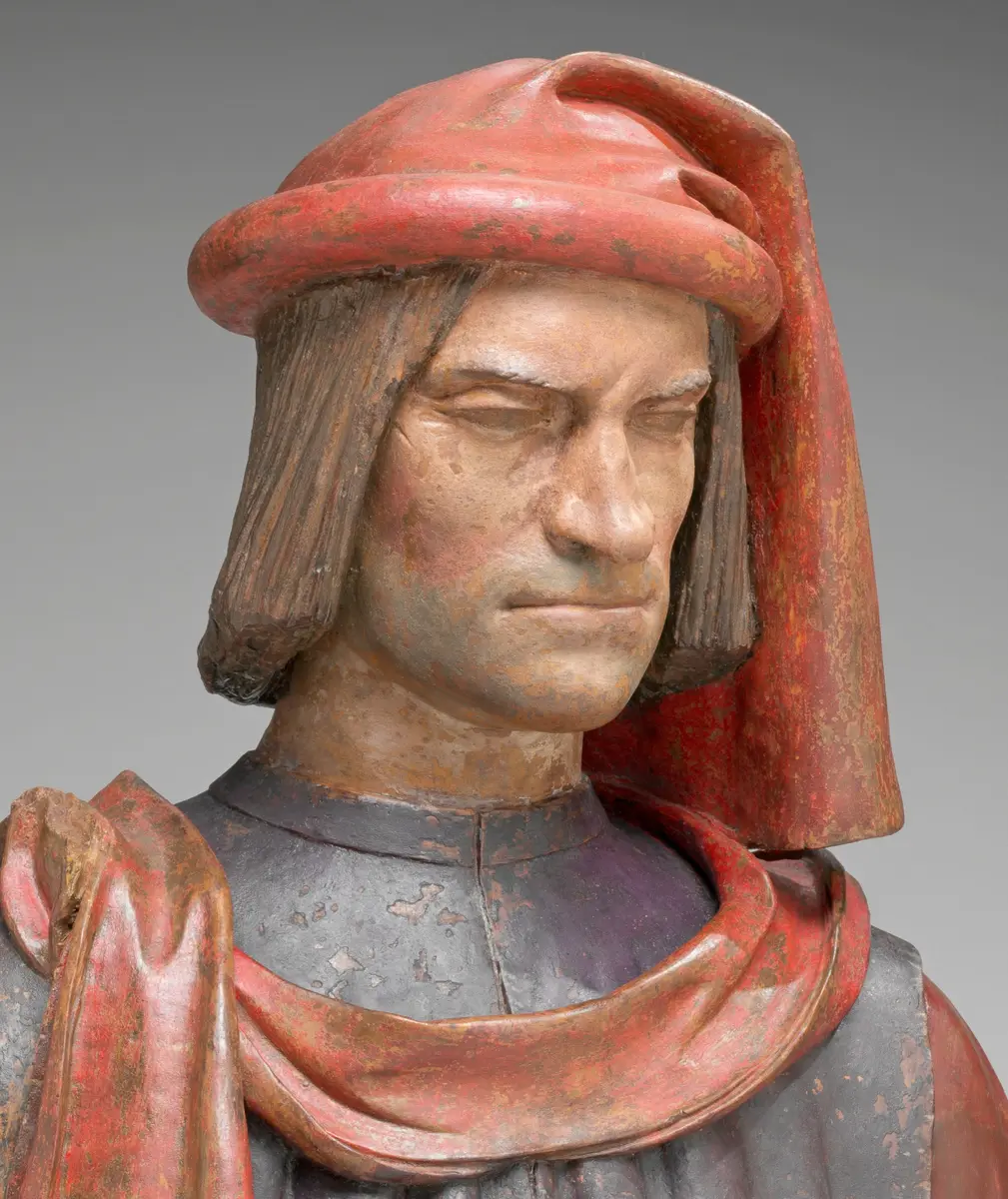
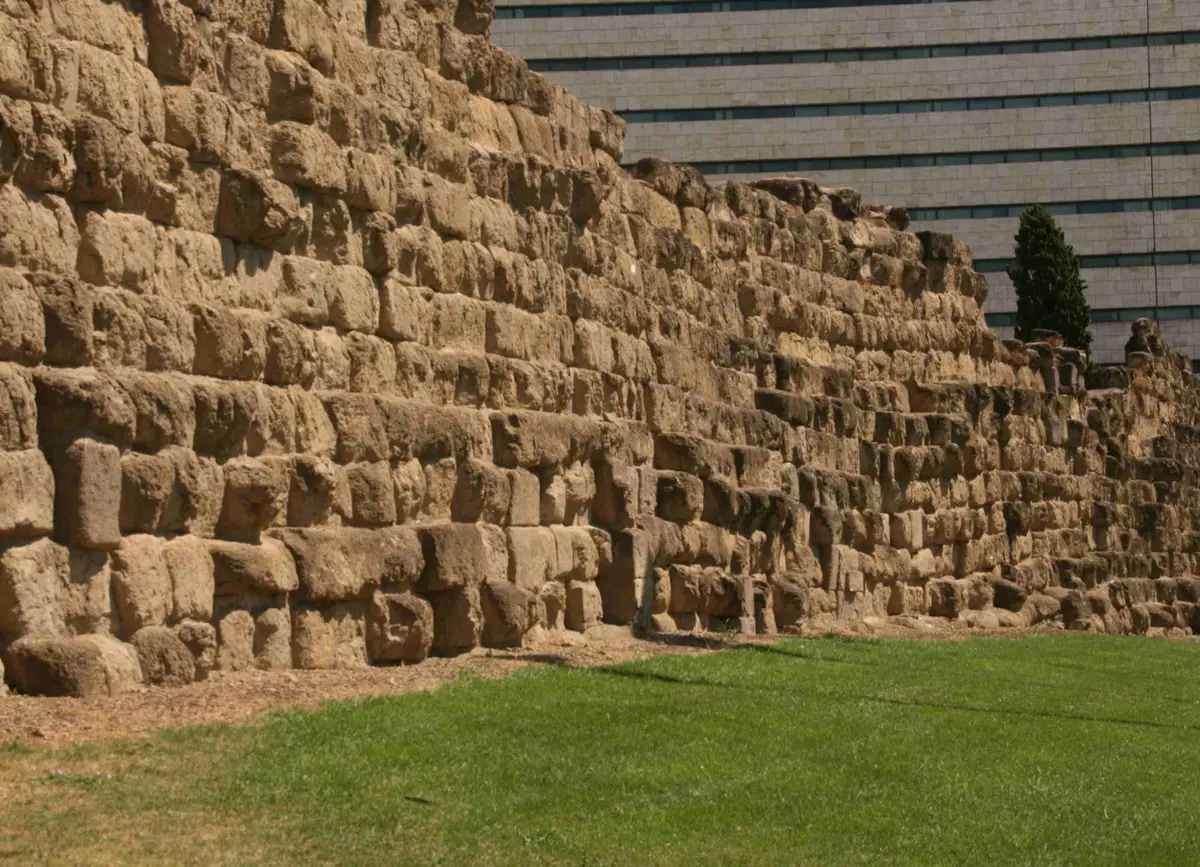
The Prince, dedicated in the end to Lorenzo di Piero de' Medici, grandson of Lorenzo the Magnificent, was meant to win back employment; it failed. In the following years he wrote the Discourses, read among friends in the Rucellai gardens in Florence, which argue that the quarrels between nobles and people made Rome free and great; The Mandrake (probably 1518), the best known of his three plays; and The Art of War (1521), the only one of his major prose works printed in his lifetime. Slowly the Medici took him back into favour: Cardinal Giulio de' Medici commissioned the Florentine Histories in 1520, and in 1525 Machiavelli presented them in Rome to Giulio, now Pope Clement VII. In 1526 he was put in charge of the city's walls as war with the Emperor Charles V came near. But when imperial troops sacked Rome in May 1527 and Florence drove out the Medici once more, the restored republic distrusted him as their servant. He fell ill and died in Florence on 21 June 1527, and was buried in Santa Croce.
Both his great books appeared only after his death, the Discourses in 1531 and The Prince in 1532, and the Church soon put all his works on its Index of Forbidden Books. A villain in Shakespeare's Henry VI already boasts that he can outdo him in murder; but Spinoza saw a republican in him, and Rousseau called The Prince 'the book of republicans'. Readers still argue whether he was a teacher of evil, a cool scientist of power, an Italian patriot or a lover of liberty, and historians of political thought count him among the greatest. Florence gave him a monument in Santa Croce in 1787, inscribed 'Tanto nomini nullum par elogium': no praise is equal to so great a name.
What happened
- 1469
Born in Florence to Bernardo Machiavelli, a doctor of law from a poor branch of an old family, and Bartolomea Nelli; he grows up in the Santo Spirito district south of the Arno and learns Latin from childhood.
- 1498
The friar Girolamo Savonarola, who had dominated Florence since the Medici were driven out in 1494, is hanged and burned with two companions in the Piazza della Signoria; Machiavelli had heard him preach that spring.
Florence: the Palazzo Vecchio, seat of the republic he served as Second Chancellor from 1498 to 1512; Savonarola was burned in the square before itAt 29, and with no known training in the chancery, he takes office as head of the republic's Second Chancery, and serves also as secretary to the Ten, the council for war and foreign affairs: the start of fourteen years of letters, reports and missions.
Florence: the Palazzo Vecchio, seat of the republic he served as Second Chancellor from 1498 to 1512; Savonarola was burned in the square before it- 1499
On one of his first missions he is sent to Countess Caterina Sforza at Forlì; later he takes from her fate the lesson that the goodwill of the people is a better fortress than walls.
- 1500
He is sent to the court of King Louis XII of France to seek terms for continuing the war against Pisa, the first of several meetings with the king whose Italian mistakes he later lists in The Prince.
- 1501
He marries Marietta Corsini; they will have several children.
- 1502
Florence makes Piero Soderini its gonfaloniere for life, and Machiavelli wins his confidence; the same year he meets Cesare Borgia, the son of Pope Alexander VI, for the first time.
At Senigallia, Cesare Borgia meets the captains who had plotted against him, has them seized, and that night has Vitellozzo Vitelli and Oliverotto da Fermo strangled; Machiavelli, Florence's envoy in his camp, later writes a famous account of the trap.
Senigallia: the Rocca Roveresca, whose surrender drew Cesare Borgia's rebel captains into his trap on 31 December 1502, with Machiavelli in his camp- 1503
Sent to Rome for the conclave, he watches Cesare Borgia help to elect his family's old enemy Giuliano della Rovere as Pope Julius II, and then sees Cesare's power collapse.
- 1504
With Soderini he announces the start of work on a dam and canals to turn the Arno away from rebel Pisa into the lagoon of Livorno, a scheme Leonardo da Vinci had studied the year before; floods break the works in the autumn and they are abandoned.
- 1506
The citizen militia he had urged on Soderini, country people drilled to replace hired soldiers, is raised and organized by Machiavelli himself; in 1507 he becomes secretary of its new board, the Nine.
- 1509
After almost fifteen years of war, Pisa agrees to surrender to Florence; the terms are settled in the presence of the Ten and of Machiavelli, who had been at the siege, and ratified the next day.
- 1512
A Spanish army sent by Pope Julius II's Holy League has sacked Prato and scattered the militia; Soderini goes into exile, and Giuliano de' Medici rides back into Florence.
Florence: the Palazzo Vecchio, seat of the republic he served as Second Chancellor from 1498 to 1512; Savonarola was burned in the square before itHe is dismissed from office, one of the few officials of the fallen republic to lose his post.
Florence: the Palazzo Vecchio, seat of the republic he served as Second Chancellor from 1498 to 1512; Savonarola was burned in the square before it- 1513
Wrongly suspected of a plot against the Medici, he has been jailed for twenty-two days and tortured with the strappado, a rope that wrenches the shoulders; he is freed in March, after Giovanni de' Medici is elected Pope Leo X on 11 March.
From the family farm at Sant'Andrea in Percussina he writes to his friend Francesco Vettori: by day the woods and the inn, at night his study, where he talks with the ancients and has written a little work 'On Principalities', The Prince.
Sant'Andrea in Percussina, near San Casciano: the family house where he lived in exile from 1513 and wrote The Prince- 1516
With Giuliano de' Medici dead, The Prince is dedicated instead to his nephew Lorenzo di Piero de' Medici, now ruling Florence; it reaches him this year, and he almost certainly never reads it.
- 1518
He probably writes The Mandrake, the comedy of a foolish old lawyer tricked into handing over his wife, while he reads his Discourses on Livy to friends in the Rucellai gardens.
- 1520
Through Cardinal Giulio de' Medici he is made the city's official historian, at 57 gold florins a year, and begins the Florentine Histories.
- 1521
The Art of War is printed in Florence, a dialogue set in the Rucellai gardens: the only one of his major prose works published in his lifetime.
- 1525
His comedy Clizia is staged for the first time, under his own direction.
In Rome he presents the Florentine Histories to Giulio de' Medici, now Pope Clement VII, and receives 120 ducats.
- 1526
As the pope's League of Cognac moves toward war with the Emperor Charles V, he is put in charge of the city's fortifications, and later joins his friend Francesco Guicciardini with the army.
- 1527
Imperial troops sack Rome and Florence drives out the Medici; he hopes to be given back his old post, but the restored republic distrusts him as a servant of the Medici and turns him down.
He falls ill and dies in Florence, after receiving the last rites with his wife and friends near him, and is buried in the family's tomb in Santa Croce.
Florence: the basilica of Santa Croce, where he was buried in 1527 and where his monument stands