Roman Republic
“Rome without kings, 509 to 27 BCE: elected consuls, a Senate and citizen assemblies that conquered the Mediterranean, then fell to their own generals and became the empire of Augustus.”
The Roman Republic was the state that Rome ran without a king for almost five hundred years. Roman tradition dated its start to 509 BCE, when Lucius Junius Brutus led the revolt that drove out the last king, Tarquin the Proud; it ended in January 27 BCE, when the Senate gave Octavian the name Augustus. In place of a king the Romans elected two consuls every year to command the armies. The Senate, a council of Rome's leading men, advised them and in practice set policy, and assemblies of citizens voted on laws and on war and peace and elected the officials. In an emergency one man could be made dictator, for six months at most. The Romans called their state res publica, 'the public thing', which gave us the word republic.
Its first two centuries were shaped by a long struggle between the patricians, the old noble families, and everyone else, the plebeians. The plebeians won officials of their own, the tribunes, who could veto the acts of magistrates; a written code of law, the Twelve Tables of about 450 BCE; and in 367 the right to stand for consul. Meanwhile Rome, sacked by Gauls around 390, fought its way to the mastery of Italy against the Latins, the Samnites and King Pyrrhus, turned the defeated into allies who fought in its armies, and tied them together with colonies and roads such as the Via Appia. Then it turned on Carthage. In three Punic Wars, from 264 to 146, Rome built a navy, took Sicily as its first province, survived Hannibal's invasion and the slaughter at Cannae, and in the end destroyed Carthage. In the same decades its legions broke the kings of Macedonia, and in 146 Corinth was destroyed as well: Rome was the master of the Mediterranean.
Conquest changed Rome itself. Wealth and slaves poured into Italy, estates worked by slaves spread, and many small farmers lost their land. When the tribune Tiberius Gracchus tried to share out public land in 133, senators and their followers killed him at the assembly, and his brother Gaius died in a riot in 121. Marius, consul seven times, filled his legions with poor volunteers who looked to their general for a reward; the Italian allies had to fight Rome in the Social War, which broke out in 91, to win citizenship; and in 88 Sulla became the first general to march a Roman army on Rome. Pompey, Crassus and Caesar then shared power in a private pact. Caesar conquered Gaul, crossed the Rubicon in January 49, beat Pompey at Pharsalus and was made dictator for life, until senators who called themselves liberators stabbed him on 15 March 44. Thirteen more years of civil war ended only when Octavian, Caesar's heir, defeated Antony and Cleopatra at Actium in 31.
The Republic's shell outlived it. Augustus kept the consuls, the Senate and the powers of the tribunes, and had the names of every consul since the Republic's first year carved on an arch in the Forum; his successors ruled through the same old offices. Roman law began with the Twelve Tables, the base of all later Roman private law, and the Republic's words are still in use: republic, senate, veto, plebeian, and dictator, which took its modern sense from Sulla's rule. Above all, the story of how a republic of citizens slid into one man's rule, as rich and poor pulled apart, generals built private armies and one rule after another was broken, has been read as a warning ever since.
What happened
- 509 BCE
By Roman tradition, Lucius Junius Brutus leads a revolt that drives out Tarquin the Proud, the last king; he and Collatinus become the first consuls, and the great temple of Jupiter on the Capitol is dedicated.
The Capitol: the temple of Jupiter Optimus Maximus, dedicated in the Republic's first year, 509 BCE - 494 BCE
The plebeians unite, form an assembly of their own and win their own officials, the tribunes of the plebs, who can veto the acts of the patrician magistrates.
- 451 BCE
A board of ten men writes down Rome's laws; the Twelve Tables, set up in bronze in the Forum, become the base of all later Roman private law.
The Roman Forum: the Republic's political centre, with the Comitium where the assemblies met and the Senate house - 390 BCE
A Gallic army routs the Romans at the river Allia and sacks Rome; the Capitol holds out under siege, and the Gauls leave only for a ransom in gold.
- 378 BCE
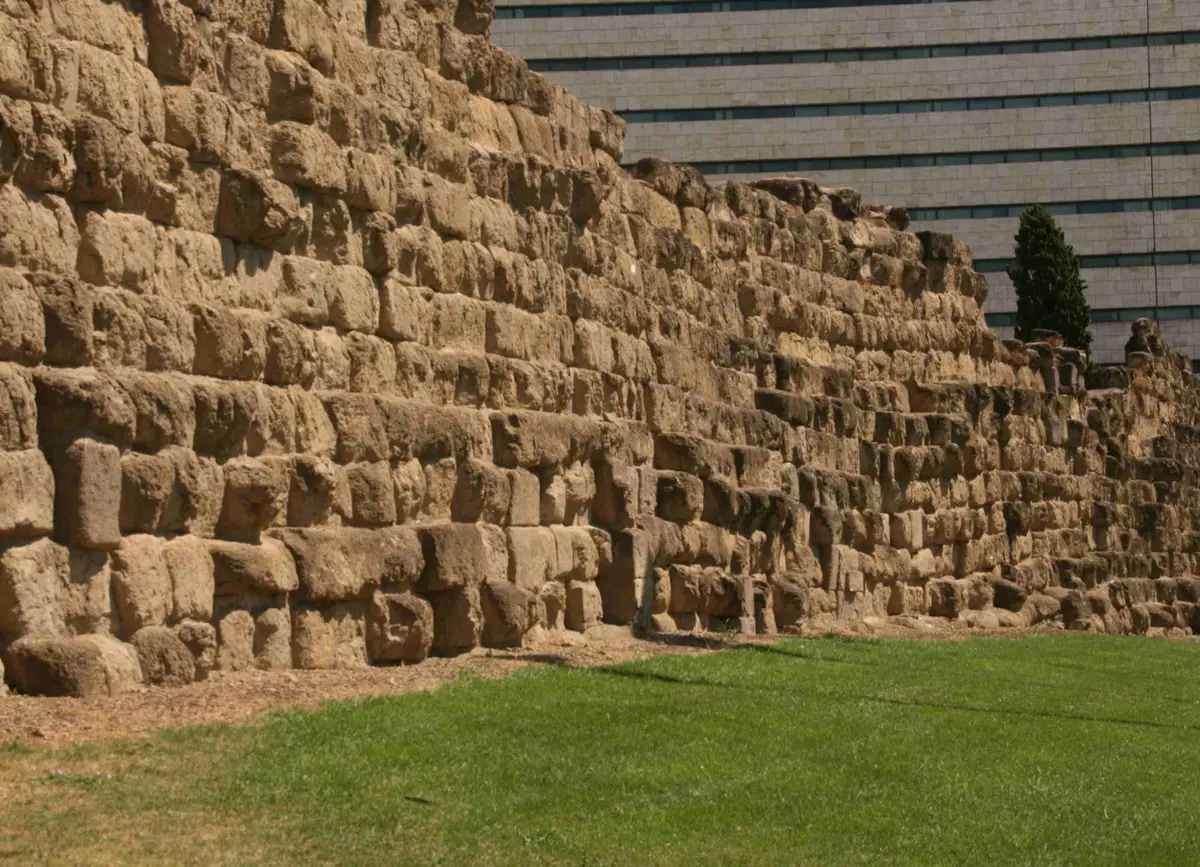
Rome rings its hills with a stone wall of tufa from conquered Veii, later called the Servian Wall.
The Servian Wall at Termini: Rome's 4th-century BCE city wall - 367 BCE
The Licinian-Sextian laws open the consulship to plebeians; the first plebeian consul takes office the next year.
- 338 BCE
Rome wins the Latin War against its old allies of Latium and becomes the leading power of central Italy.
- 312 BCE
The censor Appius Claudius Caecus begins the Via Appia, Rome's first great military road, running south towards the lands it is conquering.
- 298 BCE
The Third Samnite War begins in the year Lucius Cornelius Scipio Barbatus is consul; the victory at Sentinum in 295 breaks the Samnites and their allies, and the war ends in 290.
The Tomb of the Scipios on the Via Appia, built for Scipio Barbatus, consul in 298 BCE - 280 BCE
King Pyrrhus of Epirus lands in southern Italy with 25,000 soldiers and 20 elephants to help Tarentum; he wins costly victories in 280 and 279, but is beaten at Beneventum in 275, and by 272 Rome is master of Italy.
- 264 BCE
A Roman army crosses to Sicily to relieve Messana: the First Punic War with Carthage begins. Rome builds a war fleet and wins at Mylae in 260.
- 241 BCE
The consul Lutatius Catulus destroys the Carthaginian fleet off the Aegates Islands; Carthage makes peace, and Sicily becomes Rome's first province.
The Aegates (Egadi) Islands: the sea battle of 10 March 241 BCE that ended the First Punic War- 218 BCE
Hannibal crosses the Ebro in May, then the Pyrenees, the Rhône and, in autumn snow, the Alps; by October he is in the Po valley, where he beats the Romans at the Ticinus and the Trebia.
- 216 BCE
At Cannae in Apulia, Hannibal surrounds and destroys a Roman army of some 80,000 men, killing one of the consuls: Rome's worst defeat. Yet Rome fights on.
Cannae: Hannibal's victory of 2 August 216 BCE- 202 BCE
Scipio, who has carried the war to Africa, defeats Hannibal at Zama; in 201 Carthage hands over its fleet, gives up Spain and agrees to pay 10,000 talents.
Zama: Scipio's victory over Hannibal, 19 October 202 BCE- 168 BCE
Lucius Aemilius Paullus defeats King Perseus at Pydna, ending the kingdom of Macedonia, which Rome had already beaten at Cynoscephalae in 197; he sets up his victory monument at Delphi.
Pydna: Aemilius Paullus ends the Macedonian kingdom, 22 June 168 BCE- 146 BCE
Scipio Aemilianus storms Carthage, burns it and enslaves its last 50,000 people; the same year a Roman army destroys Corinth. Africa and Macedonia become provinces.
The Punic ports of Carthage, the city Rome destroyed in 146 BCE - 133 BCE
The tribune Tiberius Gracchus passes a law to share out public land among poor citizens, deposing a fellow tribune who vetoes it; senators and their followers kill him and many supporters at the assembly. The same year Rome gains its province of Asia in western Anatolia.
- 121 BCE
Gaius Gracchus, tribune in 123 and 122, who had pushed through cheap grain, new colonies and courts manned by rich non-senators, is killed in a riot with his ally Flaccus; many of their followers are executed.
- 107 BCE
Gaius Marius, from an equestrian family of Arpinum, is elected consul and enrols volunteers without property; consul year after year, he destroys the migrating Teutones and Cimbri in 102 and 101.
- 91 BCE
The tribune Marcus Livius Drusus fails to win citizenship for the Italian allies, and they rise against Rome in the Social War; in 90 and 89 Rome gives citizenship to those who stay loyal or lay down their arms.
- 88 BCE
Sulla, consul, learns that a tribune's law has handed his command against Mithridates to Marius; he marches his army on Rome, the first time a Roman army takes the city.
- 82 BCE
Back from the war against Mithridates, Sulla wins the civil war, takes Rome and is made dictator; his proscription lists send hundreds to death without trial. He reshapes the state in 81, lays down the dictatorship at the start of 80 and dies early in 78.
- 73 BCE
Seventy-eight gladiators break out of a school at Capua; under the Thracian Spartacus their revolt grows into a slave war that Crassus puts down in 71.
- 63 BCE
The consul Cicero crushes Catiline's plot and has his Roman accomplices executed without trial; in the East, Pompey has defeated Mithridates and makes Syria a Roman province.
- 58 BCE
Caesar, consul in 59 and allied since 60 with Pompey and Crassus, begins the conquest of Gaul; it ends with the siege of Alesia in 52.
- 49 BCE
With Crassus killed by the Parthians at Carrhae in 53, the Senate orders Caesar to give up his legions; in the night of 10 to 11 January he crosses the Rubicon into Italy, and civil war begins.
- 48 BCE
Caesar defeats Pompey and the Senate's army at Pharsalus in Thessaly; Pompey flees to Egypt and is murdered as he comes ashore on 28 September.
Pharsalus: Caesar defeats Pompey, 9 August 48 BCE- 44 BCE
Caesar, now dictator for life, is stabbed to death by more than sixty senators led by Cassius and Brutus, at a meeting of the Senate in the hall of Pompey's theatre.
Largo Argentina: four Republican temples and the Curia of Pompey, where Caesar was killed on 15 March 44 BCE- 43 BCE
A law makes Octavian, Antony and Lepidus triumvirs for five years; their proscriptions kill many senators and knights, Cicero among the first, and in 42 they destroy Brutus and Cassius at Philippi.
- 31 BCE
Octavian's fleet under Agrippa defeats Antony and Cleopatra off Actium; a year later both kill themselves in Alexandria and Egypt becomes Roman.
Actium: Octavian's fleet defeats Antony and Cleopatra, 2 September 31 BCE- 27 BCE
Three days after handing his powers back to the Senate, Octavian is given the name Augustus. Consuls are still elected and listed on the Fasti, but one man now rules: the Republic has become the Roman Empire.
The Roman Forum: the Republic's political centre, with the Comitium where the assemblies met and the Senate house