Roman Empire
“The state Augustus founded in 27 BCE that ruled the whole Mediterranean for five centuries, until its western half fell to Germanic kings in 476.”
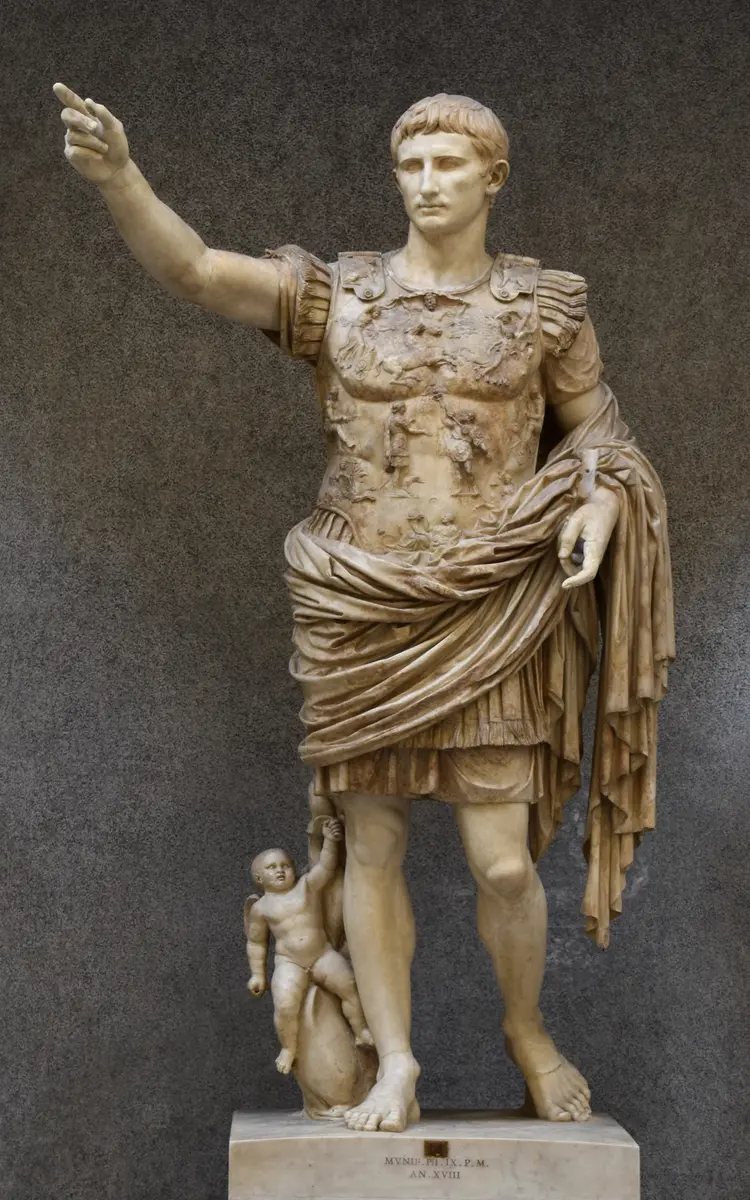
The Roman Empire was the state that ruled the whole Mediterranean world for five centuries, from Britain and the Rhine to the Euphrates and the edge of the Sahara, with an emperor at its head and Rome as its capital. It grew out of the Roman Republic, which had already conquered most of these lands but tore itself apart in civil wars. When Octavian, the adopted heir of Julius Caesar, defeated Mark Antony and Cleopatra at Actium in 31 BCE, he was the only man left with an army. In January 27 BCE the Senate gave him the name Augustus. He kept the Republic's offices and its Senate in name, but from then on one man ruled, and the system he built outlived him by centuries.
The first two centuries are remembered as the Pax Romana, the Roman peace. Inside the frontiers there were few wars, and roads, harbours and one silver coinage tied together perhaps 60 million people, between a sixth and a quarter of everyone alive. Towns from Spain to Syria were built to the same pattern, with a forum, baths, temples and an amphitheatre, and their leading families spoke Latin in the west and Greek in the east. Under Trajan, who died in 117, the empire reached its widest extent. His successor Hadrian gave up the newest conquests beyond the Euphrates and fixed the frontiers with walls and forts, the best known across northern England. In 212 every free man in the empire became a Roman citizen.
From 235 to 284 the empire nearly broke apart. At least thirty emperors were made and killed by their own soldiers, the Persians attacked in the east and Germanic peoples across the Rhine and the Danube, and the coinage lost its value. Diocletian restored order by sharing power among four emperors and reorganising the army, the provinces and the money. Constantine, who won the west at the Milvian Bridge in 312, became the first Christian emperor and in 330 made a second capital of Constantinople. After 395 the empire was ruled by two courts, one in the east and one in the west, and never again by one man. The west, poorer and with longer frontiers, could not stop the Goths, Vandals and others who crossed into it: the Visigoths sacked Rome in 410, the Vandals took North Africa and sacked the city again in 455, and in 476 the general Odoacer deposed the last western emperor, a boy called Romulus Augustulus, and named no one in his place.
The eastern half lived on as what historians call the Byzantine Empire until the Ottomans took Constantinople in 1453. In the west the empire's legacy is everywhere: the languages that grew out of Latin, from Portuguese to Romanian; the Catholic Church and its bishop in Rome; Roman law beneath most of Europe's legal systems; and the idea of one law and one citizenship for peoples of many languages. Historians still argue whether the west fell in a catastrophe or was slowly transformed into the kingdoms of the Middle Ages, but 476 has stayed the conventional line between the ancient world and the medieval one.
What happened
- 27 BCE
The Senate gives Octavian, Caesar's heir and the victor of Actium, the name Augustus. He keeps the Republic's offices in name while holding the armies and the frontier provinces himself: the Principate begins.
The Roman Forum: the old centre of Rome, its temples, law courts and Senate house- 9
In the Teutoburg Forest the Germanic leader Arminius ambushes three legions under Publius Quinctilius Varus and destroys them over several days; Rome gives up its plan for a province east of the Rhine.
Kalkriese: the probable site of the Teutoburg Forest battle of 9 CE, where three legions were lost- 14
Augustus dies after more than forty years in power, leaving the Res Gestae, the account of his deeds, to be set up in Rome and copied across the empire; his stepson Tiberius succeeds him.
The Temple of Augustus and Rome, Ankara: the best surviving copy of Augustus's Res Gestae- 64
A fire breaks out by the Circus Maximus and burns for nine days, destroying much of Rome; Nero blames the Christians and has many of them executed.
The Roman Forum: the old centre of Rome, its temples, law courts and Senate house- 70
Titus, son of the emperor Vespasian, takes Jerusalem after a long siege and destroys the Temple; the spoils are carried through Rome in the triumph of 71.
- 80
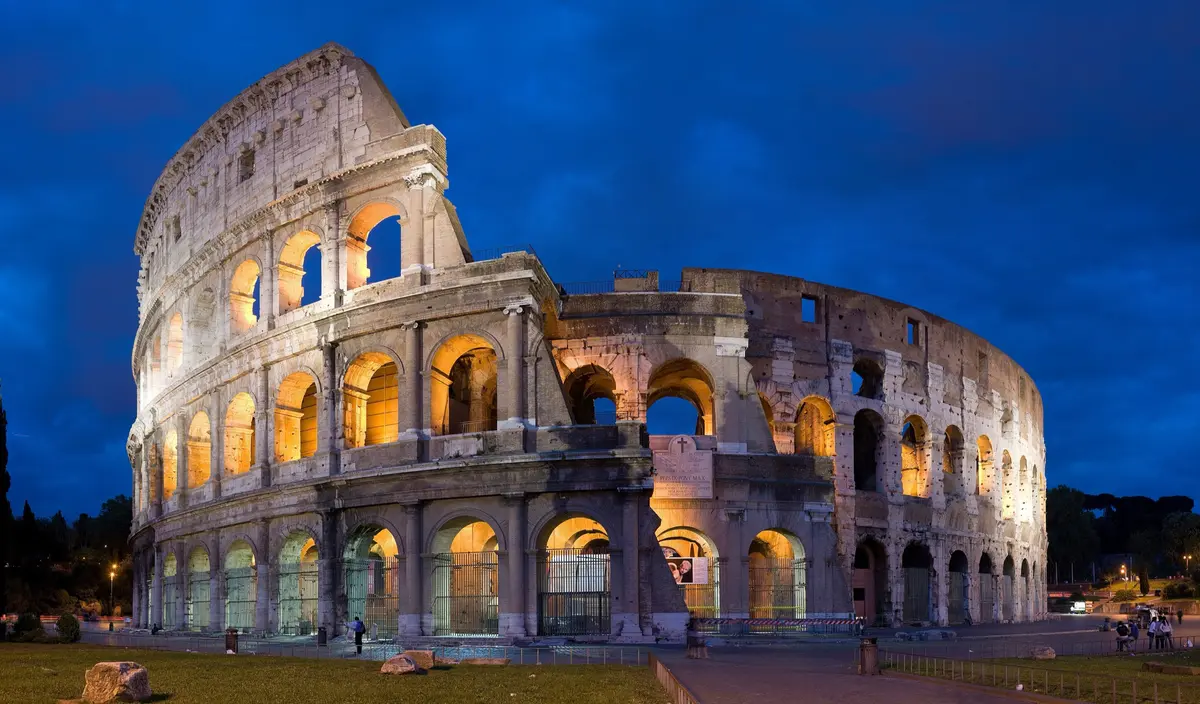
Titus inaugurates the Flavian Amphitheatre, the Colosseum, begun by his father about 72, with a hundred days of games.
The Colosseum: the Flavian Amphitheatre, opened by Titus in 80 CE - 113
Trajan dedicates his column in Rome, carved with the conquest of Dacia, which he made a province in 106 together with Arabia; when he dies in 117 after a war against Parthia, the empire is at its largest.
- 122
Hadrian visits Britain and orders a wall across the north of the island, from the Tyne to the Solway; he has already given up Trajan's conquests beyond the Euphrates.
Housesteads (Vercovicium): a fort on Hadrian's Wall, the frontier begun in 122 CE - 180
Marcus Aurelius dies at Vindobona (Vienna) during his wars on the Danube; under his son Commodus the historian Cassius Dio says the empire passed from an age of gold to one of iron and rust.
- 212
Caracalla's Constitutio Antoniniana makes every free man in the empire a Roman citizen.
- 235
The murder of the emperor Severus Alexander by his own soldiers opens fifty years of crisis: at least thirty emperors, most of them killed by their troops, invasions by Persians and Germanic peoples, plague and a collapsing coinage.
- 271
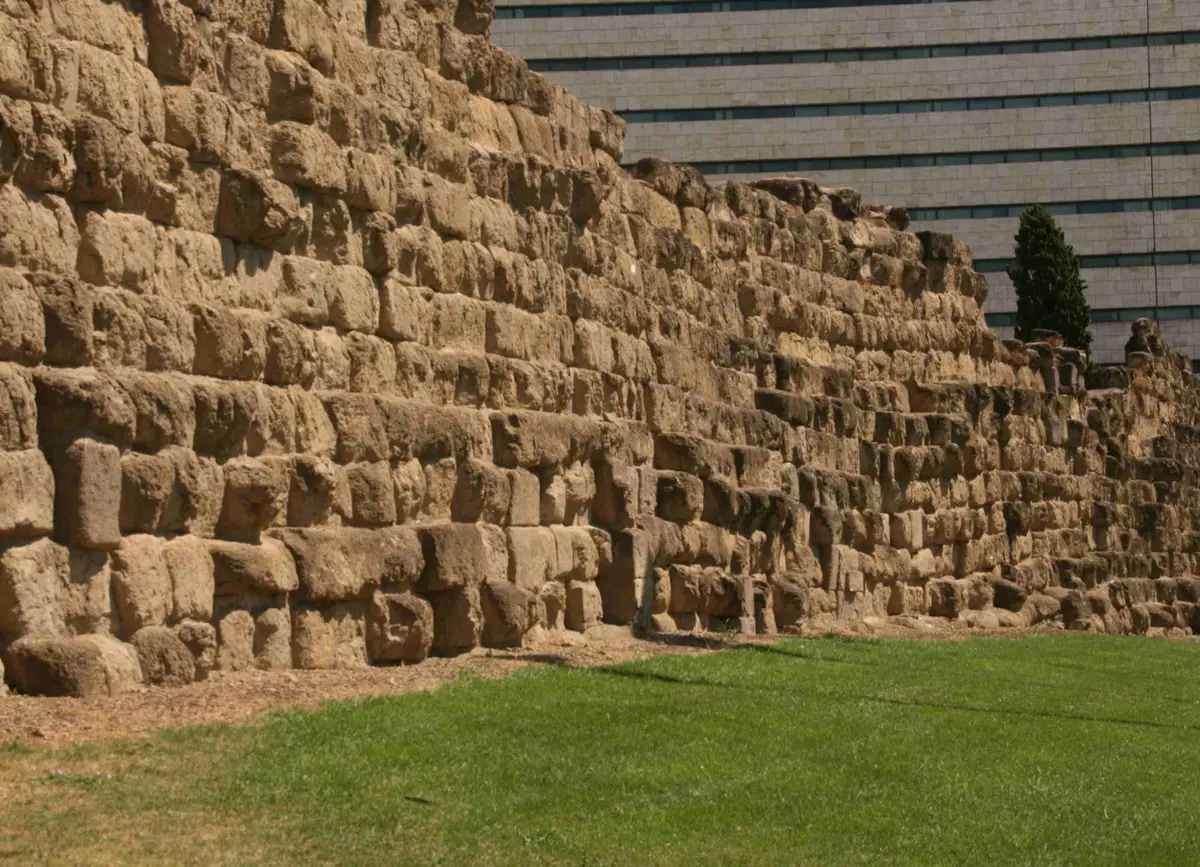
Aurelian, who will win back the breakaway Gallic and Palmyrene empires, orders a new wall around Rome itself, the first in centuries.
- 284
The army proclaims Diocletian emperor. In 293 he shares power among four rulers, two senior and two junior, and then reforms the provinces, the army and the coinage.
- 305
Diocletian and his co-emperor Maximian give up the throne together; Diocletian retires to his palace at Split, while the system of four emperors falls apart in civil war.
Diocletian's palace, Split: where the emperor retired after abdicating in 305- 312
Constantine defeats Maxentius at the Milvian Bridge outside Rome, having put a Christian sign on his soldiers' shields; the next year, at Milan, he and Licinius grant the Christians freedom of worship.
The Milvian Bridge, Rome: where Constantine defeated Maxentius on 28 October 312- 330
Constantine dedicates Constantinople, the old Greek city of Byzantium rebuilt on the Bosporus, as the empire's new residence.
Constantinople: Constantine's new capital, the imperial residence from 330- 378
At Adrianople in Thrace the Goths, admitted across the Danube two years before, destroy an eastern army and kill the emperor Valens.
Adrianople (Edirne): where the Goths killed the emperor Valens on 9 August 378- 395
Theodosius, the last emperor to rule the whole empire, dies at Milan; his sons Arcadius in Constantinople and Honorius in the west divide it, and it is never united again.
- 410
Alaric's Visigoths enter and plunder Rome, the first enemy to take the city in eight centuries; the shock is felt across the Roman world.
The Roman Forum: the old centre of Rome, its temples, law courts and Senate house- 476
The general Odoacer deposes the boy emperor Romulus Augustulus and, instead of naming another, writes to Constantinople that one emperor is enough; the western empire is over.
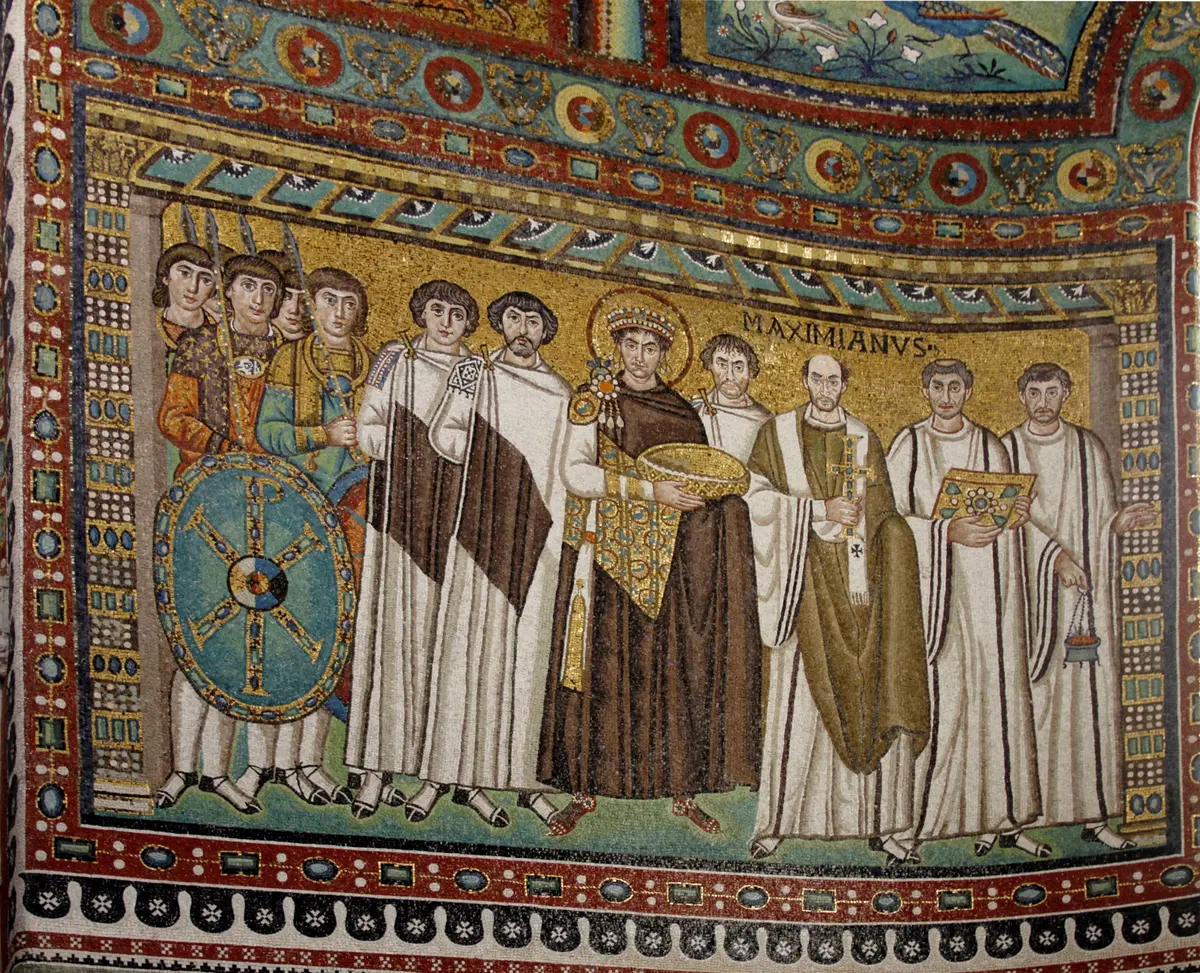
Ravenna: the western emperors' capital from 402, where Odoacer deposed Romulus Augustulus in 476