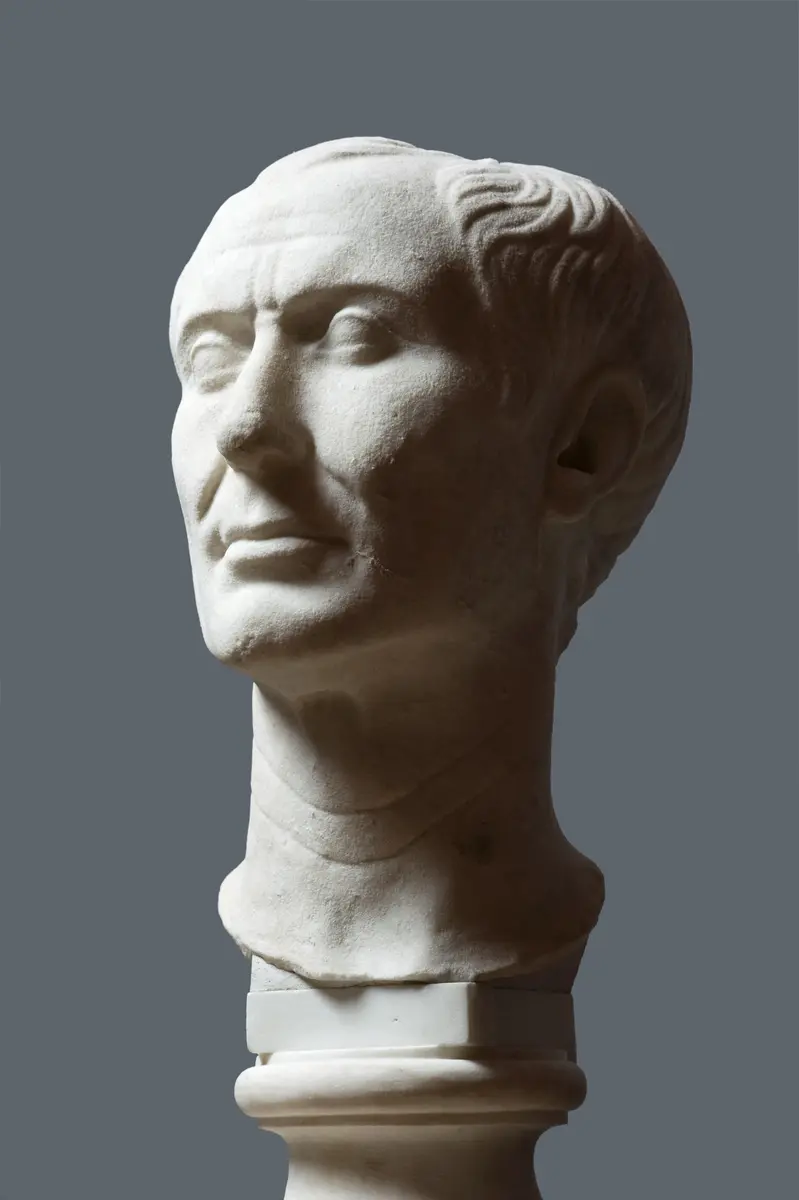
Julius Caesar
“The general who conquered Gaul, crossed the Rubicon to win Rome's civil war, made himself dictator for life and was stabbed to death in the Senate on the Ides of March, 44 BCE.”
Gaius Julius Caesar was born in Rome in July 100 BCE into the Julii, an old patrician family that claimed the goddess Venus as its ancestor but was not rich. His aunt Julia was the wife of Gaius Marius, the general who was then the leading man in Rome, and at sixteen, his father dead, Caesar married Cornelia, the daughter of Marius's ally Cinna. When Marius's enemy Sulla became dictator he ordered the young man to divorce her; Caesar refused, went into hiding and was pardoned only when powerful friends pleaded for him. He served in Asia, was captured by pirates on his way to study oratory at Rhodes and had them crucified once his ransom was paid, then climbed the ladder of Roman offices on borrowed money: quaestor in Spain, aedile in 65 with famously lavish games, and in 63 pontifex maximus, Rome's chief priest, an office he held for the rest of his life.
In 60 BCE he made a private pact with Pompey, Rome's greatest general, and Crassus, its richest man, the alliance later called the First Triumvirate, and as consul in 59 he pushed their programme through by force; Pompey married his only child, Julia. His reward was the command of Gaul. Between 58 and 50 BCE he conquered everything up to the Rhine, bridged the Rhine and twice crossed to Britain, and in 52 he broke a rising of almost all Gaul under the Arvernian chief Vercingetorix by shutting him into the hill town of Alesia behind a double ring of siege works. His own account, the Commentaries on the Gallic War, made him a hero in Rome; by one reckoning a million Gauls were killed and another million sold as slaves.
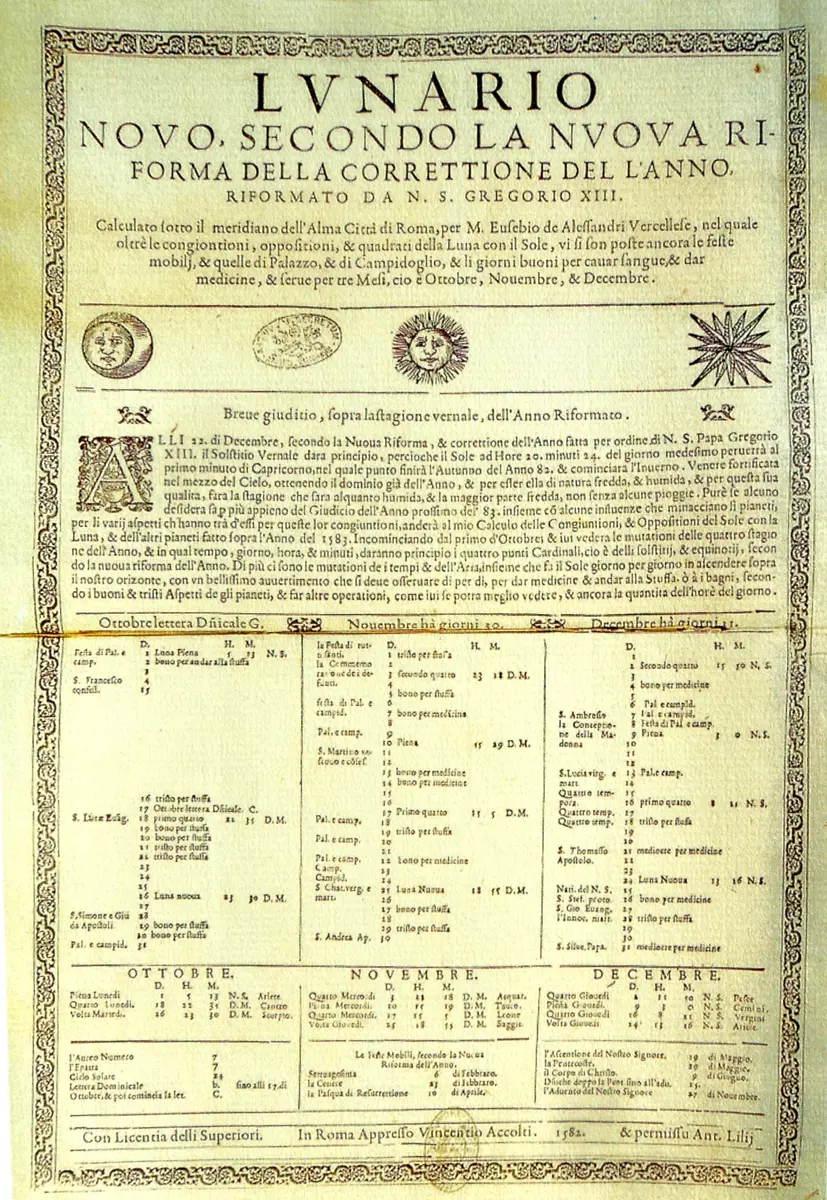
Julia died in 54 and Crassus was killed by the Parthians in 53, and Pompey drifted to the side of the senators who wanted Caesar stripped of his army and put on trial. On the night of 10 to 11 January 49 BCE Caesar led a legion across the Rubicon, the little river at the edge of his province, and started a civil war. Within two months he held Italy; he beat Pompey's legions in Spain and Pompey himself at Pharsalus in Greece on 9 August 48. Pompey fled to Egypt and was murdered there; Caesar, following him, took the side of the young queen Cleopatra and then won further wars at Zela ('I came, I saw, I conquered'), Thapsus and Munda. He pardoned his Roman enemies instead of killing them, and as dictator he cut the grain dole, settled veterans and the poor in new colonies, rebuilt Carthage and Corinth, gave Roman citizenship to provincials and, with the Alexandrian astronomer Sosigenes, replaced Rome's muddled calendar with a solar year of 365 days and a leap day every fourth year, in force from 1 January 45 BCE.
Early in 44 he was made dictator for life and his portrait appeared on Rome's coins, and when Mark Antony offered him a crown at the Lupercalia on 15 February many believed he wanted to be king. More than sixty senators, led by Cassius and by Marcus and Decimus Brutus, several of them enemies he had pardoned, stabbed him to death at a meeting of the Senate in the Curia of Pompey on the Ides of March, 15 March 44 BCE, days before he was to leave for a war against Parthia. He fell, with twenty-three wounds, at the foot of Pompey's statue. His body was burned in the Forum on 20 March, and his will made his great-nephew Octavius his son and heir.
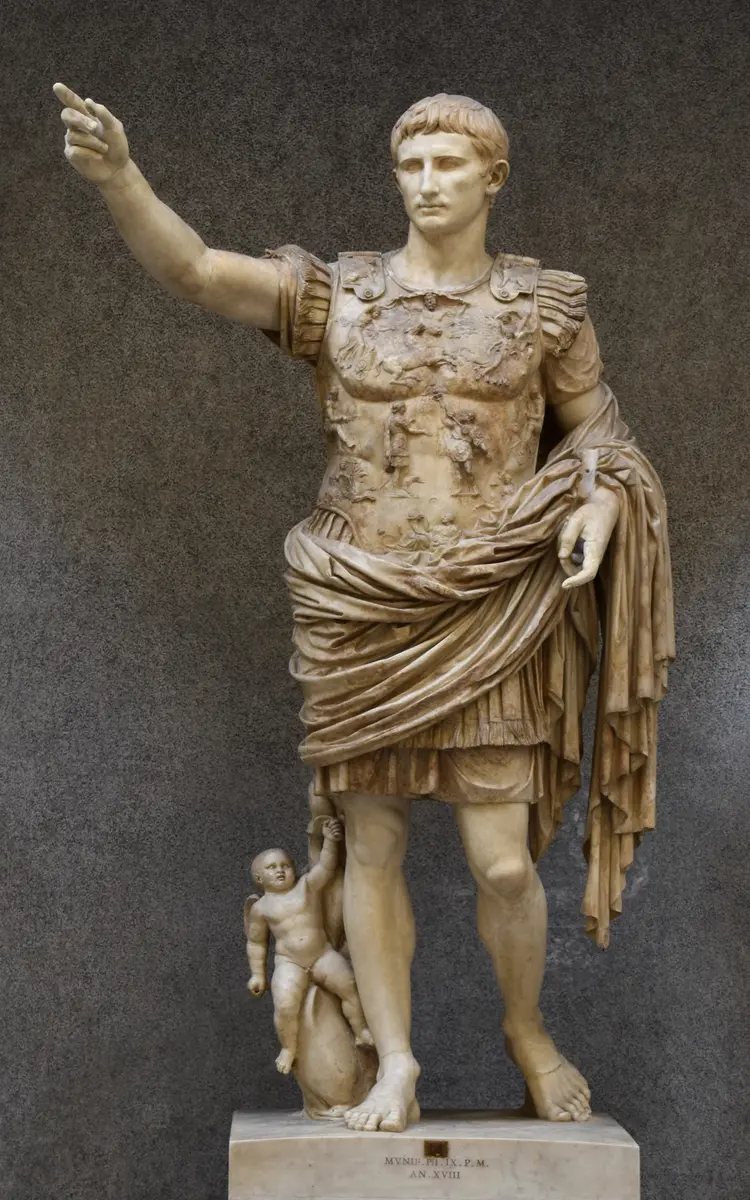
The murder did not save the Republic. Thirteen more years of civil war ended with that heir ruling alone as Augustus, the first emperor, and Caesar was declared a god of the Roman state. Already in his lifetime the month of his birth, Quintilis, had been renamed July in his honour, and his calendar, slightly corrected by Pope Gregory XIII, is the one the world still uses. His Commentaries, terse reports written as propaganda and still admired as literature, are read to this day.
What happened
- 100 BCE
Born in Rome to Gaius Julius Caesar and Aurelia, of the patrician Julii, who claimed descent from the goddess Venus; his aunt Julia is the wife of the great general Gaius Marius.
- 84 BCE
With his father dead, the sixteen-year-old marries Cornelia, daughter of Marius's ally Cinna; she will bear his only child, Julia.
- 82 BCE
Sulla, Marius's enemy, returns from the East and becomes dictator; he orders Caesar to divorce Cornelia. Caesar refuses, is stripped of a priesthood and his inheritance, goes into hiding and is pardoned only after his friends plead for him; he leaves Italy to serve in Asia.
- 75 BCE
On his way to study oratory at Rhodes he is captured by pirates and held for weeks until his ransom arrives; once free, he raises ships, captures them and has them crucified, as he had promised them he would.
- 69 BCE
Elected quaestor, he speaks at the funerals of his aunt Julia and his wife Cornelia, praising Marius and Cinna; serving in Further Spain, he sees a statue of Alexander at Gades and laments that at his age Alexander had conquered the world.
- 65 BCE
As aedile he puts on games of unheard-of splendour with borrowed money, and makes his name with the crowd.
- 63 BCE
He is elected pontifex maximus, Rome's chief priest, and moves into the official house on the Sacred Way in the Forum. In December he argues in the Senate against executing Catiline's fellow conspirators, and loses.
The Roman Forum: his home as chief priest from 63 BCE, and where his body was burned in March 44 - 62 BCE
Praetor. When a man, Publius Clodius, is found at the women-only rites of the Good Goddess in his house, he divorces his second wife, Pompeia.
The Roman Forum: his home as chief priest from 63 BCE, and where his body was burned in March 44 - 61 BCE
Crassus stands surety for his huge debts and he goes as governor to Further Spain, where a campaign in the north-west makes him rich.
- 60 BCE
Back in Rome he gives up a triumph to stand for consul, and makes a secret pact with Pompey and Crassus, the alliance later called the First Triumvirate.
- 59 BCE
Consul, he forces through land for Pompey's veterans and Pompey's settlement of the East over his colleague Bibulus. Pompey marries his daughter Julia, he marries Calpurnia, and a law gives him the provinces of Cisalpine Gaul and Illyricum, to which Transalpine Gaul is added.
- 58 BCE
He leaves for his provinces, stops the migrating Helvetii and defeats them near Bibracte, then crushes the German leader Ariovistus near modern Colmar: the conquest of Gaul begins.
- 57 BCE
He subdues the Belgic peoples of the north, crushing the Nervii at the river Sabis; the Senate decrees fifteen days of thanksgiving, an honour never given before.
- 56 BCE
At Luca he renews the pact with Pompey and Crassus: they will be consuls in 55 and his command in Gaul is extended for five years.
- 55 BCE
His engineers bridge the Rhine for a raid into Germany, and he crosses the Channel to Britain; Rome decrees twenty days of thanksgiving.
- 54 BCE
He invades Britain again and crosses the Thames. His daughter Julia, Pompey's wife and the bond between the two men, dies.
- 53 BCE
Crassus is killed by the Parthians at Carrhae; of the three partners only Caesar and Pompey are left.
- 52 BCE
Almost all Gaul rises under Vercingetorix, chief of the Arverni. Caesar storms Avaricum (Bourges) but is beaten back at Gergovia, his first real defeat in Gaul.
At Alesia, inside a double ring of siege works, his legions hold off the besieged and a huge Gallic relief army at once; the relief army breaks, and Vercingetorix surrenders.
Alesia (Mont Auxois, Burgundy): the siege that broke Gaul, and Vercingetorix's surrender, 52 BCE- 51 BCE
He puts down the last revolts, cutting off the hands of the defenders of Uxellodunum, and prepares his seven books on the Gallic War for publication.
- 49 BCE
On the night of 10 to 11 January, ordered by the Senate to give up his army, he leads the Thirteenth Legion across the Rubicon into Italy and starts a civil war; Suetonius has him say 'the die is cast'.
The Rubicon at Savignano: the river he crossed into Italy, night of 10 to 11 January 49 BCEWithin two months he holds Italy: Pompey and most of the Senate sail from the heel of Italy to Greece on 17 March. A mint travelling with his army strikes silver in his name.
At Ilerda in Spain Pompey's legions surrender to him; he spares their commanders, and back in Rome he is named dictator for the first time.
- 48 BCE
After a defeat at Dyrrhachium he wins the decisive battle of the civil war at Pharsalus in Thessaly; Pompey flees to Egypt, where he is murdered.
Pharsalus, Thessaly: his victory over Pompey, 9 August 48 BCE- 47 BCE
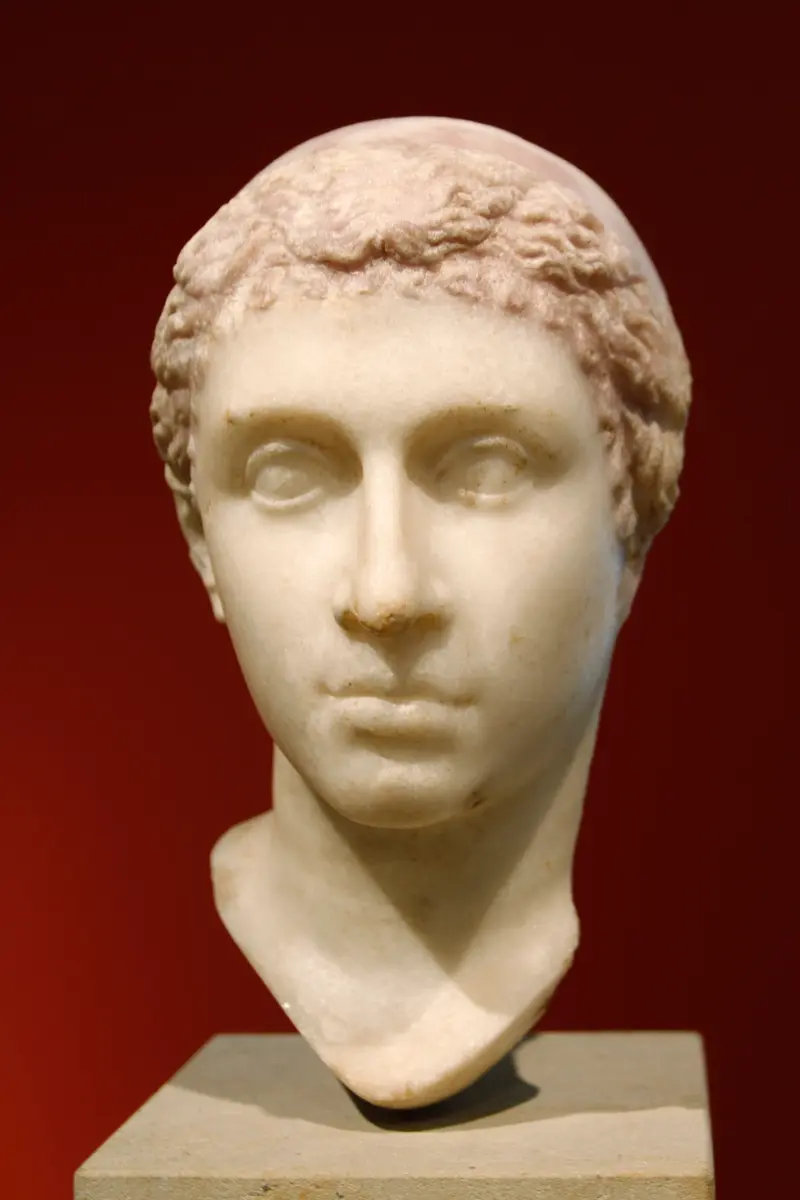
In Alexandria he takes Cleopatra's side against her brother Ptolemy XIII; besieged through the winter, he defeats the king, whose body is found in the Nile, and leaves her on the throne. A son, Caesarion, said to be his, is born in June.
He crushes Pharnaces of Pontus at Zela in a campaign he reports in three words, 'veni, vidi, vici', and is back in Rome in September.
- 46 BCE
At Thapsus in Africa he destroys the last republican army; Cato kills himself rather than accept his pardon.
Four triumphs, over Gaul, Egypt, Pontus and Africa; Vercingetorix is led through Rome and put to death. On 26 September, the last day, he dedicates his new forum and its Temple of Venus Genetrix.
- 45 BCE
His new calendar comes into force: 365 days and a leap day every fourth year, worked out with the Alexandrian astronomer Sosigenes. To bring the seasons back into line, the year 46 had been stretched to 445 days.
At Munda in Spain he defeats a son of Pompey in his last battle.
- 44 BCE
Now dictator for life, his portrait on the coins of Rome, he sits on a golden chair at the Lupercalia and refuses the crown that Mark Antony offers him; many believe the refusal was staged.
The Ides of March: at a meeting of the Senate in the Curia of Pompey, more than sixty conspirators led by Cassius and Marcus and Decimus Brutus stab him twenty-three times; he dies at the foot of Pompey's statue, days before he was to leave for war against Parthia.
The Curia of Pompey, Largo di Torre Argentina, Rome: where he was killed, 15 March 44 BCE