Cleopatra
“Egypt's last queen, who held Caesar and then Antony, lost at Actium, and chose death over Octavian's triumph.”
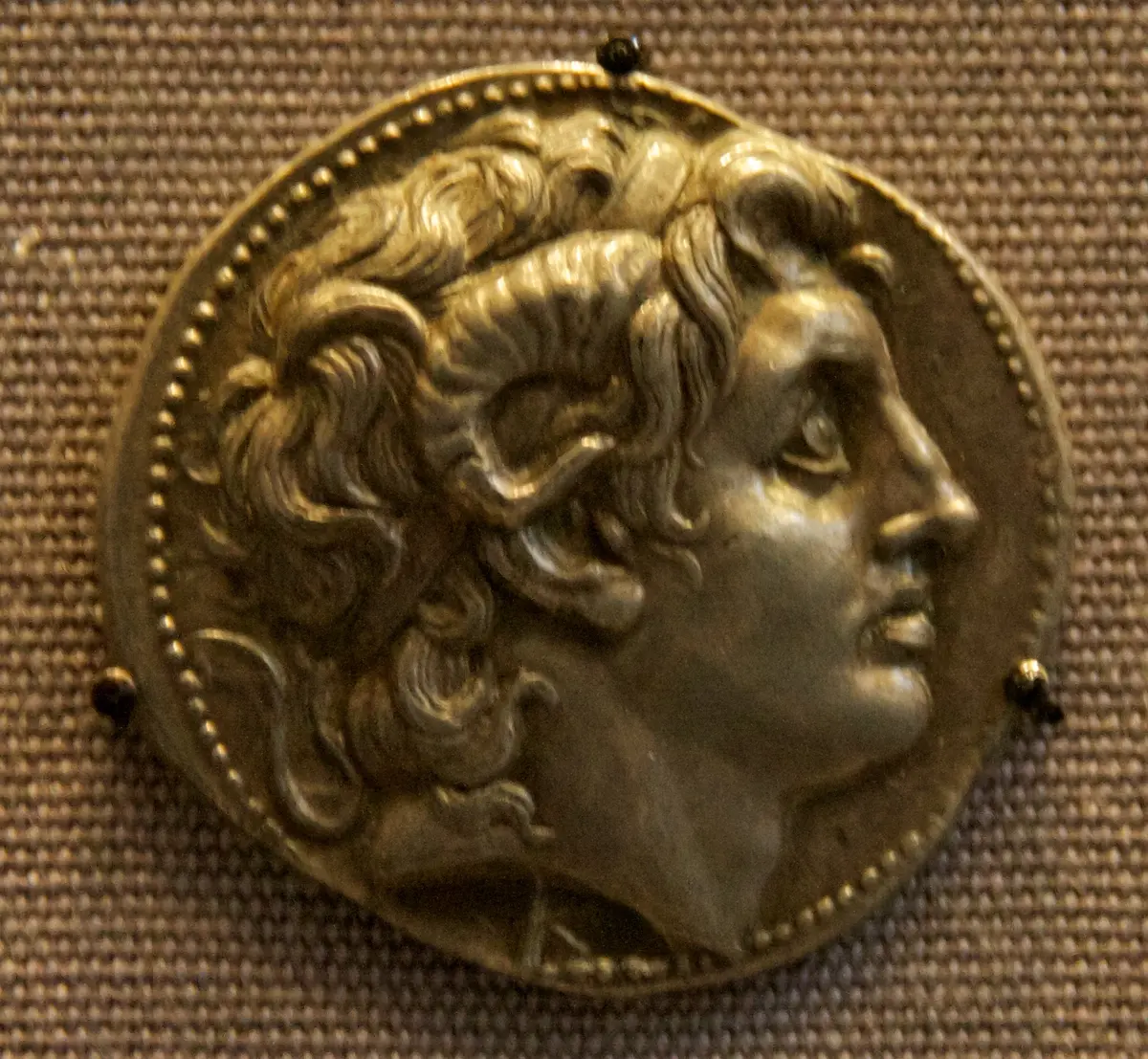
Cleopatra VII was born in the winter of 70–69 BCE, the daughter of Ptolemy XII Auletes, king of Egypt. Her family was the Macedonian Greek dynasty that had ruled Egypt since the death of Alexander the Great in 323 BCE, and she probably had little or no Egyptian blood, but she presented herself to her subjects as a pharaoh and as the goddess Isis. When her father died early in 51 BCE she became queen at eighteen, sharing the throne, as custom required, with her younger brother Ptolemy XIII.
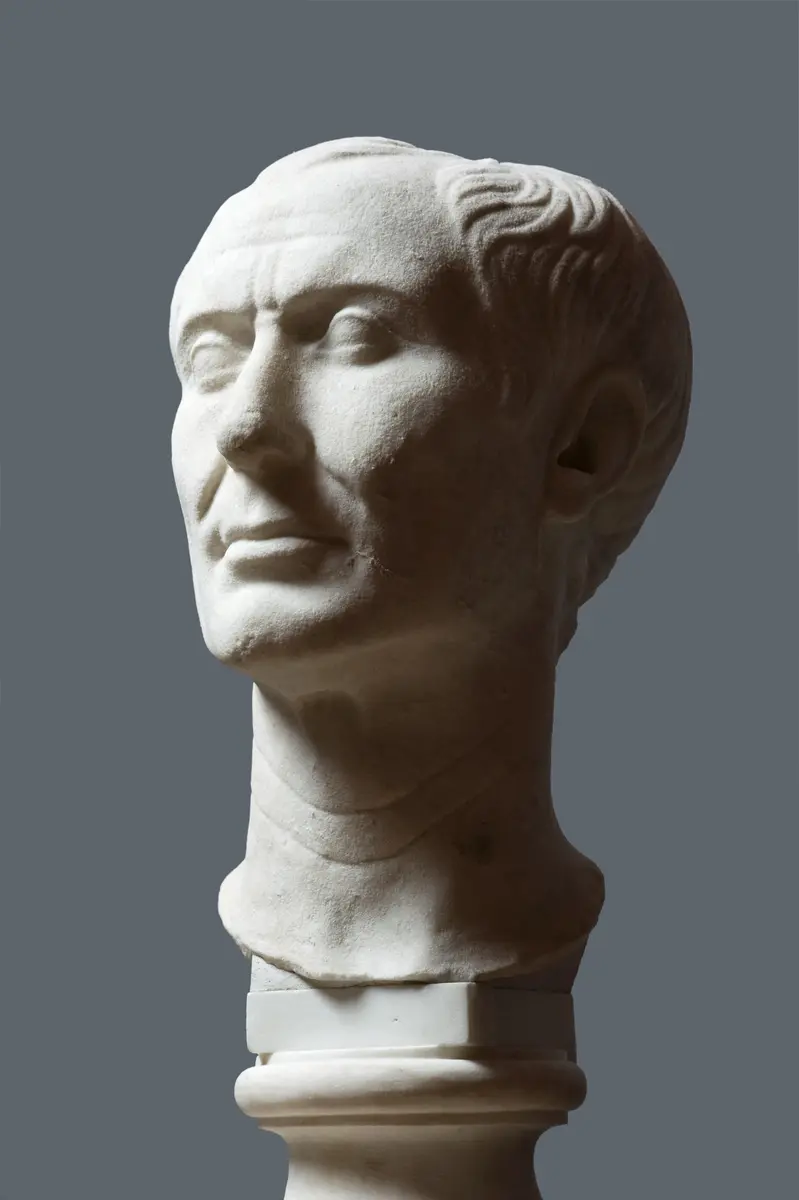
Her brother's courtiers forced her out within two years. In 48 BCE Julius Caesar, chasing his defeated rival Pompey, arrived in Alexandria; Plutarch says she was carried into the palace rolled up in a bedding sack to meet him. Caesar took her side, her brother was killed in the fighting that followed, and in 47 BCE she was queen again with a still younger brother, Ptolemy XIV, as nominal co-ruler. On June 23, 47 BCE she bore a son, Ptolemy Caesar, known as Caesarion, said to be Caesar's child. From 46 BCE she stayed in Rome as Caesar's guest; after his assassination in March 44 she went home, her second brother died, and she ruled with her small son.
In 41 BCE Mark Antony, who controlled the eastern half of the Roman world and needed Egypt's money for a war against Parthia, summoned her to Tarsus. Plutarch describes her sailing up the river in a barge with purple sails and silver oars, dressed as Venus. They became partners in love and politics: he returned old Ptolemaic lands to her, and in 34 BCE, at the ceremony Rome called the Donations of Alexandria, the two sat on golden thrones on a silver platform and shared out the East among her children. To Octavian, Caesar's heir in Rome, that was treason, and in 32 BCE the Senate declared war on Cleopatra.
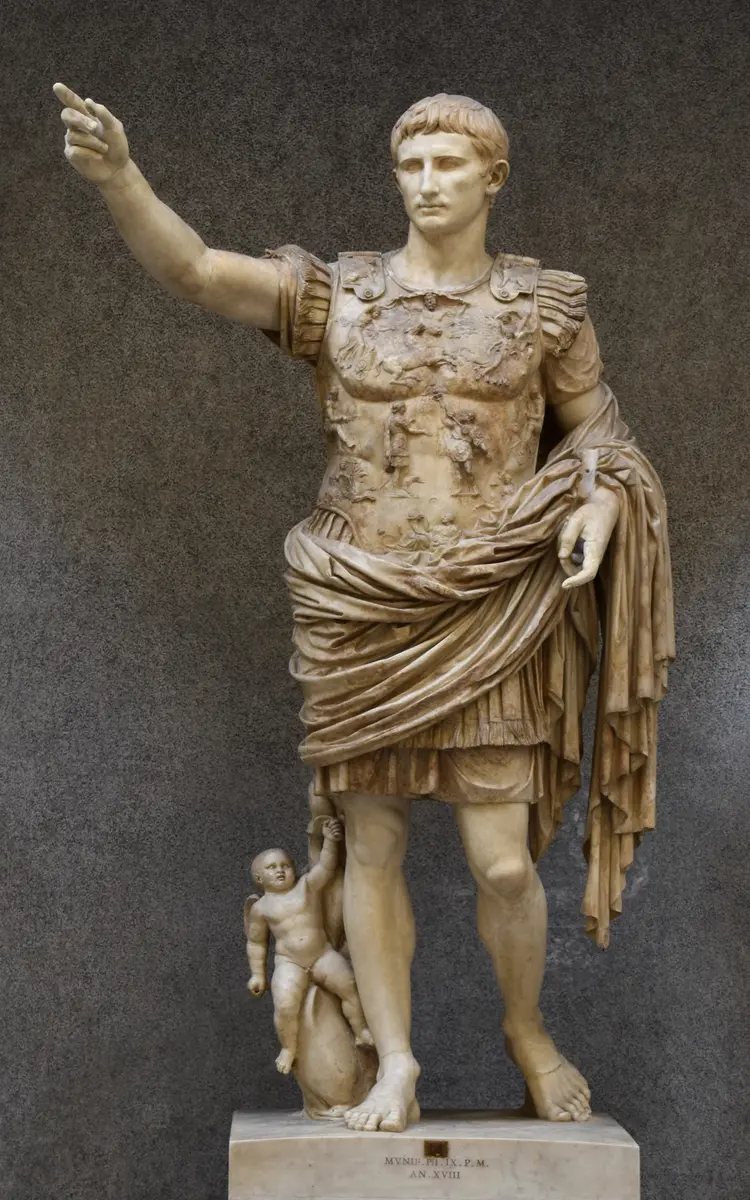
On September 2, 31 BCE their fleet was beaten at Actium, off the west coast of Greece, and the pair fled to Egypt. In August 30 BCE Octavian reached Alexandria. Antony killed himself believing she was already dead; Cleopatra, thirty-nine, buried him and then took her own life rather than be led through Rome in Octavian's triumph. The story that she used an asp was told in antiquity, but how she died is not known. Octavian had Caesarion killed and made Egypt a Roman province: three thousand years of pharaohs ended with her.
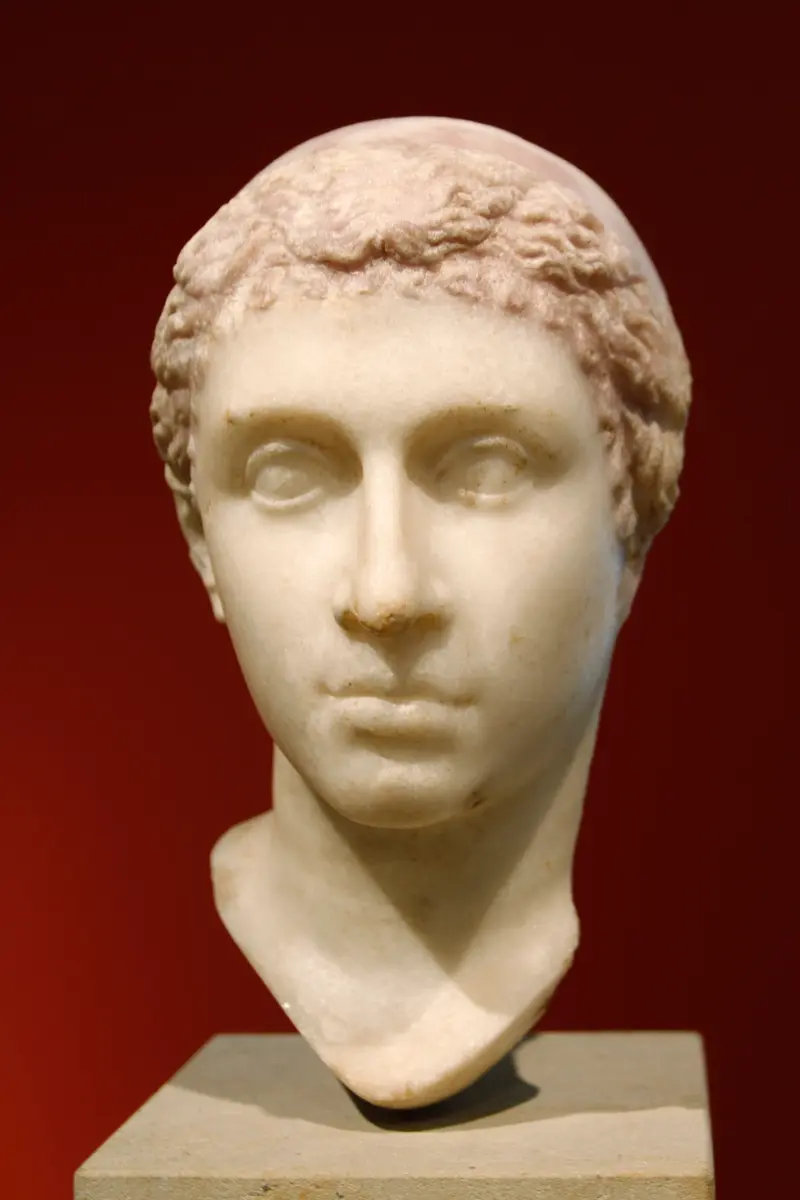
Her world was a Mediterranean being swallowed by Rome, where a client kingdom survived only by making itself useful to whichever Roman was winning, and she kept Egypt independent for twenty years while every kingdom around it fell. Roman writers made her the dangerous foreign seductress, and books, plays and films have built on that ever since. The few portraits made in her lifetime, on coins and in two marble heads in Berlin and the Vatican, show instead a sharp-featured ruler with her father's nose.
What happened
- 69 BCE
Born in the winter of 70–69 BCE, daughter of Ptolemy XII Auletes, king of Egypt, whose court is at Alexandria.
Alexandria: the Ptolemies' capital, her throne and the place of her death - 51 BCE
Her father dies early in the year; at eighteen she becomes queen, sharing the throne with her younger brother Ptolemy XIII.
Alexandria: the Ptolemies' capital, her throne and the place of her death - 48 BCE
Driven out by her brother's courtiers, she returns when Julius Caesar arrives in Alexandria after Pompey's murder, carried into the palace in a bedding sack, and wins him to her side.
Alexandria: the Ptolemies' capital, her throne and the place of her death - 47 BCE
Ptolemy XIII is killed in the fighting of the Alexandrian War; Caesar makes her queen again, with her younger brother Ptolemy XIV as nominal co-ruler.
Alexandria: the Ptolemies' capital, her throne and the place of her deathBirth of her son Ptolemy Caesar, Caesarion, said to be Caesar's child; years later mother and son are carved together on the rear wall of the temple at Dendera.
Alexandria: the Ptolemies' capital, her throne and the place of her death- 46 BCE
Travels to Rome as Caesar's guest and stays in his gardens across the Tiber; the marble head now in the Vatican was probably carved during this visit.
Rome: Caesar's guest, 46–44 BCE - 44 BCE
Caesar is assassinated in Rome; she goes home, her co-ruler Ptolemy XIV dies, and Caesarion is made king beside her.
Alexandria: the Ptolemies' capital, her throne and the place of her death- 41 BCE
Summoned by Mark Antony, she sails up the river Cydnus to Tarsus in a barge with purple sails and silver oars, dressed as Venus; he returns Egypt's old lands to her.
Tarsus: where she met Mark Antony, 41 BCE - 34 BCE
The Donations of Alexandria: on golden thrones Antony and Cleopatra share out the East among her children; the denarius of these years carries both their heads and her title 'queen of kings'.
Alexandria: the Ptolemies' capital, her throne and the place of her death - 32 BCE
The Roman Senate declares war on Cleopatra.
- 31 BCE
The fleet of Antony and Cleopatra is beaten by Octavian at Actium, off western Greece; the two flee to Egypt.
Actium: the battle of September 2, 31 BCE- 30 BCE
Octavian takes Alexandria; Antony falls on his sword and Cleopatra, thirty-nine, kills herself rather than be led in his triumph. Caesarion is killed and Egypt becomes a Roman province.
Alexandria: the Ptolemies' capital, her throne and the place of her death