Ancient Egypt (the pharaohs)
“Three thousand years of pharaohs on the Nile, from Narmer's union of the Two Lands about 3100 BCE to Cleopatra's death in 30 BCE, who left the pyramids, the hieroglyphs and the calendar.”
For three thousand years a single state ran the length of the Nile, from the First Cataract at Aswan to the Mediterranean, ruled by a king the later world called pharaoh. It began around 3100 BCE when, by tradition, a king from the south named Menes, whom most scholars identify with the Narmer of the carved palette found at Hierakonpolis, joined Upper and Lower Egypt and founded Memphis where the valley meets the delta. The Nile made the state possible: its flood renewed the fields every summer, its boats carried stone and grain, and a court of scribes counted, taxed and stored what the river gave. On that surplus the kings built, within a few centuries, the step pyramid of Djoser at Saqqara and the pyramids of Giza, the tallest buildings on earth until the Middle Ages.
Egyptologists divide the story into kingdoms and the 'intermediate periods' of disorder between them. The Old Kingdom of the pyramid builders fell apart around 2180 BCE; Mentuhotep II of Thebes reunited the country about 2055, and the Middle Kingdom gave Egypt its classic literature. After a century of rule by the Hyksos, Asiatic kings who had settled in the delta and brought the horse and the chariot, Ahmose drove them out about 1550 and began the New Kingdom, Egypt's peak. Its kings were buried in the Valley of the Kings at Thebes and raised the temples of Karnak and Luxor; Hatshepsut ruled as pharaoh for twenty years, Thutmose III pushed the empire to the Euphrates and deep into Nubia, Akhenaten tried to replace the gods with the one sun disc and built a new capital at Amarna, Tutankhamun restored them and died young, and Ramesses II fought the Hittites at Kadesh and carved his own colossi at Abu Simbel.
The New Kingdom ran down around 1070 BCE, and Egypt never ruled itself for long again: Libyan and Nubian dynasties, Assyrian invasions in the 660s, a native revival under the Saite kings, and in 525 conquest by Cambyses of Persia. Alexander the Great took Egypt without a fight in 332 and founded Alexandria; his general Ptolemy made himself king in 305, and his Greek-speaking dynasty ruled for three centuries from a city of the Library and the lighthouse while the old temples went on being built. The Rosetta Stone is one of their decrees, in Greek and in two Egyptian scripts. The last Ptolemy, Cleopatra VII, tied Egypt to Julius Caesar and then to Mark Antony; when Octavian defeated them she killed herself in 30 BCE, and Egypt became the Roman emperor's granary.
Ancient Egypt left the world the 365-day calendar, papyrus and the pen, the land-measuring that the Greeks said gave them geometry, medicine, a literature of wisdom, and the idea of a judgement after death that the Book of the Dead rehearsed. Its monuments outlasted its gods: Greeks and Romans already came as tourists, Napoleon's scholars surveyed it in 1798, Champollion read the hieroglyphs in 1822 by way of the Rosetta Stone, and Howard Carter's opening of Tutankhamun's tomb in 1922 made a boy king the most famous of the pharaohs. The Nile valley still holds more standing antiquity than any other place on earth, and the pyramids of Giza are the last of the Seven Wonders.
What happened
- 3100 BCE
A king from the south, Narmer, the Menes of tradition, brings Upper and Lower Egypt under one crown and founds Memphis where the valley meets the delta; the palette found at Hierakonpolis shows him striking down the north.
Memphis: the capital founded, by tradition, by Menes (Narmer) where the valley meets the delta - 2650 BCE
Djoser's architect Imhotep raises the step pyramid at Saqqara, the first great building of cut stone, over the king's tomb.
Saqqara: the step pyramid of Djoser, about 2650 BCE, the first great building of stone - 2560 BCE
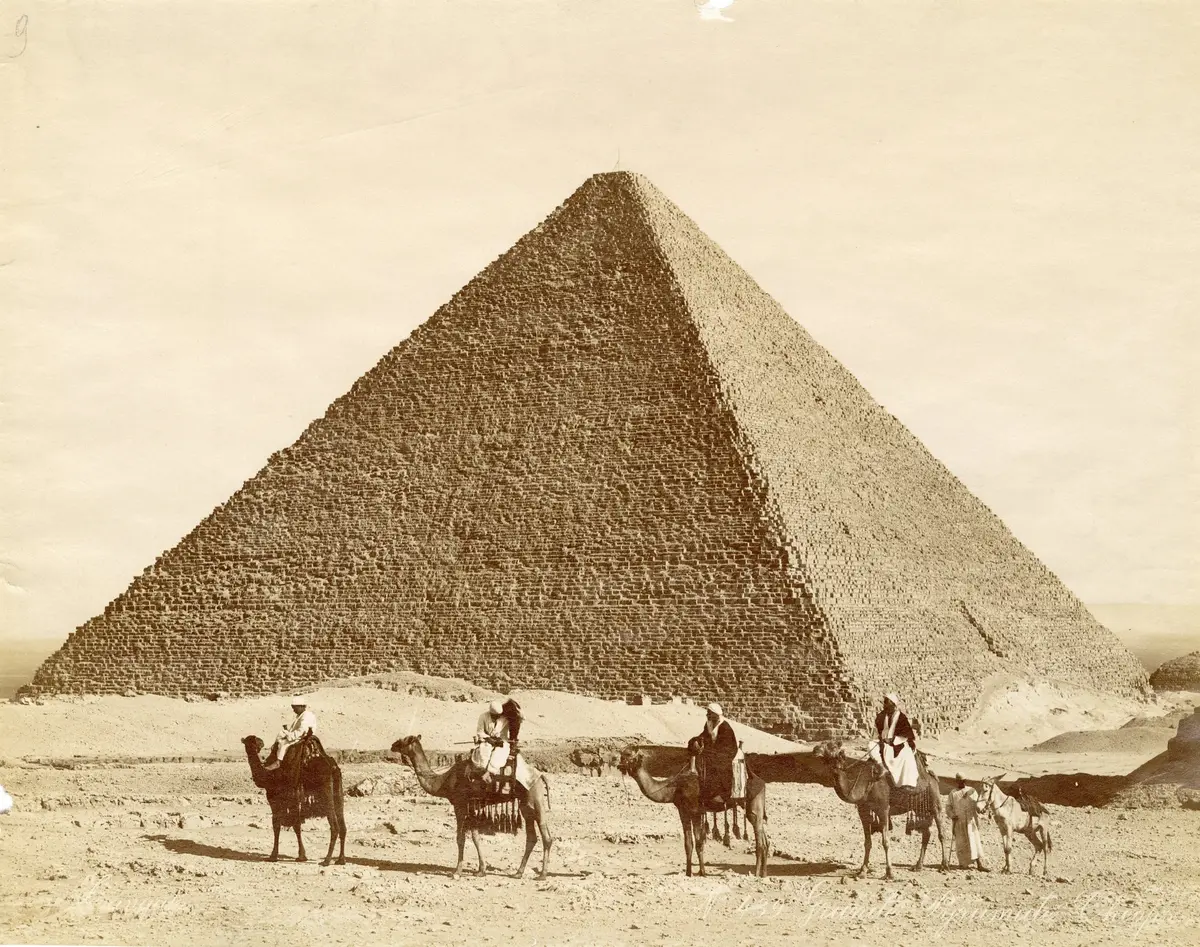
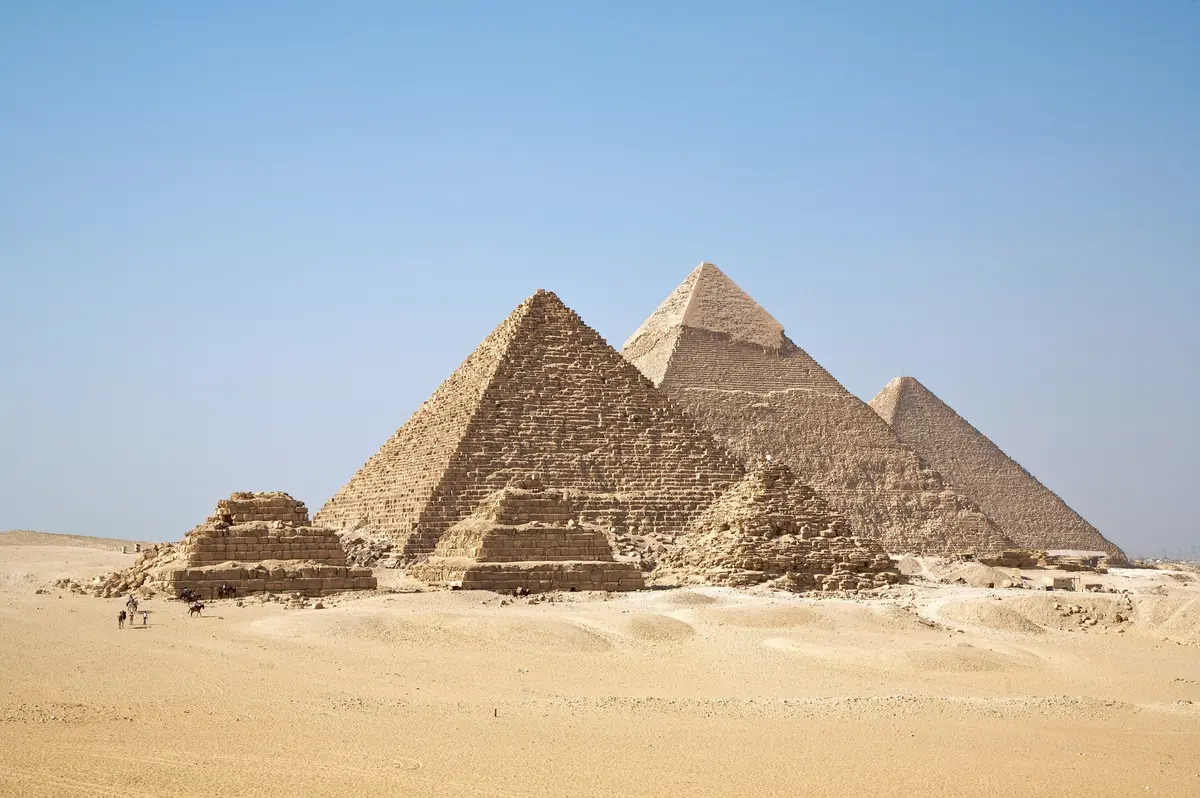
Khufu's Great Pyramid is finished at Giza, 146 metres high, the tallest building on earth for nearly four thousand years; his son Khafre and grandson Menkaure add theirs beside it.
Giza: the Great Pyramid of Khufu, about 2560 BCE, with Khafre's and Menkaure's pyramids and the Sphinx beside it - 2500 BCE
Khafre carves the Great Sphinx beside his pyramid's causeway and sets his diorite statues in his valley temple.
Giza: the Great Pyramid of Khufu, about 2560 BCE, with Khafre's and Menkaure's pyramids and the Sphinx beside it - 2180 BCE
The Old Kingdom falls apart: the kings of the 7th and 8th dynasties lose control to local lords, the Nile floods fail, and Egypt splits between Herakleopolis in the north and Thebes in the south.
- 2055 BCE
Mentuhotep II of Thebes reunites the country and begins the Middle Kingdom; his temple at Deir el-Bahari sets the pattern Hatshepsut will follow five centuries later.
Deir el-Bahari, Thebes: the terraced temples of Mentuhotep II and Hatshepsut, where their statues were found - 1650 BCE
The Hyksos, Asiatic settlers of the delta, rule the north from Avaris and bring the horse, the chariot and the composite bow; the Theban kings pay them tribute.
- 1550 BCE
Ahmose drives the Hyksos out and founds the New Kingdom; Thebes becomes the capital and its god Amun the god of the empire, with Karnak as his temple.
Karnak, Thebes: the temple of Amun, enlarged by every king of the New Kingdom - 1479 BCE
Hatshepsut, regent for her stepson Thutmose III, takes the crown and rules as pharaoh for twenty years, sending a trading fleet to Punt and building her terraced temple at Deir el-Bahari.
Deir el-Bahari, Thebes: the terraced temples of Mentuhotep II and Hatshepsut, where their statues were found - 1457 BCE
Thutmose III defeats a coalition of Canaanite princes at Megiddo, the first of sixteen campaigns that carry Egypt's power to the Euphrates and the Fourth Cataract; at his death in 1425 the empire is at its widest.
Egypt in the New Kingdom: the Nile valley from the Delta to Aswan, as the historical-basemaps dataset draws it for 1500 BCE - 1350 BCE
Amenhotep IV renames himself Akhenaten, makes the sun disc Aten the one god, closes the other temples and moves the court to a new city at Amarna; after his death the city is abandoned and his name erased.
Amarna (Akhetaten): Akhenaten's new capital of about 1350 BCE, abandoned after his death - 1323 BCE
Tutankhamun, who had restored the old gods, dies at about nineteen and is buried in a small tomb in the Valley of the Kings, where it lies forgotten until 1922.
The Valley of the Kings: the rock-cut tombs of the New Kingdom's rulers, Tutankhamun's among them - 1274 BCE
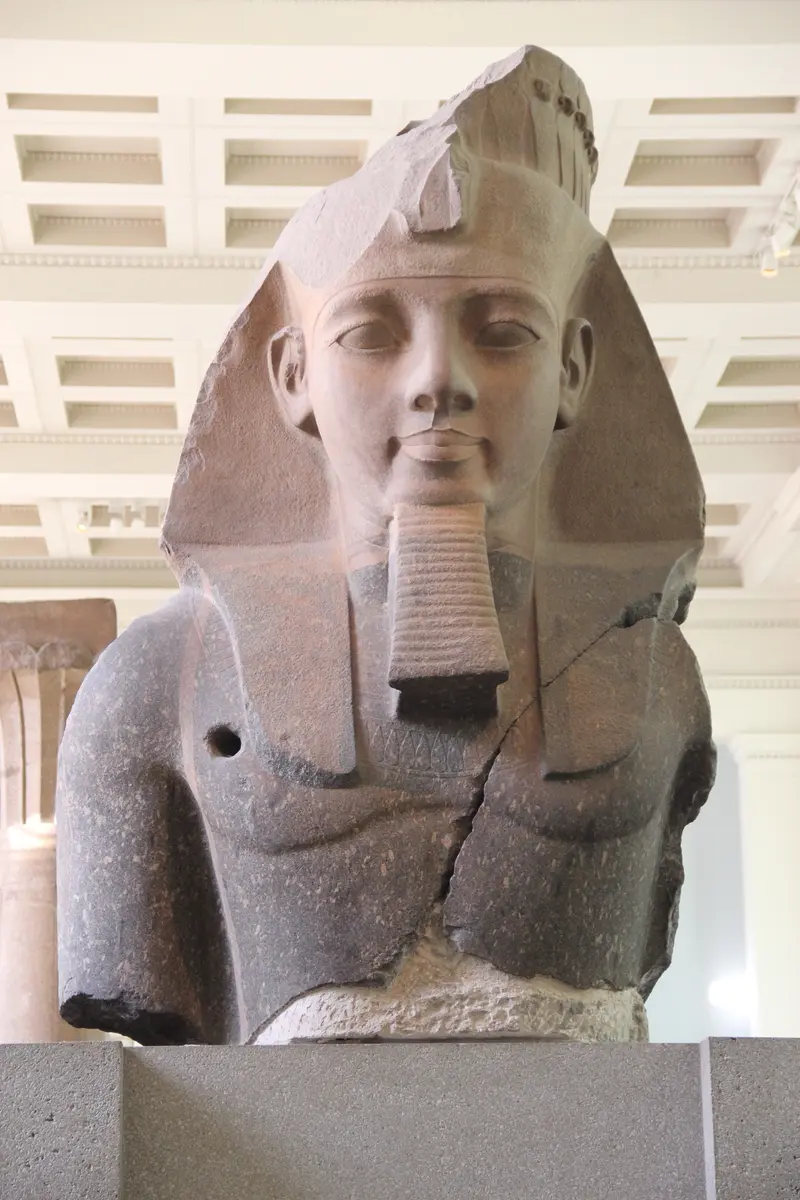
Ramesses II fights the Hittites to a standstill at Kadesh and calls it a victory on every temple wall; a decade later his rock temple at Abu Simbel is finished, with four colossi of himself at the door.
Abu Simbel: the rock temples of Ramesses II, about 1265 BCE, moved uphill in the 1960s above the Aswan dam's lake - 1070 BCE
The New Kingdom ends with the last Ramesses; Egypt breaks into rival courts, and for four centuries Libyan and then Nubian kings wear the double crown.
- 671 BCE
The Assyrians invade; within a decade they have sacked Thebes, and Psamtik I of Sais, their vassal, rebuilds a native kingdom with Greek mercenaries.
- 525 BCE
Cambyses of Persia conquers Egypt; the pharaohs are now Persian kings ruling through a satrap, with one long break of native rule in the fourth century.
Memphis: the capital founded, by tradition, by Menes (Narmer) where the valley meets the delta - 332 BCE
Alexander the Great takes Egypt from the Persians without a battle, is welcomed as pharaoh, and lays out Alexandria on the coast the next year.
Alexandria: Alexander's foundation of 331 BCE, the capital of the Ptolemies, where Cleopatra died in 30 BCE - 305 BCE
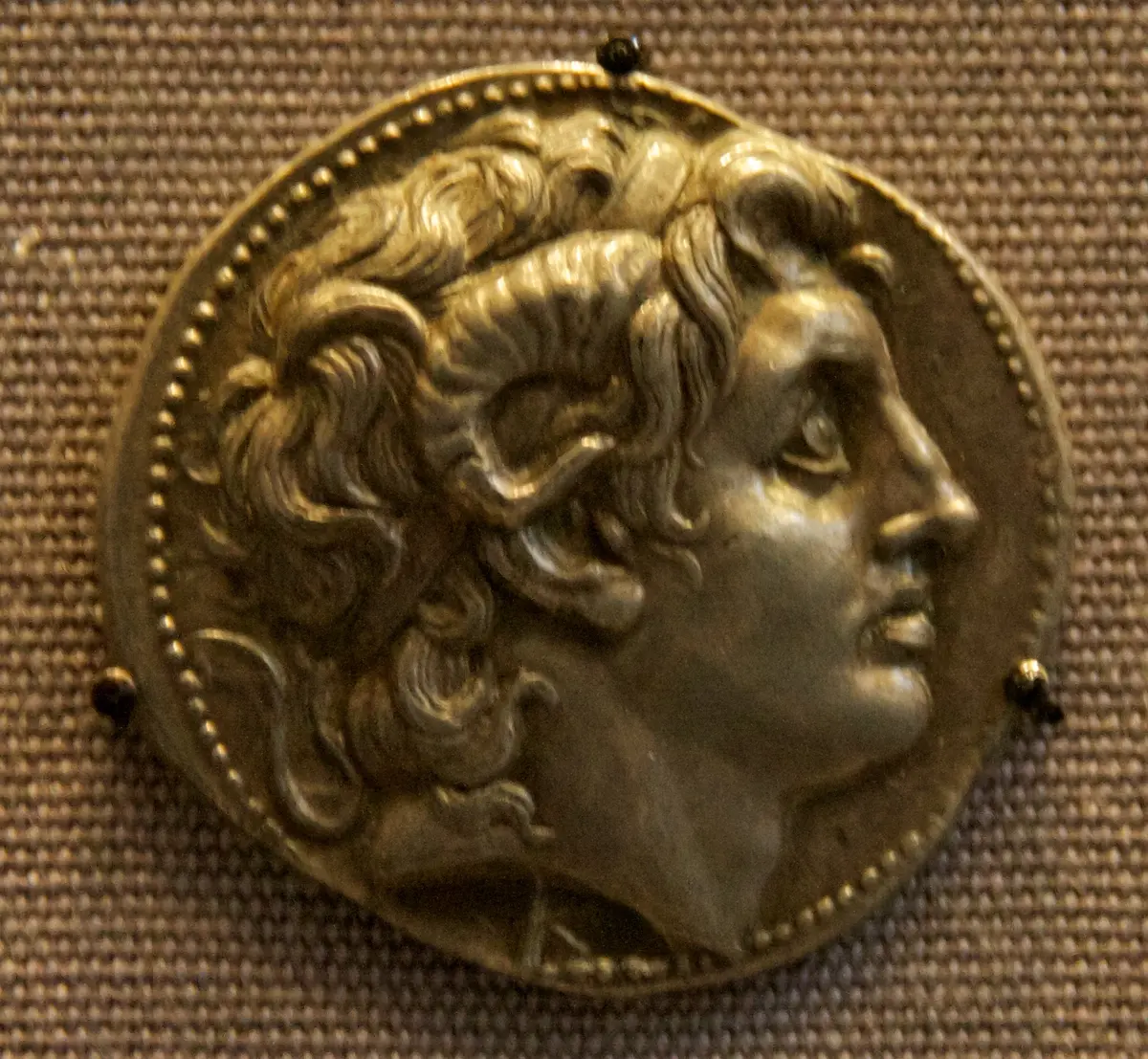
Ptolemy, Alexander's general, has himself crowned king of Egypt; his Greek dynasty will rule from Alexandria for 275 years, building the Library and the lighthouse and keeping the old temples in business.
The Ptolemaic kingdom in 200 BCE: Egypt and Cyrenaica under Alexander's successors (dataset snapshot) - 196 BCE
The priests of Memphis decree honours for the boy king Ptolemy V in hieroglyphs, demotic and Greek: the Rosetta Stone.
Rosetta (Rashid): where French soldiers found the stone with Ptolemy V's decree in 1799 - 30 BCE
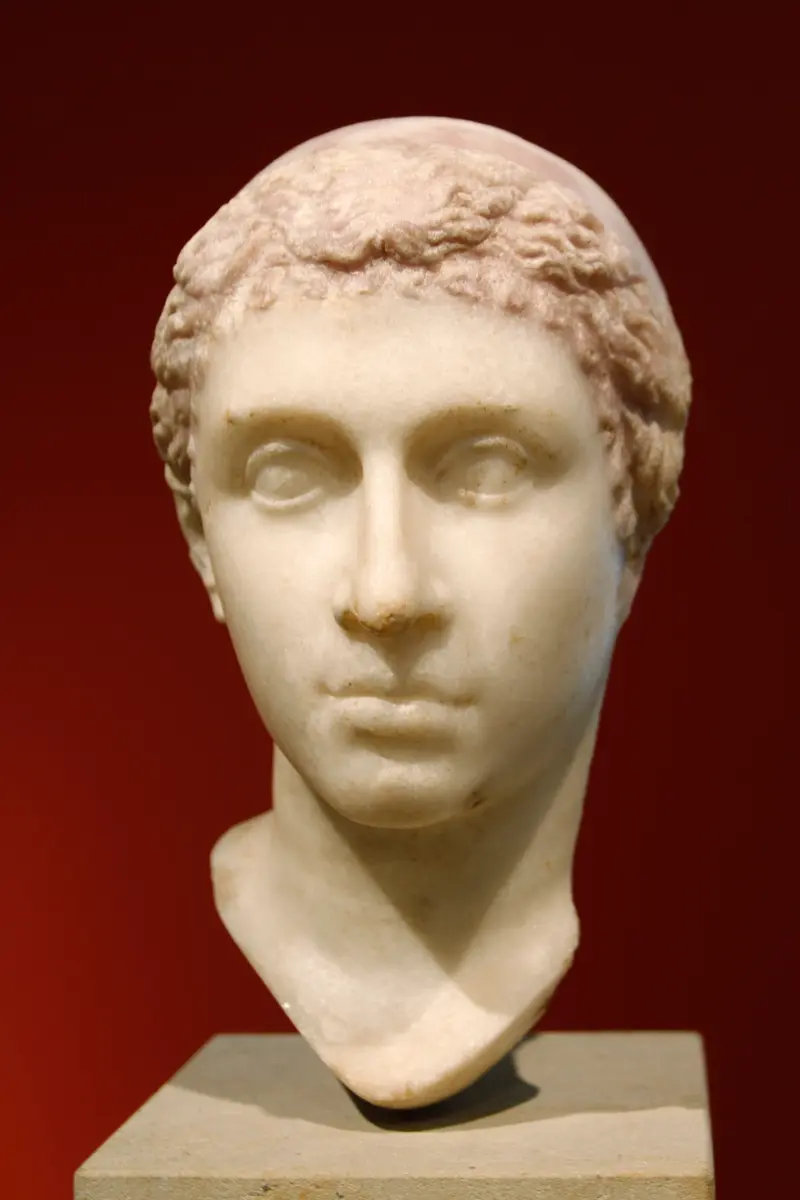
Cleopatra VII, defeated with Mark Antony at Actium, kills herself in Alexandria as Octavian enters the city; Egypt becomes a province owned by the Roman emperor, and the pharaohs are at an end.
Alexandria: Alexander's foundation of 331 BCE, the capital of the Ptolemies, where Cleopatra died in 30 BCE