The Great Pyramid of Giza is finished
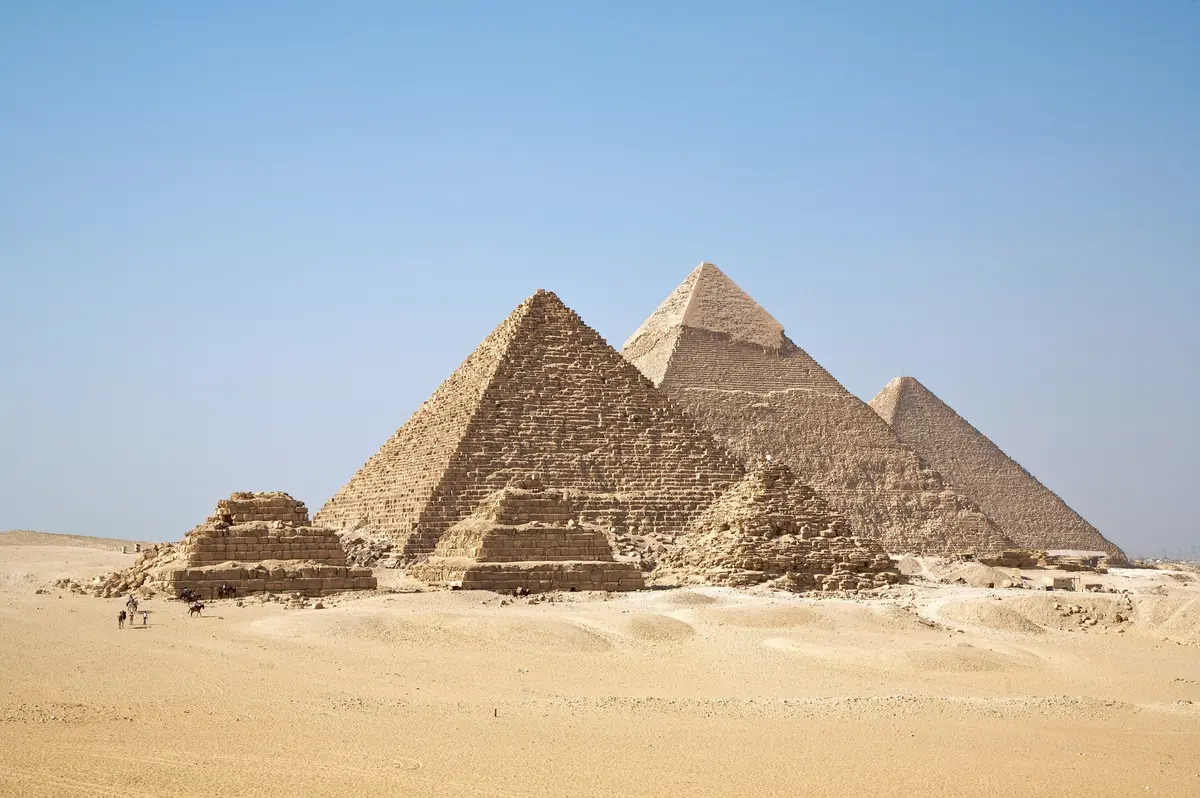
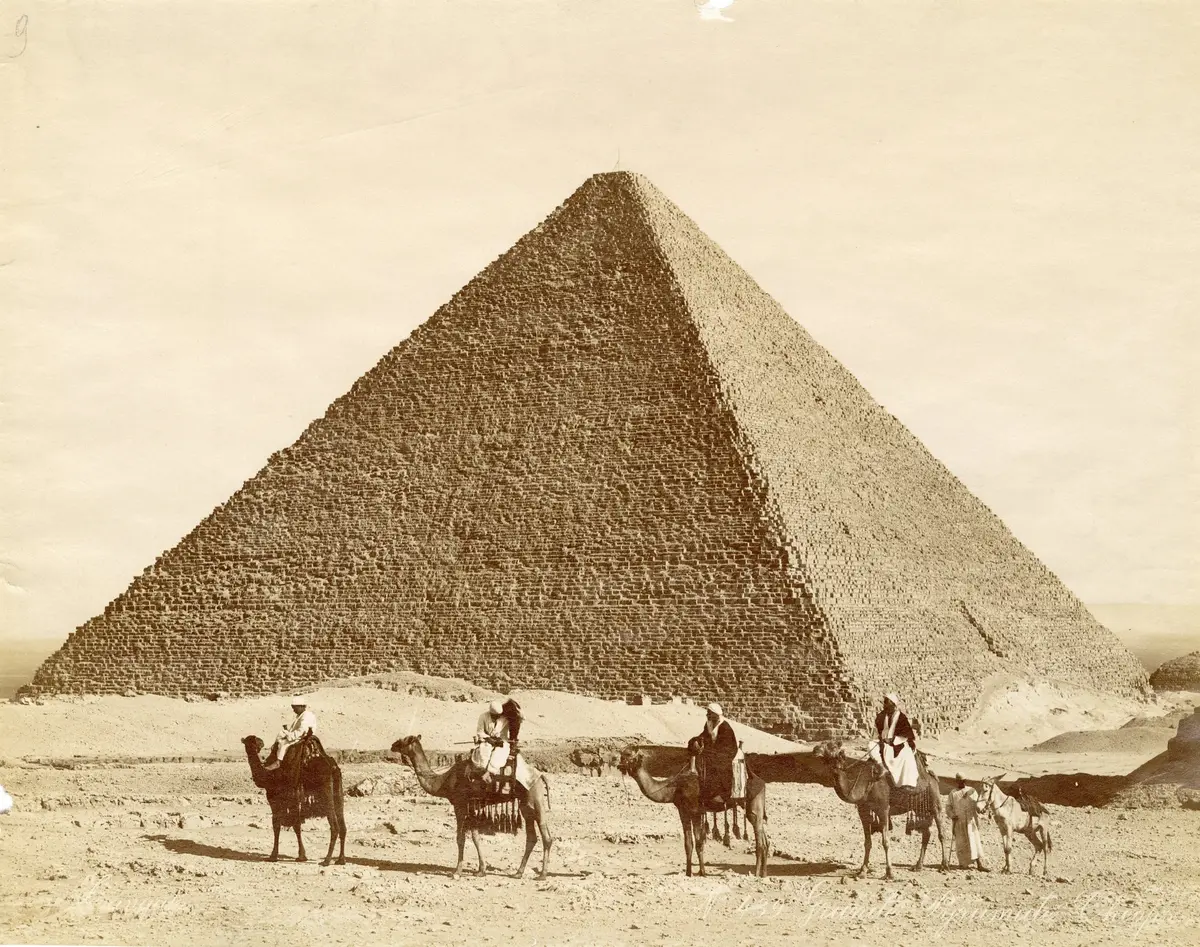
“Khufu's tomb at Giza, about 146 metres high and finished about 2560 BCE: the oldest and only surviving Wonder of the ancient world, and the tallest building on earth for 3,800 years.”
On a limestone plateau on the west bank of the Nile, where Giza now meets Cairo, the king Khufu, whom the Greeks called Cheops, built the largest stone building the world had seen. Its base was a square of 440 cubits, about 230 metres a side, and it rose at an angle of just under 52 degrees to a point 280 cubits, about 146.6 metres, above the plateau. Roughly 2.3 million blocks went into it: coarse limestone quarried on the spot for the core, fine white limestone ferried across the river from Tura for the casing, and granite floated 900 kilometres downstream from Aswan for the burial chamber and the five relieving chambers above it. Inside there is almost nothing: a descending passage to an unfinished room in the bedrock, an ascending one to the so-called Queen's Chamber and the tall corbelled Grand Gallery, and at the top of the gallery the King's Chamber with its empty granite sarcophagus. The Egyptians called the whole thing Akhet-Khufu, Khufu's Horizon.
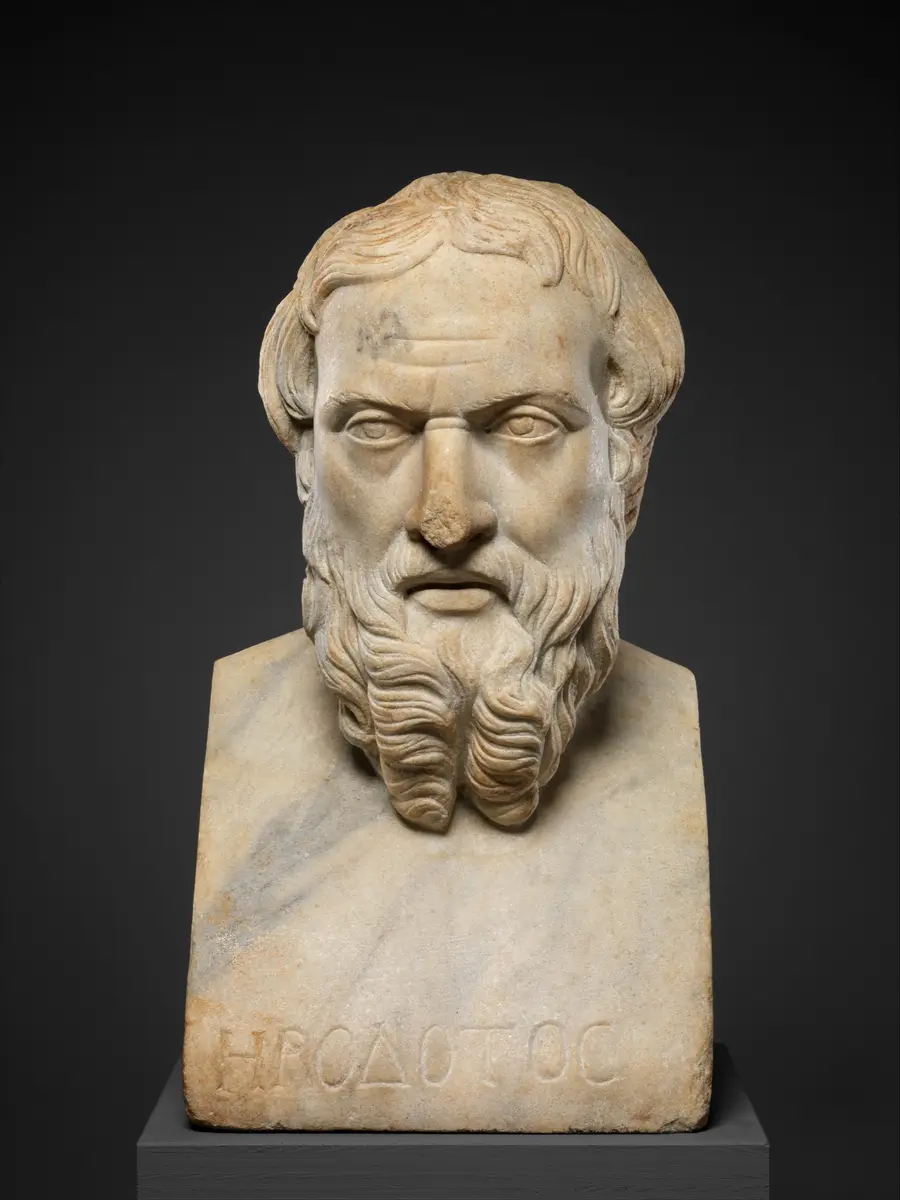
It was the climax of a building programme begun by Khufu's father Sneferu, who had turned Djoser's stepped pyramid into the true smooth-sided form at Meidum and Dahshur. Khufu's vizier Hemiunu, whose fat, lifelike statue was found in his tomb beside the pyramid, held the title of overseer of all the king's works; his half-brother Ankhhaf ran the harbour at the plateau's foot. Egyptologists now think a permanent force of perhaps 20,000 skilled workers, housed and fed by the state in a purpose-built town south of the Sphinx, did the work, not the 100,000 conscripts of Herodotus's story; the gangs painted their names on the blocks, 'the White Crown of Khnum-Khufu is powerful' among them. The one dated document is the logbook of an inspector named Merer, found in 2013 at Khufu's Red Sea harbour of Wadi al-Jarf, the oldest papyrus with writing on it: in the king's twenty-seventh year, between July and November, Merer's crew made four-day round trips bringing casing blocks from the Tura quarries to Akhet-Khufu, reporting to 'the noble Ankhhaf'.
When Khufu died, after at least twenty-six years on the throne, his son Djedefre buried him and sealed the boat pits beside the pyramid with blocks carrying his own name; one of them, opened in 1954, held a 43-metre cedar ship in 1,224 pieces, the oldest intact ship in the world. The king's cult went on in the temple on the pyramid's east side for centuries, which is how we know he was really buried there, but his body and anything buried with it were gone long before the first visitors who wrote about the place. His son Khafre and grandson Menkaure built the two smaller pyramids and, most probably, the Great Sphinx beside the Great Pyramid, and the three together became one of the Seven Wonders of the ancient world, the only one still standing.
The pyramid was already two thousand years old when Herodotus climbed the plateau about 450 BCE and wrote down what his guides told him about the tyrant Cheops; Diodorus saw its casing still intact in the first century BCE, and the Romans came as tourists. The casing was stripped for Cairo's buildings in the Middle Ages, which is why the pyramid now shows its stepped core and stands 138 metres high. Napoleon's scholars surveyed it in 1798–1801 and published the first exact plans; in 1837 Howard Vyse blasted his way into the relieving chambers and found the workmen's red-paint graffiti that proved whose pyramid it was; Flinders Petrie measured it to the millimetre in 1880–82; George Reisner found the gilded furniture of Khufu's mother Hetepheres in a shaft beside it in 1925. The questions that remain, how the stones were raised and what the cosmic-ray scans of 2017–2023 found behind its north face, keep the oldest of the Wonders in the news.
The Great Pyramid matters because it shows what the first large states could do. Four and a half thousand years ago an administration of scribes could count a nation's cattle, feed and house a city of workers, quarry and ship six million tonnes of stone and set it to within a few centimetres of true, all for one man's tomb. For 3,800 years nothing taller was built anywhere on earth, and it still is the most visited and most argued-over building in the world.
What happened
- 2589 BCE
Khufu succeeds his father Sneferu, who had built three pyramids at Meidum and Dahshur and turned the stepped pyramid into the true smooth-sided form; the date is Shaw's conventional one.
The king chooses a limestone plateau on the west bank north of Saqqara and Dahshur, and names his tomb Akhet-Khufu, 'Khufu's Horizon'; the site is levelled and a base of 440 cubits is laid out square to the cardinal points.
The Great Pyramid, Akhet-Khufu: the footprint of Khufu's tomb, 230 metres a side, from OpenStreetMap- 2588 BCE
Hemiunu, the king's nephew and vizier, 'overseer of all the king's works', directs the building; his half-brother Ankhhaf will run the harbour at the plateau's foot.
Mastaba G 4000 in the Western Cemetery: the tomb of the vizier Hemiunu, overseer of the king's works, where his statue was found in 1912 - 2587 BCE
The coarse limestone of the core is quarried on the plateau itself; the summer flood brings the Nile to a harbour below the pyramid, so that boats can land stone at its doorstep.
The Great Pyramid, Akhet-Khufu: the footprint of Khufu's tomb, 230 metres a side, from OpenStreetMap - 2586 BCE
Fine white limestone for the casing is cut at Tura across the river, and granite for the burial chamber, in blocks of up to 80 tonnes, is quarried at Aswan and floated 900 kilometres downstream.
Tura: the limestone quarries in the hills east of the village gave the pyramid its white casing, shipped across the river by Merer's crew - 2585 BCE
A state-built town of barracks, bakeries, granaries and officials' houses grows up south of the plateau to house and feed the workforce, a permanent force of perhaps 20,000 rather than Herodotus's 100,000 conscripts.
The granite quarries of Aswan, 900 kilometres upstream, where the blocks of the King's Chamber were cut; the unfinished obelisk of a later age still lies here - 2580 BCE
The pyramid passes the height of the King's Chamber: the Grand Gallery is corbelled, the granite chamber roofed, and five relieving chambers stacked above it; the work gangs paint their names on the blocks, 'the White Crown of Khnum-Khufu is powerful' among them.
The Great Pyramid, Akhet-Khufu: the footprint of Khufu's tomb, 230 metres a side, from OpenStreetMap - 2579 BCE
The granite sarcophagus is set in the King's Chamber, the only object that will remain in it; two narrow shafts are run from the chamber through the masonry to the open air.
The Great Pyramid, Akhet-Khufu: the footprint of Khufu's tomb, 230 metres a side, from OpenStreetMap - 2578 BCE
Queen Hetepheres, the king's mother, is buried in a deep shaft east of the pyramid with her gilded bed, carrying chair and canopy; the tomb lies untouched until 1925.
Shaft G 7000 X in the Eastern Cemetery: the tomb of Khufu's mother Hetepheres, found by Reisner in 1925 with her gilded furniture - 2576 BCE
Three small pyramids rise on the east side for the queens, and the royal children and great officials receive mastaba tombs in the cemeteries east and west of the pyramid: Nefertiabet, Ankhhaf and Hemiunu among them.
Mastaba G 4000 in the Western Cemetery: the tomb of the vizier Hemiunu, overseer of the king's works, where his statue was found in 1912 - 2572 BCE
The king's expeditions reach for copper and turquoise in Sinai, where his relief is cut at Wadi Maghareh, and for cedar at Byblos.
- 2563 BCE
Khufu's twenty-sixth year, 'the year after the thirteenth cattle count': his harbour at Wadi al-Jarf on the Red Sea, with its stone mole, boat galleries and anchors, serves the Sinai crossings; its papyri record the state sending food to the crews.
Wadi al-Jarf on the Red Sea: Khufu's harbour for the Sinai expeditions, where Merer's papyri were found in 2013 - 2562 BCE
Khufu's twenty-seventh year, July to November: the inspector Merer's crew makes four-day round trips from the Tura quarries to Akhet-Khufu with casing blocks, reporting to 'the noble Ankhhaf' at the harbour of Ro-She Khufu; the logbook is the oldest papyrus with writing on it.
Tura: the limestone quarries in the hills east of the village gave the pyramid its white casing, shipped across the river by Merer's crew - 2561 BCE
The casing is finished and polished to the point, 280 cubits above the plateau; the pyramid temple with its black basalt floor is laid out on the east side, with a causeway down to the valley temple at the water.
The Great Pyramid, Akhet-Khufu: the footprint of Khufu's tomb, 230 metres a side, from OpenStreetMap - 2560 BCE
Khufu dies after at least twenty-six years as king and is laid in the King's Chamber; his son Djedefre buries him and seals the boat pits with blocks bearing his own name, one of them over a cedar ship taken apart into 1,224 pieces.
Khufu's southern boat pits: where the cedar ship lay in pieces from the king's funeral until 1954, under the museum that housed it from 1982 to 2021The priests of Khufu begin his cult in the temple against the pyramid's east face, whose reliefs show the king's thirty-year jubilee; it runs for centuries, the proof that he was buried here.
The Great Pyramid, Akhet-Khufu: the footprint of Khufu's tomb, 230 metres a side, from OpenStreetMap