Herodotus
“The Greek 'father of history', born at Halicarnassus about 484 BCE, who travelled the Persian world and wrote the Histories, our main source for the Persian Wars.”
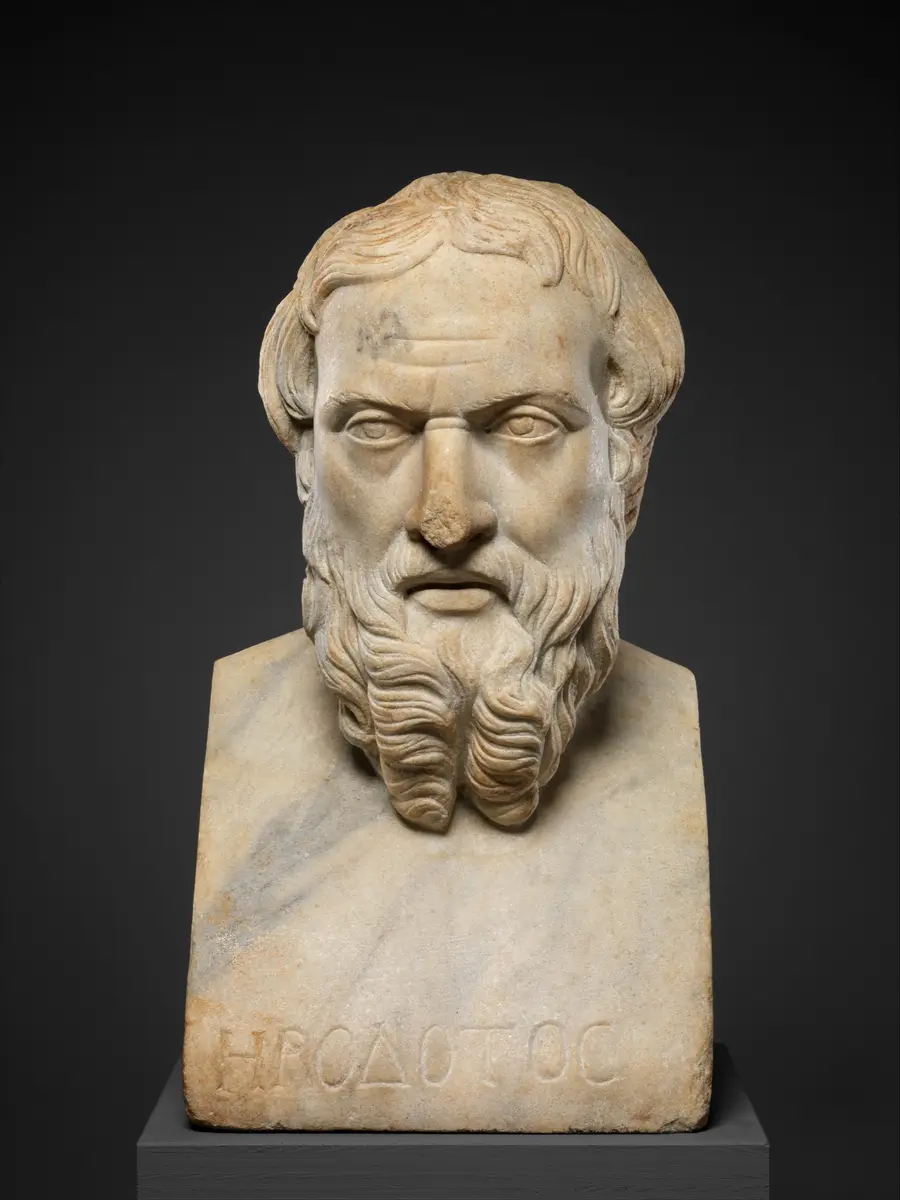
Herodotus was a Greek writer of the fifth century BCE whose one book, the Histories, is the oldest surviving work of history and the reason he is called the father of the subject. He was born about 484 BCE at Halicarnassus (Bodrum, on the south-west coast of Turkey), a Greek city then ruled by the Persian kings through a local dynasty. The Byzantine dictionary known as the Suda names his parents, Lyxes and Dryo, says the tyrant Lygdamis drove him into exile on the island of Samos, and has him return to help throw the tyrant out before leaving his city for good. Almost nothing else about his life is certain; most of what we know is read out of the book itself.
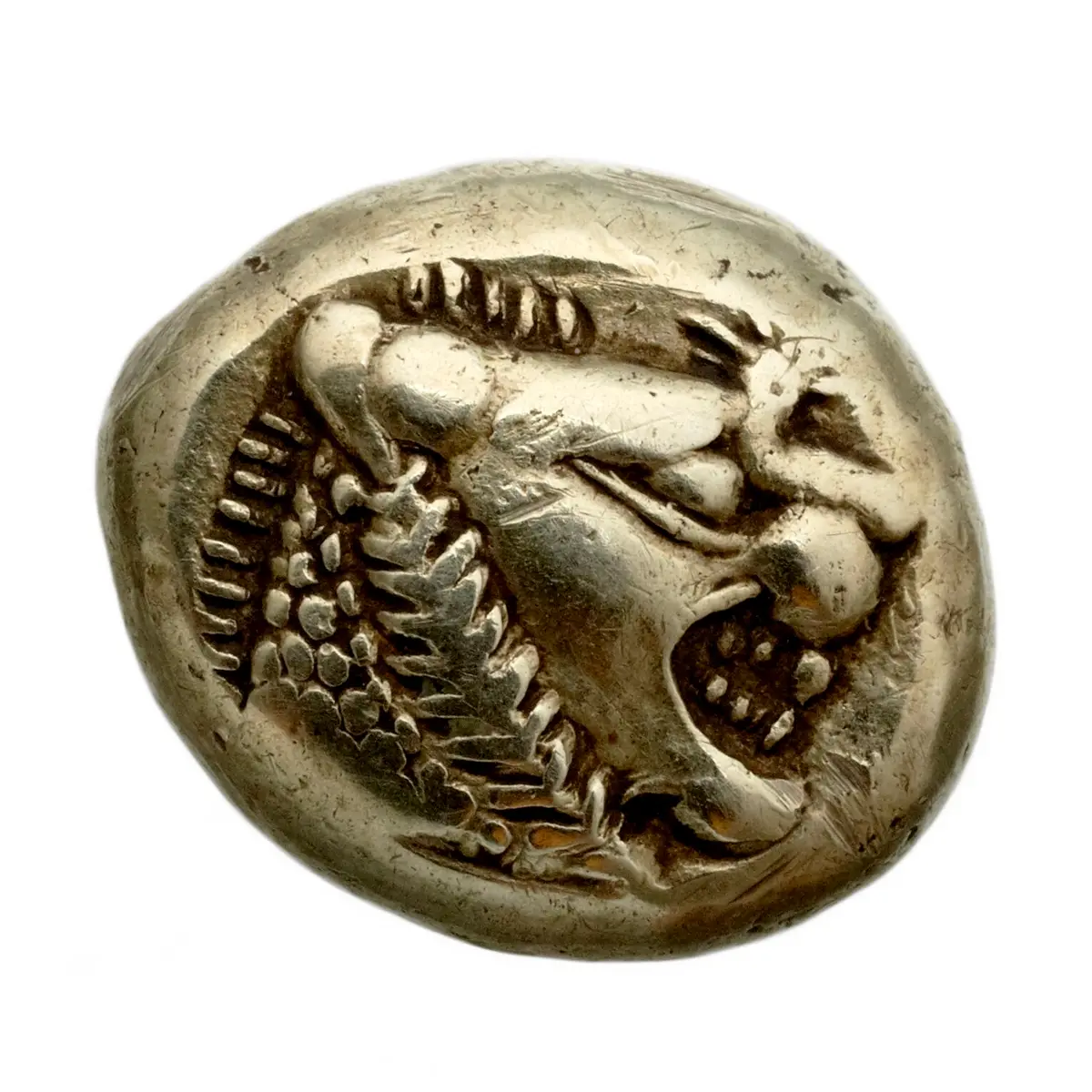
The book opens with the words 'This is the display of the inquiry of Herodotus of Halicarnassus', and 'inquiry', historie in his Ionian Greek, is where our word history comes from. His subject was the war between the Greeks and the Persian Empire that ended with Xerxes' defeat at Salamis, Plataea and Mycale in 480 and 479, a generation before his own time. To explain how it came about he told the whole rise of Persia, from Croesus of Lydia and Cyrus to Darius and Xerxes, and on the way described every people the Persians had conquered: the Egyptians and their pyramids, the Babylonians, the nomad Scythians north of the Black Sea, the Lydians who, he says, were the first to strike coins. He travelled to see things for himself, went up the Nile as far as Elephantine, questioned priests and old soldiers, and set different versions side by side when he could not decide between them.
In the 440s he was in Athens, the leading city of Greece, where Pericles was in power and Sophocles was writing his plays. A late tradition says the Athenians voted him a reward of ten talents for reading his work in public, and Plutarch quotes a poem that Sophocles wrote for a Herodotus. In 443 Athens sent out settlers to found Thurii in southern Italy, on the site of the ruined Sybaris, and Herodotus went with them: Aristotle quotes his first sentence as 'Herodotus of Thurii'. He was still writing in the first years of the Peloponnesian War, since he mentions an event of the winter of 430, and he died soon afterwards, about 425 BCE, at Thurii, Pella or Athens, each of which claimed his grave. Later editors in Alexandria divided the work into nine books and named them after the nine Muses.
Herodotus was doubted almost from the start. Thucydides, his younger contemporary, left out the gods, the digressions and the tall stories, and for two thousand years readers who enjoyed Herodotus' tales called him the father of lies as well as the father of history. Yet he treats Greeks and Persians with the same curiosity and the same fairness, the Persian names he gives match the cuneiform records, and the Samian tunnel, the Babylonian walls and the Scythian graves he described have been dug up. Nearly everything known about the battles of Marathon, Thermopylae and Salamis rests on his pages, and every historian since has worked inside the form he invented: a prose inquiry into what people did and why.
What happened
- 484 BCE
Born at Halicarnassus, a Greek city on the coast of Caria under Persian rule, the son of Lyxes and Dryo; the year comes from Pamphila's reckoning that he was fifty-three when the Peloponnesian War began.
Halicarnassus (Bodrum): born here about 484 BCE, under Persian rule; exiled by its tyrant Lygdamis and said to have helped drive him out - 460 BCE
At a date the sources do not give, he goes into exile on Samos because of Lygdamis, tyrant of Halicarnassus and grandson of Queen Artemisia; the Suda says he later returned, helped drive the tyrant out, and left again when his fellow citizens turned against him.
Samos: his refuge in exile, where the Suda says he learned the Ionian dialect; he describes the island's tunnel, harbour mole and temple as the three greatest works of the Greeks - 455 BCE
The years of travel, which cannot be dated: up the Nile as far as Elephantine, to the Greek cities of the Black Sea and the Scythian country, to Phoenicia and Cyrene, perhaps to Babylon, which many scholars now doubt.
- 445 BCE
In Athens, where a tradition says he read his work in public and the assembly voted him a reward of ten talents; he adopts the outlook of Pericles' party and comes to know the city's writers.
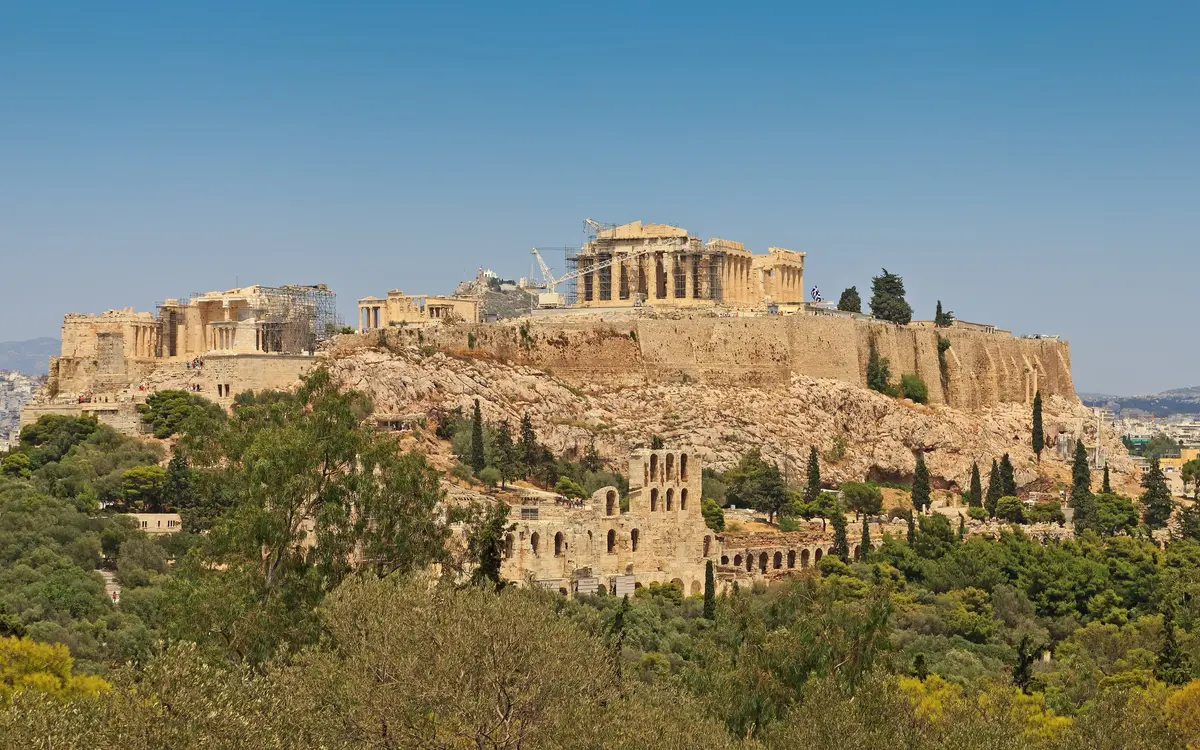
Athens: where he read his work in public in the 440s, knew Sophocles, and was living when the Peloponnesian War began in 431 - 443 BCE
Athens sends out settlers under Lampon and Xenocritus to found Thurii in southern Italy beside the ruins of Sybaris, and Herodotus goes with them, then or soon after; Aristotle later quotes his first sentence as 'Herodotus of Thurii'.
Thurii: the Athenian colony in southern Italy founded in 443 BCE, which he joined; the Suda says he died here and was buried in the market place - 441 BCE
Sophocles, aged fifty-five, writes a song for Herodotus, the one surviving sign that the historian and the playwright were friends.
Athens: where he read his work in public in the 440s, knew Sophocles, and was living when the Peloponnesian War began in 431 - 431 BCE
In Athens as the Peloponnesian War begins: he has seen the new Propylaea of the Acropolis, finished in 432, and he describes a monument there as a man who knows the city.
Athens: where he read his work in public in the 440s, knew Sophocles, and was living when the Peloponnesian War began in 431 - 430 BCE
The latest event he mentions: Spartan envoys seized in Thrace and put to death at Athens in the winter of 430/429, which Thucydides also records. He was therefore still writing in 429; and since he says Decelea had never been ravaged by the Spartans, he did not live to see 413.
Athens: where he read his work in public in the 440s, knew Sophocles, and was living when the Peloponnesian War began in 431 - 425 BCE
Dies, about 425 BCE, perhaps earlier: Livius thinks he may have been a victim of the Athenian plague of 429. Thurii claimed his grave in its market place, Pella and Athens claimed it too, and the Histories end, perhaps unfinished, with the Greek capture of Sestos in 479.
Thurii: the Athenian colony in southern Italy founded in 443 BCE, which he joined; the Suda says he died here and was buried in the market place