The first coins, in Lydia (Turkey)
“Around 630 BCE the kings of Lydia, in western Turkey, began stamping pieces of electrum with a lion: the first coins. Their last king, Croesus, struck the first coins of pure gold and silver.”
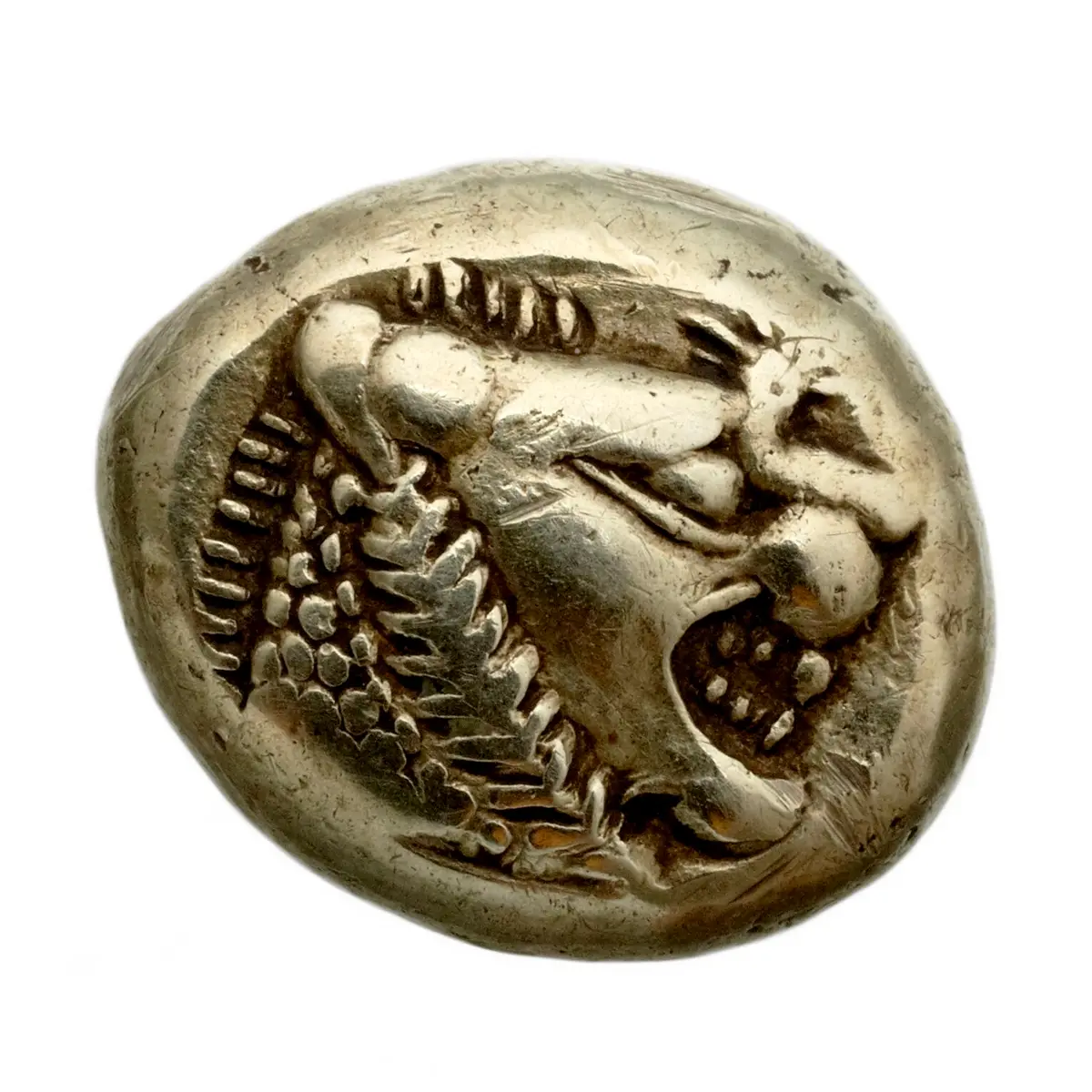
The first coins were made in western Turkey in the late seventh century BCE, in the kingdom of Lydia and the Greek cities along its coast. Lydia was rich in electrum, a pale natural mixture of gold and silver, panned from streams such as the Pactolus, which ran through the capital, Sardis. Electrum made an awkward payment: every lump had to be weighed, and no one could easily tell how much gold it held. The answer was to cut it into pieces of a fixed weight and stamp each one with a mark that guaranteed it. The issuer's word now set the value, and a sum could be counted out instead of weighed. The coins of the Lydian kings carried the head of a roaring lion, or on the very smallest a lion's paw, and came in a whole range of sizes, from a third of a stater at 4.7 grams down to specks of 0.15 grams; one of the small ones, a twenty-fourth, was worth about a sheep.
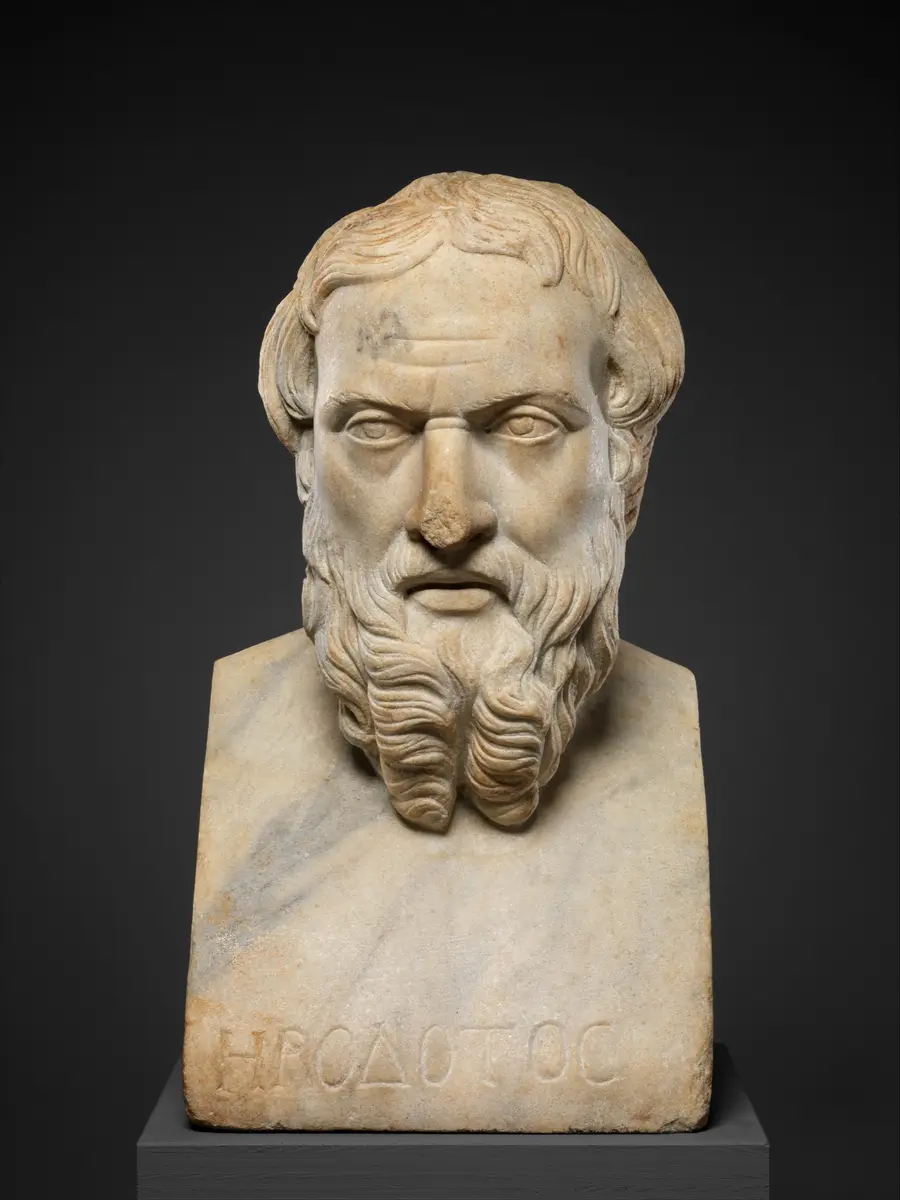
The oldest coins that can be dated come from the sanctuary of Artemis at Ephesus. In 1904 and 1905 excavators from the British Museum found 93 early electrum pieces under the great temple, many of them laid there as offerings, and later digs found a tiny lion's-paw coin in a layer of offerings that was sealed by about 615 BCE. Some lion coins carry the Lydian word WALWET, very probably the name of King Alyattes, who ruled from about 610 to 560, and a hoard of some 45 of them turned up as far east as Gordion in central Turkey. The Greeks agreed on who came first: Herodotus, writing about a century after Lydia fell, says the Lydians were the first people known to strike and use coins of gold and silver, and the first to sell in shops. The king also made a profit: laboratory tests show that his electrum had been thinned with silver to about 54 per cent gold, while it was valued as if it were natural metal of about 73 per cent.
Alyattes's son Croesus, king from about 560 BCE, made the second great change. Around the middle of the century he called in the electrum and issued coins of pure gold and pure silver, stamped with the fronts of a lion and a bull facing each other; the gold ones were known all over the Greek world as croeseids. To make them the Lydians had to split electrum into its two metals, and Harvard's excavators found where they did it, beside the Pactolus: workshops where thin sheets of electrum were baked with salt until only gold was left, and the silver was won back from the waste with lead in some two hundred small hearths, the earliest evidence of this process anywhere. Croesus spent lavishly at the Greek sanctuaries of Delphi and Ephesus, where pieces of columns inscribed 'King Croesus dedicated' survive, and his wealth became a proverb: 'as rich as Croesus'.
His kingdom ended when Cyrus the Great of Persia defeated him and took Sardis after a siege of fourteen days, most probably in 547 BCE. Small croeseids found in and under the burnt debris of the city wall prove that the new coins were already being struck before the Persians came. Cyrus kept the mint of Sardis working, and the lion and bull went on being struck for about thirty years, until around 515 BCE Darius I replaced them with the gold daric and the silver siglos, which show the Persian king with his bow. By then the Greek cities of Ionia had taken up the idea and were striking coins of their own. Every coin made since, down to the change in a modern pocket, works on the Lydian idea: a piece of metal of fixed weight whose value is guaranteed by the stamp of the power that issued it.
What happened
- 630 BCE
About this time, in Lydia and the Greek cities of its coast, pieces of electrum of a fixed weight begin to be stamped with a mark: the first coins. A tiny Lydian lion's-paw coin is left with offerings at the sanctuary of Artemis at Ephesus, in layers that are covered over by about 615 BCE.
The Temple of Artemis at Ephesus, where the earliest dated coins were found - 610 BCE
Alyattes becomes king of Lydia. The royal lion-head coins, some inscribed WALWET, very probably his Lydian name, are struck at Sardis in sizes from a third of a stater down to a forty-eighth, and made of electrum thinned with silver, at a profit to the king.
Sardis, the capital of the Lydian kings, where their coins were struck and their refinery worked - 600 BCE
About this time or a little before, jewellery, ivories and electrum coins are laid as offerings in the foundations at the centre of the sanctuary of Artemis at Ephesus; British Museum excavators recover 93 early electrum coins on the site in 1904 and 1905.
The Temple of Artemis at Ephesus, where the earliest dated coins were found - 560 BCE
Alyattes dies after a reign of some forty years; his son Croesus wins the throne from his half-brother Pantaleon and raises his father's great mound at Bin Tepe, about 355 m across.
The tumulus of Alyattes at Bin Tepe, the royal cemetery north of SardisCroesus pays for many of the marble columns of the new temple of Artemis at Ephesus; pieces of their bases still carry the words 'King Croesus dedicated'.
The Temple of Artemis at Ephesus, where the earliest dated coins were found- 550 BCE
Around the middle of the century Croesus calls in the electrum and issues coins of pure gold and pure silver with a lion facing a bull, the croeseids; the gold is parted from the silver in a royal refinery on the bank of the Pactolus.
The Pactolus (Sart Çayı), the gold-bearing stream of Sardis; the royal gold refinery stood on its bank - 547 BCE
Cyrus the Great defeats Croesus and takes Sardis after a fourteen-day siege; a soldier killed at the wall dies with a silver croeseid of a twenty-fourth stater by his head. Lydia becomes a Persian province, and the mint of Sardis goes on striking the lion and bull for the new masters.
Sardis, the capital of the Lydian kings, where their coins were struck and their refinery worked