Battle of Thermopylae
“In 480 BCE Leonidas, his 300 Spartans and a few thousand other Greeks held the pass of Thermopylae against Xerxes for three days, until a mountain path let the Persians surround them.”
In the late summer of 480 BCE the Persian king Xerxes marched into Greece with a very large army, and the Greek cities that had chosen to resist tried to stop him at Thermopylae, the 'Hot Gates', named after the sulphur springs in the pass. There the coast road ran between the cliffs of the Kallidromo range and the sea, in places only a cart's width across, so a small force could block it; at the narrowest point, the Middle Gate, the Greeks rebuilt an old wall of the Phocians. The Spartan king Leonidas commanded some 4,000 to 7,000 men: his own 300 Spartans, all fathers of living sons, with men from the Peloponnese, Thespiae, Thebes, Locris and Phocis. The main Spartan army stayed at home for the festival of the Carneia, while the Greek fleet waited for the Persian ships off Artemisium, on the northern tip of Euboea.
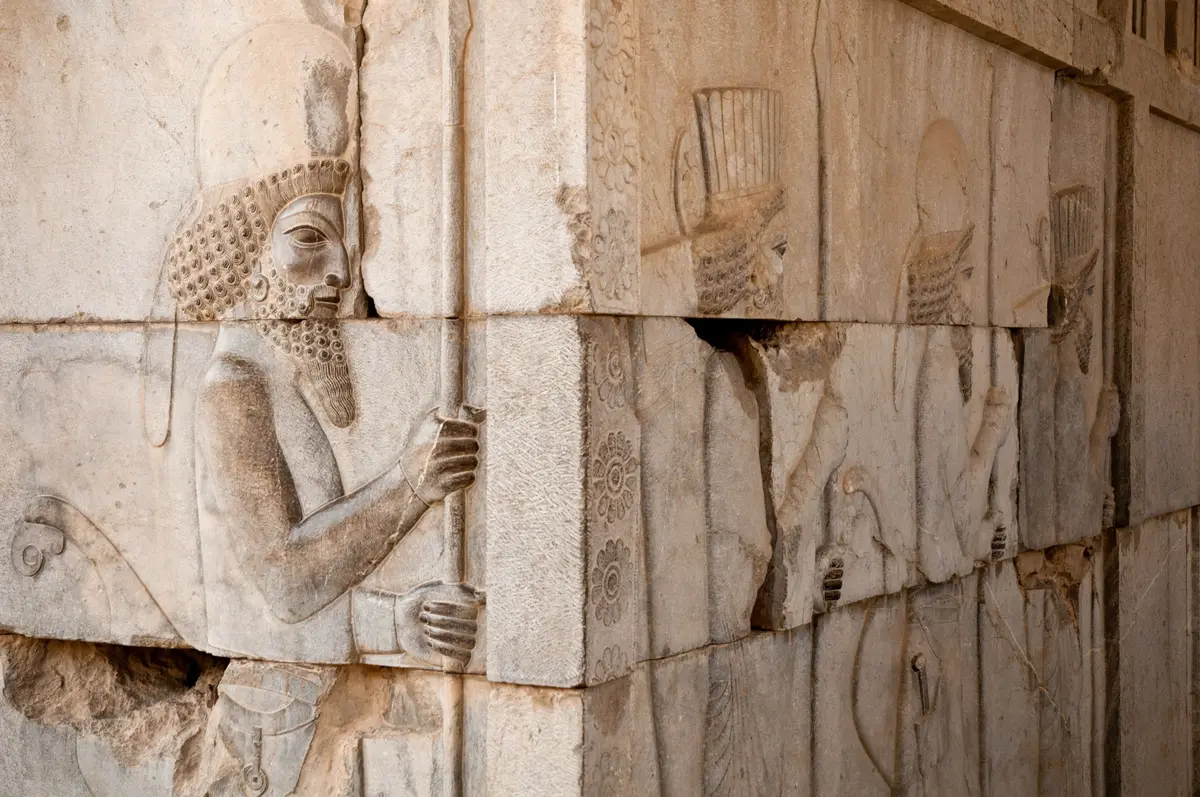
Xerxes waited four days for the Greeks to run away, then attacked. For two days his Medes and Cissians, and then his royal guard, the Immortals, came at the wall and were thrown back: the Greek hoplites had longer spears and better armour, and on the narrow road numbers did not count. Then a local man, Ephialtes, is said to have shown the king a path over the mountain, the Anopaia. The Immortals marched it by night and at dawn brushed aside the thousand Phocians guarding the heights. Warned in time, most of the allies left, sent away by Leonidas or going of their own accord (Herodotus gives both versions). Leonidas stayed with his Spartans and their helots, 700 Thespians and 400 Thebans. On the third morning he led them out into the wider part of the pass and fell there; his men fought over his body, then fell back behind the wall onto a low hill, the Kolonos, where Persian archers shot them down. The Thebans surrendered.
Thermopylae was a defeat. The road south lay open, the fleet left Artemisium, and within weeks the Persians took Athens and burned the temples on its Acropolis. But the three days at the pass, and the sea fights off Artemisium on the same days, had cost Xerxes men and ships, and late in September the Greek fleet destroyed much of his navy at Salamis; in 479 his army was beaten at Plataea. Why Leonidas stayed to die is still argued over. Herodotus tells of an oracle that Sparta would lose either its city or a king, a story that may have been made up afterwards; the historian Charles Hignett called his choice an unsolved riddle.
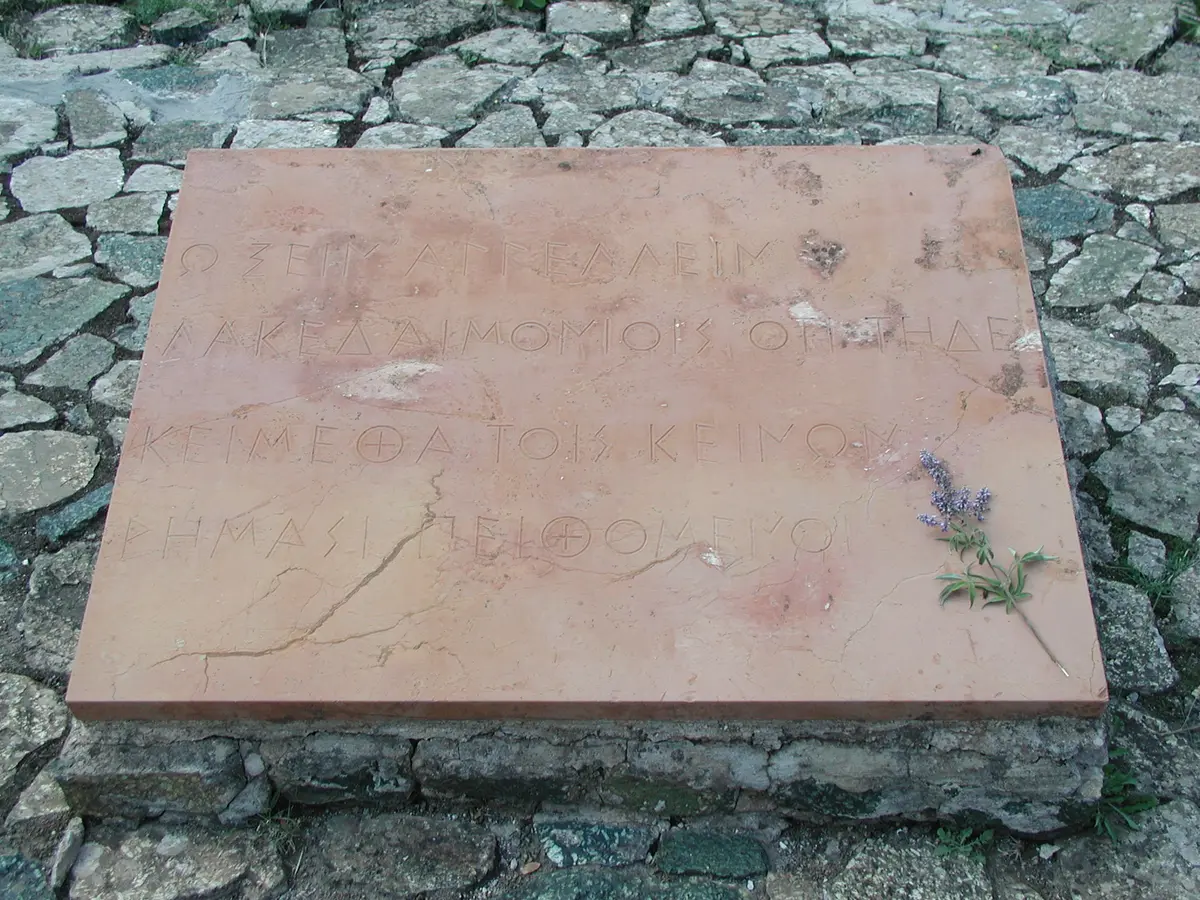
The dead were buried where they fell, under inscriptions that include the epitaph usually credited to the poet Simonides: 'Stranger, tell the Spartans that we lie here, obedient to their orders.' A stone lion marked the hill, and decades later Leonidas's bones were carried home to Sparta. Nearly everything we know comes from Herodotus, writing a generation or two later, and even the month is uncertain: Britannica puts the battle in August, while Livius, following a study of Herodotus's chronology, puts it in mid-September. The sea has since retreated more than a mile, so the narrow pass is now a wide plain. Ever since, Thermopylae has stood for a stand against hopeless odds: Jacques-Louis David painted Leonidas there in 1814, a bronze Leonidas was set up beside the hill in 1955, and the film 300 (2006) retold the story for a new audience.
What happened
- 480 BCE
Having given up the Vale of Tempe, the allied Greeks decide to stop Xerxes where the road and the sea run closest: the fleet goes to Artemisium, and the Spartan king Leonidas marches north with 300 Spartans, all fathers of living sons; the main armies are to follow after the Carneia festival and the Olympic games.
Sparta: Leonidas's city, which sent its 300 ahead of the main armyAt the Middle Gate some 4,000 to 7,000 Greeks rebuild the old wall of the Phocians across the road between cliff and sea; a thousand Phocians volunteer to guard the path over the mountain.
The Phocian wall: the old wall across the road that the Greeks rebuilt and defendedXerxes's army camps in the plain of Trachis, and for four days the king waits for the Greeks to run, while a storm wrecks part of his fleet off the coast of Magnesia. These days fall in late August by Britannica's date; Livius, following Kenneth Sacks, puts them in mid-September.
Trachis: the plain where Xerxes's army camped before the passFirst day: the Medes and Cissians attack the wall and are thrown back, then the Immortals under Hydarnes do no better; the Greeks' longer spears and heavier armour tell in the narrow road, and Xerxes, Herodotus says, leaps up from his throne three times.
The battlefield at the Middle Gate: the narrowest point of the pass, where the Greeks held the wall for three daysSecond day: the attacks fail again. Off Artemisium, on the same days, the Greek fleet takes thirty Persian ships, and a storm wrecks the squadron sent round Euboea to cut it off.
Artemisium: where the Greek fleet fought the Persian navy on the same three daysA Malian, Ephialtes, is said to show Xerxes the Anopaia path; at lamp-lighting time Hydarnes leads the Immortals up the Asopos gorge and over the mountain, and at dawn they scatter the Phocians on the heights.
The Anopaia path over the mountain, by which the Immortals turned the Greek position in the nightThird morning: warned by the seer Megistias, by deserters and by lookouts running down from the hills, most of the allies leave; Leonidas stays with his 300 and their helots, 700 Thespians and 400 Thebans.
The battlefield at the Middle Gate: the narrowest point of the pass, where the Greeks held the wall for three daysIn mid-morning Leonidas leads his men out into the wider part of the pass and is killed; they fight over his body, and when the Immortals come down behind them the survivors fall back behind the wall onto the Kolonos hill, where they are shot down. The Thebans surrender.
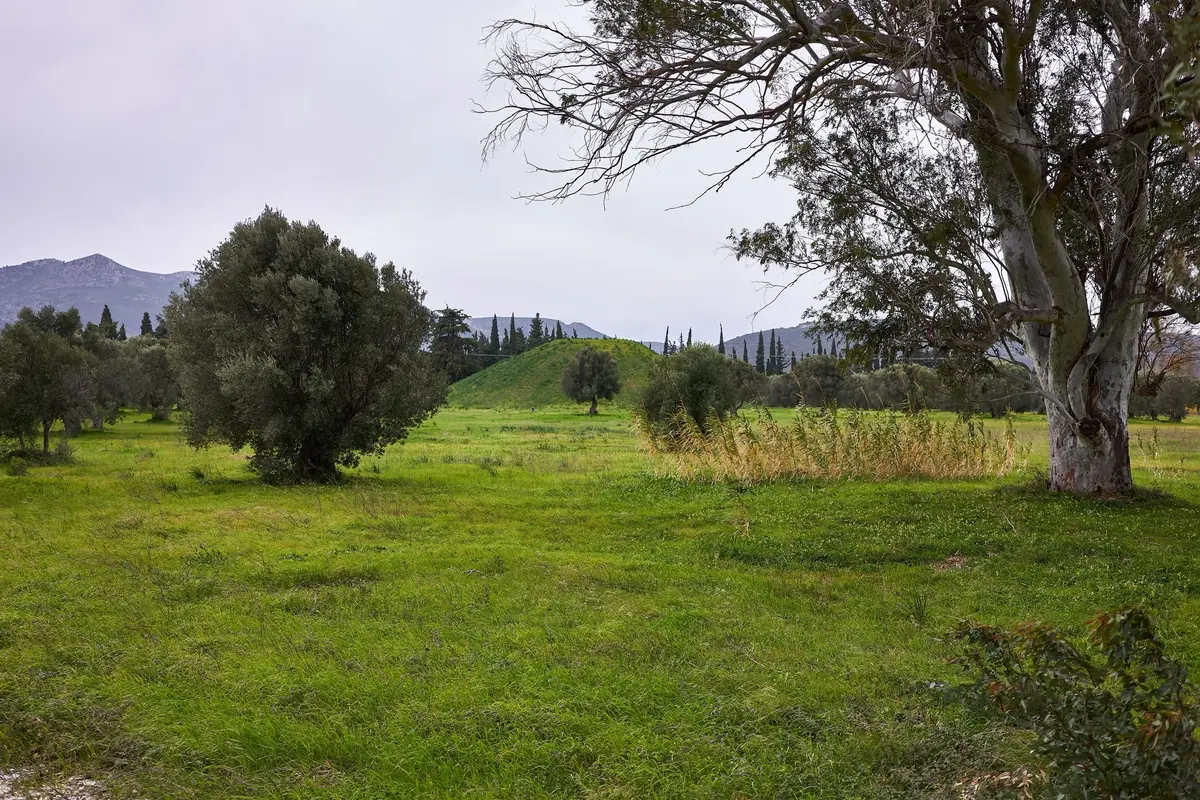
The Kolonos hill: where the last Spartans and Thespians died under the Persian arrowsXerxes has Leonidas's head cut off and set on a stake, hides most of his own dead and invites the men of his fleet to view the Greek dead; at Artemisium the Greeks hear the news and sail south.
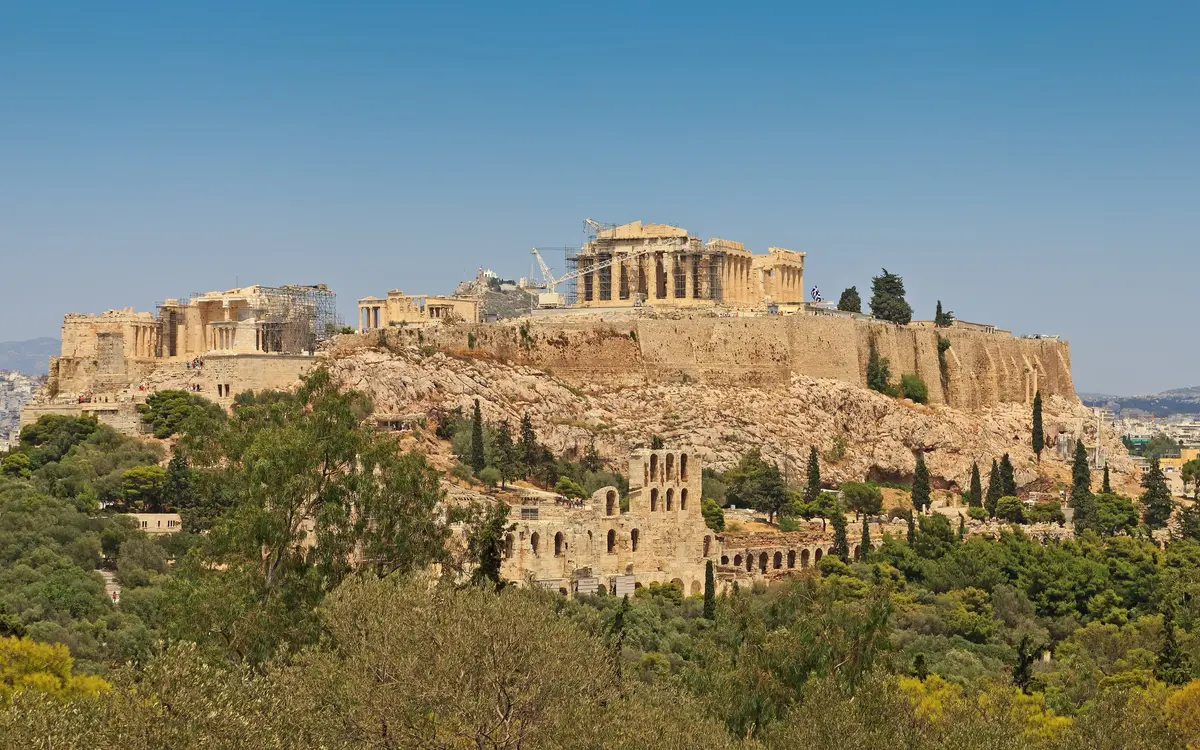
The battlefield at the Middle Gate: the narrowest point of the pass, where the Greeks held the wall for three daysWith the road open, the Persian army marches through Phocis and Boeotia, takes Athens and storms the Acropolis, killing those who had stayed and setting the temples on fire.
The Acropolis of Athens: taken and burned by the Persians a few weeks after the battleThe Greek fleet that fell back from Artemisium destroys much of Xerxes's navy in the strait of Salamis, and the king turns back to Asia, leaving an army in Greece for the winter.
Salamis: the strait where the Greek fleet beat Xerxes's navy at the end of September