Napoleon
“The Corsican general who seized power out of the French Revolution, crowned himself emperor in 1804, conquered most of Europe and lost it all at Waterloo, leaving his law code behind.”
Napoleon Bonaparte was the Corsican artillery officer who rose through the wars of the French Revolution to rule France, as First Consul from 1799 and as Emperor of the French from 1804 until 1814, and again for a hundred days in 1815. At its height his empire and its satellites covered most of continental Europe. He was beaten in the end by a coalition of every other great power, but the state he built, with its law code, its prefects, its schools and its peace with the Church, outlived him in France and was copied across Europe and beyond.
He was born at Ajaccio on 15 August 1769, the year after Genoa ceded Corsica to France, into a family of minor Corsican nobility, and was sent to French military schools at nine; he spoke French with an accent all his life. Commissioned in the artillery in 1785, he was made by the Revolution: his guns drove the British out of Toulon in 1793 and made him a general at 24, and in October 1795 he put down a royalist rising in Paris. In March 1796 he married Joséphine de Beauharnais and took command of the army in Italy, where a string of victories made him famous. In 1798 he invaded Egypt with an army and more than 150 scholars, whose finds included the Rosetta Stone; in November 1799 he came home and seized power in the coup of 18 Brumaire.
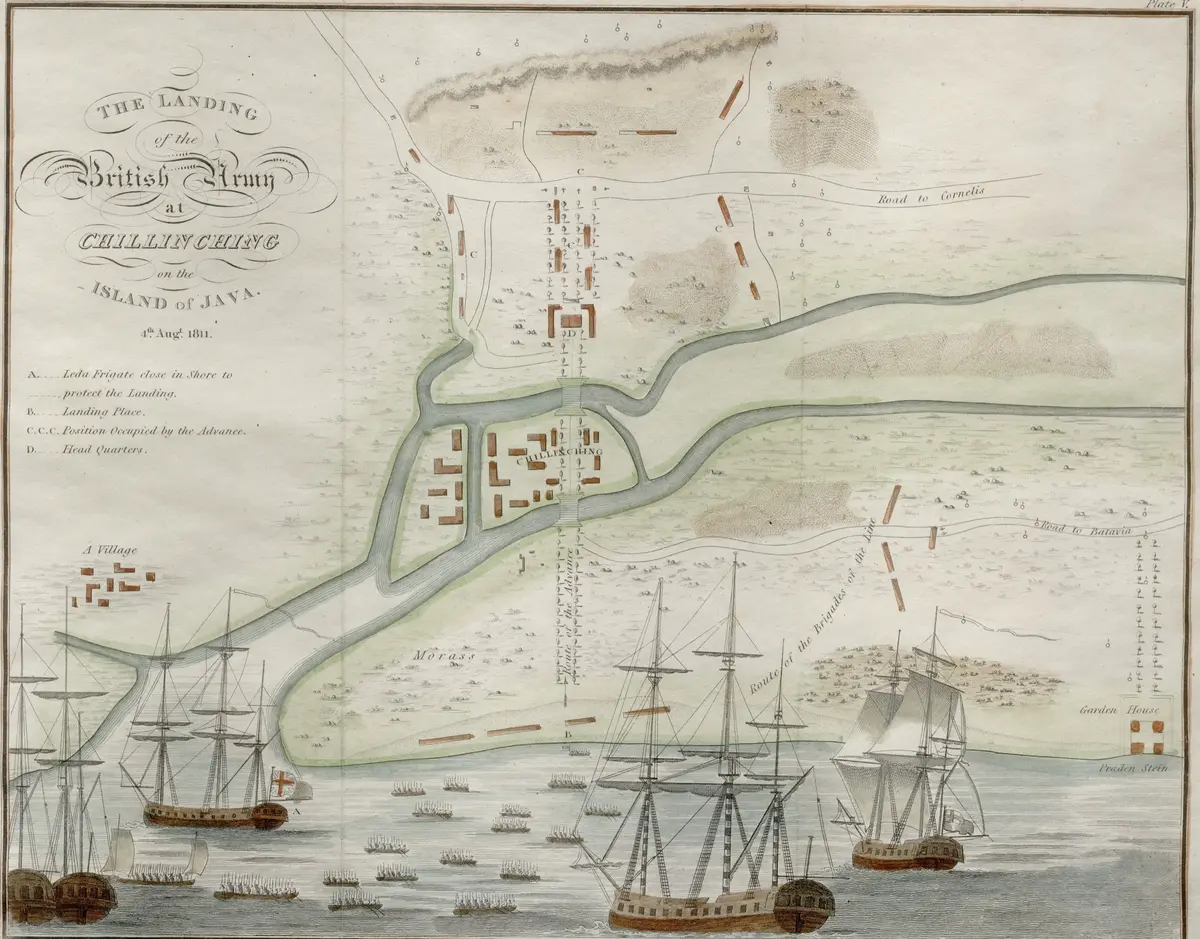
As First Consul he made peace with the Pope in the Concordat of 1801, centralised the government under prefects, founded the lycées and gave France the Civil Code of 1804, which set down equality before the law, the rights of property and civil marriage. On 2 December 1804 he crowned himself emperor in Notre-Dame. His victories at Austerlitz in 1805, Jena in 1806 and Friedland in 1807 broke Austria, Prussia and Russia in turn; the Holy Roman Empire was dissolved, his brothers were made kings of Holland, Naples, Westphalia and Spain, and the Dutch governor he sent to Java, Herman Willem Daendels, drove the Great Post Road across the island. Only Britain, safe behind the navy that won at Trafalgar in 1805, held out, and Napoleon tried to strangle its trade with the Continental System.
Spain's long guerrilla war, from 1808, and the invasion of Russia in 1812 undid him. He crossed the Niemen in June 1812 with around 450,000 front-line troops and reached Moscow in September, only to find it burning; the retreat through the winter destroyed his army. Beaten at Leipzig in October 1813, he abdicated on 6 April 1814 and was sent to the island of Elba. He escaped, landed in France on 1 March 1815, ruled again for a hundred days, and was defeated at Waterloo on 18 June. The British exiled him to Saint Helena in the South Atlantic, where he dictated his memoirs and died on 5 May 1821, aged 51. In 1840 his body was brought back to Paris and laid under the dome of the Invalides.
Historians still argue whether he was the heir of the Revolution or its gravedigger, a moderniser or the first of the modern dictators, and whether his wars, which killed millions, began the age of total war. His Civil Code is the root of the law of France, Belgium, the Netherlands, Italy and much of Latin America; by unseating Spain's king in 1808 he set off Latin America's wars of independence, and by sweeping away the old patchwork of Germany and Italy he prepared both for unification. Few lives have been painted, written about and argued over more.
What happened
- 1769
Born at Ajaccio in Corsica, the year after Genoa ceded the island to France, the second son of Carlo Buonaparte.
Maison Bonaparte, Ajaccio: the family house where he was born in 1769- 1779
Aged nine, he enters the military school at Brienne in France, where he is teased for his Corsican accent.
- 1785
He is commissioned as a lieutenant of artillery.
- 1793
At the siege of Toulon his guns drive the British fleet from the harbour; he is made a brigadier general at 24.
- 1795
On 13 Vendémiaire he turns his cannon on a royalist rising in Paris and saves the Republic's government.
- 1796
He marries Joséphine de Beauharnais and two days later leaves to command the French army in Italy.
At Arcole, flag in hand, he leads an attack across a bridge in a three-day battle against the Austrians; the Italian victories make him a national hero.
- 1798
He invades Egypt with an army and a commission of scholars and wins the Battle of the Pyramids; in July 1799 his soldiers dig up the Rosetta Stone.
- 1799
Back from Egypt, he seizes power in the coup of 18 Brumaire and makes himself First Consul.
- 1800
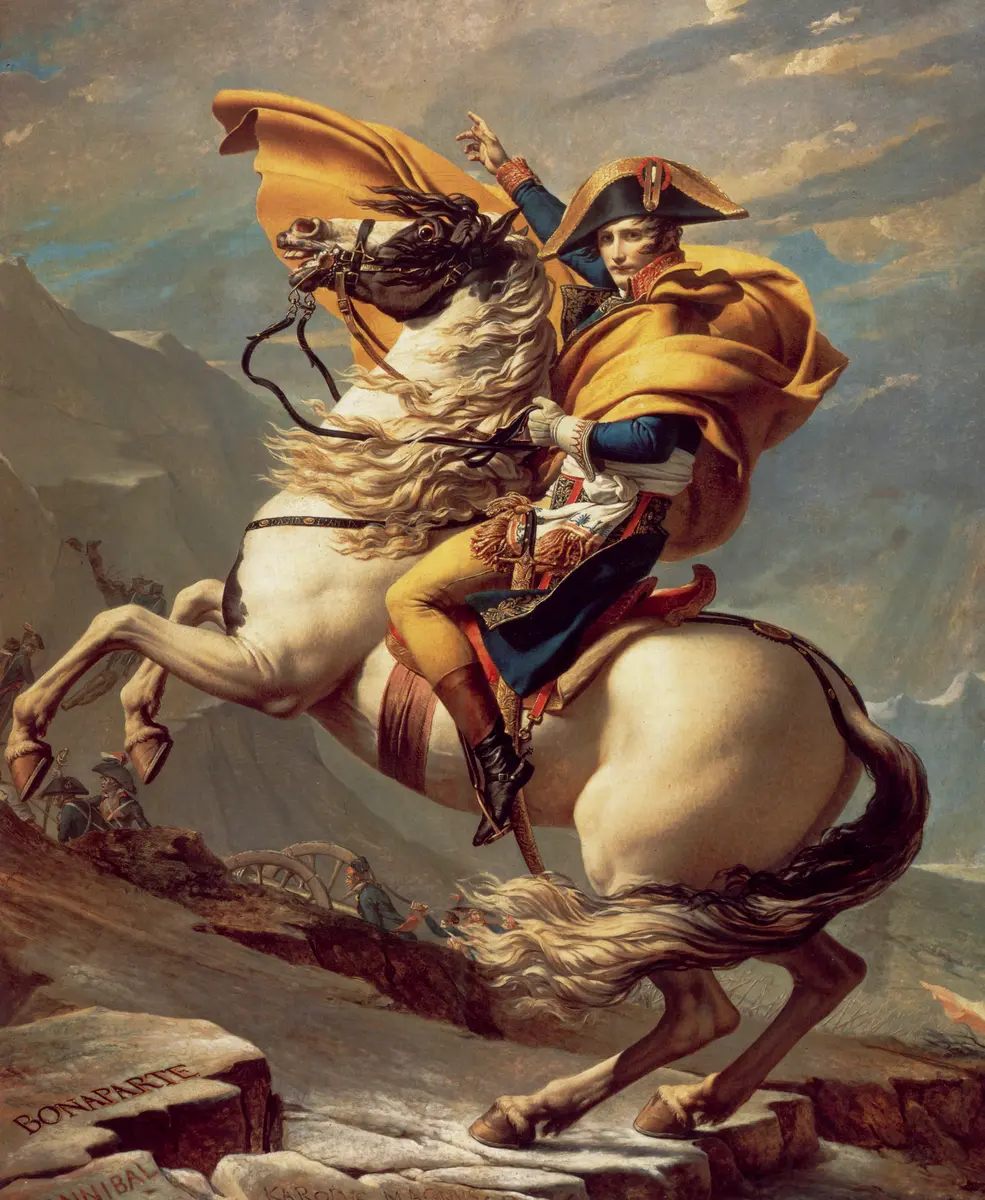
He leads an army over the Great St Bernard Pass into Italy and in June beats the Austrians at Marengo.
- 1804
The Civil Code of the French comes into force: equality before the law, secure property and civil marriage for the whole country.
In Notre-Dame, before Pope Pius VII, he crowns himself Emperor of the French, then crowns Joséphine.
Notre-Dame de Paris: where he crowned himself emperor on 2 December 1804- 1805
Nelson destroys the French and Spanish fleets at Trafalgar, ending any hope of invading Britain.
On the anniversary of his coronation he crushes the Austrian and Russian armies at Austerlitz.
The battlefield of Austerlitz (Slavkov u Brna), Moravia: his greatest victory, 2 December 1805- 1806
Francis II gives up the crown and the Holy Roman Empire comes to an end; Napoleon's brother Louis is now King of Holland, and in October the Prussians are routed at Jena.
- 1807
At Eylau, in a snowstorm, he fights the Russians to a bloody draw; in June he beats them at Friedland and in July makes peace at Tilsit, at the height of his power.
- 1808
In Java, Herman Willem Daendels takes office as governor-general for Louis's Kingdom of Holland and begins the Great Post Road along the north coast.
He forces the Spanish king to abdicate and makes his brother Joseph King of Spain; Spain rises in a guerrilla war that will bleed his armies for six years.
- 1812
He crosses the Niemen into Russia with around 450,000 front-line troops.
He enters Moscow, which burns the next night; the tsar will not negotiate, and in October the long retreat through the winter begins.
- 1813
At Leipzig, the 'Battle of the Nations', the armies of Russia, Prussia, Austria and Sweden defeat him.
- 1814
With the allies in Paris, he abdicates at Fontainebleau and is sent to rule the island of Elba.
- 1815
He lands at Golfe-Juan and marches on Paris; the troops sent to stop him join him, and the Hundred Days begin.
Wellington and Blücher defeat him at Waterloo; four days later he abdicates for the second time.
The British land him on Saint Helena, far out in the South Atlantic, where he settles at Longwood and dictates his memoirs.
Longwood House, Saint Helena: his prison from 1815 and the place of his death in 1821- 1821
He dies at Longwood, aged 51. In 1840 his body is brought back to Paris and laid under the dome of the Invalides.
Les Invalides, Paris: his tomb under the dome since 1840