Britain takes Java
“In 1811 a British army from India took Java from Napoleon's Dutch regime; Stamford Raffles governed the island for five years, until it was handed back to the Dutch in 1816.”
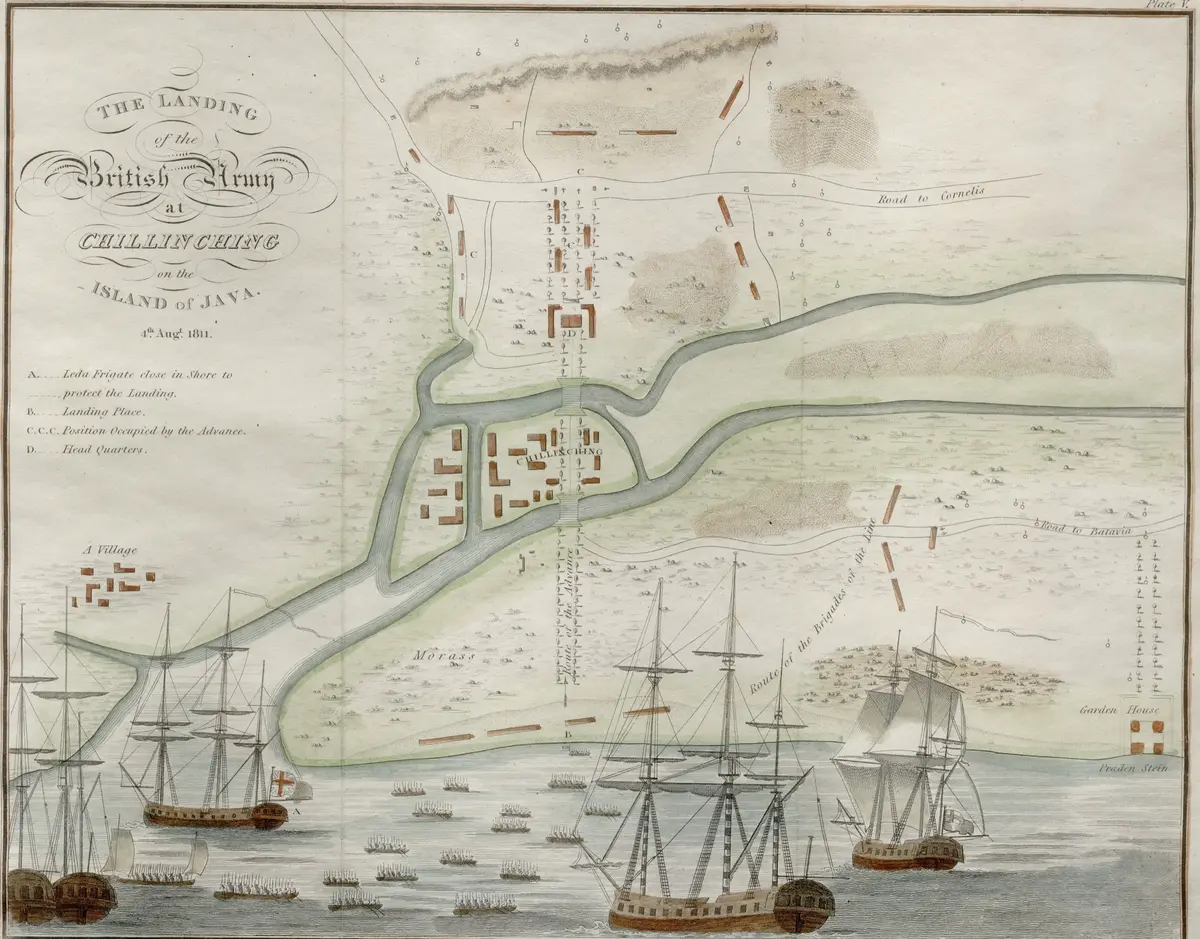
In August 1811 a British army sailed from India and in six weeks took Java from the government Napoleon had placed over it. The Netherlands had become the Kingdom of Holland under Napoleon's brother Louis, and Java was ruled for it first by Marshal Herman Willem Daendels, who strengthened the island's defences and built the great post road along its length, then by General Jan Willem Janssens. To the British East India Company the island was a base from which French warships could prey on its ships bound for China. Lord Minto, the governor-general of India, who had already taken Mauritius, Réunion and the Moluccas in 1810, came with the expedition himself. On 4 August about 10,000 men, two thirds of them Indian sepoys from Bengal and Madras, landed unopposed at Cilincing, east of Batavia. They entered the city on the 8th and on 26 August stormed Daendels's great entrenched camp at Meester Cornelis, today's Jatinegara, in the decisive and bloody battle of the campaign. Janssens fled east; after his last troops broke in the hills above Semarang he signed the surrender of Java and its dependencies on 18 September, the capitulation that Dutch and Indonesian histories name after Tuntang.
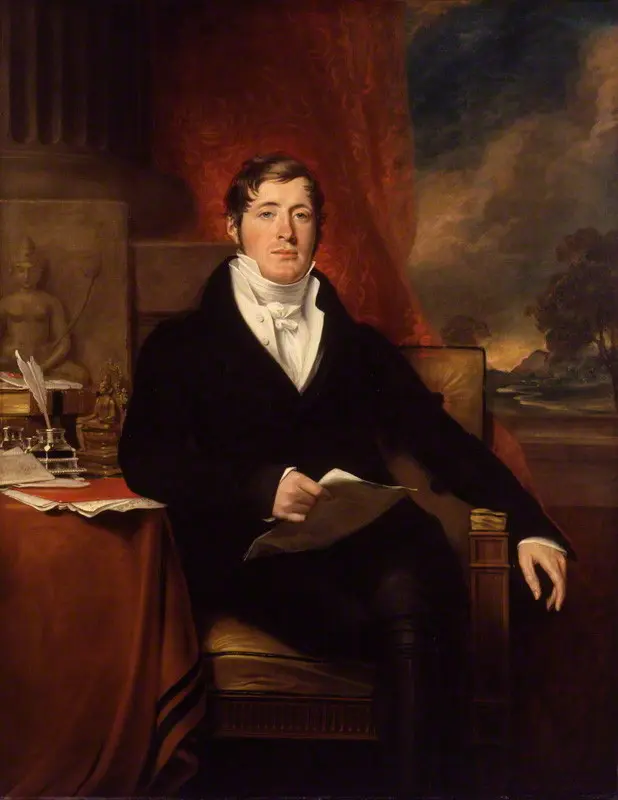
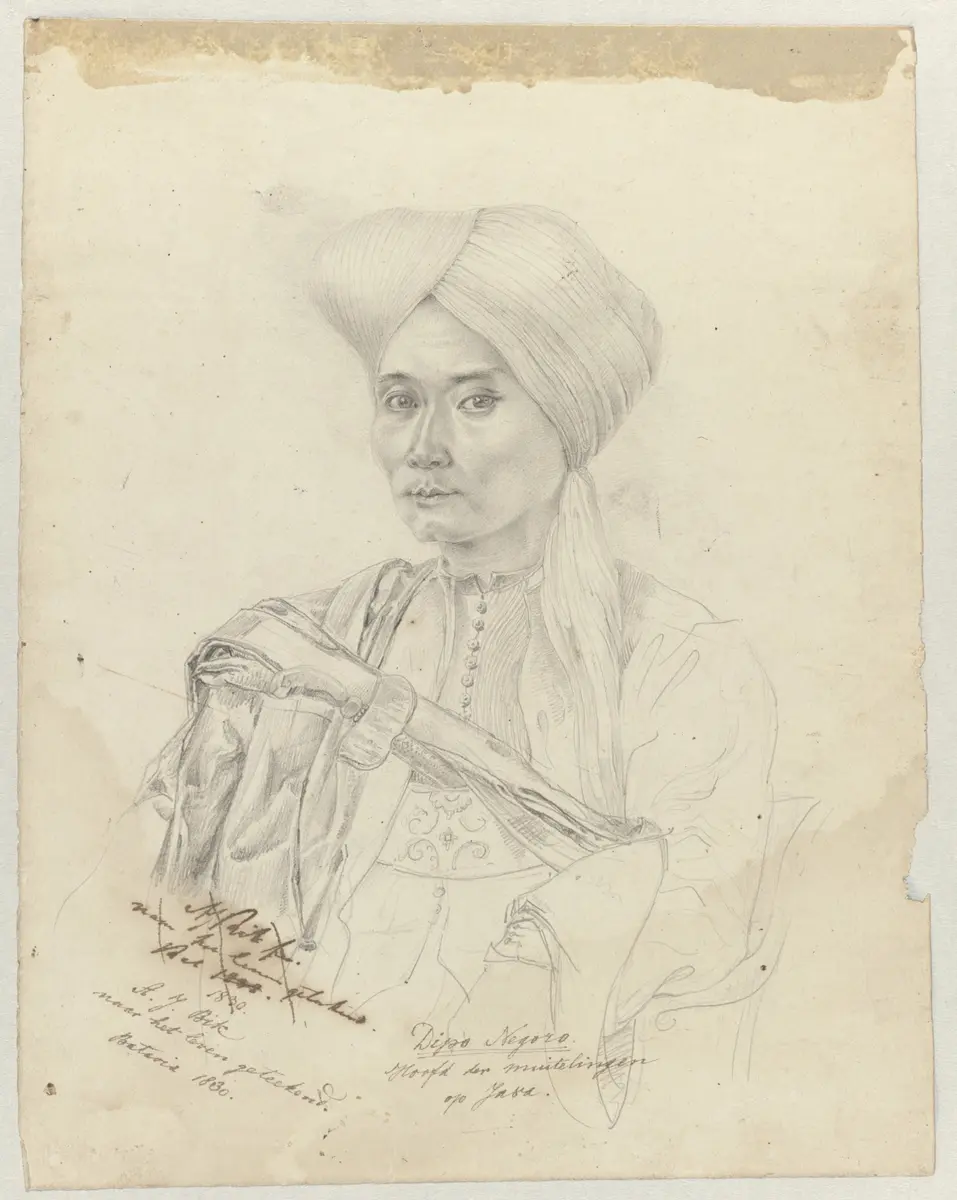
Minto proclaimed British rule on 29 August and on 11 September made Thomas Stamford Raffles lieutenant-governor. Raffles was thirty, a Company official who had prepared the invasion from Malacca and had made himself a student of Malay language and culture. He believed that British methods, modelled on Bengal, would free the Javanese from Dutch forced deliveries and make the island pay: he planned to group its regencies into residencies, declared the land the government's and asked the farmers for a rent in place of compulsory crops, and the new government abolished judicial torture and moved against slavery. But he misread the Javanese regents as feudal landlords, and exports and revenue fell. His rule also humbled the central Javanese courts. On 20 June 1812 British and sepoy troops under Colonel Rollo Gillespie stormed the walled palace of Yogyakarta: Sultan Hamengkubuwono II was deposed and shipped to Penang, his son was made sultan, the province of Kedu was taken, and the palace's treasure and library were carried off; dozens of its manuscripts are now in the British Library. The young Prince Diponegoro, whose father was the new sultan, refused the British offer to make him crown prince.
Raffles also took Java's past seriously. He brought the great Buddhist monument of Borobudur, buried under volcanic ash and jungle, to European notice in 1814, had Borobudur and Prambanan surveyed, collected manuscripts, gamelan instruments and shadow puppets, and sent ancient inscriptions abroad, among them the Sangguran stone he gave to Lord Minto. From 1812 he lived at Buitenzorg, today's Bogor, where his wife Olivia died in 1814. Some of his rules outlived him: Indonesians still drive on the left and buy food from kaki lima, 'five-foot' street sellers named after his order that pavements be five feet wide. The army was another matter: in late 1815 Bengal sepoys in south-central Java plotted to kill their British officers and set up a government of their own.
The occupation was always tied to the war in Europe. After Napoleon's first defeat Britain agreed in 1814 to give the Dutch back their East Indies, while keeping most of the other Dutch colonies it had taken. The Company, which found Raffles's reforms too costly, recalled him; he sailed for England on 25 March 1816, and on 19 August 1816 Java was formally handed back to the Dutch, whose governor-general Godert van der Capellen ruled it until 1826. The Dutch kept the British framework of residencies and regencies, and Van der Capellen's own policy on Javanese land helped set off the Java War of 1825. In London Raffles published The History of Java in 1817 and was knighted the same year; two years later he founded Singapore. In Yogyakarta the sack of 1812 is remembered as Geger Sepehi, after the sepoys; in 2018 the British Library began to digitise the manuscripts taken from the palace, at a launch opened by Sultan Hamengku Buwono X.
What happened
- 1811
The expedition's fleet anchors off Cilincing, twelve miles east of Batavia, and the army lands unopposed: about 10,000 men, two thirds of them sepoys from Bengal and Madras, under Lieutenant-General Sir Samuel Auchmuty, with Lord Minto in person. Colonel Rollo Gillespie's advance takes position beyond the village on the road to Meester Cornelis to cover the landing.
Cilincing, on the coast twelve miles east of Batavia: where the British army landed on 4 August 1811The British enter Batavia, the old walled town, to a royal salute from the fleet. That night an enemy column attacks the picket at the bridge from Weltevreden and is driven off.
Batavia, the old walled town (Kota Tua): entered by the British on 8 August 1811Gillespie's advance marches before dawn to Weltevreden, the new quarter south of the town, and finds the cantonment abandoned. On the road beyond, the Franco-Dutch rearguard fights for two hours behind an abatis and pepper gardens before falling back into the lines of Meester Cornelis.
Soon after midnight Gillespie's column sets out on a long detour through difficult country, and the British storm Daendels's great redoubt at Meester Cornelis. It is the decisive battle of the campaign, and a bloody one: by Peter Carey's count more than 12,000 of the 21,500 Franco-Dutch troops died in the six weeks, and the British threw the dead of Cornelis into a swamp still called Rawa Bangke, 'swamp of corpses'. Janssens escapes east by way of Buitenzorg.
Meester Cornelis (today Jatinegara): Daendels's entrenched camp, stormed by the British on 26 August 1811Minto proclaims British rule over Java and its dependencies, promising their people a new era of enlightened government.
Minto, who called him 'a very clever, able, active and judicious man', proclaims Stamford Raffles, aged thirty, lieutenant-governor of Java.
About 1,100 British infantry under Colonel Gibbs march at two in the morning from Semarang, drive Janssens's army off its hill position at Jatingaleh ('Jattee Alice' in the dispatch), and by noon take the fort of Ungaran, which the enemy abandon in confusion. That night Janssens sends an officer under a flag of truce to ask for an armistice.
Janssens's chief of staff, De Kock, has agreed terms at Ungaran the day before; Janssens first refuses to sign, then, as the British column marches at six towards Salatiga, sends the capitulation signed. Auchmuty approves it the same day: Java and its dependencies pass to Britain and the French army becomes prisoners of war. Dutch and Indonesian histories call it the capitulation of Tuntang, after the village on that road.
Tuntang, on the road from Semarang to Salatiga: the village that gives its name to the capitulation of 18 September 1811Minto and Auchmuty sail back to India, leaving the civil government to Raffles and the army to Gillespie.
Raffles arrives at Yogyakarta, accepts Sultan Hamengkubuwono II, whom Daendels had deposed, back on his throne and concludes a treaty with him; it soon breaks down.
The kraton of Yogyakarta: the sultan's palace, stormed and plundered by the British on 20 June 1812- 1812
Raffles and his wife Olivia settle at Buitenzorg, the governors' country palace in the hills south of Batavia, which becomes their home; there she holds receptions despite poor health.
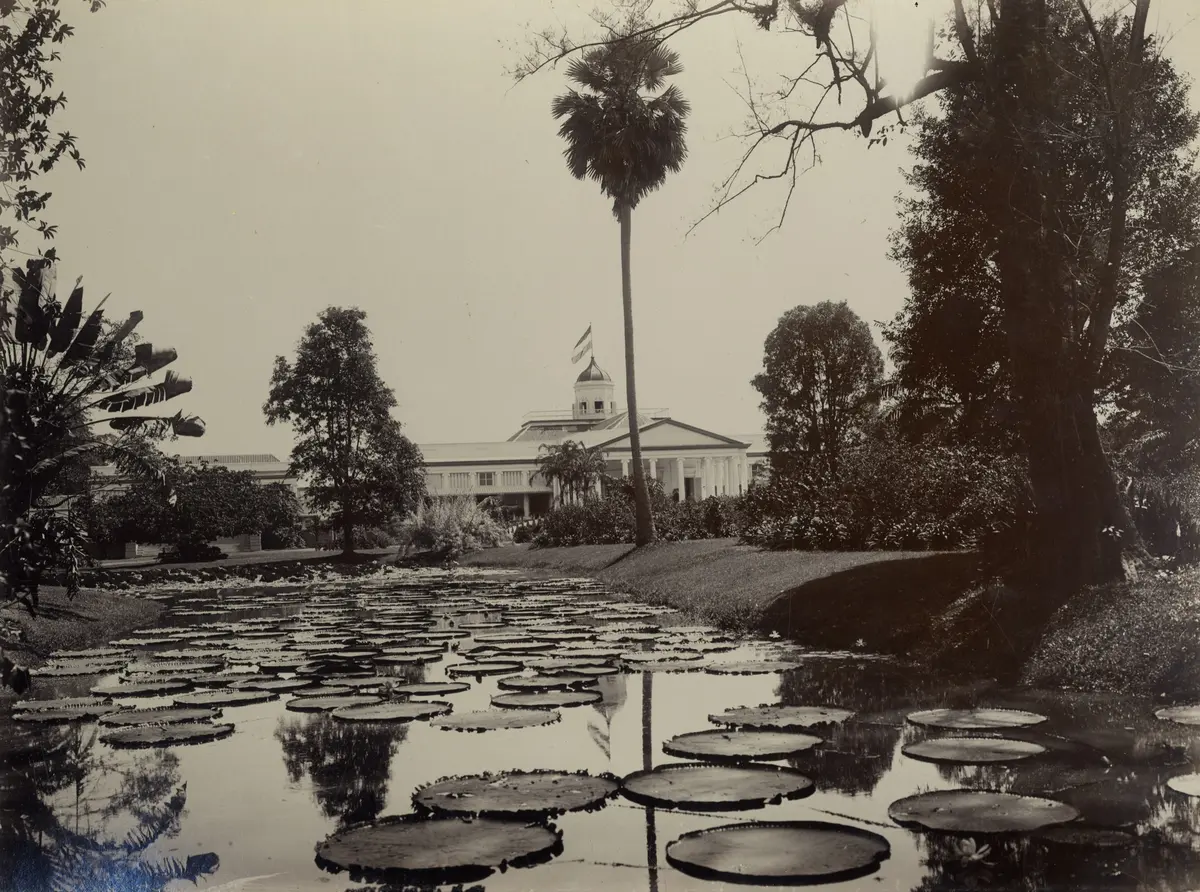
Buitenzorg (Bogor): the governors' country palace, Raffles's home from 1812, rebuilt in 1856 after the earthquake of 1834Gillespie and Raffles, who had come before Yogyakarta with a small force on 17 June, take the kraton by storm with British and sepoy troops; the powder store in its north-east bastion is blown up. Hamengkubuwono II surrenders, is deposed and exiled to Penang, and his son, Diponegoro's father, becomes sultan as Hamengkubuwono III; Kedu is ceded to the British. The palace is plundered and its library is shared out among Raffles, the resident John Crawfurd and the engineer Colin Mackenzie.
The kraton of Yogyakarta: the sultan's palace, stormed and plundered by the British on 20 June 1812- 1813
The Sangguran stone, a tenth-century charter that Colin Mackenzie had removed from the hills near Malang, sails for Calcutta on the Matilda as Raffles's gift to Lord Minto, who later takes it to his estate in Scotland, where it still stands.
- 1814
Raffles brings Borobudur, the great Buddhist monument of the ninth century, buried under volcanic ash and jungle, to European notice, and has Borobudur and Prambanan surveyed.
In a minute to the government in Calcutta Raffles sets out his land-rent system: all land is declared the government's, and each cultivator is to pay a rent for it in place of the forced deliveries of crops.
In London, Britain and the Netherlands sign a convention by which the Dutch East Indies are to be returned, while Britain keeps most of the other Dutch colonies it took in the war.
Olivia Raffles dies at Buitenzorg, aged 43. She is buried in the Tanah Abang cemetery in Batavia, and a memorial is raised to her at Buitenzorg.
The Botanical Gardens at Buitenzorg (Bogor), founded by the Dutch in 1817 beside the palace, with the memorial to Olivia Raffles- 1815
In October and November Bengal sepoys stationed in south-central Java, drawn to the rituals of the Surakarta court and the old temples, plot to kill their British officers and set up a government of their own: the sepoy conspiracy.
- 1816
Recalled by the East India Company, ill and grieving, Raffles sails for England. With him goes Raden Rana Dipura, a Javanese who will play the gambang before a composer in London and whose portrait opens The History of Java.
Java and its dependencies are formally handed back to the Dutch. Godert van der Capellen becomes governor-general and rules until 1826.
Batavia, the old walled town (Kota Tua): entered by the British on 8 August 1811