Prince Diponegoro
“The Yogyakarta prince who led the Java War against the Dutch from 1825 to 1830, was seized at peace talks in Magelang and dictated his life story in exile; a national hero of Indonesia.”
Prince Diponegoro (Dipanagara, 'the light of the country') was the eldest son of the third sultan of Yogyakarta and the leader of the Java War of 1825 to 1830, the great rising against Dutch rule that Indonesians call Diponegoro's War. He was born in the Yogyakarta kraton on 11 November 1785 to an unofficial wife of the future sultan and was known in his youth as Raden Mas Ontowiryo. From the age of seven he was brought up by his great-grandmother Ratu Ageng, the first sultan's widow, on her estate at Tegalrejo west of the city, among farmers and Muslim teachers rather than at court. He grew into a devout Muslim and a Javanese mystic, a follower of the Shattariyah and Naqshbandiyah Sufi brotherhoods, who made long retreats in caves and at the shrines of the south coast and believed that the spirit guardians of Java and the saint Sunan Kalijaga spoke to him.
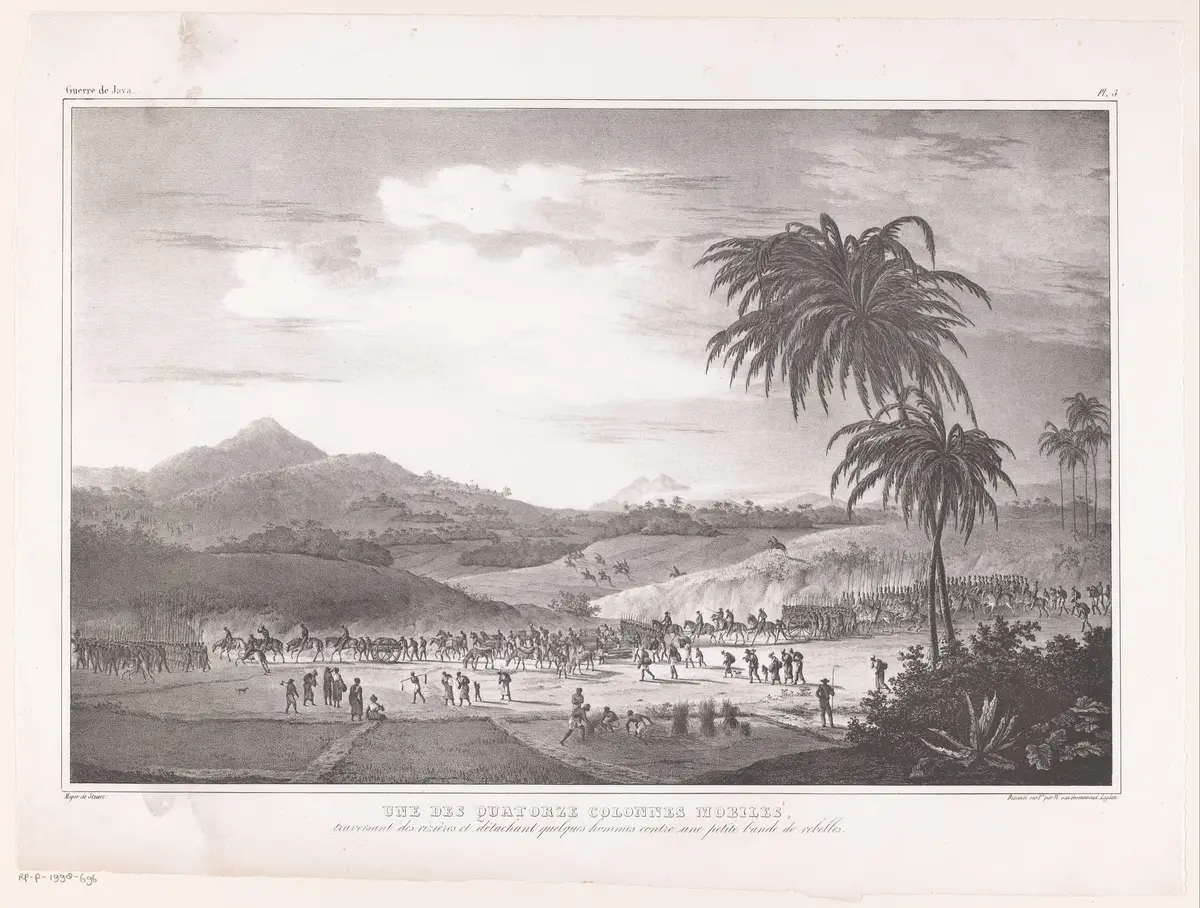
He was passed over for the throne in 1814, when his half-brother, the queen's son, became sultan, and again in 1822, when that brother died and an infant succeeded. He watched the court sink under Dutch interference, cancelled land leases and the tollgates that squeezed the peasants. In July 1825 officials staked out a road across Tegalrejo without telling him; his men pulled the stakes up, and on 20 July Dutch and Yogyakarta troops came to take him. He escaped to the cave of Selarong and from there led a five-year war as the Ratu Adil, the Just King of Javanese prophecy, fighting a holy war for Islam and for the old order of Java, with commanders who carried Ottoman titles. For nearly three years his guerrilla bands held much of central Java, until General de Kock's network of small forts linked by roads wore them down. In March 1830 he came to Magelang to talk peace, and on the 28th he was arrested in the Resident's house, an act De Kock himself called ignoble and dishonest.
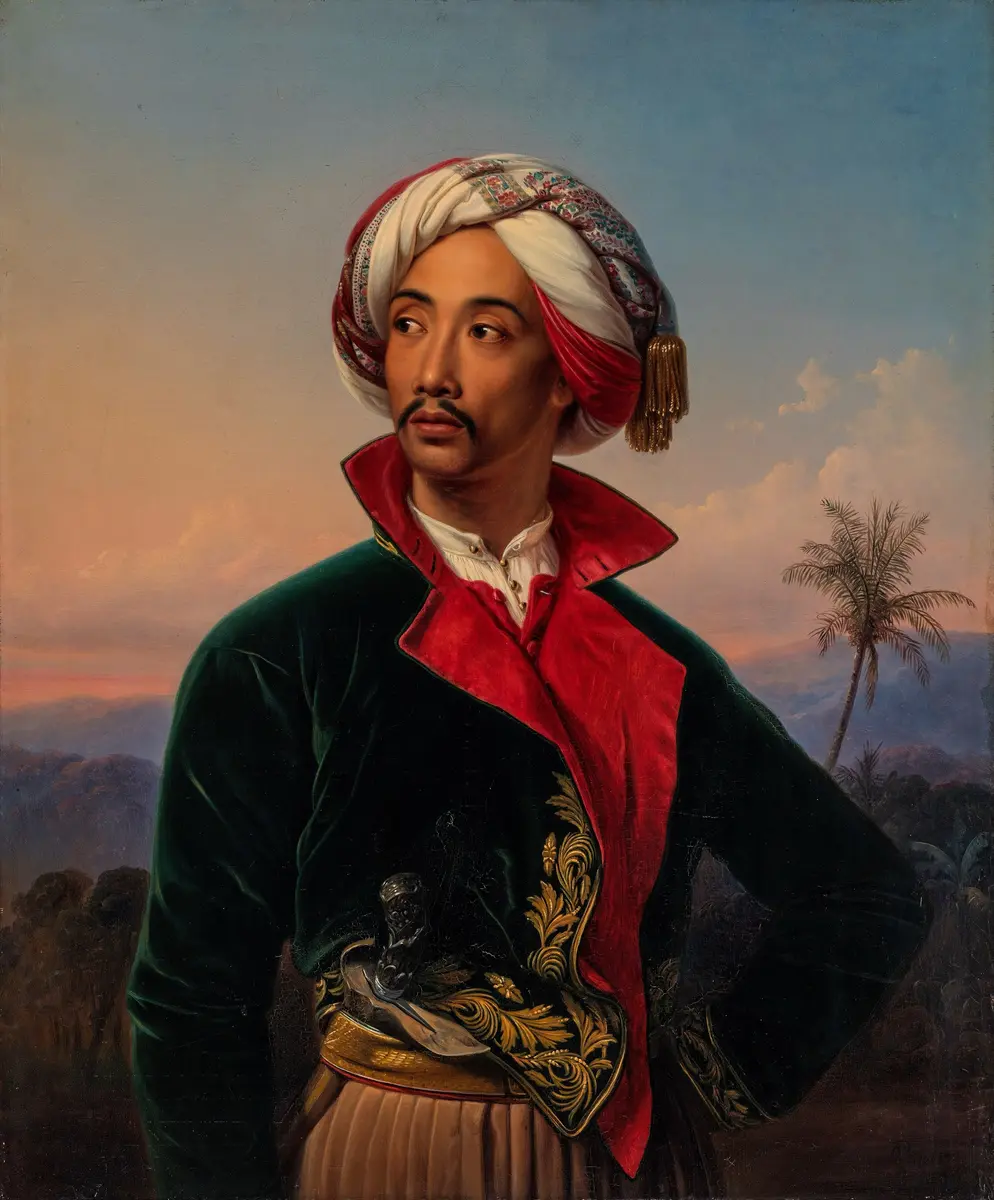
He spent the rest of his life as a state prisoner, first in Fort Nieuw Amsterdam at Manado in North Sulawesi, where in 1831 and 1832 he dictated the Babad Diponegoro, a verse chronicle of Java and of his own life that runs to over a thousand pages and is perhaps the first autobiography in modern Javanese, and from 1833 in Fort Rotterdam at Makassar, where he died on 8 January 1855. Two paintings fix the end of his war in memory: Nicolaas Pieneman's 'submission', painted for De Kock, and Raden Saleh's 'arrest' of 1857, in which the prince stands unbowed. Independent Indonesia made him a national hero in 1973; a university, the Central Java army division and many streets carry his name. His chronicle entered UNESCO's Memory of the World register in 2013, his pilgrim's staff was handed back by a Dutch family in 2015, and his kris, Kyai Nogo Siluman, by the Dutch state in 2020.
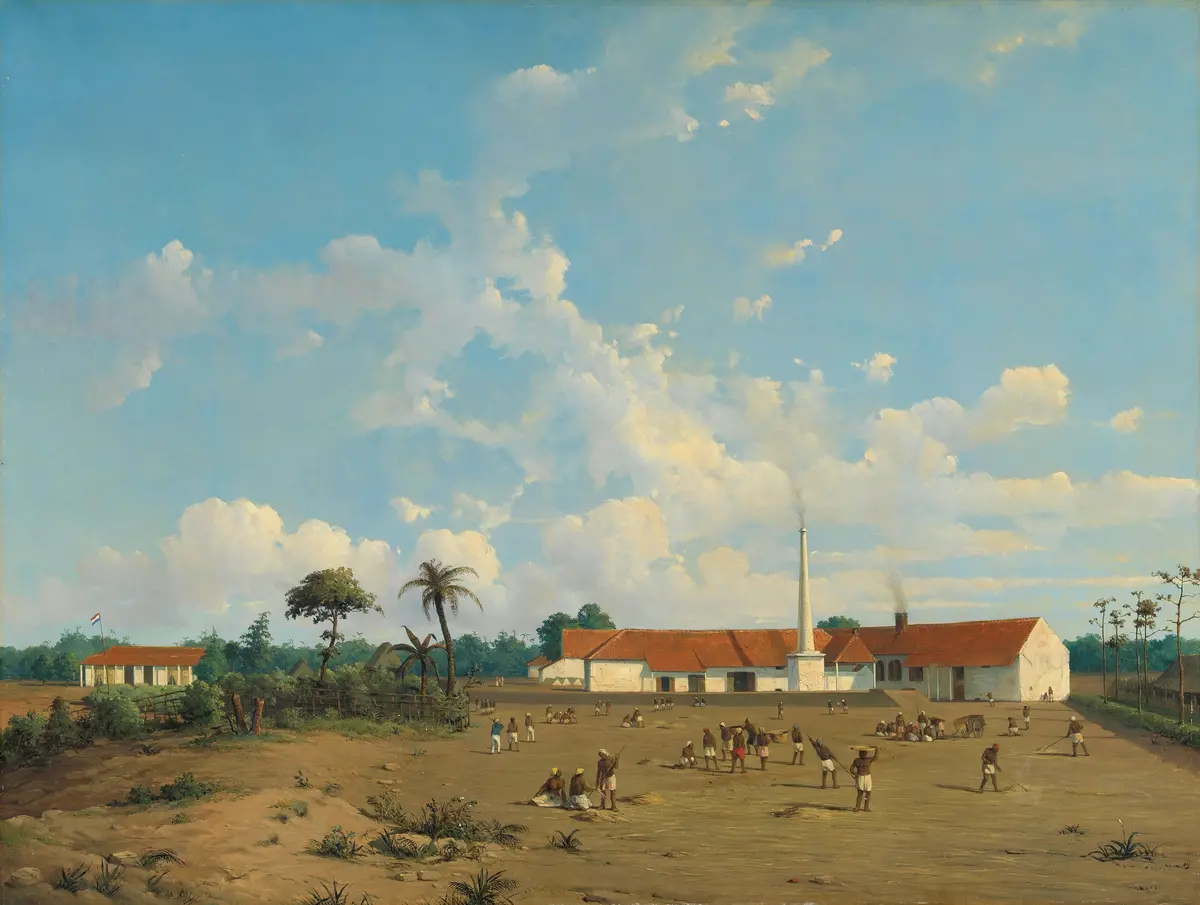
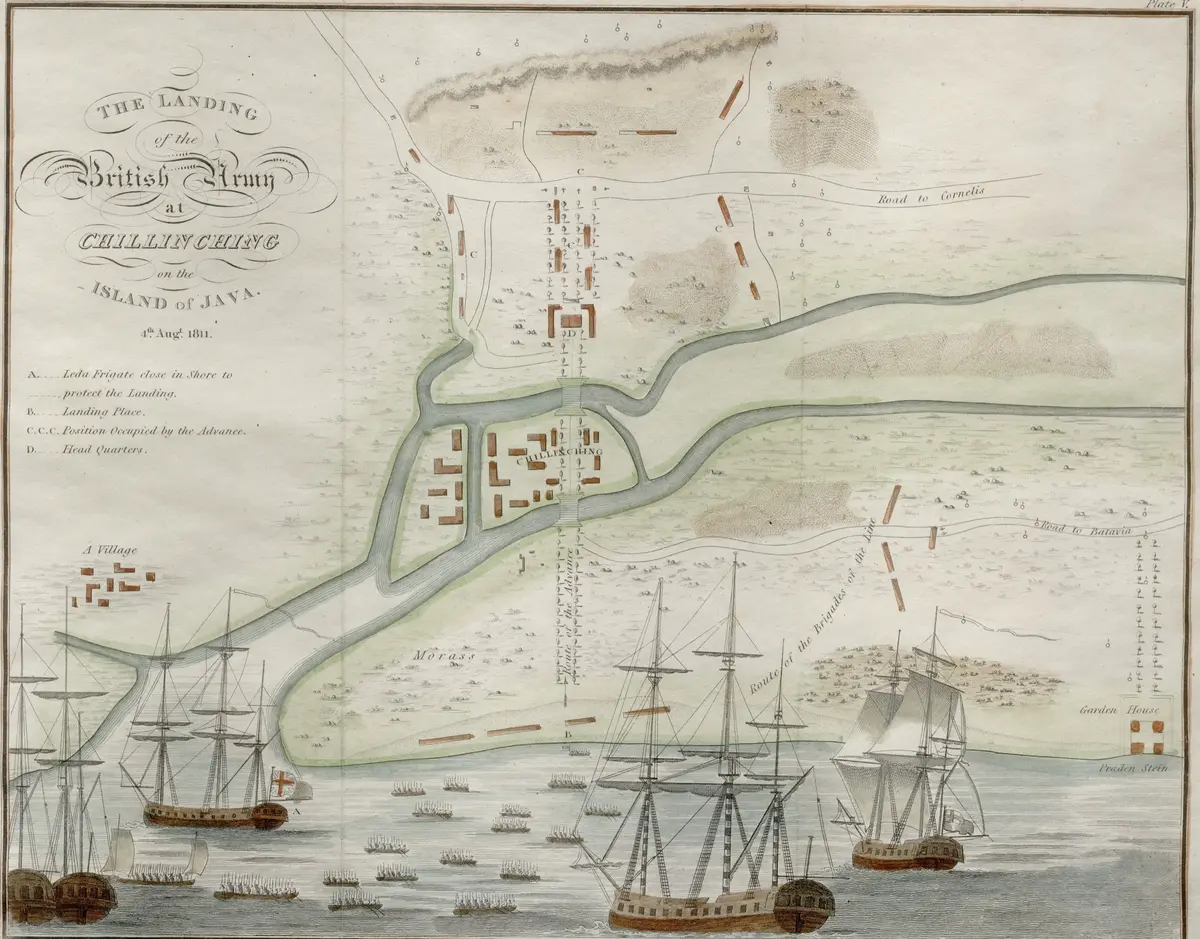
His life spanned the end of old Java. He was born under the Dutch East India Company, saw Marshal Daendels humble the Yogyakarta court in 1810 and 1811 and the British under Raffles storm and plunder it in June 1812, and lived through the return of a Dutch government that leaned ever harder on the courts and their peasants. He admired the Ottoman empire, modelled his army on its Janissaries and, through his envoys in the last months of the war, offered the Dutch a choice: become Muslims, go home, or stay as traders in Batavia and Semarang, paying fair prices for Java's crops. The war was put down at great cost, and his defeat opened the way for the Cultivation System, under which Javanese farmers grew coffee, sugar and indigo for the Dutch state at low fixed prices. To the Dutch of his day he was 'the chief of the rebels'; to Indonesians he is the hero whose war, joining Javanese identity and Islam, foreshadowed the national movement of the twentieth century.
What happened
- 1785
Born in the kraton of Yogyakarta, the eldest son of the future Sultan Hamengkubuwono III, then a grandson of the reigning first sultan, by Raden Ayu Mangkarawati, an unofficial wife; as a boy he is known as Raden Mas Ontowiryo.
The kraton of Yogyakarta: the sultan's palace, where Diponegoro was born on 11 November 1785- 1793
Aged seven, he is taken by his great-grandmother Ratu Ageng, the widow of the first sultan, to her estate at Tegalrejo west of the city. There he grows up among farmers, Muslim teachers and ascetics, and visits the court only for its great festivals.
Tegalrejo, west of Yogyakarta: Ratu Ageng's estate and his home from 1793 until the Dutch attack of 20 July 1825; the Sasana Wiratama monument museum stands on it - 1805
About 1805 he makes a pilgrimage to the south coast. By his own account the spirit queen Ratu Kidul promises to return to him, and at Parangkusumo a voice gives him the name Ngabdulkamit (Abdulhamid), foretells great troubles in Yogyakarta in which he will play the chief part, warns him never to let Europeans make him crown prince, and gives him the arrow Sarotama, which he has made into a dagger.
- 1812
British troops under Gillespie storm and plunder the Yogyakarta kraton. The old sultan is exiled to Penang and Diponegoro's father is made sultan; Diponegoro, who had stood by him, refuses the British offer to make him crown prince.
The kraton of Yogyakarta: the sultan's palace, where Diponegoro was born on 11 November 1785- 1814
His father dies after two years on the throne. By custom the crown goes to his thirteen-year-old half-brother, the queen's son, as Hamengkubuwono IV; Diponegoro is said to have been promised the throne if the boy died young.
- 1822
The young sultan dies, still a minor, and his infant son succeeds as Hamengkubuwono V under a regency council of which Diponegoro is a member: he is passed over again.
- 1824
In the fasting month, alone in the Secang cave at Selarong where he spends every Ramadan, he has a vision: a messenger leads him to a mountaintop where the Ratu Adil, the Just King, in a green turban, tells him to lead his soldiers in the conquest of Java, with the Qur'an as his mandate.
- 1825
Officials of the Yogyakarta chief minister stake out a new road across Tegalrejo without telling him. His men pull the stakes up; the road to the city is blocked and reopened three times, and he decides that there is no going back.
Tegalrejo, west of Yogyakarta: Ratu Ageng's estate and his home from 1793 until the Dutch attack of 20 July 1825; the Sasana Wiratama monument museum stands on itDutch and Yogyakarta troops come to Tegalrejo to seize him. Fighting breaks out; he escapes with his followers across the rice fields, by local tradition through a gap broken in the back wall, and the estate is burned behind him.
Tegalrejo, west of Yogyakarta: Ratu Ageng's estate and his home from 1793 until the Dutch attack of 20 July 1825; the Sasana Wiratama monument museum stands on itBy the morning he is at the cave of Selarong, where his family and treasure have gone ahead. He raises the banner of a holy war as the Ratu Adil, and the Java War spreads across central Java; his commanders take Ottoman titles such as Ali Basah.
- 1828
After nearly three years of successful guerrilla war, the tide turns. General de Kock covers the country with small forts linked by good roads, and in late 1828 the Dutch win the victory that proves the turning point.
- 1829
His young commander Sentot, Ali Basah Prawirodirjo, surrenders and goes over to the Dutch. Diponegoro's envoys begin to talk peace, offering the Dutch a choice: become Muslims, go home, or stay as traders in Batavia and Semarang.
- 1830
He rides into Magelang with his followers to the camp prepared for them and spends the rest of the fasting month there, meeting De Kock as a guest.
After the fasting month he calls on De Kock at the Kedu Residency house. When he rises to leave after hours of talk he is told he cannot go, is arrested despite the promise of safe conduct, and is sent off by coach under Major de Stuers. De Kock himself called it ignoble and dishonest.
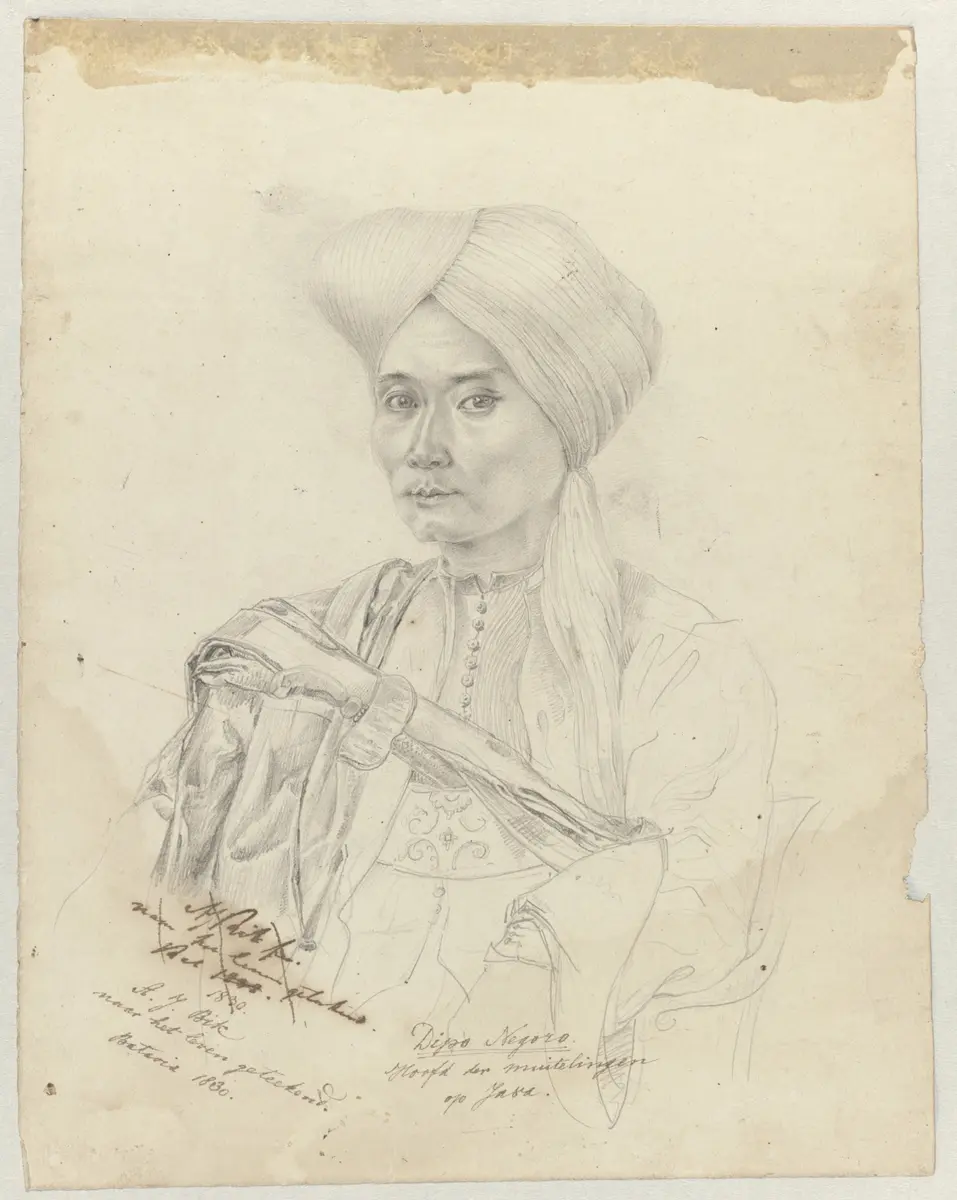
The Kedu Residency house, Magelang: where he was arrested at the peace talks on 28 March 1830; the Diponegoro museum is in it todayAfter a week in Semarang he reaches Batavia, where he is held for nearly four weeks; A. J. Bik draws his portrait from life.
After leaving Batavia on 3 May on the navy corvette Pollux, he lands at Manado in North Sulawesi and is held in Fort Nieuw Amsterdam.
- 1831
He begins to dictate the Babad Diponegoro, the history of Java and of his own life in Javanese verse, written down in pégon script by a scribe. He finishes it in February 1832: some 1,150 pages, perhaps the first autobiography in modern Javanese.
- 1833
Fearing that the British might try to free him and use him as a puppet king, the Dutch move him south to the stronger Fort Rotterdam at Makassar, where he will spend the rest of his life with his wife and a few followers.
Fort Rotterdam, Makassar: his prison from 1833 and the place of his death on 8 January 1855- 1837
Prince Hendrik of the Netherlands, aged sixteen, visits him in Fort Rotterdam and finds him still 'full of fire'. In his years at Makassar he goes on writing, on Javanese history and Islamic mysticism.
Fort Rotterdam, Makassar: his prison from 1833 and the place of his death on 8 January 1855- 1855
He dies in Fort Rotterdam, aged 69, and is buried in Makassar, where his grave is now a place of pilgrimage.
Diponegoro's grave, Makassar: where he was buried in 1855, beside his wife