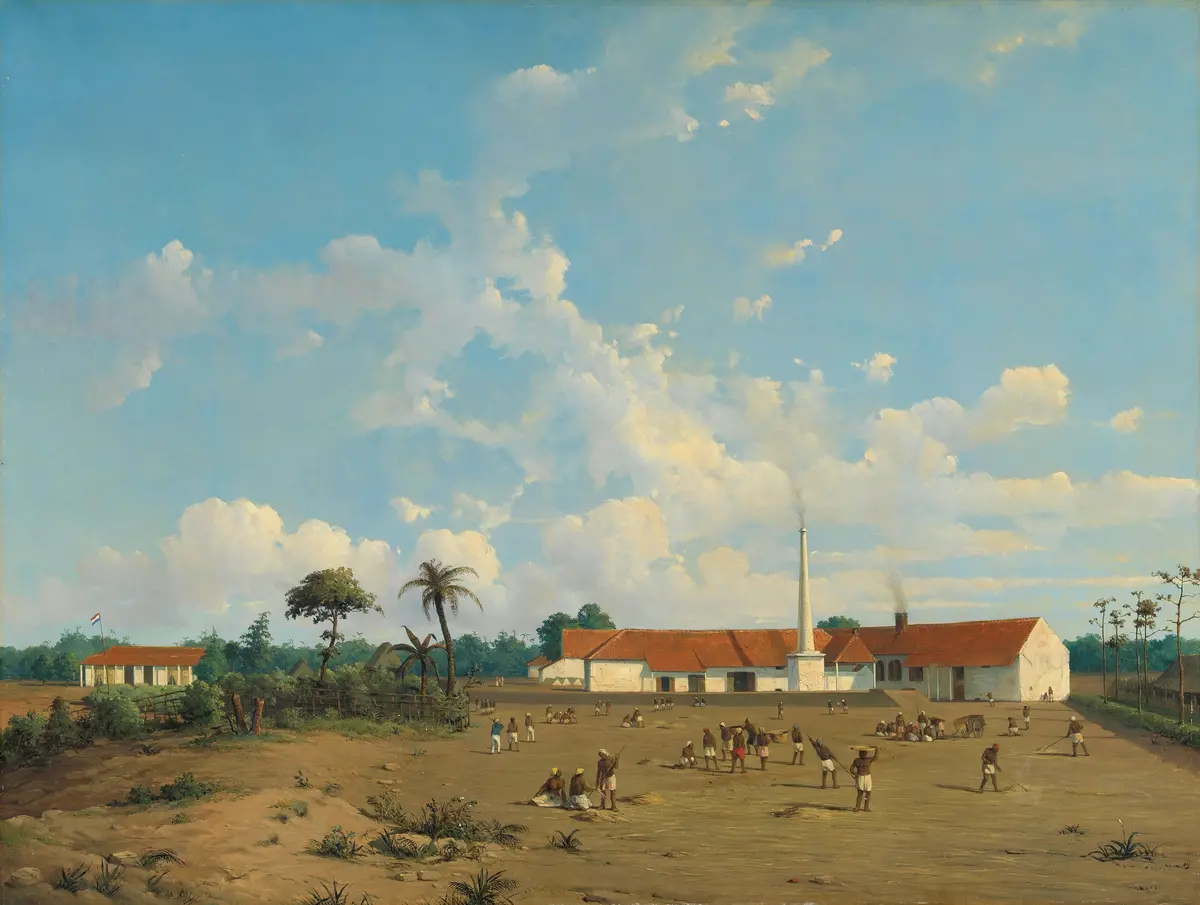
The Cultivation System in Java
“From 1830 to 1870 the Dutch made Javanese villages grow coffee, sugar and other export crops for the government, a forced system that paid off Dutch debts and filled the Dutch treasury.”
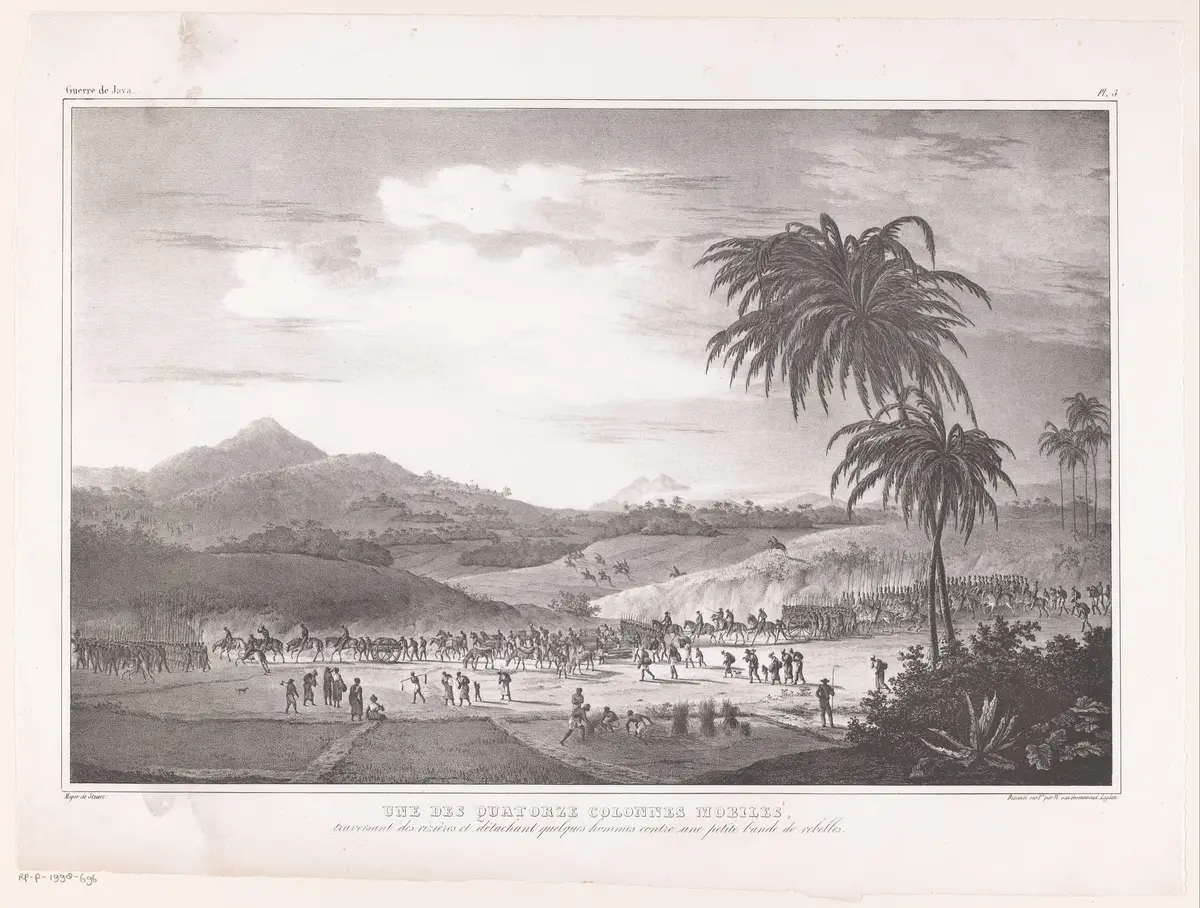
The Cultivation System (in Dutch, cultuurstelsel) was the way the Dutch colonial government made Java pay from 1830 to 1870. Instead of paying their land tax, Javanese and Sundanese villages had to grow crops for the world market and deliver them to the government at low fixed prices: coffee above all, sugar and indigo, and on a smaller scale tea, tobacco, pepper, cinnamon and others. In the plan, a village set aside about a fifth of its rice land, or about a fifth of its working time, for these crops. The sugar and indigo were processed in mills run by European and Chinese contractors with government loans; the Netherlands Trading Society (Nederlandsche Handel-Maatschappij, NHM), a company founded with the king as its chief shareholder, shipped everything to the Netherlands and sold it at auction in Amsterdam. The system was run through Java's own aristocracy: the regents and, below them, the village heads organised the work, and they and the Dutch officials above them were paid a percentage of the crops delivered, the 'cultivation percentages', which invited pressure and abuse.
The Netherlands needed the money badly. Its debts had grown after the Napoleonic wars, the Java War of 1825-30 had been costly, and for two centuries Central and East Java had brought losses rather than profit. Then, in 1830, Belgium rebelled; the kingdom lost part of its territory and its income, and the attempt to win Belgium back, given up only in 1839, added heavily to the debt. The author of the system, Johannes van den Bosch, a general who had served in Java, put his plan to King William I in March 1829. The king gave him wide powers, and he arrived in Java as governor-general in January 1830. He promised that the scheme would benefit everyone, villagers included, and at first spoke of voluntary contracts; within a year the crops were simply ordered. His successor in Batavia, Jean Chrétien Baud, called Java the life-belt that kept the Netherlands afloat.
In practice there was hardly one system, and the burden fell very unevenly. Officials took a third, a half or even all of the land of some villages, while elsewhere little changed; apart from coffee, which grew on hill land, only about six per cent of Java's farmland was under government crops in 1840. The heavier load was labour: by historians' counts between half and three-quarters of Java's farming households worked on government crops around 1840, most of them on coffee, and they also carted the harvest, worked in the mills and built roads and waterways. Sugar and indigo competed with rice for land and water. In the 1840s rice ran short: famine struck Cirebon in 1843-44, and in 1849-50 famine and typhoid swept Central Java, above all the regencies of Demak and Grobogan, while people fled their villages by the thousands. For the Netherlands the result was a fortune. Java's exports rose from 13 million guilders in 1830 to 74 million in 1840, and between 1831 and 1877 the colony sent the Dutch treasury 832 million guilders, the 'batig slot' or surplus: about a fifth of all Dutch state revenue before 1850 and about a third in the 1850s and early 1860s. It paid off the old debts of the East India Company, cut Dutch taxes and built the Dutch state railways.
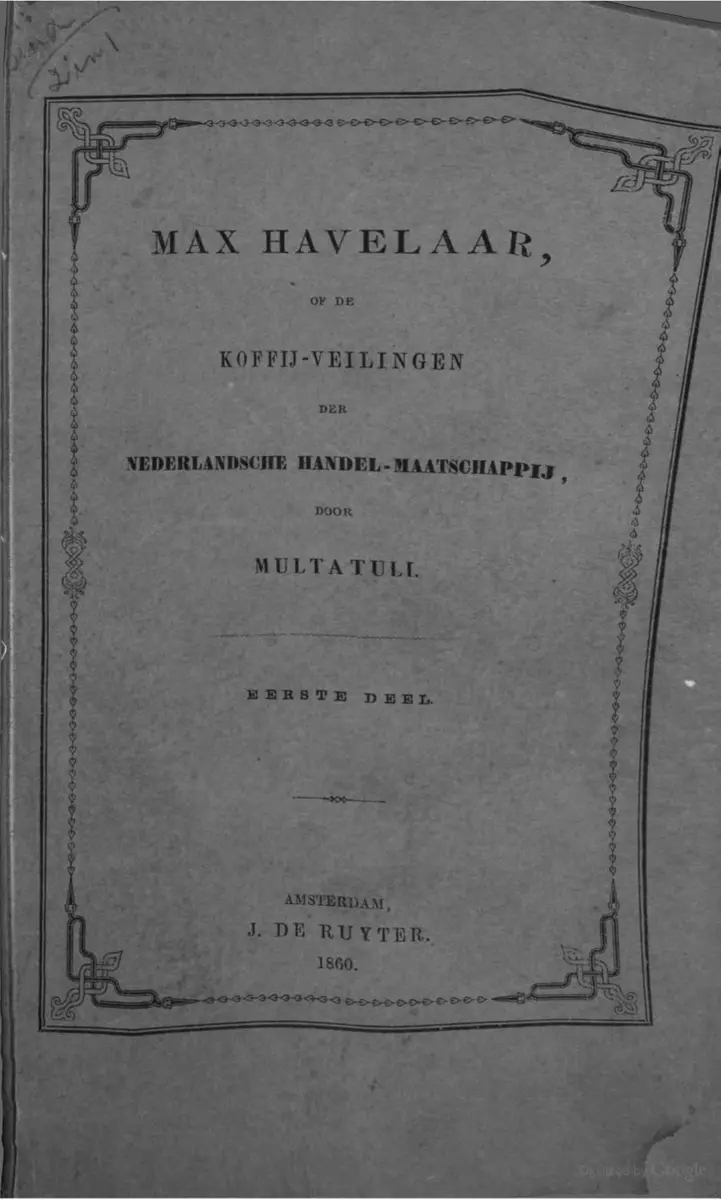
The end came from the Netherlands. The constitution of 1848 gave parliament a say in colonial affairs, and a liberal middle class, grown rich partly on Java's produce, wanted the colony opened to private business. In 1860 a former colonial official, Eduard Douwes Dekker, writing as Multatuli, published the novel Max Havelaar about the oppression of the Javanese, and a sugar planter, Isaäc Dignus Fransen van de Putte, attacked the system and its sugar contracts in a pamphlet. From 1862 the government gave up the crops that paid least, pepper first and tobacco by 1866. In 1870 the minister of colonies, Engelbertus de Waal, passed the Agrarian Law, which let Europeans lease land for up to 75 years, and the Sugar Law, which withdrew the government from sugar in twelve yearly steps from 1878. Forced coffee growing lasted longest: in the Priangan highlands, where the company had begun it in the eighteenth century, it ended only in 1917.
Historians still disagree about what the system did to Java. The American scholar Clive Day (1904) saw it as harsh exploitation hidden behind fine words, and the sociologist Jan Breman (2015) argues the same for the coffee lands. J. S. Furnivall (1939) thought conditions bad but many reports exaggerated, and wrote that the system was abandoned not because it failed but because it succeeded. Robert Van Niel (1972) found material well-being rising faster than the population in 1837-51, and R. E. Elson and Cornelis Fasseur stress the money it brought into villages; M. C. Ricklefs concludes that it enriched village elites, Chinese entrepreneurs and Dutch officials but was probably a time of hardship for most Javanese. Java's population grew from about 7 million in 1830 to about 16 million in 1870, which some once read as proof of prosperity. Economists have found that places near the system's sugar factories are still more industrial, better educated and richer today. And at the end of the century a Dutch liberal, Conrad Theodor van Deventer, argued that the wealth drained from the Indies was a debt of honour the Netherlands had to repay, the idea behind the Ethical Policy.
What happened
- 1830
Johannes van den Bosch arrives in Java as governor-general, with wide powers from King William I to put into practice the plan he submitted in March 1829: villages are to grow export crops for the government instead of paying the land tax.
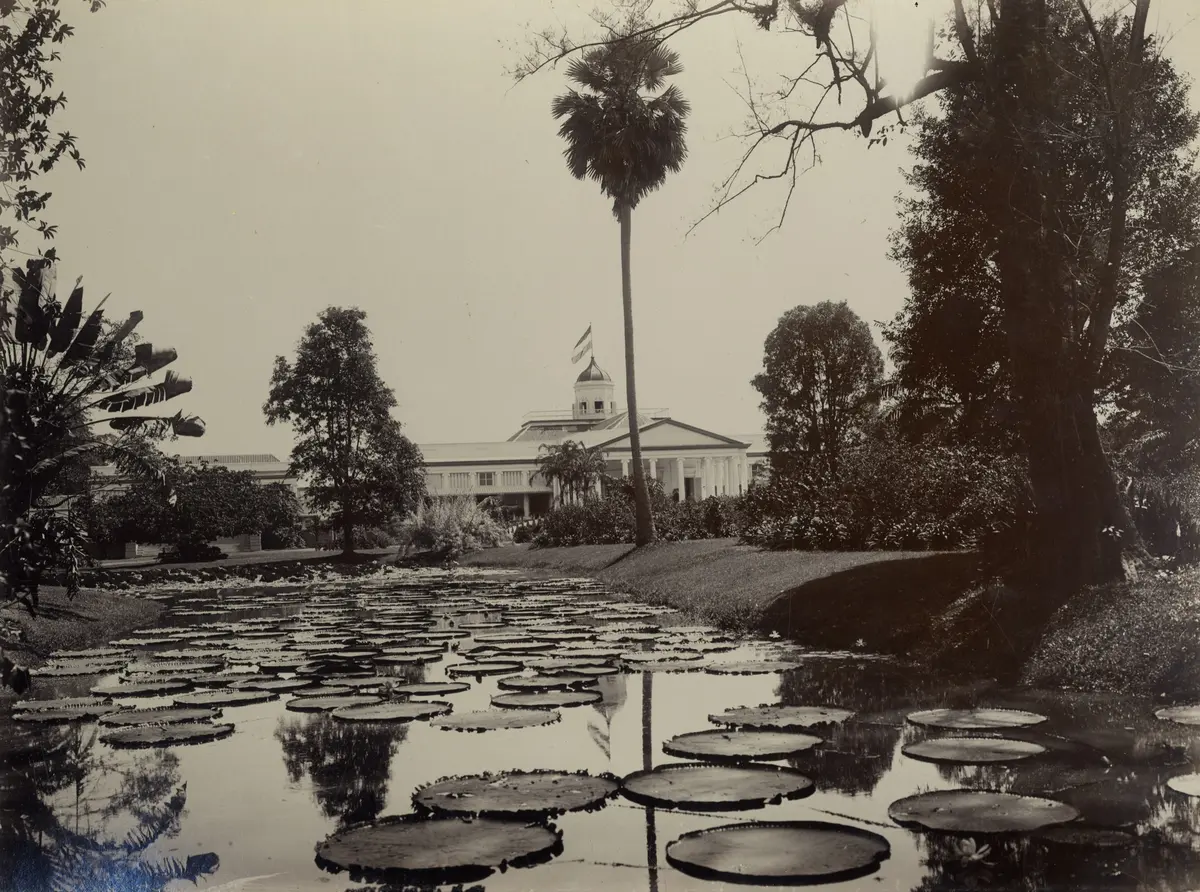
The governor-general's palace at Buitenzorg (Bogor), from which Van den Bosch ruled; rebuilt after the earthquake of 1834Van den Bosch names a fifth of a village's land as the proper share for government crops, in place of the land tax of two-fifths of the rice harvest; by August he says a third could be taken without difficulty. Belgium, meanwhile, has risen against the Dutch king.
- 1831
The government orders indigo, sugar and coffee to be planted all over Java, and the 'contracts' with free villagers give way to command. The colonial budget is balanced for the first time, and the old debts of the East India Company start to be paid off.
- 1834
Van den Bosch, back in the Netherlands, becomes minister of the colonies and runs the system from The Hague until 1839. Java has already sent home 16 million guilders since 1831; the NHM ships the crops to Amsterdam and sells them at auction, and the city becomes a great market for coffee and sugar again.
- 1840
The system is at its height. Java's exports have risen from 13 million guilders in 1830 to 74 million, and by historians' counts between half and three-quarters of the island's farming households work on government crops, most of them on coffee.
Sukabumi in the Priangan highlands, the coffee country where forced cultivation began under the company and ended only in 1917 - 1843
In Cirebon, where the system has added coffee, sugar, indigo, tea and cinnamon to the rice fields, the government also has the rice tax collected in kind by a contractor. Hunger follows; after the rice harvest fails in 1844, famine drives thousands of families from their villages.
Cirebon, struck by famine in 1843-44 - 1844
Johannes van den Bosch dies in The Hague, aged 63; a silver medal is struck in his memory.
- 1848
A new, liberal Dutch constitution gives parliament a say in colonial affairs for the first time, and opposition to the system gathers there.
- 1849
After years of typhoid epidemics, famine sweeps Central Java, worst of all in the regencies of Demak and Grobogan, and lasts into 1850. People flee their villages and more rice land falls out of use; Clive Day later put the dead at over a third of a million, a figure historians treat with caution.
Demak, one of the two Central Java regencies hit hardest by the famine of 1849-50 - 1851
World prices for coffee and sugar rise and the profits soar: in the 1850s the colony's remittances pay for about a third of all Dutch state revenue, twice as much between 1851 and 1870 as in the two decades before.
Batavia, the colonial capital and port, from which the NHM shipped the government's crops to the Netherlands - 1860
Multatuli's novel Max Havelaar exposes the oppression of the Javanese, the sugar planter Fransen van de Putte attacks the government's sugar contracts in a pamphlet, and parliament votes for the contracts to be regulated by law.
- 1862
The government begins to give up the crops that pay least: pepper in 1862, cloves and nutmeg next, indigo, tea and cinnamon in 1865 and tobacco in 1866. Coffee and sugar, the money-makers, stay.
- 1866
Fransen van de Putte, now leading the government, proposes a Culture Law to give Javanese cultivators and private planters free use of the land; parliament amends it, he refuses the change and resigns, and the liberals split.
- 1870
The minister of colonies, Engelbertus de Waal, carries the Agrarian Law: only Indonesians may own land, but Europeans may lease it from the government for up to 75 years, which opens Java to private plantations.
The Sugar Law withdraws the government from sugar in twelve yearly steps from 1878. Forced coffee growing goes on, ending in the Priangan only in 1917.