Max Havelaar is published
“Multatuli's 1860 novel about a Dutch official in Java who stands up for the villagers of Lebak; it shook the Netherlands and became the classic indictment of Dutch colonial rule.”
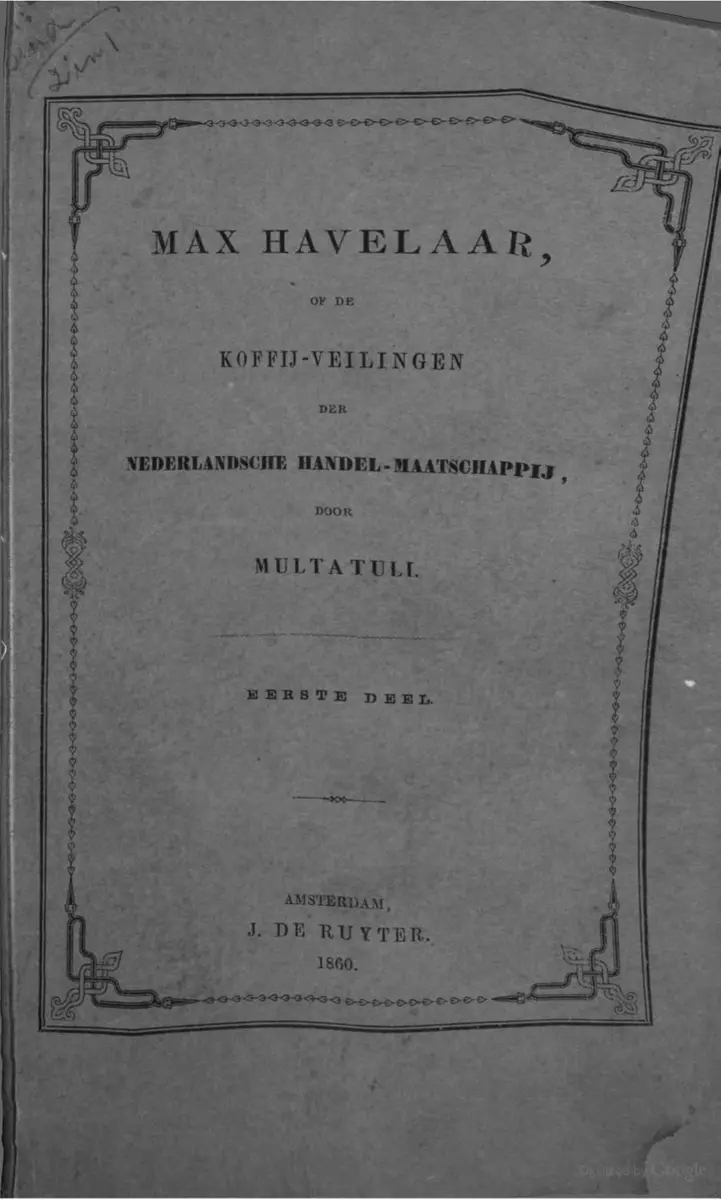
In May 1860 the Amsterdam publisher J. de Ruyter brought out a two-volume book called Max Havelaar, or the Coffee Auctions of the Dutch Trading Company. Its author signed himself Multatuli, Latin for 'I have suffered much'. Behind the name was Eduard Douwes Dekker, born in Amsterdam in 1820, who had served the colonial government in the Dutch East Indies for seventeen years. The book tells how Max Havelaar, a newly arrived Dutch official in Java, tries to protect the villagers of his district from their own chiefs and is abandoned by his superiors. It was, with little disguise, Dekker's own story.
In January 1856 Dekker was made assistant-resident of Lebak, a poor district of the Bantam residency in western Java, with its seat at Rangkasbitung. Within weeks he became convinced that the regent, the highest Javanese official of the district, was making people work for him without pay and taking their produce without paying a fair price. On 24 February he accused the regent in writing and asked the Resident at Serang to remove him so that witnesses could speak freely. The Resident refused, and the Governor-General, Duymaer van Twist, did not back his young official: he moved Dekker to another post instead. Dekker asked to leave the service and was discharged in April 1856. He went back to Europe poor and in debt, and in September and October 1859, in an attic room above the Brussels tavern Au Prince Belge, he wrote the book in a few weeks.
Max Havelaar is a strange and modern novel. It opens with Batavus Droogstoppel, a smug Amsterdam coffee broker who wants a book about coffee, and turns into the story told from a bundle of papers left by a shabby former official, 'Sjaalman' (Scarfman). Woven into it is the tale of Saidjah and Adinda, two Javanese villagers whose lives are destroyed by extortion and war. At the end Multatuli dismisses his narrators and appeals directly to King William III. The novelist Jacob van Lennep, who arranged its printing, removed the names of people and places and the dates, and Dekker had unwittingly signed away the rights to his own book. The Lebak documents appeared in full only in later editions and in the first English translation of 1868.
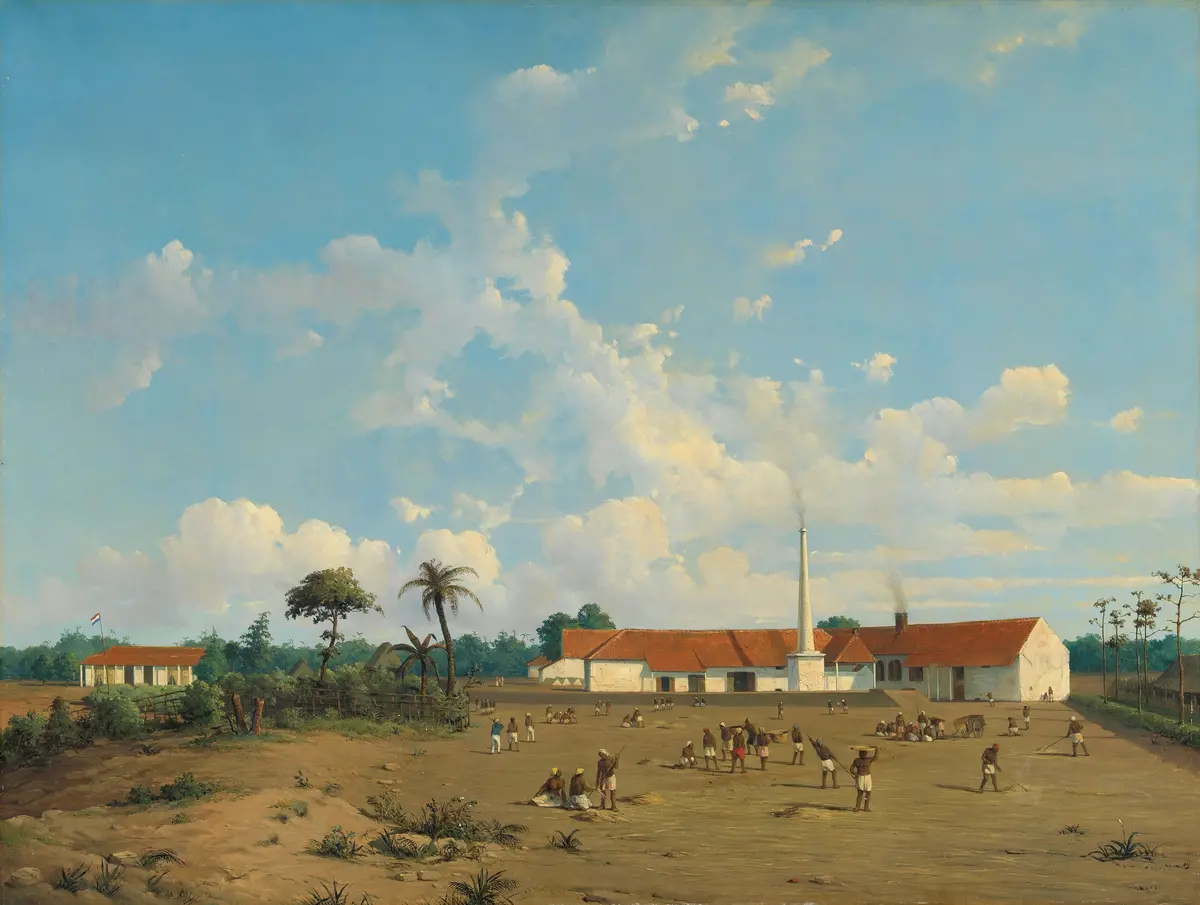
The book caused a sensation. Readers in the Netherlands learned that the profits of the Cultivation System, under which Javanese villages had to grow coffee, sugar and other crops for the government, came with hunger and abuse. Max Havelaar was often compared to Uncle Tom's Cabin. Historians are more careful: Dekker idealised the Javanese, his story is not free of errors of fact, and the book was one of several forces behind reform. But it came at the right moment. Colonial policy became the leading question in the Dutch parliament through the 1860s, and by 1870 the liberals had won and the forced cultivation began to give way to private enterprise.
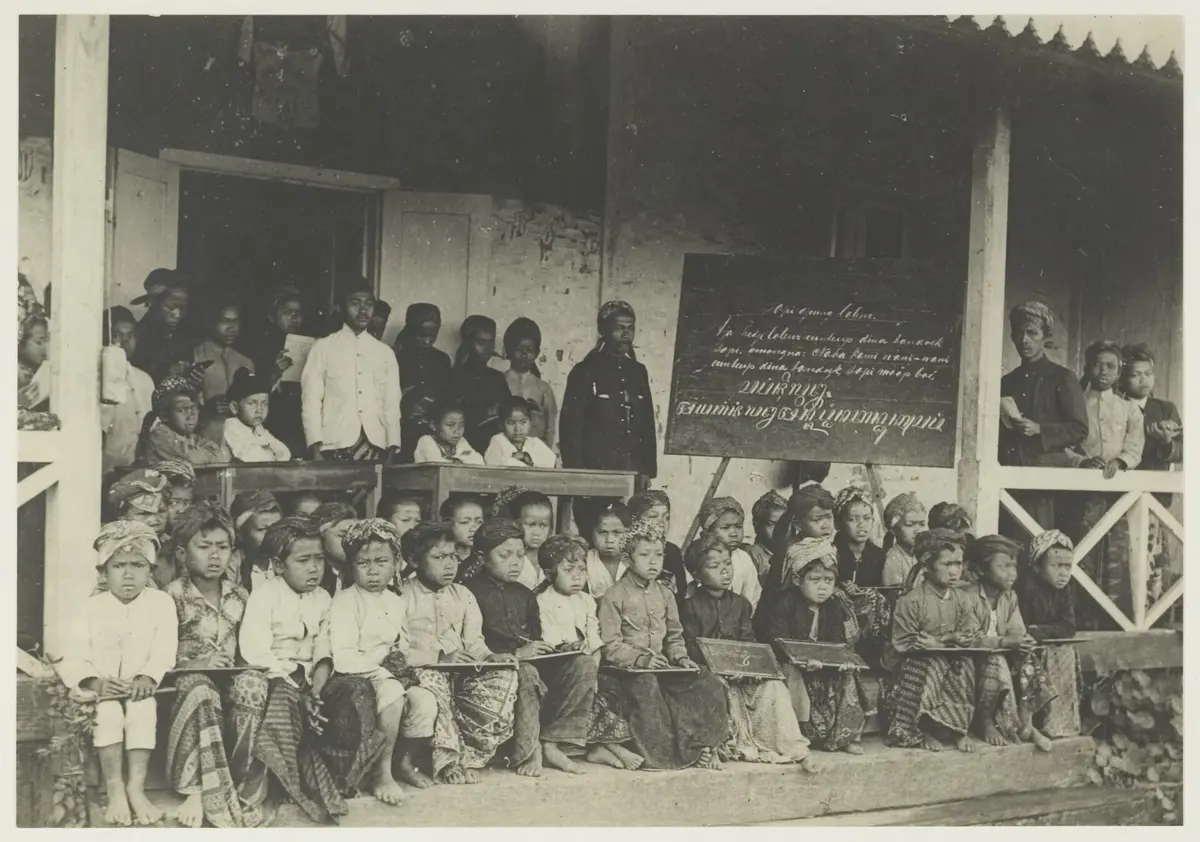
Max Havelaar is often called the greatest Dutch novel, and it has been translated into dozens of languages; D. H. Lawrence introduced the English version of 1927. In 1999 the Indonesian writer Pramoedya Ananta Toer called it 'the book that killed colonialism': in his view it shamed the Dutch into the Ethical Policy of 1901, whose schools produced the generation that led Indonesia to independence. Others point out that Dekker attacked abuses, not Dutch rule itself. The name lives on in the first Fairtrade label, launched as Max Havelaar coffee in 1988, and in the Multatuli Museum that Lebak opened at Rangkasbitung in 2018.
What happened
- 1856
By decree of the Governor-General, Eduard Douwes Dekker is appointed assistant-resident of Lebak, in the residency of Bantam, at 800 guilders a month. Later in January he takes up the post at Rangkasbitung, the district's new capital.
Rangkasbitung, the new capital of the Lebak district, where Dekker served as assistant-resident from January to April 1856In a letter marked private and immediate (No. 88), Dekker formally accuses the regent of Lebak, Raden Adipati Karta Natanegara, of abuse of power by putting people to unpaid work and of extortion, and the regent's son-in-law, the district chief of Parang Kujang, of complicity. He asks the Resident to send the regent to Serang at once and hold an inquiry. A second letter (No. 91) follows the next day.
Rangkasbitung, the new capital of the Lebak district, where Dekker served as assistant-resident from January to April 1856Two days after the Resident of Bantam has come over from Serang, refused his proposals and disapproved of his conduct, Dekker answers (No. 93): he has only done his duty, cannot serve otherwise, and asks that the case be put before the Governor-General.
Serang, seat of the Resident of Bantam, Dekker's superior, to whom he sent his accusation of 24 February 1856The Governor-General, Duymaer van Twist, relieves Dekker of Lebak and posts him provisionally to Ngawi, in the Madiun residency, at a lower salary. The regent stays. Dekker will not serve under these terms and asks to leave the service.
At his own request Dekker is honourably discharged from government service, after seventeen years in the Indies.
Still waiting for his successor, Dekker writes to the controller of Lebak that he is ready to hand the district over to him (No. 153). Soon after, he leaves Rangkasbitung with his wife and small son.
Rangkasbitung, the new capital of the Lebak district, where Dekker served as assistant-resident from January to April 1856In Batavia, refused an audience again and again, Dekker writes to the outgoing Governor-General on the eve of his departure for Europe that his request of 28 February to be heard has gone unanswered. Multatuli later printed the letter in the novel, noting that his copy was 'not exact'.
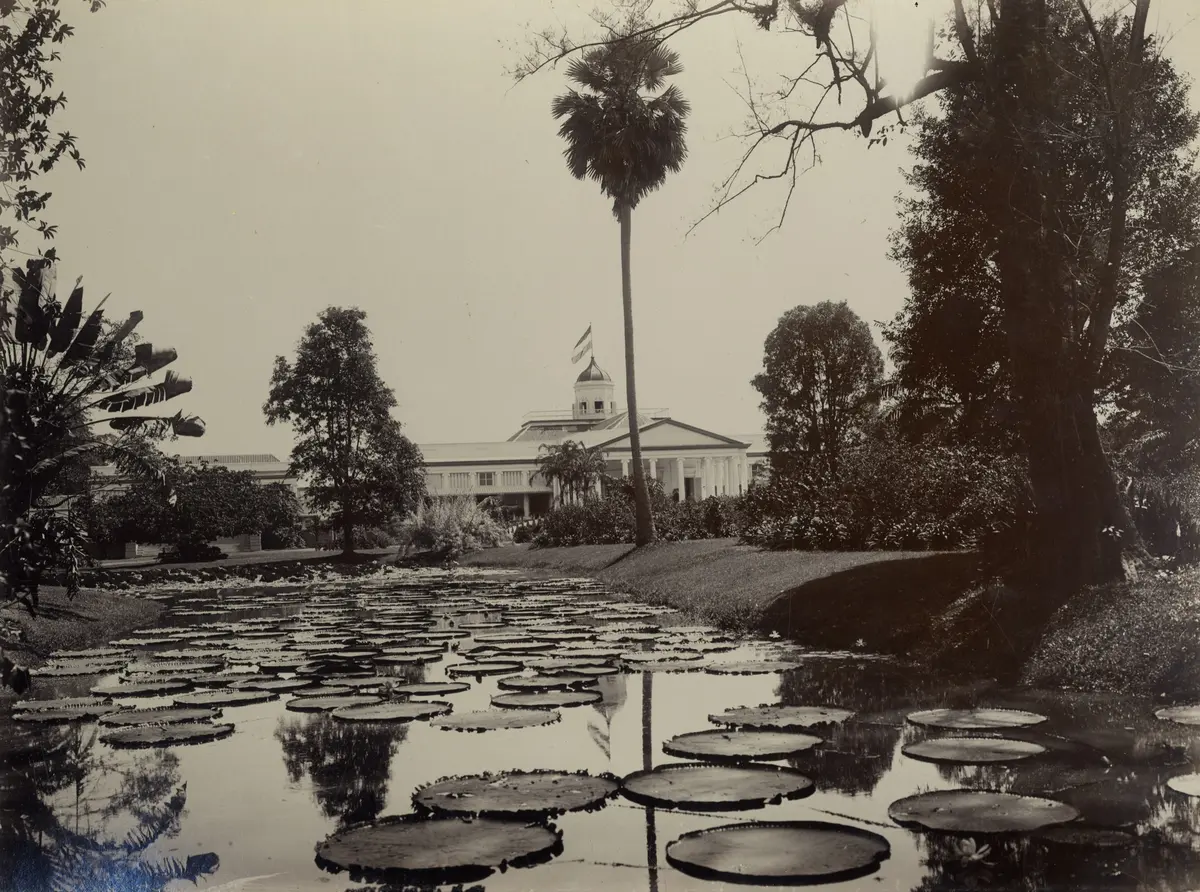
Batavia (Jakarta), where Dekker waited in vain in May 1856 for an audience with the outgoing Governor-General- 1857
Dekker leaves Java for Europe. Poor and pursued by creditors, he drifts between jobs and countries and settles for a time in Brussels.
- 1859
In an attic room above the tavern Au Prince Belge in the Bergstraat, Brussels, where post-office workers come to drink, Dekker begins to write Max Havelaar.
Brussels, Bergstraat (Rue de la Montagne): the tavern Au Prince Belge, where Multatuli wrote Max Havelaar in September and October 1859Dekker finishes the book in Brussels, a few weeks after starting it.
Brussels, Bergstraat (Rue de la Montagne): the tavern Au Prince Belge, where Multatuli wrote Max Havelaar in September and October 1859- 1860
J. de Ruyter in Amsterdam publishes Max Havelaar, or the Coffee Auctions of the Dutch Trading Company, by Multatuli, in two volumes. Jacob van Lennep, to whom the finished manuscript had been passed and who arranged its printing, has removed the names of people and places and the dates, and Dekker has unwittingly signed away his rights to the book.
Amsterdam, where J. de Ruyter published the book in May 1860: Multatuli's statue on the Torensluis, near the house where he was born