R. A. Kartini
“The Jepara regent's daughter whose letters from seclusion, published in 1911 as 'Through Darkness into Light', made her Indonesia's pioneer of girls' education; she died at 25, and April 21 is Kartini Day.”
Raden Ajeng Kartini was a Javanese noblewoman whose letters, written in Dutch between 1899 and 1904, made her the first great voice of Indonesian women and an early voice of Javanese national feeling. She was born on April 21, 1879, at Mayong in the Jepara district on Java's north coast, where her father, Raden Mas Adipati Ario Sosroningrat, was district head; in 1880 he became regent of Jepara, the head of the Javanese administration of the region under Dutch supervision. Her mother, Ngasirah, the daughter of a local Muslim teacher, was his first wife but not of noble birth, so as regent he also had to marry a high-born official wife, who stood above her in the household. Kartini was his fifth child and second daughter. The family prided itself on Western learning, and her father did something unusual: he sent his daughters to the European primary school in Jepara, where Kartini learned perfect Dutch.
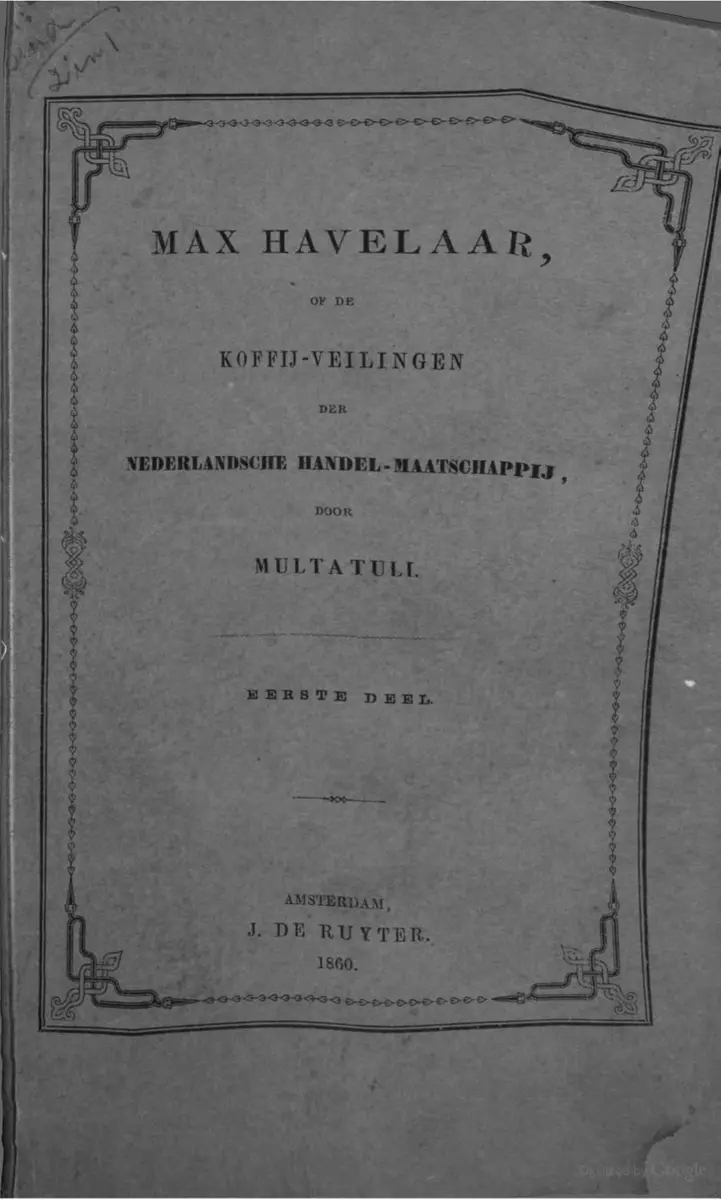
At about twelve she was taken out of school and kept inside the regent's house, as custom demanded of a noble girl until her parents found her a husband. She later called those years her prison. What kept her going were Dutch books, newspapers and journals, many of them from Marie Ovink-Soer, the wife of the Dutch assistant resident, who became her mentor; she read feminist novels and Multatuli's Max Havelaar, the famous attack on colonial abuse in Java. From the mid-1890s the doors opened a little. In 1898 she and two sisters were allowed to travel to Semarang for the festivities of Queen Wilhelmina's inauguration, which set tongues wagging, and her account of batik dyeing went to the National Exhibition of Women's Work in The Hague. From May 1899 she wrote to Stella Zeehandelaar, a feminist in Amsterdam, and from August 1900 to Rosa Abendanon-Mandri, the wife of the colony's new director of education, religion and industry: long letters against forced marriage and polygamy, about the ignorance in which Javanese girls were kept and the arrogance of colonial officials, and about her wish to study in the Netherlands and become a teacher.
With her sisters Roekmini and Kardinah, the 'cloverleaf', she turned ideas into work. She found Dutch buyers for the woodcarvers of Jepara and helped make their carving a trade. A Dutch socialist member of parliament, Henri van Kol, visited in April 1902 and lobbied the government in The Hague, in the end successfully, for a grant that would have let her study in Holland. Persuaded to train as a teacher in Batavia instead, she applied in April 1903, and by July she and Roekmini had opened a small school for officials' daughters in the regent's house. Then, just as the grant for Batavia was approved, her father arranged her marriage to the regent of Rembang, Raden Adipati Djojo Adiningrat, a widower with six children and other wives. She accepted on condition that she could keep working for girls' education, married him on November 8, 1903, and began teaching her stepdaughters at Rembang. On September 13, 1904, she gave birth to a son, Singgih; four days later she died, aged twenty-five, and was buried at Bulu, south of the town.
In 1911 J. H. Abendanon, the former director, published a selection of her letters as Door duisternis tot licht, 'Through Darkness into Light', to raise money for girls' schools. It was widely read, appeared in English in 1920 and in Malay in 1922, and a Kartini Fund launched in the Netherlands in 1913 paid for Kartini schools for Javanese girls, twenty-six of them by 1922. Historians now read the book with care: Abendanon held back 46 of the letters to his own family, cut the rest heavily, and made Kartini the tragic heroine of the Dutch reformers' cause. All the letters to the Abendanons were published only in 1987, and her complete writings in English in 2014.
Indonesian nationalists claimed her as their own. President Sukarno declared her a national hero in 1964, and her birthday, April 21, is kept every year as Kartini Day. In 2025 UNESCO added her letters and archive, kept in Leiden, The Hague and Jakarta, to its Memory of the World register. What makes her matter is that, in a few years of letters from a provincial town, she claimed education, dignity and a say in their own future for the Javanese, and above all for Javanese women, well before the men of her generation said so in public.
What happened
- 1879
Kartini is born at Mayong, in the Jepara district, where her father Sosroningrat is district head (wedana). Her mother Ngasirah, his first wife, is the daughter of a local Muslim teacher; Kartini is the fifth of her father's eleven children and his second daughter.
Mayong, in the Jepara district: where her father was district head (wedana) and where Kartini was born on April 21, 1879- 1880
Sosroningrat is appointed regent of Jepara, and the family moves into the regent's residence on the town square. A regent is expected to have a wife of noble birth, and his official consort, Raden Ayu Moerjam, ranks above Kartini's mother in the household.
The regent's residence (kabupaten) at Jepara, on the town square: Kartini's home from 1880 to 1903, the house of her seclusion, her letters and her little school - 1891
At about twelve and a half Kartini is taken out of the European primary school in Jepara, where she has learned Dutch, and kept inside the regent's house in seclusion until a husband can be found. She will remember it as four years behind thick walls, with books and letters as her only escape.
The regent's residence (kabupaten) at Jepara, on the town square: Kartini's home from 1880 to 1903, the house of her seclusion, her letters and her little school - 1892
Marie Ovink-Soer arrives in Jepara with her husband, the new Dutch assistant resident. A writer and feminist, she becomes Kartini's mentor for most of a decade and keeps her supplied with Dutch books and journals.
The regent's residence (kabupaten) at Jepara, on the town square: Kartini's home from 1880 to 1903, the house of her seclusion, her letters and her little school - 1898
After a few outings from the mid-1890s, Kartini and two of her sisters are allowed for the first time to travel out of Jepara, to Semarang, for the festivities of Queen Wilhelmina's inauguration, which sets tongues wagging. The same year her account of batik dyeing is shown at the National Exhibition of Women's Work in The Hague.
- 1899
She writes her first letter to Stella Zeehandelaar, an Amsterdam feminist five years older: she has longed, she says, to know a 'modern girl'. The same year her article on marriage among the Koja appears in a Dutch scholarly journal, and the first of her short stories, signed 'Tiga Saudara' (three sisters).
The regent's residence (kabupaten) at Jepara, on the town square: Kartini's home from 1880 to 1903, the house of her seclusion, her letters and her little school- 1900
J. H. Abendanon, the new director of education, religion and industry, and his wife Rosa visit Jepara for two days to win the regent's support for schools for noble girls. Kartini and Rosa become close friends, and most of Kartini's later letters go to her.
The regent's residence (kabupaten) at Jepara, on the town square: Kartini's home from 1880 to 1903, the house of her seclusion, her letters and her little school- 1901
By now Kartini is the go-between for Jepara's woodcarvers and their Dutch customers, commissioning boxes, frames and screens; she has persuaded the carvers to cut whole wayang stories into the wood, and their carving goes into a box meant as the regents' gift to the Queen. She later becomes the agent of the Dutch association Oost en West, and the carvers' work becomes a trade for the town.
The regent's residence (kabupaten) at Jepara, on the town square: Kartini's home from 1880 to 1903, the house of her seclusion, her letters and her little school- 1902
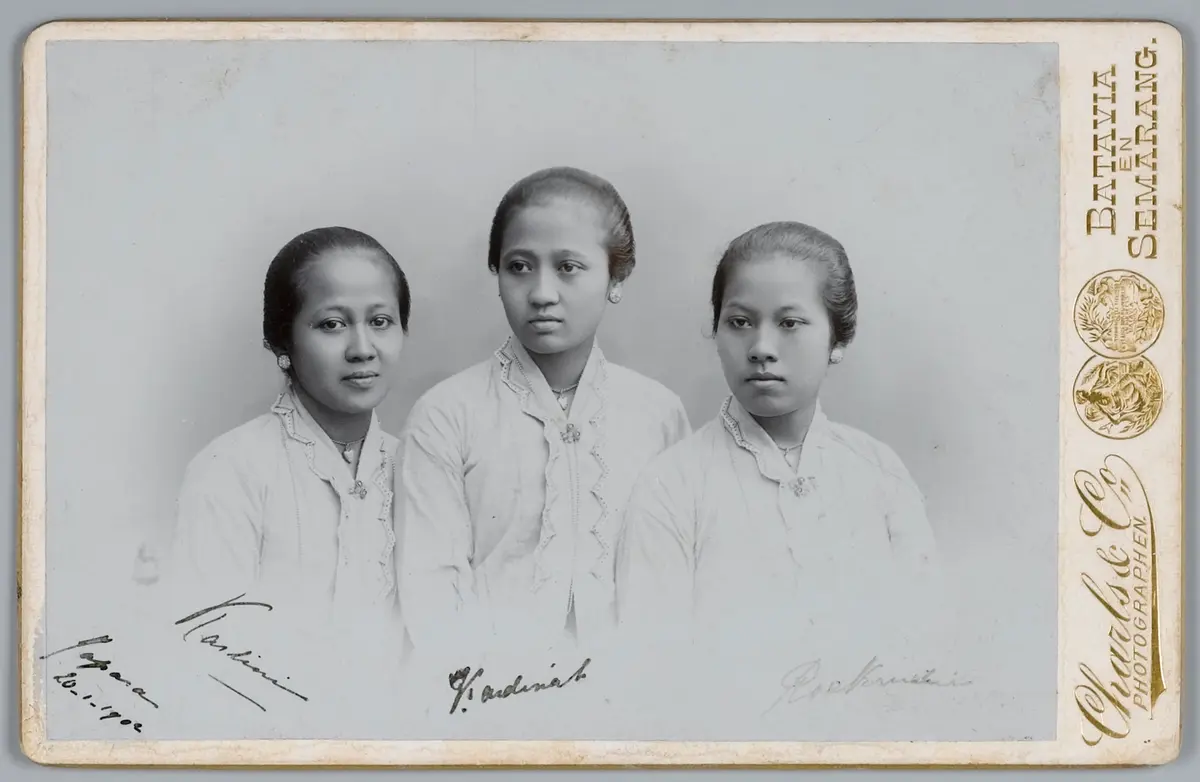
Kardinah, the youngest of the 'cloverleaf', marries a cousin who will succeed his father as regent of Tegal. Four days earlier the three sisters had sat for their last portrait together.
The regent's residence (kabupaten) at Jepara, on the town square: Kartini's home from 1880 to 1903, the house of her seclusion, her letters and her little schoolHenri van Kol, a socialist member of the Dutch parliament on a study tour of the Indies, visits Kartini at Jepara. He promises to win her a government grant to study in the Netherlands, which would make her the first Javanese woman to do so, and in the end he succeeds.
The regent's residence (kabupaten) at Jepara, on the town square: Kartini's home from 1880 to 1903, the house of her seclusion, her letters and her little school- 1903
Talked out of Europe by Abendanon, Kartini and Roekmini petition the colonial government for a grant to train as teachers in Batavia; the petition is received on April 19 and starts a long journey through the bureaucracy.
The regent's residence (kabupaten) at Jepara, on the town square: Kartini's home from 1880 to 1903, the house of her seclusion, her letters and her little schoolWhile they wait, the sisters open a small school in the regent's house for the daughters of Javanese officials. On July 4 Kartini writes to Rosa Abendanon that it already has seven pupils and more are asking to come.
The regent's residence (kabupaten) at Jepara, on the town square: Kartini's home from 1880 to 1903, the house of her seclusion, her letters and her little schoolIn a letter marked 'confidential' she tells the Abendanons that her father has accepted a proposal from the regent of Rembang, Raden Adipati Djojo Adiningrat, a widower with six children and other wives. It comes just as the grant for Batavia is approved; she accepts on condition that she may go on with her education and her school. In September the government records that both sisters have given up the grant.
The regent's residence (kabupaten) at Jepara, on the town square: Kartini's home from 1880 to 1903, the house of her seclusion, her letters and her little school- 5:30 p.m.
Kartini marries Djojo Adiningrat at the regent's house in Jepara, at half past five in the afternoon, with the Dutch resident present. Neither wears wedding costume, and she refuses to kiss her husband's foot, as a Javanese bride is expected to do; he takes it well and offers her his arm.
The regent's residence (kabupaten) at Jepara, on the town square: Kartini's home from 1880 to 1903, the house of her seclusion, her letters and her little school In her first letter from Rembang she describes a household of stepchildren that has welcomed her, and her plan to open a school for officials' daughters in the regent's house as soon as a good teacher can be found.
The regent's residence at Rembang: her home for the ten months of her marriage, where her son was born and where she died- 1904
She reports that the school at Jepara, now run by her younger sisters, has twenty-two pupils, and that at Rembang her own stepdaughters are her first pupils.
The regent's residence at Rembang: her home for the ten months of her marriage, where her son was born and where she died- 9:30 p.m.
Her labour began the day before; with the government doctor away, Dr van Ravensteijn comes from Pati, and at about half past nine in the evening Kartini gives birth to a large baby boy with the help of instruments. His father names him Singgih, after his own childhood name.
The regent's residence at Rembang: her home for the ten months of her marriage, where her son was born and where she died Four days after the birth, with pains the doctor thought normal, Kartini dies quietly in her husband's arms at Rembang, aged twenty-five. Her sisters are brought overnight from Jepara, and the next morning she is buried at Bulu, about 20 km outside the town.
Bulu, south of Rembang: Kartini's grave, beside that of her husband's first wife