Indonesia declares independence, 17 August
“Two days after Japan's surrender, on August 17, 1945, Sukarno and Hatta proclaimed the Republic of Indonesia from the steps of a house in Jakarta; the Dutch took four more years to let it go.”
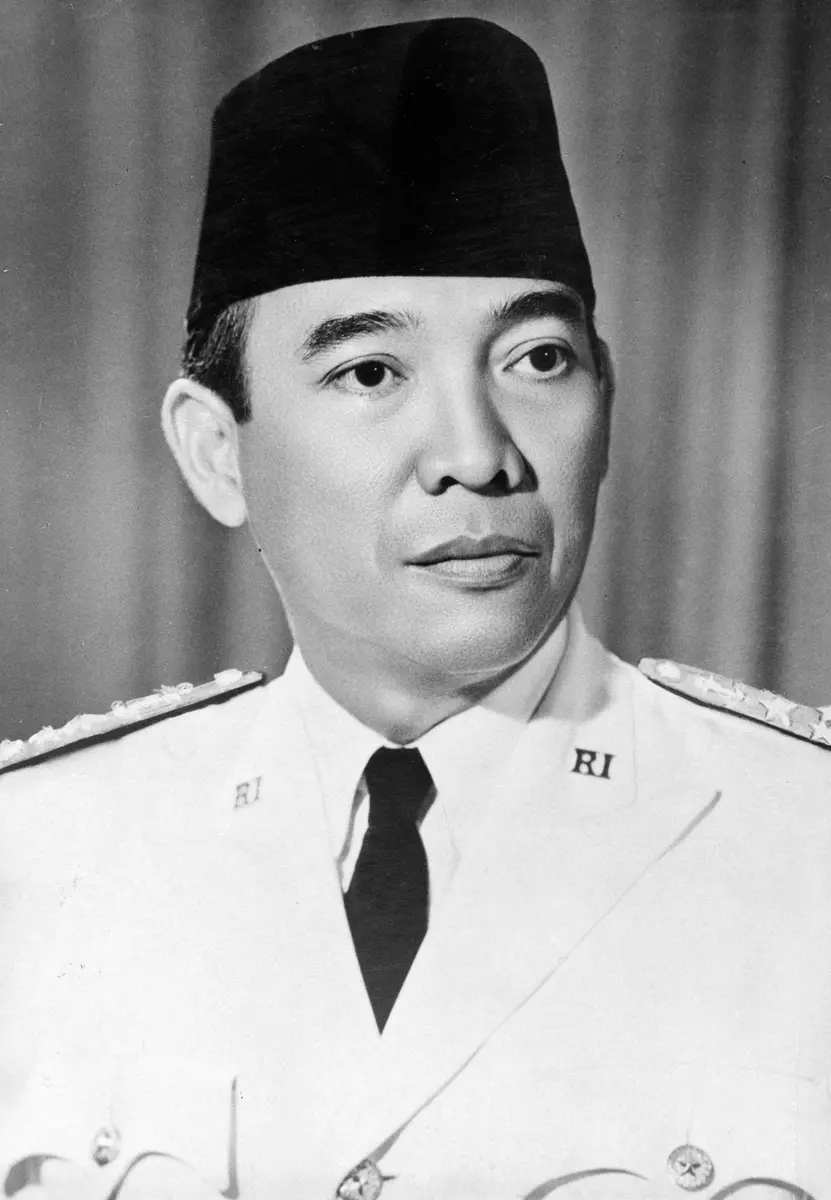
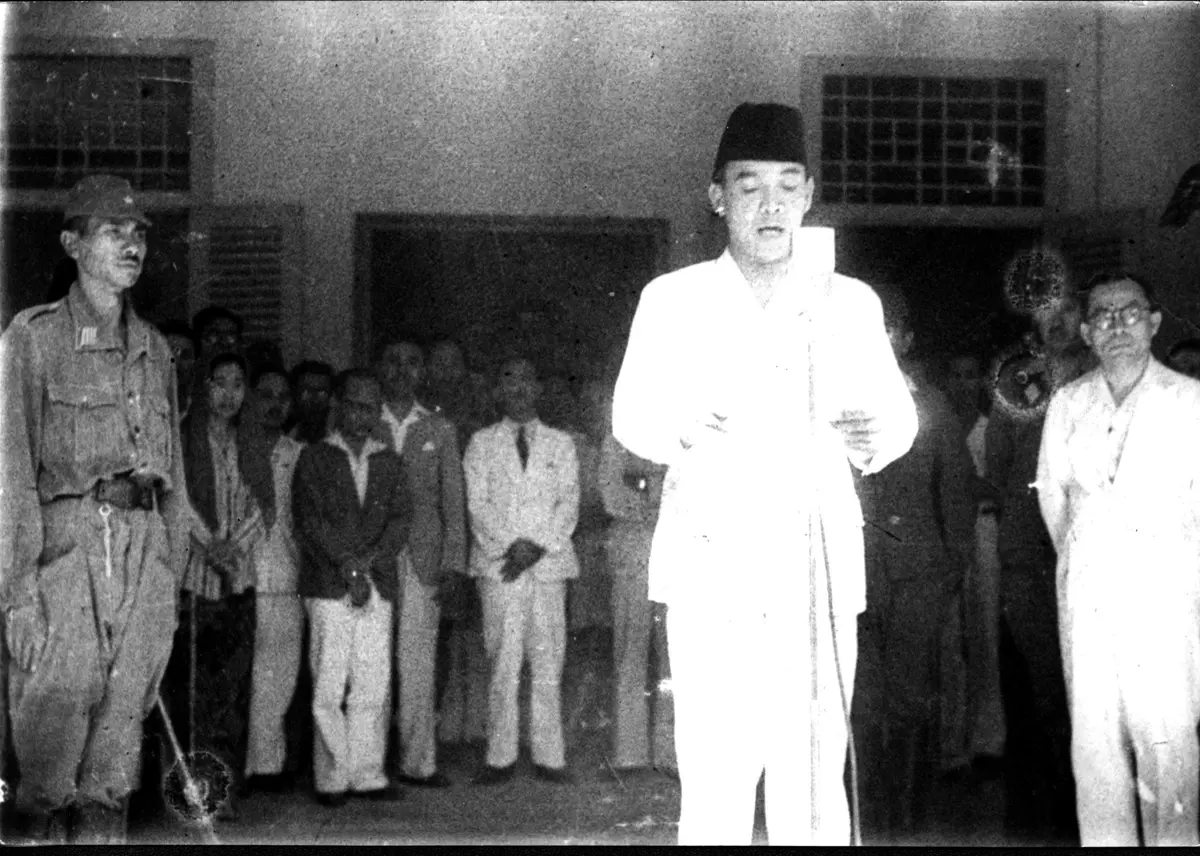
At ten in the morning on Friday, August 17, 1945, two days after Japan's surrender, Sukarno stood on the front steps of his house at Pegangsaan Timur 56 in Jakarta, with Mohammad Hatta beside him and a few hundred people in the garden, and read two sentences into a microphone: the people of Indonesia declared their independence, and matters such as the transfer of power would be settled carefully and as fast as possible. A red-and-white flag his wife Fatmawati had sewn was raised on a bamboo pole, the crowd sang 'Indonesia Raya', and the ceremony was over in minutes. Frans Mendur's three photographs are the only pictures of it. The next day a committee adopted a constitution and named Sukarno president and Hatta vice-president of the Republic of Indonesia.
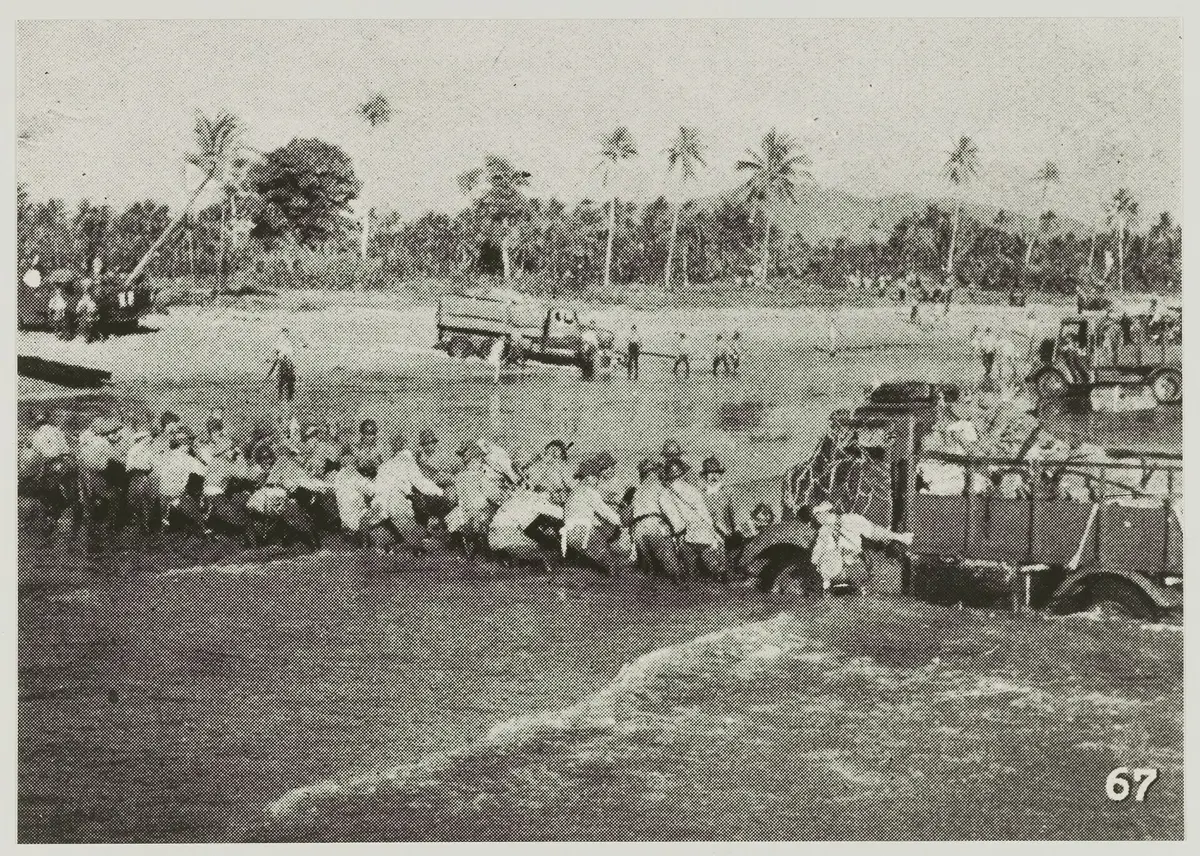
The moment had been building for three and a half years. The Japanese, who had conquered the Dutch East Indies in March 1942, used Sukarno and Hatta to rally the population and, as the war turned, promised independence 'later on' in September 1944, let a committee draft a constitution in the summer of 1945, and on August 7 set up the Preparatory Committee for Indonesian Independence under the two men; a few days before the surrender Field Marshal Terauchi received them in Dalat and told them Java would be free within weeks. The emperor's broadcast of August 15 changed everything: the Japanese army in Java was ordered to keep things as they were until the Allies arrived, and the young nationalists, the pemuda, wanted a proclamation that owed nothing to Japan, at once. When Sukarno and Hatta hesitated, a group of them took the two out of the city before dawn on August 16 to the small town of Rengasdengklok. They were brought back that night with a promise from Rear Admiral Maeda, the Japanese navy's liaison officer, that his house could be used and that the army would not interfere, and there, in the small hours of August 17, the text was written in Sukarno's hand, argued over word by word, and typed by Sayuti Melik.
The proclamation made a republic with a flag, an anthem and two signatures, and little else. Its leaders had to build a state while the Japanese still held the guns, and the Allies, who landed British and Indian troops in Java at the end of September, had come to free their prisoners and to hand the colony back to the Netherlands. Young men seized railways, radio stations and weapons, wrote 'Merdeka' on every wall, and in Surabaya in November fought a British division for three weeks; the Dutch returned in force in 1946 and fought two full campaigns, 'police actions', to put the republic down. It took four years of war and diplomacy, and pressure from the United States, before the Netherlands transferred sovereignty on December 27, 1949.
August 17 is Indonesia's national day, and the whole country stops for a flag-raising at ten in the morning. The house on Pegangsaan Timur was pulled down on Sukarno's own orders and the Proclamation Monument stands in its place; Maeda's house is a museum; the flag, the Bendera Pusaka, is kept at the presidential palace and a copy is raised each year. The two sentences are the founding text of the fourth most populous country on earth, and Sukarno and Hatta are 'the Proclaimers'. The Netherlands counted independence from 1949 until June 2023, when Prime Minister Rutte told parliament that his country recognised 'fully and without reservation' that Indonesia became independent on August 17, 1945.
What happened
- 1945
The morning paper 'Asia Raya' carries the portraits of the new Preparatory Committee for Indonesian Independence and Sukarno's audience with the Japanese southern commander at Dalat: independence is still a gift Japan plans to hand over in September.
In the afternoon Sukarno, Hatta and Achmad Soebardjo call on Rear Admiral Maeda, the navy's liaison officer, who confirms unofficially that the rumour is true. Hatta asks for the committee to meet the next morning and goes home to draft a proclamation.
Rear Admiral Maeda's house, Jalan Imam Bonjol 1: where the text was drafted in the night of August 16 to 17; the Museum Perumusan Naskah Proklamasi todayThat evening a delegation of pemuda led by Wikana demands at Sukarno's house that he proclaim independence at once, without the Japanese-made committee. He refuses; Hatta, arriving, tells them to do it themselves if they can; Wikana answers that he cannot be responsible for what happens if there is no proclamation by noon the next day.
Pegangsaan Timur 56 (now Jalan Proklamasi): Sukarno's house, where the proclamation was read on August 17, 1945; the Proclamation Monument's park stands on the site- 12:00 p.m.
At noon Tokyo time the emperor's recorded voice tells Japan that it accepts the Allied terms. The Japanese army in Java is ordered to keep everything as it is until the Allies arrive and says nothing; in Jakarta the surrender is a rumour.
In Jakarta the committee's meeting cannot be held. Maeda learns that the two have disappeared; the search leads to Wikana, who is pressed to bring them back. With Maeda's guarantee of their safety and of Japanese non-interference, and the offer of his house, Soebardjo drives to Rengasdengklok and returns with them late that night.
Rengasdengklok: the small town in Karawang where the pemuda held Sukarno and Hatta on August 16In the night at Maeda's house the leaders and the committee members write the text. The pemuda's harsher draft, which implied seizing power from the Japanese, is set aside; Sukarno writes two sentences in his own hand, with Hatta and Soebardjo weighing each word, so that 'the transfer of power ... in the shortest possible time' says independence without breaking the surrender terms. They decide that only Sukarno and Hatta will sign, 'on behalf of the Indonesian nation', not the Japanese-made committee; Sayuti Melik types the fair copy, and the meeting breaks up about five in the morning.
Rear Admiral Maeda's house, Jalan Imam Bonjol 1: where the text was drafted in the night of August 16 to 17; the Museum Perumusan Naskah Proklamasi today- 4:00 a.m.
About four in the morning Sukarni, Chairul Saleh and other pemuda, with a PETA officer, take Sukarno (with Fatmawati and their baby son Guntur) and Hatta out of the city to Rengasdengklok, first to the PETA post and then to the house of Djiaw Kie Siong, to have independence proclaimed away from the Japanese. The two still refuse to act without the army's assurance that it will not interfere.
Rengasdengklok: the small town in Karawang where the pemuda held Sukarno and Hatta on August 16 The news goes out the same day through the Japanese news agency's telegraph, by leaflet and word of mouth, and by radio from Bandung; many Indonesians do not believe it or take it for a Japanese trick, and Sumatra's towns learn of it only in September. In Jakarta the pemuda parade through the streets.
- 10:00 a.m.
At ten in the morning by Java time (the Tokyo clock then in force), before a few hundred people in the front garden of Pegangsaan Timur 56, the preamble of the draft constitution is read, then Sukarno makes a short speech and reads the proclamation with Hatta beside him; Frans Mendur photographs it. The ceremony had been planned for Ikada Square, but Japanese troops had sealed it off.
Pegangsaan Timur 56 (now Jalan Proklamasi): Sukarno's house, where the proclamation was read on August 17, 1945; the Proclamation Monument's park stands on the site - 10:00 a.m.
Latief Hendraningrat of PETA and Suhud raise the red-and-white flag that Fatmawati had sewn, on a bamboo pole, and the crowd sings 'Indonesia Raya'. The flag flies day and night for the next year and is kept to this day as the Bendera Pusaka, the heirloom flag.
Pegangsaan Timur 56 (now Jalan Proklamasi): Sukarno's house, where the proclamation was read on August 17, 1945; the Proclamation Monument's park stands on the site The Preparatory Committee meets in the former Volksraad building on Pejambon, adopts the constitution drafted in July, with the clause binding Muslims to Islamic law struck out by Hatta after consulting the Christian and Muslim members, elects Sukarno president and Hatta vice-president, and decides that a national committee will assist the president: the Republic of Indonesia has a government.
Gedung Pancasila, the former Volksraad building on Pejambon: where the Preparatory Committee adopted the constitution and elected Sukarno and Hatta on August 18