Japan occupies Indonesia
“In eight weeks of 1942 Japan swept the Dutch out of the Indies; three and a half years of camps, forced labour and Japanese-trained nationalists followed, until Japan surrendered in August 1945.”
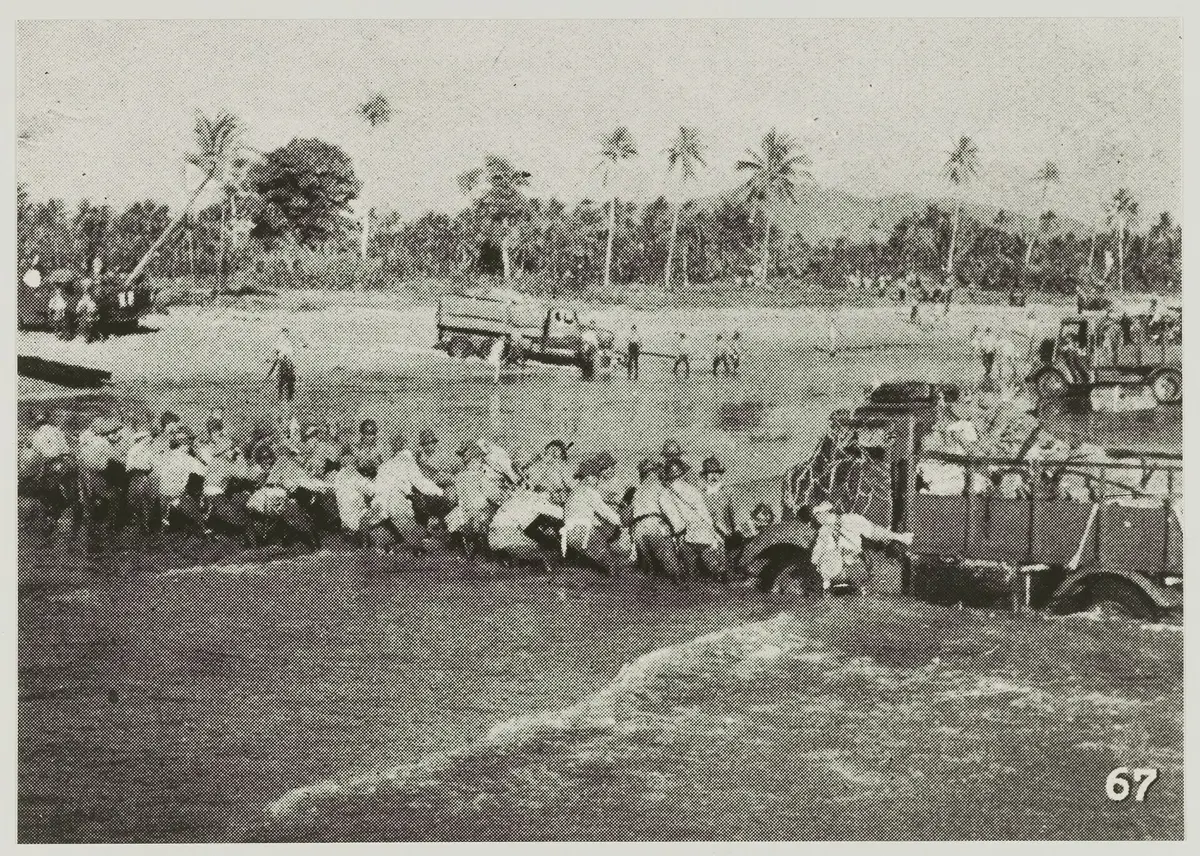
On January 11, 1942, five weeks after Pearl Harbor, Japanese troops came ashore on Tarakan, an oil island off the coast of Borneo, and at Manado in Celebes. Oil was the prize: before the Dutch joined the American embargo in the summer of 1941, the Indies had supplied about a quarter of the oil Japan bought abroad. The islands then fell one after another. On February 14 paratroops dropped on the refineries of Palembang in Sumatra; on February 27 the Allied fleet of the Dutch Rear Admiral Karel Doorman was destroyed in the Battle of the Java Sea, and Doorman died with more than a thousand of his sailors. Before dawn on March 1 the Japanese Sixteenth Army landed at three points on Java's north coast. Batavia fell on the 5th, and on March 8, at the airfield of Kalijati north of Bandung, the Dutch commanders agreed to give up. On the 9th the army on Java laid down its arms, and more than 42,000 European and some 25,000 Indonesian soldiers went into captivity.
Japan divided the conquered colony in three: Java under the Sixteenth Army, Sumatra under the Twenty-fifth, Borneo and the eastern islands under the navy. Everything Dutch was to go. About 100,000 Dutch civilians, men, women and children, were shut up in camps, where almost 13,000 of them died, and the prisoners of war were shipped off to mines in Japan and to railways in Sumatra, Burma and Thailand. Clocks and calendars were set to Tokyo, Malay and Japanese replaced Dutch in offices and schools, Batavia became Jakarta, and the occupiers paid in guilders of their own, printed in Dutch 'De Japansche Regeering', the Japanese government. Posters and the magazine 'Djawa Baroe', 'New Java', sold Japan as the leader, protector and light of Asia.
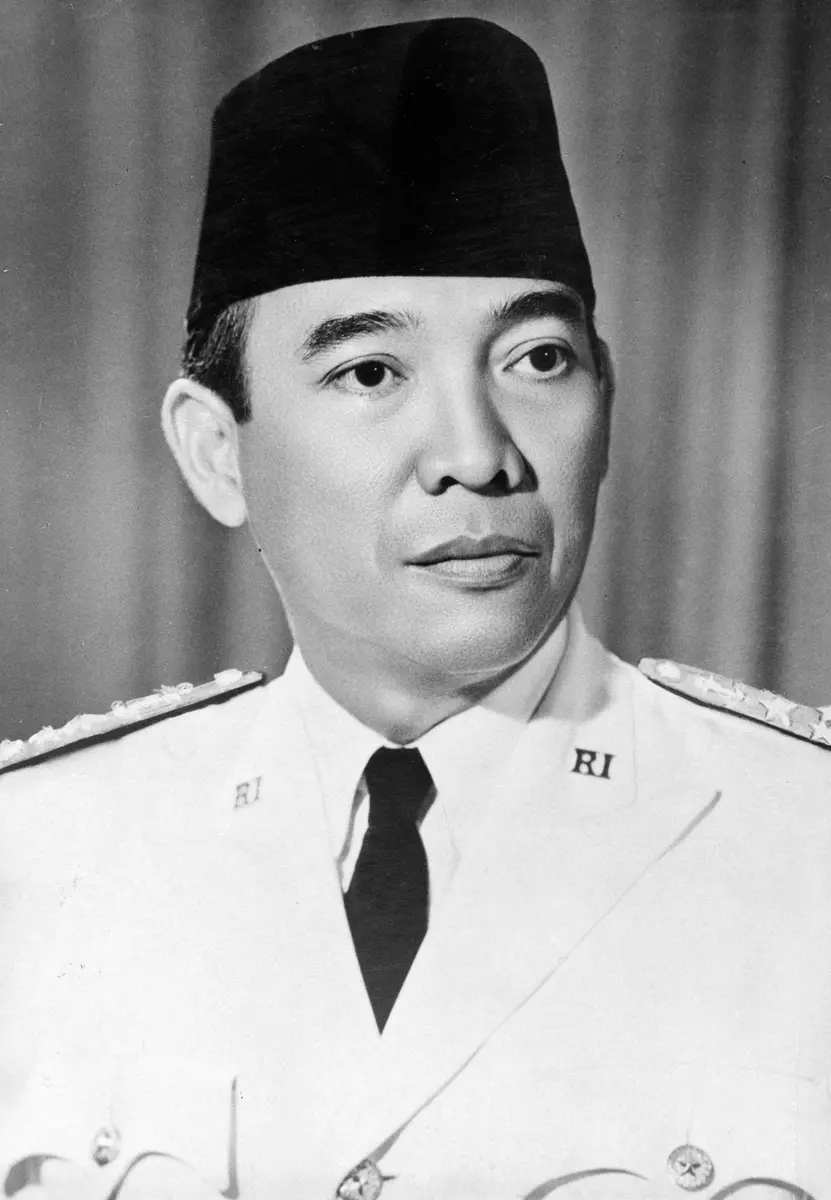
For Indonesians the occupation was both an opening and a catastrophe. Sukarno and Hatta, just out of Dutch exile, decided in 1942 to work with the Japanese as the shortest road to independence. In March 1943 Sukarno became chairman of Putera, the 'Centre of the People's Power', and in October the Japanese founded PETA, a volunteer army of Indonesians trained and officered on the Japanese model, which had 37,000 men on Java by the end of the war. The villages paid the price. Rice was requisitioned until people starved, and millions of men were pressed as romusha, 'labourers', to dig, build and carry for the Japanese army; about 270,000 were shipped to other islands and other countries, and only 52,000 came back. Sukarno's part in recruiting them stained his name. In February 1945 a PETA battalion at Blitar, which had watched romusha die on the south coast, rose against the Japanese; the revolt was crushed and six of its leaders were sentenced to death.
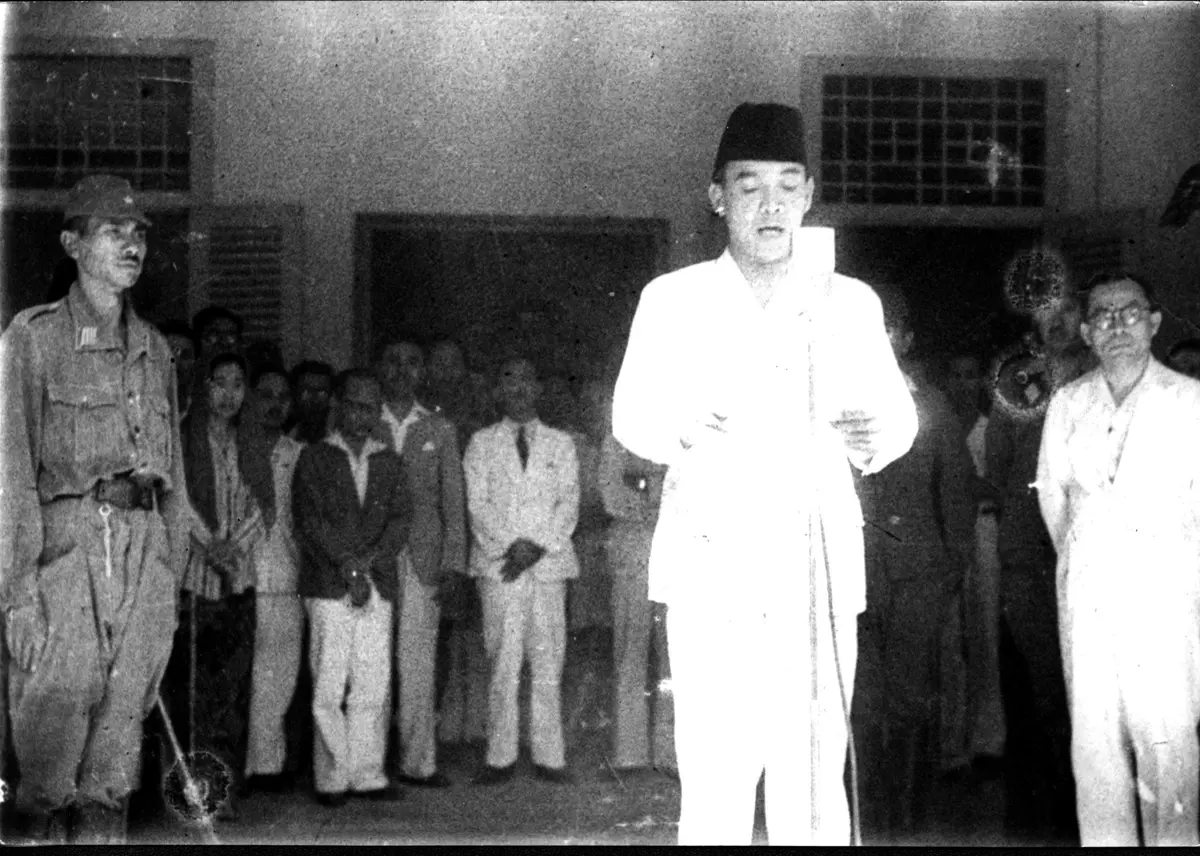
As the war turned against it, Japan bid for Indonesian loyalty. In September 1944 its prime minister announced that the Indies would be prepared for self-government, and at the end of May 1945 a committee of Indonesian leaders met in the old Volksraad building in Jakarta to prepare it; there, on June 1, Sukarno set out the Pancasila, the five principles that are still the creed of the state. Japan surrendered on August 15, and two days later Sukarno and Hatta proclaimed the Republic of Indonesia. The Dutch came back, but to a different country. Three and a half years of occupation had broken the myth of European power, handed Indonesians the offices the Dutch had kept for themselves, and trained the young officers who became the core of the republic's army. They also left memories that are still raw, of the romusha, of the women forced into army brothels and of the camps, whose dead every source counts differently.
What happened
- 1942
Japanese troops land on Tarakan, the oil island off Borneo, and at Manado in Celebes: the first Dutch territory to fall. Here and on the islands that follow, the Dutch answer is mostly to wreck oil installations, airfields and harbours before the Japanese can use them.
Tarakan: the oil island off north-east Borneo where the first Japanese troops landed on January 11, 1942A Japanese convoy reaches Balikpapan, the refinery port of east Borneo. Four American destroyers slip into the anchorage in the night and sink several transports, but the Japanese take the town.
Balikpapan: the refinery port on the east coast of Borneo, taken on January 24, 1942Japanese paratroops drop on Palembang, whose fields and refineries produce more than half the oil of the Indies. The Dutch beat off the first attack, but the next day, as Singapore surrenders, seaborne infantry follow and southern Sumatra is lost.
Palembang and the refineries at Pladju: the oil centre of southern Sumatra, attacked by paratroops on February 14, 1942In the Battle of the Java Sea, Rear Admiral Karel Doorman's mixed fleet of Dutch, British, Australian and American ships tries to stop the invasion convoy north of Java and is destroyed. Doorman goes down with his flagship De Ruyter, and more than a thousand Allied sailors die.
The Java Sea north of Tuban: where Doorman's cruisers De Ruyter and Java went down on the night of February 27-28, 1942Before dawn the Sixteenth Army lands on Java at three points: more than 20,000 men at Merak and in Bantam Bay in the west, about 3,000 at Eretan Wetan, and the 48th Division near Kragan, east of Rembang, to take the east of the island.
Kragan, east of Rembang: where the 48th Division and its companions came ashore on March 1, 1942The force from Eretan Wetan drives 80 kilometres inland and seizes the airfield of Kalijati the same day; the next morning Japanese fighters and bombers are flying from it, and Dutch counter-attacks fail.
Kalijati airfield (now Suryadarma Air Force Base, Subang): taken by the Japanese on the day of the landing, March 1, 1942Japanese troops enter Batavia, the colonial capital. The army commander, Lieutenant-General Hein ter Poorten, has given up the city and Buitenzorg to gather what is left of his forces around Bandung in the hills.
With the Japanese at Lembang, just above Bandung, ter Poorten broadcasts his surrender order over a radio station in Japanese hands. At Kalijati the Dutch commanders meet the Japanese and agree that the general capitulation of the army will be announced the next morning.
The house at Kalijati (Rumah Sejarah Kalijati): where the capitulation of the Dutch army on Java was agreed on March 8, 1942The Royal Netherlands Indies Army on Java surrenders. More than 42,000 European soldiers and sailors and some 25,000 Indonesian soldiers become prisoners; most of the Indonesians are soon let go. Dutch rule in the Indies is over in practice.
The Japanese bring Sukarno back to Jakarta from Sumatra, where the retreating Dutch had left him. He and Mohammad Hatta, back from exile on Banda since the eve of the invasion, agree to work with the occupiers as the surest way to independence.
The mass internment of Dutch women and children begins in Batavia, in whole city quarters fenced off as camps, Tjideng and Kramat among them; the men have been rounded up since March. By the end Tjideng holds about 10,000 women and children.
Tjideng, Batavia: the city quarter turned into the largest internment camp for Dutch women and children on Java- 1943
Putera, the 'Centre of the People's Power', is launched in Jakarta with Sukarno as chairman and Hatta, Ki Hadjar Dewantara and Kyai Haji Mas Mansur beside him. It gives Sukarno a platform across Java, and the job of keeping Indonesians working for Japan.
The commander of the Sixteenth Army issues the ordinance founding PETA, the Volunteer Army for the Defence of the Fatherland: Indonesian battalions, one to each district, trained and officered on the Japanese model to help repel an Allied landing. Its first officers are sworn in at Jakarta on December 8.
- 1944
Across Java, men are pressed into labour gangs as romusha; about 270,000 are shipped to other islands and to Japanese-held Southeast Asia, and few return. On the south coast the PETA battalion of Blitar is set to build fortifications with romusha and watches them die of malaria, dysentery and beri-beri.
Finding that Putera serves Indonesian more than Japanese interests, the Japanese replace it with the Djawa Hokokai, a 'people's loyalty organisation' under their close control. Sukarno remains its public face, and the drive for rice and romusha grows harsher.
With the war going against Japan, its prime minister announces that the East Indies are to be prepared for self-government.
- 1945
The PETA battalion at Blitar rises against the Japanese: its men fire mortars at the hotel of the Japanese officers and leave the town in four columns for the forests of Mount Kelud. The Japanese put the revolt down, partly with Indonesian troops sent against it; 55 men are tried in Jakarta and six are sentenced to death, and their leader, Suprijadi, is never seen again.
Blitar: the East Javanese town where a PETA battalion rose against the Japanese on February 14, 1945The Investigating Committee for Preparatory Work for Independence, Indonesian leaders chosen with Japanese approval, opens its first session of debates in the old Volksraad building in Jakarta.
The former Volksraad building on Pejambon, Jakarta (Gedung Pancasila): where the committee preparing independence met from May 1945, and where Sukarno gave his Pancasila speechOn the last day of the session Sukarno gives the most famous speech of his life, setting out the Pancasila, five principles for the coming state: nationalism, internationalism, democracy, social prosperity and belief in God.
The former Volksraad building on Pejambon, Jakarta (Gedung Pancasila): where the committee preparing independence met from May 1945, and where Sukarno gave his Pancasila speechJapan accepts the Allied terms and surrenders, and its empire in the Indies is at an end. Two days later, in Jakarta, Sukarno and Hatta proclaim Indonesia's independence.