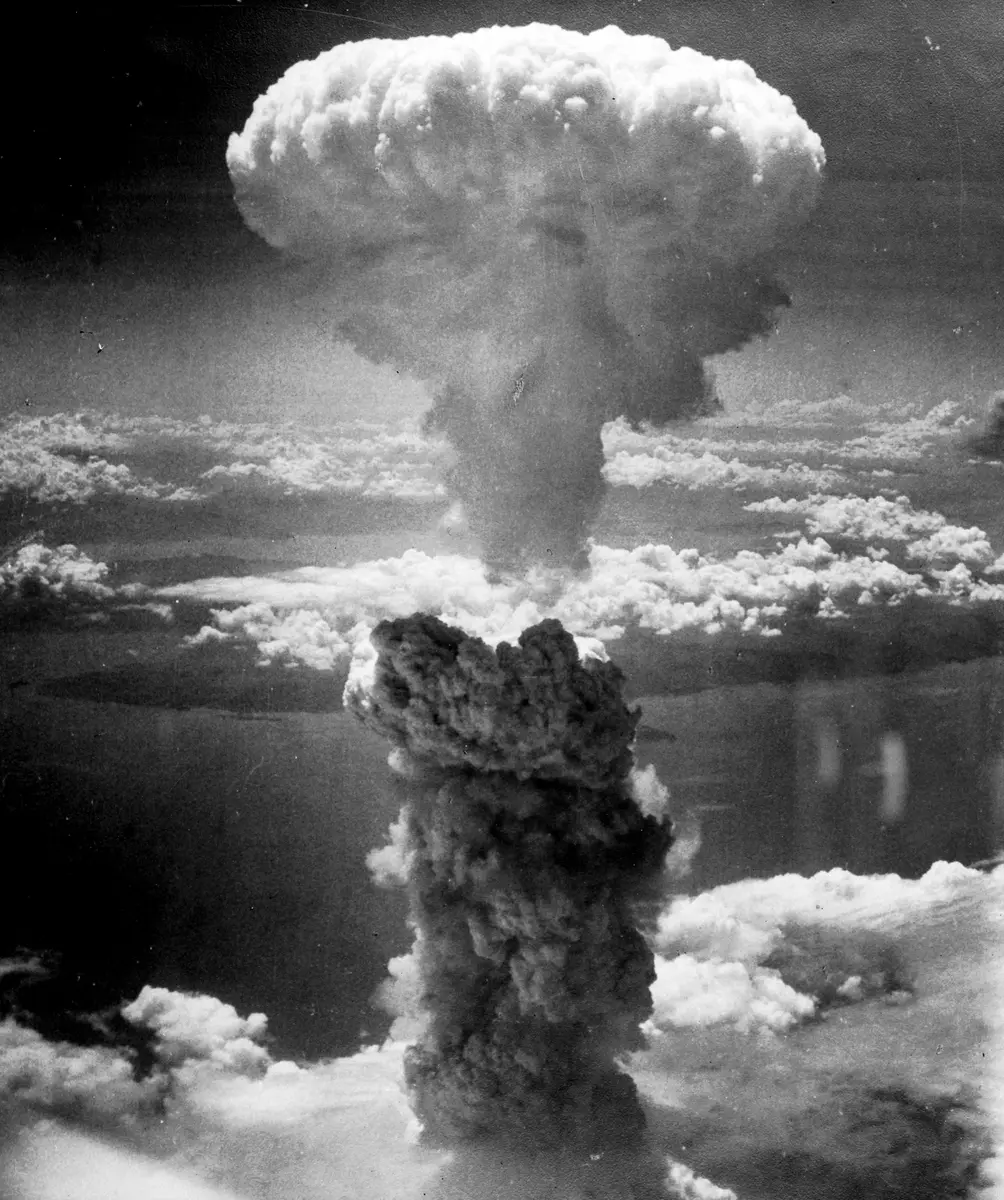
Atomic bombs end the war
“On August 6 and 9, 1945, US bombers dropped atomic bombs on Hiroshima and Nagasaki, killing about 210,000 people by the year's end; Japan surrendered days later, ending World War II.”
In August 1945 the United States used the two atomic bombs it had built in secret during the war on two Japanese cities. At 8:15 in the morning of August 6 a B-29 bomber, the Enola Gay, dropped a uranium bomb nicknamed Little Boy on Hiroshima; at 11:02 on August 9 another, Bockscar, dropped a plutonium bomb, Fat Man, on Nagasaki. They were the first nuclear weapons ever used in war, and they are still the only ones. They exploded in the air with the force of about 15,000 and 21,000 tons of TNT, and each turned the heart of a city into burning ruins within seconds. About 70,000 people died at once in Hiroshima and about 40,000 in Nagasaki; by the end of 1945 the two cities counted roughly 140,000 and 74,000 dead, killed by the flash, the blast, the fires and a new illness caused by radiation.
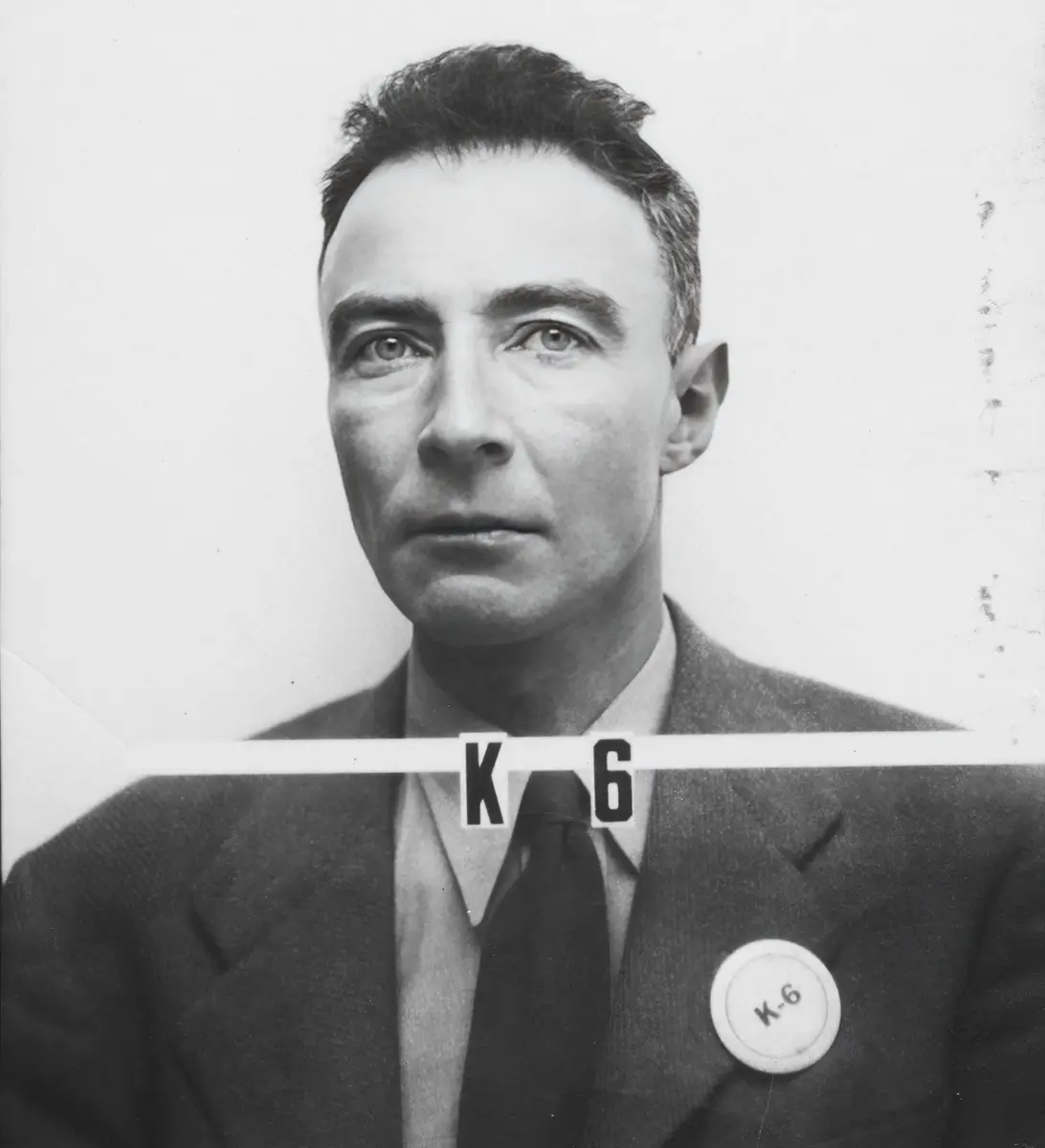
The bombs came out of the Manhattan Project, the American programme, with British scientists taking part, that had raced since 1942 to turn the newly discovered splitting of the atom into a weapon, for fear that Nazi Germany would get there first. Germany surrendered in May 1945, but the war with Japan went on, and after the battle for Okinawa, where more than 12,000 Americans and some 200,000 Japanese soldiers and Okinawans died, an invasion of Japan was planned for the autumn. The first bomb was tested at dawn on July 16 in the New Mexico desert. Ten days later the United States, Britain and China demanded in the Potsdam Declaration that Japan surrender or face 'prompt and utter destruction', and Japan's prime minister told reporters his government would ignore it. President Truman had already approved the order to drop the first 'special bomb' on Hiroshima, Kokura, Niigata or Nagasaki, cities left out of the fire raids so that its effects could be seen and measured. Whether this was necessary is still argued: many historians hold that the bombs ended the war quickly and saved the lives an invasion would have cost, others that Japan was close to giving up anyway and that Washington also meant to impress the Soviet Union.
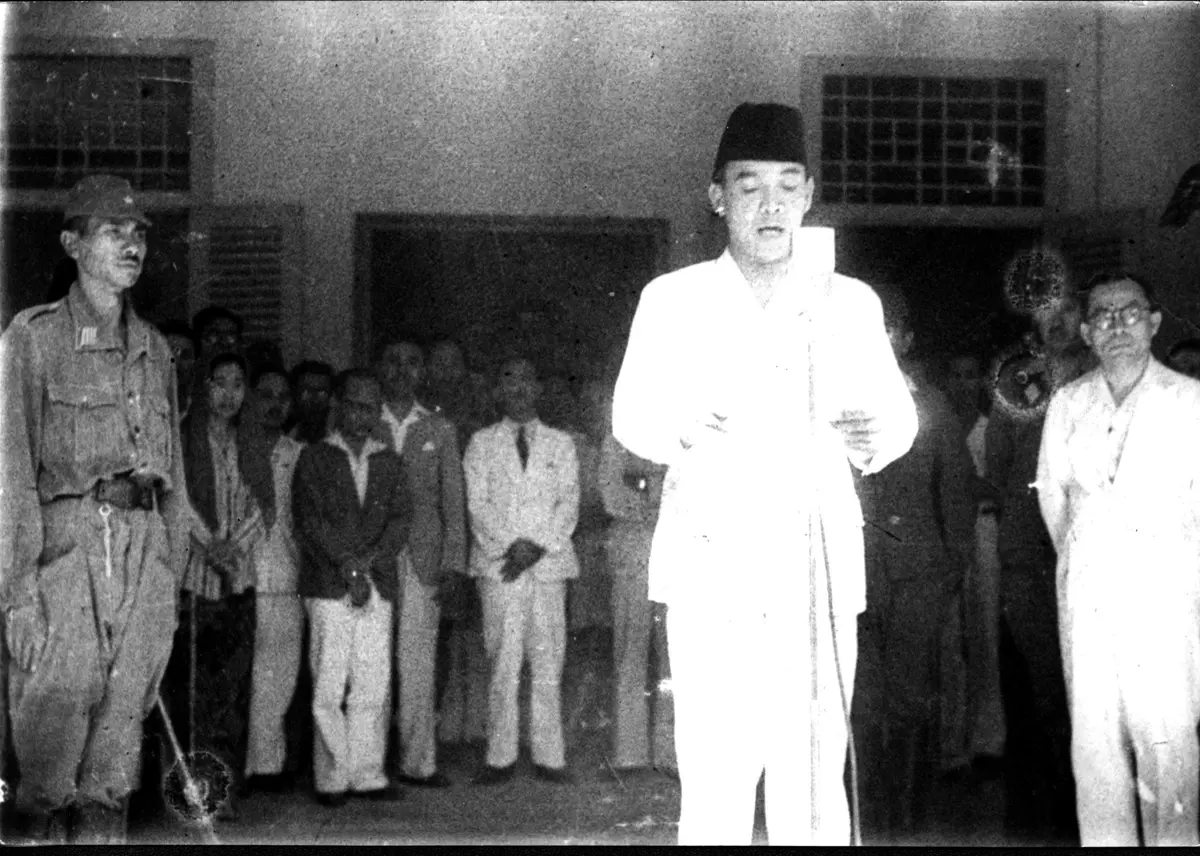
Japan gave in within days, though not only because of the bombs. On August 8 the Soviet Union declared war and invaded Manchuria, ending Tokyo's last hope that Moscow would mediate a peace. In the night after Nagasaki, with his war council split three against three, Emperor Hirohito broke with custom and decided for surrender, and on August 10 Japan offered to accept the Potsdam terms if he could keep his throne; Truman stopped further atomic attacks, though a third bomb would have been ready within about a week. When the Allied reply left the emperor's future open, he decided again on August 14; an attempt by young officers to seize the palace failed that night, and at noon on August 15 the nation heard his recorded voice for the first time, accepting the Allied terms and speaking of 'a new and most cruel bomb'. Two days later Sukarno and Hatta proclaimed Indonesia's independence in Jakarta. On September 2, 1945 Japan's envoys signed the surrender aboard the battleship USS Missouri in Tokyo Bay, and the Second World War was over.
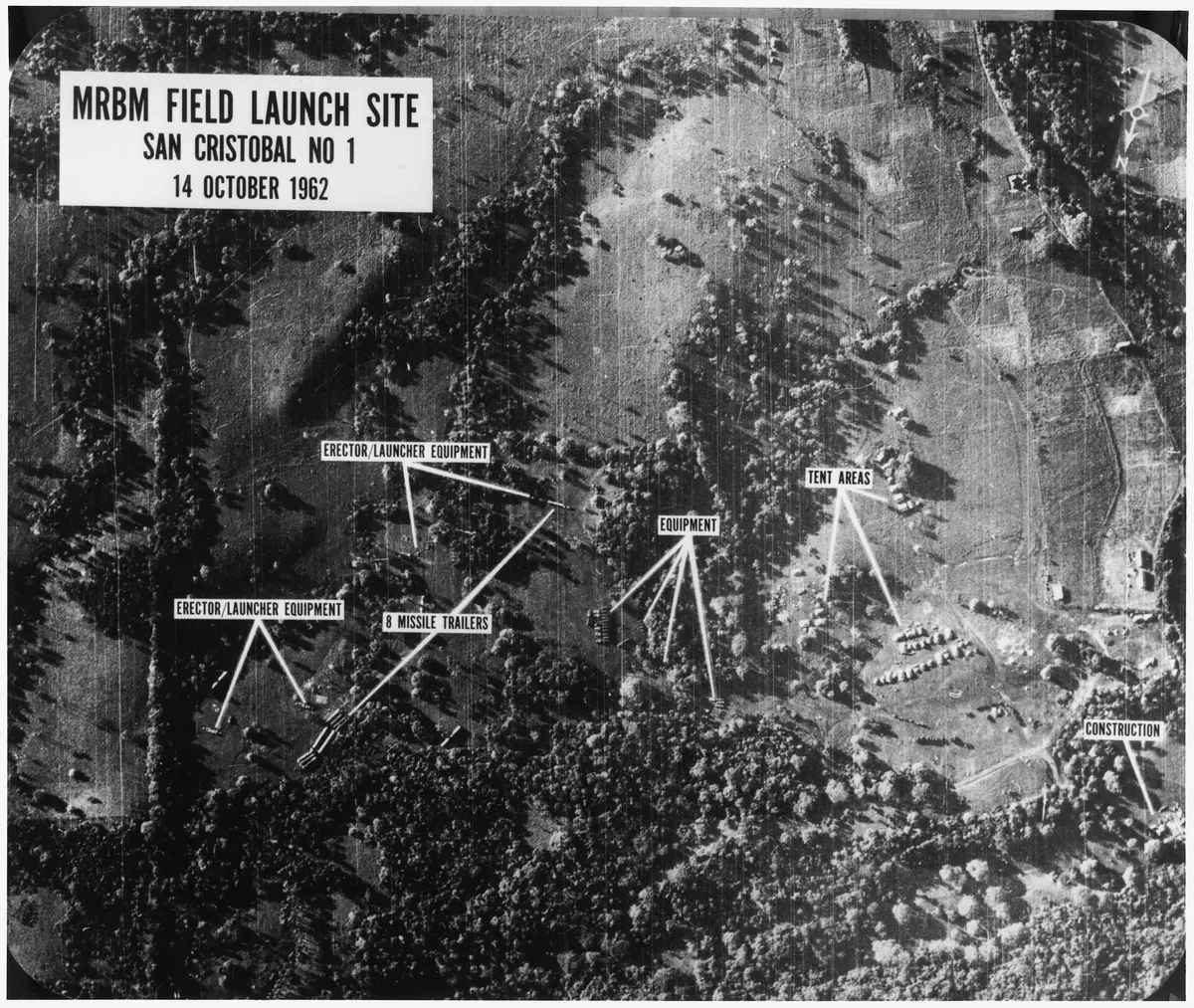
The bombs opened the nuclear age. The Soviet Union tested its own bomb in 1949, and the arms race between the two superpowers brought the world to the edge of nuclear war over Cuba in 1962; far more powerful weapons were built in their tens of thousands, but none has been used in war since Nagasaki. The survivors, the hibakusha, lived with burns, scars and the fear of radiation sickness and cancer, and their two cities became the spiritual centres of the movement to ban nuclear weapons. Hiroshima kept the gutted shell of its Prefectural Industrial Promotion Hall, which stood about 160 metres from the point under the explosion, as the Atomic Bomb Dome, a UNESCO World Heritage Site since 1996; beside it the city laid out its Peace Memorial Park, and Nagasaki its Peace Park over the hypocentre in the Urakami valley.
What happened
- 1945
- 5:29 a.m.
At 5:29 in the morning (5:30 in round numbers), after a storm had delayed the test, the plutonium 'Gadget' explodes on a 100-foot tower in the New Mexico desert with the force of about 21,000 tons of TNT: the Trinity test, the first nuclear explosion. Hours later the cruiser USS Indianapolis sails from San Francisco with the parts of the uranium bomb.
Trinity Site, New Mexico: where the first atomic bomb exploded at dawn on July 16, 1945 At Potsdam, Truman tells Stalin, without an interpreter, that the United States has 'a new weapon of unusual destructive force'; Stalin, who knows of it from his spies, says only that he hopes it will be used well against Japan.
General Handy's directive, drafted by Groves and approved by Truman, Stimson and Marshall, orders the 509th Composite Group to drop its 'first special bomb' on Hiroshima, Kokura, Niigata or Nagasaki as soon after about August 3 as the weather allows, and further bombs as they are made ready. No other order is needed.
The United States, Britain and China issue the Potsdam Declaration: Japan must surrender unconditionally or face 'prompt and utter destruction'; it says nothing of the bomb or of the emperor. The same day the Indianapolis delivers Little Boy's parts to Tinian. Prime Minister Suzuki tells reporters that his government will 'ignore' (mokusatsu) the declaration.
On Tinian, Little Boy is hoisted from its pit into B-29 number 82, which Colonel Tibbets names Enola Gay after his mother; General LeMay confirms the mission for the next day.
North Field, Tinian: the base from which the Enola Gay and Bockscar took off with the two bombsBetween about 9:30 and 11 in the morning, at the west end of Miyuki Bridge, 2.2 km from the hypocentre, the newspaper photographer Yoshito Matsushige photographs the burned survivors being given first aid with oil: two of the five photographs he takes that day, the only ones of the victims inside the city.
Miyuki Bridge, Hiroshima: where Yoshito Matsushige photographed the burned survivors on the morning of August 6- 2:45 a.m.
At 2:45 in the morning, Tinian time (an hour ahead of Japan), the overloaded Enola Gay takes off from North Field with Tibbets at the controls and the weaponeer William Parsons, who arms the bomb in flight; two B-29s follow with cameras and instruments, and three weather planes fly ahead.
North Field, Tinian: the base from which the Enola Gay and Bockscar took off with the two bombs - 8:15 a.m.
Over a clear Hiroshima the bombardier aims at the T-shaped Aioi Bridge and releases Little Boy at 8:15. Forty-three seconds later it explodes about 600 metres above Shima Hospital with the force of some 15,000 tons of TNT; about 70,000 people die at once, nearly every building within a mile is destroyed, and a firestorm burns 4.4 square miles. Radio and telegraph contact with the city stops at 8:16.
The hypocentre in Hiroshima: Little Boy exploded about 600 metres above Shima Hospital at 8:15 on August 6 - 11:00 a.m.
At 11 in the morning in Washington, the radio plays Truman's statement: 'Sixteen hours ago an American airplane dropped one bomb on Hiroshima ... It is an atomic bomb.' If Japan does not accept the Potsdam terms, he warns, it 'may expect a rain of ruin from the air, the like of which has never been seen on this earth'. The statement was written before Truman left Germany; he hears the news aboard the cruiser Augusta, sailing home from Potsdam.
The Soviet Union declares war on Japan, and its armies cross into Manchuria and Sakhalin within hours, ending Tokyo's hope that Moscow would mediate a peace.
- 10:00 p.m.
On Tinian, Fat Man, assembled in a rush in the early hours to beat five days of bad weather, is loaded into the B-29 Bockscar at 10 p.m.
North Field, Tinian: the base from which the Enola Gay and Bockscar took off with the two bombs - 3:47 a.m.
Bockscar, piloted by Major Charles Sweeney, takes off from Tinian at 3:47 a.m., Tinian time; its primary target is the arsenal at Kokura. A fuel pump fault leaves it without its reserve tank, and it circles nearly an hour off Yakushima waiting for its two escorts, one of which never arrives.
North Field, Tinian: the base from which the Enola Gay and Bockscar took off with the two bombs - 9:45 a.m.
Over Kokura at about 9:45, local time, smoke and haze from a fire raid on nearby Yawata hide the aiming point; after three runs, with flak and fighters closing in and fuel running low, Sweeney turns south for the secondary target, Nagasaki.
Kokura (today Kitakyushu): the first target on August 9, spared because smoke and haze hid its arsenal - 11:02 a.m.
Through a gap in the clouds over Nagasaki the bombardier releases Fat Man, which explodes at 11:02 about 500 metres above the Urakami valley, between the two Mitsubishi arms plants and well north of the city centre, with the force of 21,000 tons of TNT. About 40,000 people die at once; the hills shield the old port in the south. Bockscar, almost out of fuel, makes an emergency landing on Okinawa.
The hypocentre in Nagasaki: Fat Man exploded above the Urakami valley at 11:02 on August 9, over today's Hypocenter Park At an imperial conference that runs through the night in the palace in Tokyo, the war council is split three against three; Emperor Hirohito breaks custom and decides to accept the Potsdam terms. Japan offers to surrender on condition that the emperor keeps his sovereign powers, and Truman orders a halt to further atomic attacks; the next bomb would have been ready after August 17 or 18.
The Imperial Palace, Tokyo: where the emperor decided for surrender and recorded the broadcast of August 15Secretary of State James Byrnes answers for the Allies: from the moment of surrender the emperor's authority will be 'subject to the Supreme Commander of the Allied Powers', and Japan's final form of government will be left to the free will of its people.
With his ministers still divided and American bombers back over Japan, the emperor decides a second time: Japan accepts the Allied terms. He records his rescript that night, and the acceptance goes to the Allies; in the Oval Office in Washington, Truman reads the news to reporters.
The White House, Washington: where Truman announced Japan's surrender on August 14, 1945In the night, young army officers led by Major Kenji Hatanaka try to seize the Imperial Palace and stop the broadcast; they fail, and Hatanaka and others kill themselves. The war minister, General Anami, who would not join them, takes his own life.
The Imperial Palace, Tokyo: where the emperor decided for surrender and recorded the broadcast of August 15- 12:00 p.m.
At noon the radio plays the emperor's recorded voice, which most Japanese hear for the first time: Japan accepts the Allied terms, because 'the enemy has begun to employ a new and most cruel bomb' and the war has 'developed not necessarily to Japan's advantage'.
The Imperial Palace, Tokyo: where the emperor decided for surrender and recorded the broadcast of August 15 General Douglas MacArthur, Supreme Commander for the Allied Powers, lands at Atsugi airfield near Tokyo; the Allied occupation of Japan begins.
- 9:04 a.m.
Aboard USS Missouri, at anchor in Tokyo Bay, MacArthur opens the ceremony at 9:02; Foreign Minister Shigemitsu and General Umezu sign the Instrument of Surrender for Japan at 9:04, then MacArthur and the Allied representatives sign. After 23 minutes the Second World War is over.
USS Missouri's anchorage in Tokyo Bay, 35°21′17″N 139°45′36″E: where the surrender was signed on September 2, 1945