J. Robert Oppenheimer
“The physicist who led Los Alamos and built the first atomic bombs, then warned against them, opposed the hydrogen bomb and was stripped of his security clearance in 1954.”
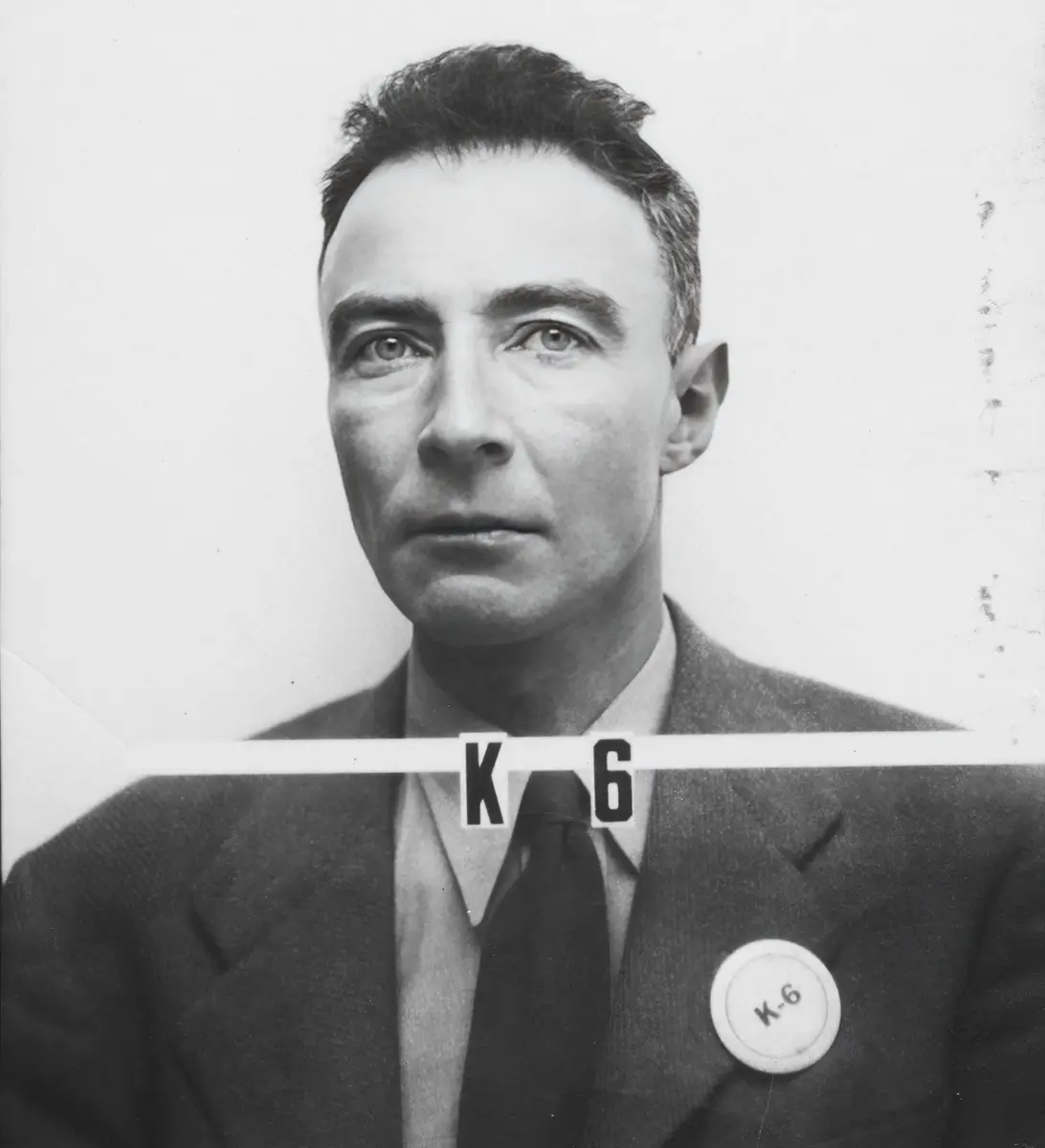
J. Robert Oppenheimer was the American theoretical physicist who directed the secret laboratory at Los Alamos, New Mexico, where the first atomic bombs were designed and built during the Second World War. It made him famous as the 'father of the atomic bomb'. Watching the first test explosion at dawn on 16 July 1945, he said twenty years later, he thought of a line from the Hindu scripture the Bhagavad Gita: 'Now I am become Death, the destroyer of worlds.' Less than ten years after the war the government he had served declared him a security risk, and his life became the classic story of a scientist caught between discovery, power and conscience.
He was born in New York City on 22 April 1904, the son of a wealthy German-Jewish textile importer and a painter, and grew up in a Riverside Drive apartment hung with fine paintings. A solitary, brilliant boy who collected minerals, he went to the progressive Ethical Culture School, finished Harvard in three years and in 1925 sailed for Europe, where quantum mechanics was being invented. At Göttingen he took his doctorate under Max Born in 1927. Their joint paper on molecules, which treats the heavy, slow nuclei and the light, fast electrons separately, is still taught as the Born–Oppenheimer approximation.
From 1929 he taught at both the University of California at Berkeley and Caltech in Pasadena, and with the experimenter Ernest Lawrence he made Berkeley the leading place in America to study physics. In 1939, with two young colleagues, he showed that a burnt-out star that is heavy enough cannot stop as a neutron star but must go on collapsing, a founding paper on what are now called black holes. He was nominated four times but never received a Nobel Prize. In the 1930s he also moved to the political left; his brother, his lover Jean Tatlock and later his wife Kitty were or had been Communist Party members.
In 1942 General Leslie Groves chose him to run the new weapons laboratory, though he had never managed anything larger than a seminar, and they placed it in a boys' ranch school on a remote mesa that Oppenheimer knew from riding trips. He recruited the scientists, let them talk freely inside the fence, and brought the work to the Trinity test and the bombs that destroyed Hiroshima and Nagasaki. Leaving Los Alamos in October 1945 he warned that mankind would one day curse its name, and he told President Truman he felt he had blood on his hands. After the war he wrote much of the American plan for international control of atomic energy, chaired the Atomic Energy Commission's General Advisory Committee, which in 1949 advised against a crash programme for the hydrogen bomb, and directed the Institute for Advanced Study in Princeton from 1947 to 1966.
His opponents, among them the commission's chairman Lewis Strauss, used that advice, his old communist friendships and a lie he had once told army security officers against him. After a four-week hearing in the spring of 1954, at the height of McCarthyism, the commission took away his security clearance, without questioning his loyalty. President Lyndon Johnson gave him the Enrico Fermi Award in 1963, and he died of throat cancer in Princeton on 18 February 1967, aged 62. In December 2022 the Department of Energy formally vacated the 1954 decision as the product of a flawed and biased process.
What happened
- 1904
Julius Robert Oppenheimer is born in New York City, the elder son of Julius Oppenheimer, a wealthy textile importer who had come from Germany, and the painter Ella Friedman. The family later lives in a large apartment at 155 Riverside Drive.
155 Riverside Drive, Manhattan: the Oppenheimers' apartment house in his childhood; he was born in New York City on 22 April 1904- 1911
He starts at the Ethical Culture School, Felix Adler's progressive school of secular humanism. A precocious boy who collects minerals, he writes to the New York Mineralogical Club so well that it invites him to lecture.
- 1921
He graduates from the Ethical Culture School at the top of his class, then falls dangerously ill with dysentery after a prospecting trip to old mines in Bohemia and loses a year.
- 1922
To recover his strength he spends the summer in New Mexico, riding for days through the mountains, and falls in love with the high desert; on one ride he comes to the isolated Los Alamos Ranch School on the Pajarito Plateau.
He enters Harvard, studies chemistry and then physics, reads widely, writes poetry, and finishes his degree in three years.
- 1925
After Harvard he sails to England to do research at the Cavendish Laboratory in Cambridge under J. J. Thomson. Poor at experiments and unhappy, he finds that his gift is for theory.
- 1926
At Max Born's invitation he moves to the University of Göttingen, a centre of the new quantum mechanics, where he meets physicists such as Paul Dirac.
- 1927
He receives his doctorate in physics from Göttingen, aged 23.
He travels with Dirac from Göttingen to Leiden, where both speak at Paul Ehrenfest's colloquium.
Annalen der Physik receives his paper with Born, 'On the quantum theory of molecules', which separates the motion of the light electrons from that of the heavy nuclei: the Born–Oppenheimer approximation, still basic to chemistry.
- 1928
Back in America, he spends the spring at Caltech in Pasadena and accepts posts at both Berkeley, where there is no theoretical physics yet, and Caltech, but first returns to Europe for a year.
On a horse-packing trip with his brother Frank he leases a cabin in the Sangre de Cristo Mountains, which he calls Perro Caliente ('hot dog!'); he buys it in 1947.
In the autumn he returns to Ehrenfest in Leiden and then joins Wolfgang Pauli's group in Zürich.
- 1929
He begins teaching at Berkeley, coming to Caltech each year after Christmas, and over the next decade trains a generation of American theorists. He becomes a close friend of Ernest Lawrence, the inventor of the cyclotron.
LeConte Hall (now Physics North and Physics South), University of California, Berkeley: his office from 1929 to 1943, and the secret bomb seminar of the summer of 1942 - 1936
He begins a turbulent relationship with Jean Tatlock, a medical student and Communist Party member, and is drawn into left-wing causes; his brother Frank joins the party the next year.
- 1939
With George Volkoff he publishes 'On Massive Neutron Cores', which finds that a star made of neutrons can only be so heavy.
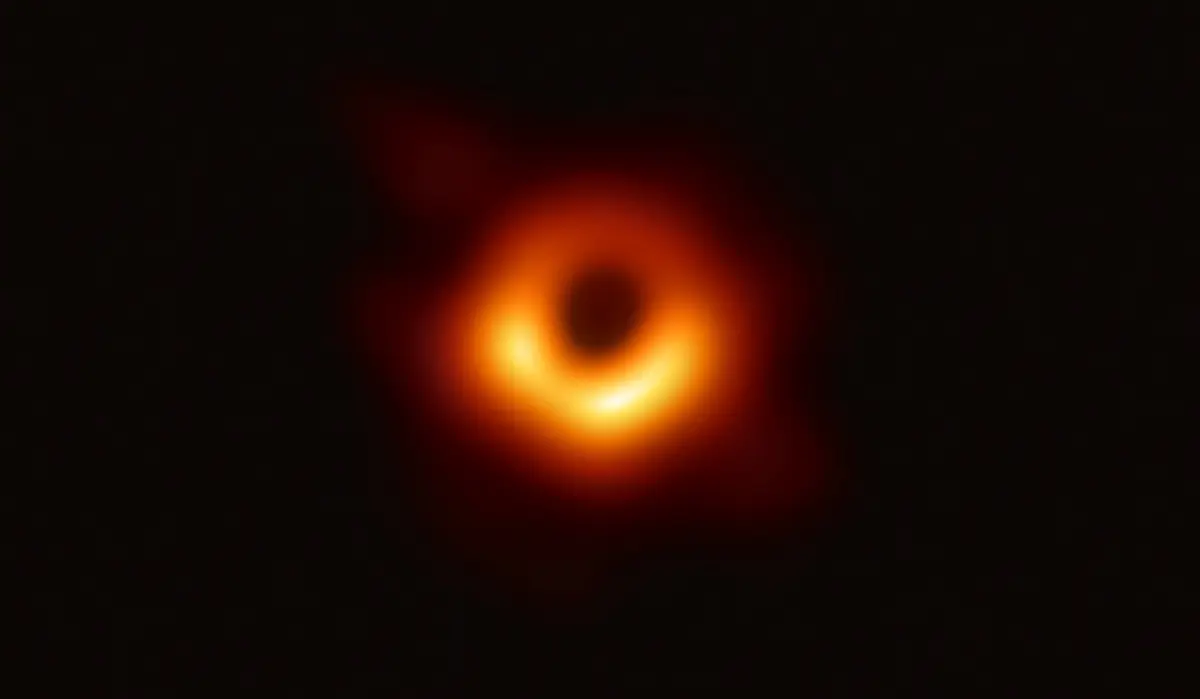
With Hartland Snyder he publishes 'On Continued Gravitational Contraction': a heavy enough star, its fuel spent, collapses without end, a founding paper on what are now called black holes.
- 1940
He marries Katherine 'Kitty' Puening, a biologist and former Communist Party member, on the day her divorce from her previous husband comes through. Their son Peter is born in May 1941.
- 1941
Lawrence brings him into the secret discussions on an atomic bomb, at a committee meeting he later remembered as being in Schenectady.
- 1942
Arthur Compton puts him in charge of the theory of the bomb and of fast-neutron research, scattered over half a dozen universities.
He gathers leading theorists, Hans Bethe among them, in offices on the top floor of LeConte Hall to work out the principles of an atomic bomb, and emerges as the group's natural leader.
LeConte Hall (now Physics North and Physics South), University of California, Berkeley: his office from 1929 to 1943, and the secret bomb seminar of the summer of 1942General Leslie Groves, the new head of the Manhattan Project, asks him to direct a central laboratory for the bomb, despite his lack of experience as a manager, his left-wing past and his lack of a Nobel Prize.
Groves, Oppenheimer and Edwin McMillan reject Jemez Springs, deep in a canyon; Oppenheimer suggests the Los Alamos Ranch School on its mesa, and Groves decides at once that this is the place.
The Oppenheimer House on Bathtub Row, Los Alamos: a Ranch School house of 1929, his home while he directed the laboratory, 1943–1945- 1943
After three months of recruiting across the country he arrives at Los Alamos in mid-March, with his family moving into a Ranch School house on Bathtub Row. He wins the right for the scientists to stay civilians and to talk freely among themselves.
The Oppenheimer House on Bathtub Row, Los Alamos: a Ranch School house of 1929, his home while he directed the laboratory, 1943–1945- 1945
The Gadget, the plutonium bomb to be tested, is hoisted to the top of a 100-foot tower in the desert; before the test Oppenheimer climbs up alone for a final inspection.
Trinity Site, New Mexico: where his laboratory's Gadget exploded at dawn on 16 July 1945, the first nuclear explosion- 5:29 a.m.
The Trinity test, named by Oppenheimer after a poem by John Donne: the first nuclear explosion lights the desert. He watches from a control bunker south of the tower and tells his brother simply 'it worked'; twenty years later he recalls the Bhagavad Gita: 'Now I am become Death, the destroyer of worlds.'
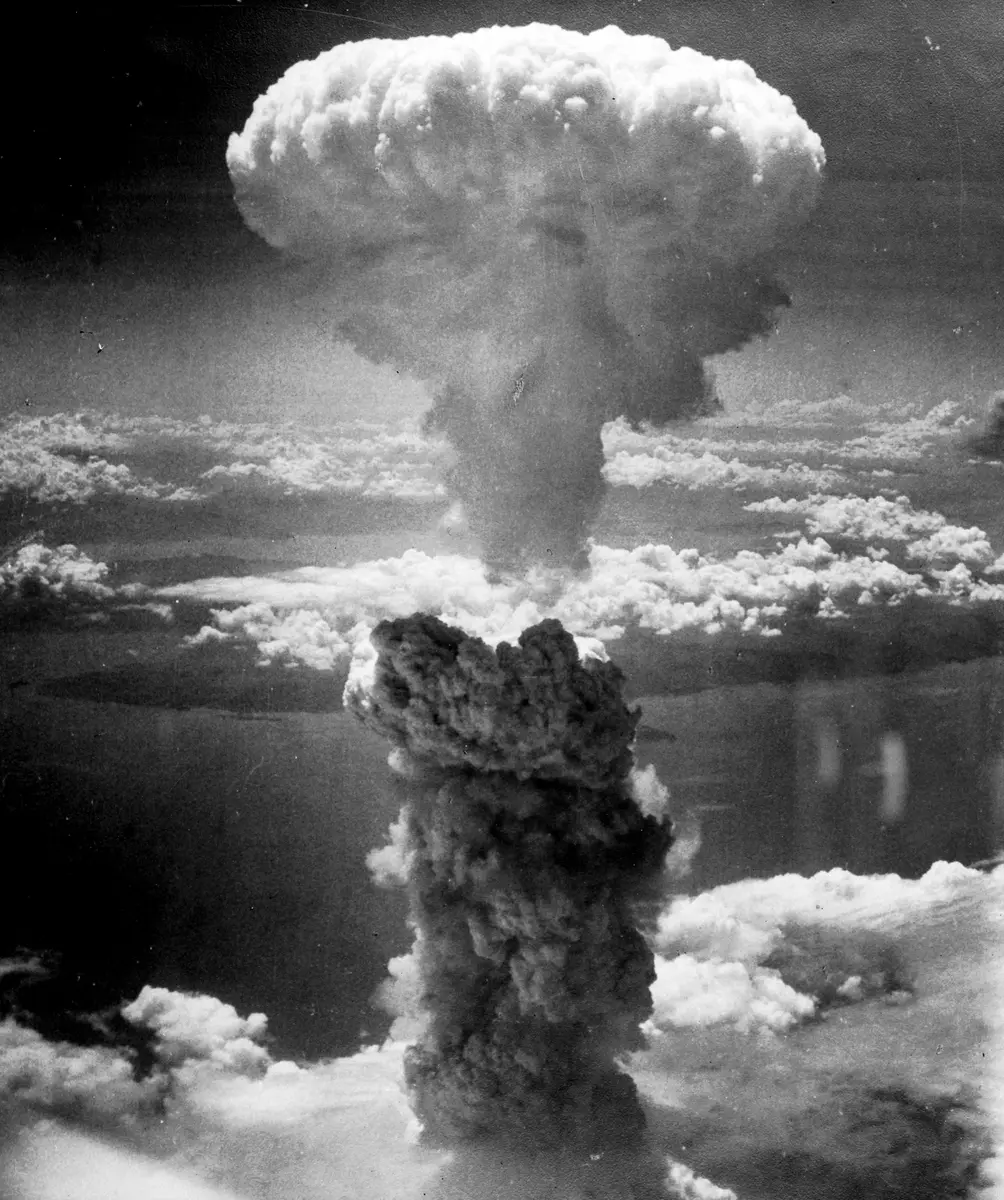
Trinity Site, New Mexico: where his laboratory's Gadget exploded at dawn on 16 July 1945, the first nuclear explosion After the bombing of Hiroshima on 6 August he tells an assembly of the laboratory's workers that he is proud, regretting only that the bomb came too late for use against Germany; after Nagasaki on 9 August a gloom settles over the laboratory.
He returns to the Trinity Site with Groves when it is opened to the press.
Trinity Site, New Mexico: where his laboratory's Gadget exploded at dawn on 16 July 1945, the first nuclear explosionOn his last day as director, accepting a scroll from Groves for the laboratory, he warns that if atomic bombs join the world's arsenals, mankind will curse the names of Los Alamos and Hiroshima. Norris Bradbury takes over.
With Secretary of War Robert Patterson he meets President Truman in the Oval Office to argue for international control. He says he feels he has blood on his hands; the offended president later calls him a 'cry baby' scientist.
The family moves to Pasadena, where he returns to teaching at Caltech.
- 1946
The Acheson–Lilienthal report, largely his work, proposes an international Atomic Development Authority to oversee the mining and use of fissile materials and to run every nuclear plant that could make weapons.
- 1947
He becomes chairman of the General Advisory Committee of the new civilian Atomic Energy Commission, an exceptionally influential post that he holds until 1952.
He becomes director of the Institute for Advanced Study in Princeton.
Fuld Hall, Institute for Advanced Study, Princeton: he directed the Institute from 1947 to 1966 and died in Princeton on 18 February 1967- 1949
After the first Soviet atomic test, his committee advises against a crash programme to build the hydrogen bomb, the 'Super'; the majority writes that 'a super bomb should never be produced'. The president overrules them.
- 1953
The commission's chairman Lewis Strauss tells him that his clearance is suspended, on charges of past communist associations and of opposing the hydrogen bomb. He refuses to resign and asks for a hearing.
- 1954
The hearing before a three-man Personnel Security Board opens in Washington and runs to 6 May. Cross-examined, he admits that in 1943 he lied to army security officers about an approach made through his friend Haakon Chevalier; Teller testifies that he would trust 'hands which I understand better'.
The board recommends by two votes to one against restoring his clearance, while finding no evidence of disloyalty.
The Atomic Energy Commission, by four votes to one, finds 'fundamental defects' in his character and revokes his clearance, two days before his consulting contract would have run out.
- 1963
At the White House, President Lyndon Johnson presents him with the Enrico Fermi Award, the commission's highest honour, for his work 'as a teacher and originator of ideas' and his leadership of Los Alamos.
- 1966
He retires as director of the Institute for Advanced Study and learns that he has throat cancer, after a lifetime of heavy smoking.
Fuld Hall, Institute for Advanced Study, Princeton: he directed the Institute from 1947 to 1966 and died in Princeton on 18 February 1967 - 1967
He dies in Princeton, aged 62. His ashes are scattered at sea off St. John in the Virgin Islands, where he had a retreat.
Fuld Hall, Institute for Advanced Study, Princeton: he directed the Institute from 1947 to 1966 and died in Princeton on 18 February 1967