Sumer & Babylon
“The land of the first cities, writing and written law, from Uruk and Ur through Hammurabi's Babylon to Nebuchadnezzar, until Cyrus took Babylon in 539 BCE.”
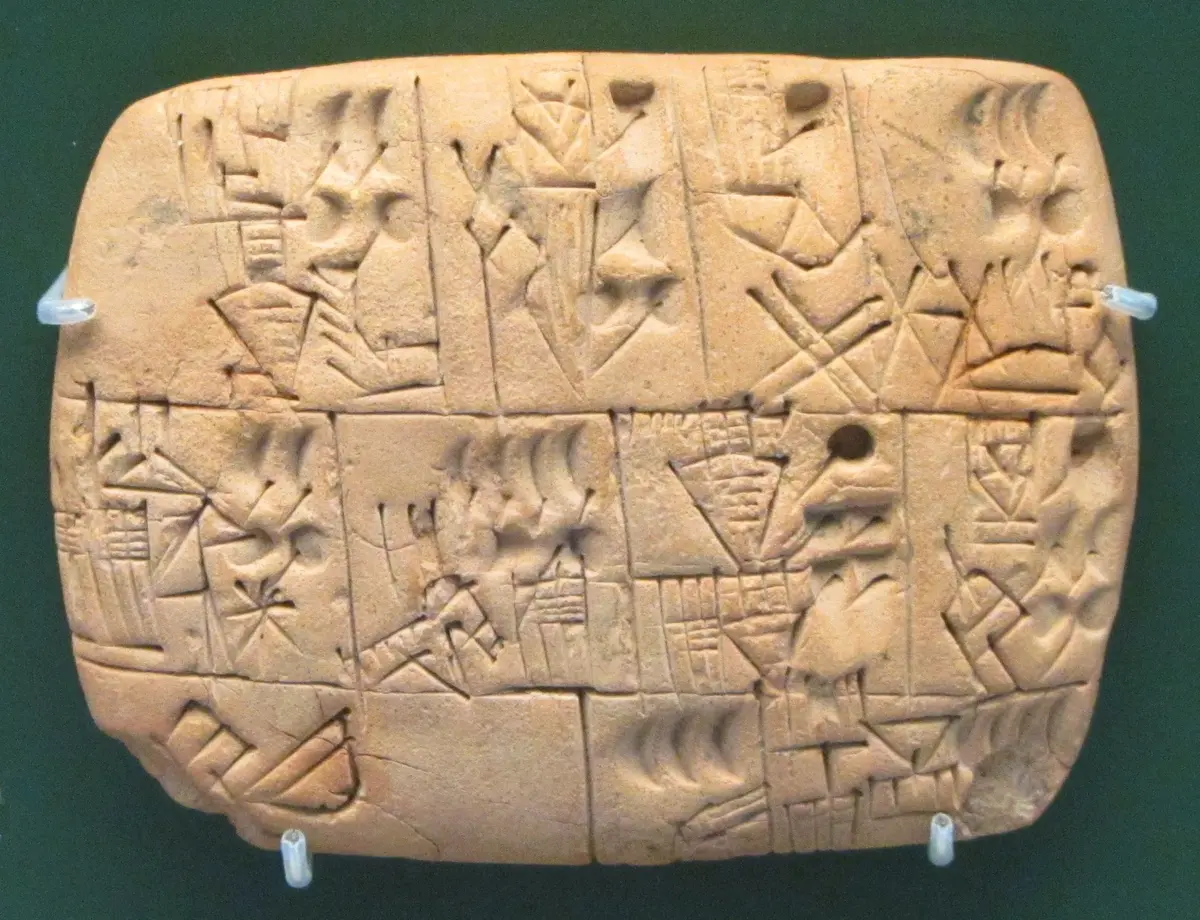
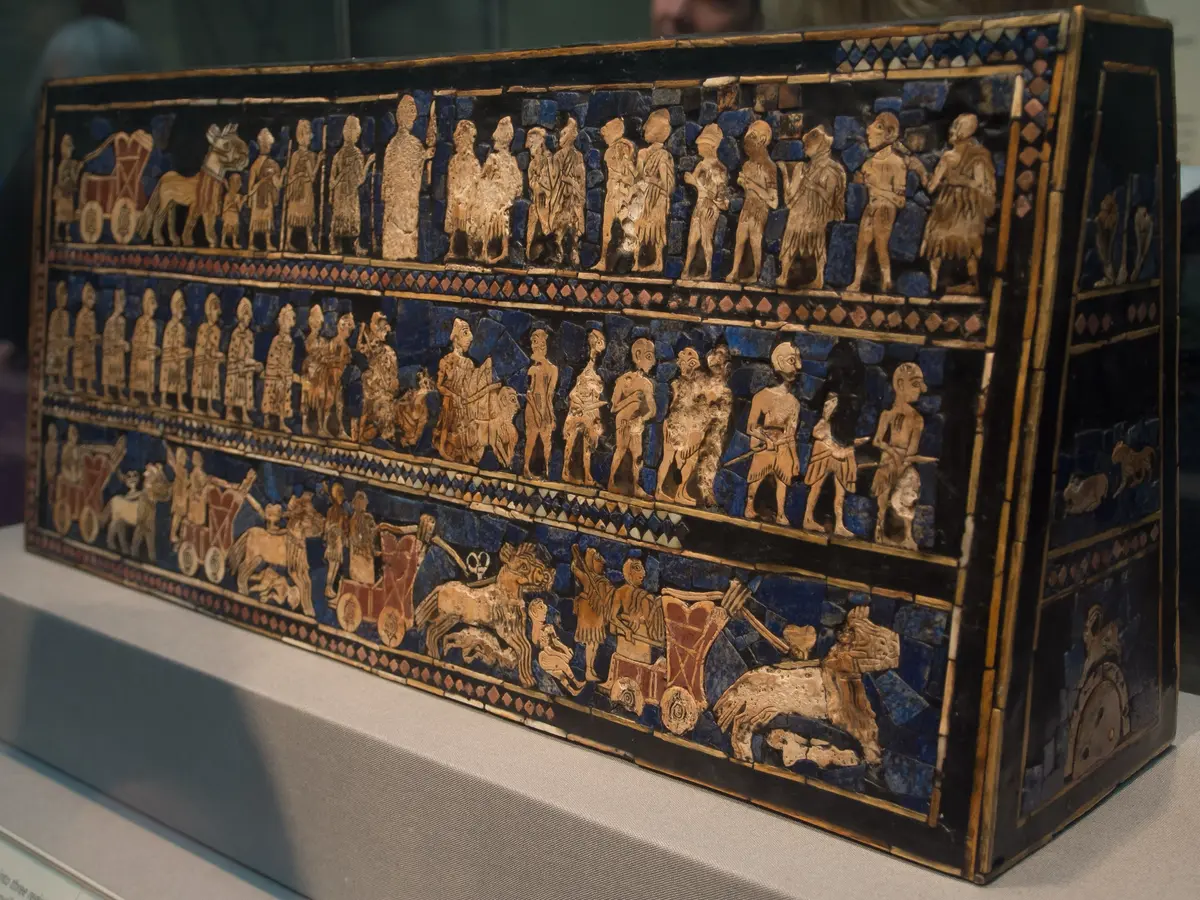
Between the Tigris and the Euphrates, in what is now southern Iraq, people built the first cities in the world. By about 3200 BCE Uruk covered some 250 hectares, with temples on high terraces, a wall its people later credited to the hero-king Gilgamesh, and scribes who pressed the first written signs into clay to keep the temple's accounts. The land was called Sumer, and for the next thousand years it was a patchwork of walled city-states, Uruk, Ur, Kish, Lagash, Umma, Nippur, each ruled by a king on behalf of its god, each fighting its neighbours over fields and water. The kings of Ur buried around 2600 BCE took their court with them into the grave, with gold helmets, lyres and the inlaid box known as the Standard of Ur.
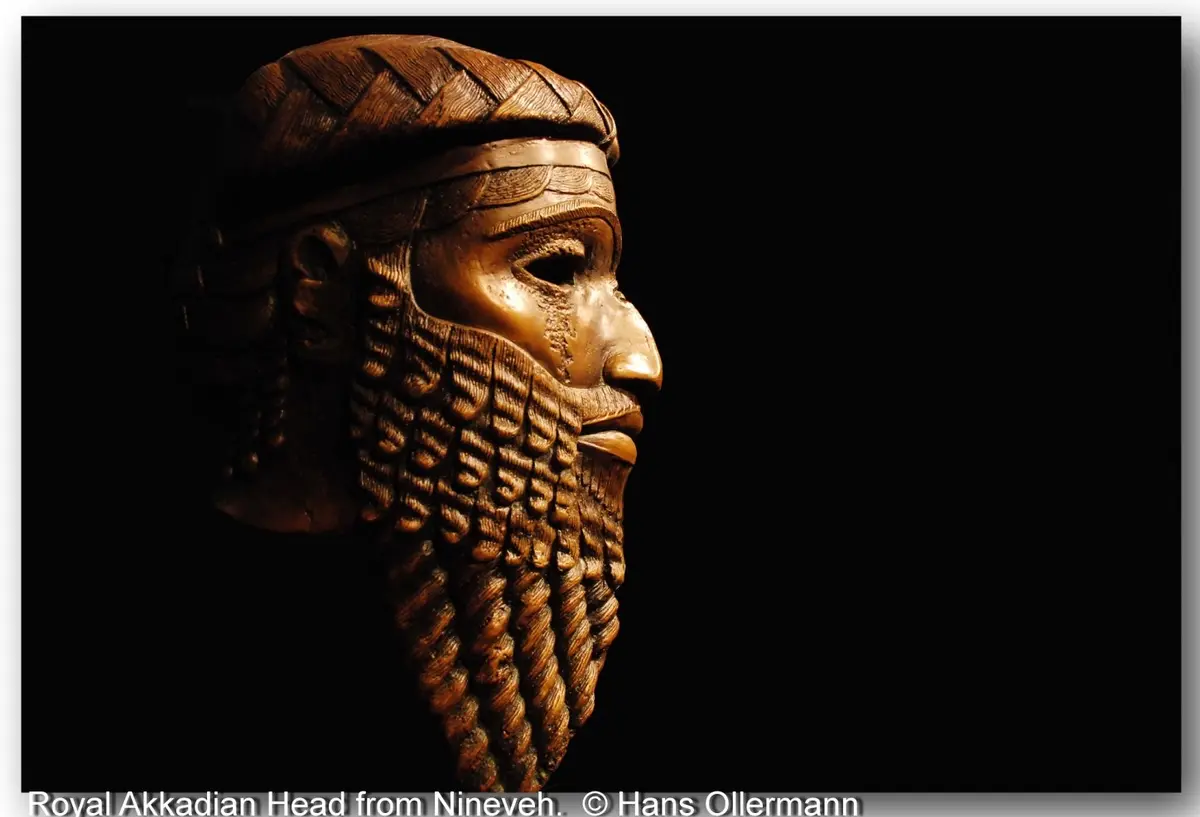
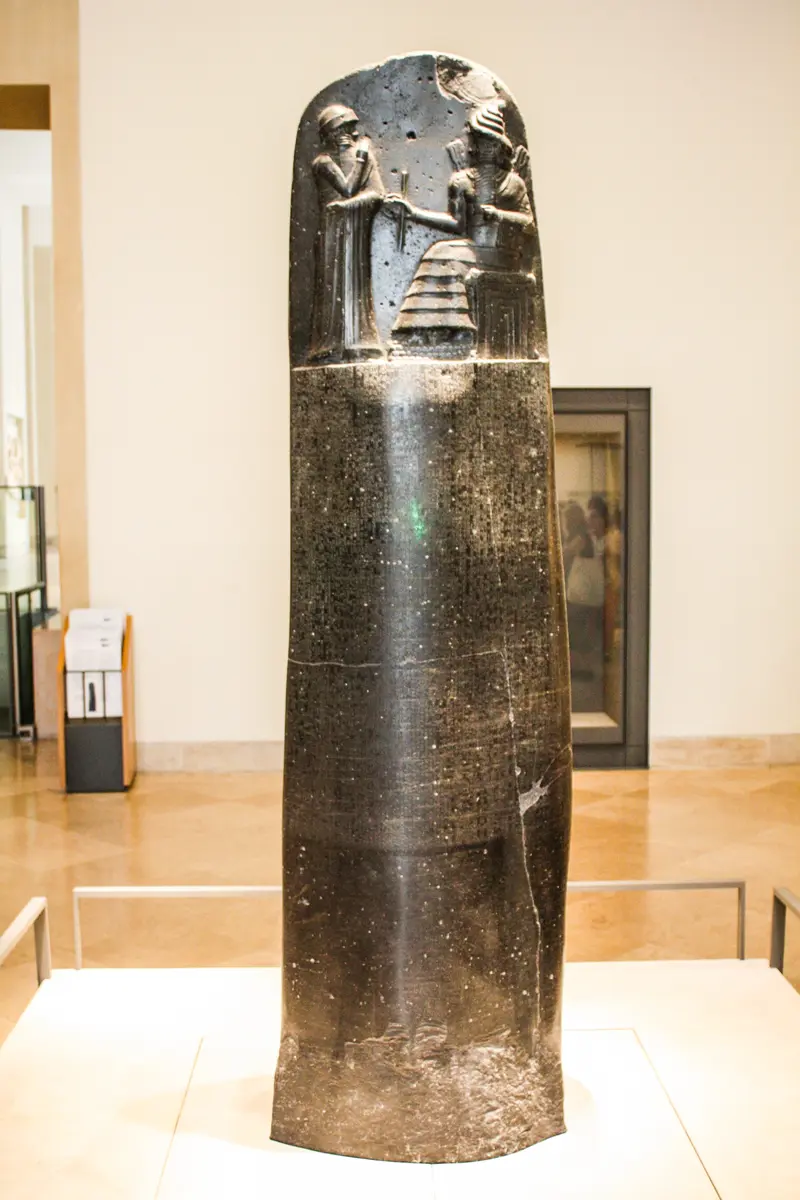
Twice the cities were gathered into one state. Sargon of Akkad, a Semitic-speaking king from the north, conquered them all around 2334 BCE and built the first empire; when it broke up, Ur-Nammu of Ur reunited the land about 2112 BCE, raised the great ziggurat of Ur and issued the oldest known code of law. His dynasty fell to Elamite invaders in 2004, and Sumerian stopped being spoken, though it lived on for two thousand years as the language of religion and learning. Power passed north to Babylon, an unimportant town until Amorite kings made it their seat in 1894 BCE. Its sixth king, Hammurabi, conquered the whole plain in the 1760s and set up the stone pillar of laws that is now in the Louvre; his god Marduk rose to be king of all the gods, and the plain from Baghdad to the Gulf was called Babylonia from then on.
Babylon's political luck ran out quickly. Hittite raiders sacked it in 1595, Kassite kings from the Zagros mountains ruled it for four centuries, and then Assyria, its northern neighbour, grew into the strongest power in the Near East and treated Babylon as a prize to be held, flattered or crushed: Sennacherib razed the city in 689, his son Esarhaddon rebuilt it. Through all this Babylon remained the cultural capital of the region, the home of the creation epic Enuma Elish, of astronomers who tracked the planets and of scribal schools that copied the old Sumerian texts. When Assyria weakened, the Babylonian general Nabopolassar made himself king in 626 and, with the Medes, destroyed Nineveh in 612.
His son Nebuchadnezzar II (605–562 BCE) gave Babylon its last and greatest age. He beat Egypt at Carchemish, took Jerusalem twice and deported its people, the Babylonian exile of the Bible, and rebuilt his capital with walls, the blue-glazed Ishtar Gate now in Berlin, the temple of Marduk and its tower, the Etemenanki, which later ages remembered as the Tower of Babel. The dynasty did not outlive him by a generation. The last king, Nabonidus, spent ten years in the Arabian oasis of Tayma and quarrelled with Marduk's priests; in October 539 the Persian king Cyrus beat his army at Opis and his troops walked into Babylon without a fight. The city lived on under Persians and Greeks, but it was never again the capital of its own state. What Sumer and Babylon left behind is the furniture of civilisation itself: writing, the city, written law, the hour of sixty minutes and the circle of 360 degrees, the earliest epics and the first maps of the world.
What happened
- 3200 BCE
Uruk, on a branch of the Euphrates, is the largest city in the world, about 250 hectares inside its walls, with the temples of Inanna and Anu on high terraces; its scribes press the first written signs into clay to count grain, beer and workers.
Uruk (Warka): the first city, about 250 hectares by 3200 BCE, with the Eanna of Inanna and the White Temple of Anu - 2700 BCE
Gilgamesh, by tradition king of Uruk, builds the city's wall, nearly ten kilometres round; within a few centuries he is the hero of epic poems, the oldest in the world.
Uruk (Warka): the first city, about 250 hectares by 3200 BCE, with the Eanna of Inanna and the White Temple of Anu - 2600 BCE
The kings and queens of Ur are buried in stone tombs with their court: soldiers, musicians and serving women lie in the death pits beside gold helmets, lyres and the inlaid Standard of Ur.
Ur (Tell el-Muqayyar): the royal tombs of about 2600 BCE and Ur-Nammu's ziggurat of about 2100 - 2500 BCE
Ur-Nanshe founds the ruling house of Lagash at Girsu and has himself shown carrying bricks for its temples, the oldest portrait of a named Mesopotamian king.
Girsu (Tello): the capital of the state of Lagash under Ur-Nanshe, Eannatum and Gudea - 2450 BCE
Eannatum of Lagash beats the neighbouring city of Umma in the long war over their border fields and records it on the Stele of the Vultures, the earliest known war memorial.
Girsu (Tello): the capital of the state of Lagash under Ur-Nanshe, Eannatum and Gudea - 2334 BCE
Sargon of Akkad, a Semitic-speaking usurper from Kish, conquers the Sumerian cities one by one and rules them from his new capital Agade: the first empire in history, which lasts about a century and a half.
Sumer about 3000 BCE: the land of the first cities between the Tigris and the Euphrates, as the historical-basemaps dataset draws it (feature 'Ur') - 2300 BCE
Sargon makes his daughter Enheduanna high priestess of the moon god at Ur; the hymns she writes in Sumerian make her the first author whose name we know.
Ur (Tell el-Muqayyar): the royal tombs of about 2600 BCE and Ur-Nammu's ziggurat of about 2100 - 2254 BCE
Sargon's grandson Naram-Sin takes the Akkadian empire to its height, from Anatolia to the Gulf, calls himself king of the four quarters of the world and has himself worshipped as a god.
- 2120 BCE
Gudea, ruler of Lagash while Gutian invaders from the Zagros hold the north and Akkad's empire is gone, rebuilds the temples of Girsu and fills them with statues of himself in hard diorite brought from the Gulf, inscribed with his prayers in Sumerian.
Girsu (Tello): the capital of the state of Lagash under Ur-Nanshe, Eannatum and Gudea - 2112 BCE
Ur-Nammu makes Ur the capital of a reunited Sumer and Akkad, the Third Dynasty of Ur; he raises the great ziggurat to the moon god Nanna and issues the oldest law code yet found.
Ur (Tell el-Muqayyar): the royal tombs of about 2600 BCE and Ur-Nammu's ziggurat of about 2100 - 2100 BCE
Ur-Nammu lays out Enlil's sanctuary at Nippur, the Ekur, in the form it kept for a thousand years, and buries bronze figures of himself carrying the builder's basket in its foundations.
Nippur: the sanctuary of Enlil, the Ekur, that every king of Sumer and Babylon had to honour - 2094 BCE
Shulgi, Ur-Nammu's son, rules for forty-eight years: he standardises weights and measures and the calendar, founds scribal schools and has himself declared a god; his clerks leave tens of thousands of tablets.
Ur (Tell el-Muqayyar): the royal tombs of about 2600 BCE and Ur-Nammu's ziggurat of about 2100 - 2004 BCE
The Elamites sack Ur and carry off its last king, Ibbi-Sin; the Lament for Ur mourns the city, and Sumerian gives way to Akkadian as the spoken language of the land.
Ur (Tell el-Muqayyar): the royal tombs of about 2600 BCE and Ur-Nammu's ziggurat of about 2100 - 1894 BCE
The Amorite chief Sumu-abum makes the small town of Babylon the seat of a kingdom; his dynasty will rule it for three hundred years.
Babylon: Hammurabi's and Nebuchadnezzar's capital, taken by Cyrus in October 539 BCE - 1792 BCE
Hammurabi becomes the sixth king of Babylon; in his first years he takes Uruk and Isin from Rim-Sin of Larsa, then spends twenty years fortifying his cities while the kingdoms of Mari, Ashur, Eshnunna and Larsa watch each other.
Babylon: Hammurabi's and Nebuchadnezzar's capital, taken by Cyrus in October 539 BCE - 1763 BCE
Hammurabi defeats Rim-Sin and takes Larsa and the whole south, then Mari and Eshnunna: for the first time since Ur III the plain is one kingdom, ruled from Babylon, and its god Marduk becomes king of the gods.
Babylon: Hammurabi's and Nebuchadnezzar's capital, taken by Cyrus in October 539 BCE - 1750 BCE
Hammurabi dies after setting up, near the end of his reign, the stone pillar carrying his 282 laws in Marduk's temple; his son Samsu-iluna soon loses the south.
Babylon: Hammurabi's and Nebuchadnezzar's capital, taken by Cyrus in October 539 BCE - 1595 BCE
A Hittite army under Mursili I marches down the Euphrates and sacks Babylon, ending Hammurabi's dynasty; within a generation Kassite kings from the Zagros hold the city and rule Babylonia for four hundred years.
Babylon: Hammurabi's and Nebuchadnezzar's capital, taken by Cyrus in October 539 BCE - 1234 BCE
Tukulti-Ninurta I of Assyria conquers Babylon and carries off its king and the statue of Marduk; Assyria, Babylon's northern neighbour, is now the stronger power.
Babylon: Hammurabi's and Nebuchadnezzar's capital, taken by Cyrus in October 539 BCE - 1158 BCE
The Elamites sack Babylon and end the Kassite dynasty, carrying Hammurabi's law pillar and the kings' boundary stones off to Susa, where French excavators will find them in 1901–02.
Babylon: Hammurabi's and Nebuchadnezzar's capital, taken by Cyrus in October 539 BCE - 1125 BCE
Nebuchadnezzar I of the new dynasty of Isin defeats Elam and brings the statue of Marduk home to Babylon; the creation epic Enuma Elish, which makes Marduk king of the gods, belongs to this age.
Babylon: Hammurabi's and Nebuchadnezzar's capital, taken by Cyrus in October 539 BCE - 729 BCE
Tiglath-pileser III of Assyria captures the Chaldean king of Babylon and takes its throne himself; for a century the Assyrian kings rule Babylon in a personal union, respecting its gods and its learning.
Babylon: Hammurabi's and Nebuchadnezzar's capital, taken by Cyrus in October 539 BCE - 689 BCE
After years of Babylonian revolt, the Assyrian king Sennacherib razes Babylon, diverts the river over its ruins and carries Marduk's statue to Assyria, an act his own people think impious.
Babylon: Hammurabi's and Nebuchadnezzar's capital, taken by Cyrus in October 539 BCE - 680 BCE
Sennacherib's son Esarhaddon reverses his father's work: he lets the Babylonians come home and rebuilds the city and Marduk's temple, recording it on clay prisms buried in the walls.
Babylon: Hammurabi's and Nebuchadnezzar's capital, taken by Cyrus in October 539 BCE - 626 BCE
Nabopolassar, a Babylonian officer who had fought in the Assyrian army, drives out the Assyrian governors and is recognised as king of Babylon: the beginning of the Neo-Babylonian empire.
Babylon: Hammurabi's and Nebuchadnezzar's capital, taken by Cyrus in October 539 BCE- 612 BCE
Nabopolassar and the Median king Cyaxares take Nineveh after a three-month siege and burn it; the Assyrian empire is finished within three years, and Babylon is the capital of the Near East.
Nineveh: the Assyrian capital sacked by Nabopolassar and the Medes in July 612 BCE- 605 BCE
The crown prince Nebuchadnezzar, fresh from destroying the Egyptian army at Carchemish, hurries home on his father's death and takes the throne on 1 Ululu; he will reign forty-three years.
Babylon: Hammurabi's and Nebuchadnezzar's capital, taken by Cyrus in October 539 BCE- 597 BCE
Nebuchadnezzar's army takes Jerusalem, deposes King Jehoiachin and carries him and the city's leading men to Babylon, where the Babylonian records list their rations.
Jerusalem: taken by Nebuchadnezzar II in 597 and destroyed in 587 BCE, the start of the Babylonian exile- 587 BCE
After a long siege Nebuchadnezzar destroys Jerusalem and Solomon's temple and deports the people of Judah: the Babylonian exile of the Bible begins.
Jerusalem: taken by Nebuchadnezzar II in 597 and destroyed in 587 BCE, the start of the Babylonian exile - 575 BCE
Nebuchadnezzar completes the Ishtar Gate and the Processional Way in blue glazed brick, the crown of his rebuilding of Babylon: double walls, a new palace, Marduk's temple Esagila and its tower Etemenanki.
Babylon: Hammurabi's and Nebuchadnezzar's capital, taken by Cyrus in October 539 BCE - 562 BCE
Nebuchadnezzar II dies after forty-three years; his son Amel-Marduk is murdered within two years and the throne passes to his son-in-law Neriglissar.
Babylon: Hammurabi's and Nebuchadnezzar's capital, taken by Cyrus in October 539 BCE - 556 BCE
A coup led by the nobleman Belshazzar puts his father Nabonidus, an elderly scholar devoted to the moon god Sin, on the throne; he soon quarrels with the priests of Marduk.
Babylon: Hammurabi's and Nebuchadnezzar's capital, taken by Cyrus in October 539 BCE - 549 BCE
Nabonidus leaves for the oasis of Tayma in Arabia and stays ten years, with Belshazzar governing in Babylon; year after year the New Year festival of Marduk cannot be held without the king.
- 539 BCE
Cyrus of Persia defeats the Babylonian army at Opis on the Tigris and massacres the people; Sippar surrenders without a fight, Nabonidus flees, and the next day the Persian general Gobryas leads Cyrus's troops into Babylon unopposed.
Sippar (Tell Abu Habba): the city of the sun god Shamash, where the Babylonian map of the world was found and where Cyrus's army arrived on 12 October 539Cyrus enters Babylon in peace, greeted as a liberator; Nabonidus is a prisoner, and Babylon, the capital of the Near East, becomes a province of the Persian empire.
Babylon: Hammurabi's and Nebuchadnezzar's capital, taken by Cyrus in October 539 BCE