Writing is invented in Sumer (Iraq)
“About 3200 BCE, temple accountants in Uruk, in southern Iraq, began drawing signs on clay to count grain, beer and animals: the oldest known writing, which grew into cuneiform.”
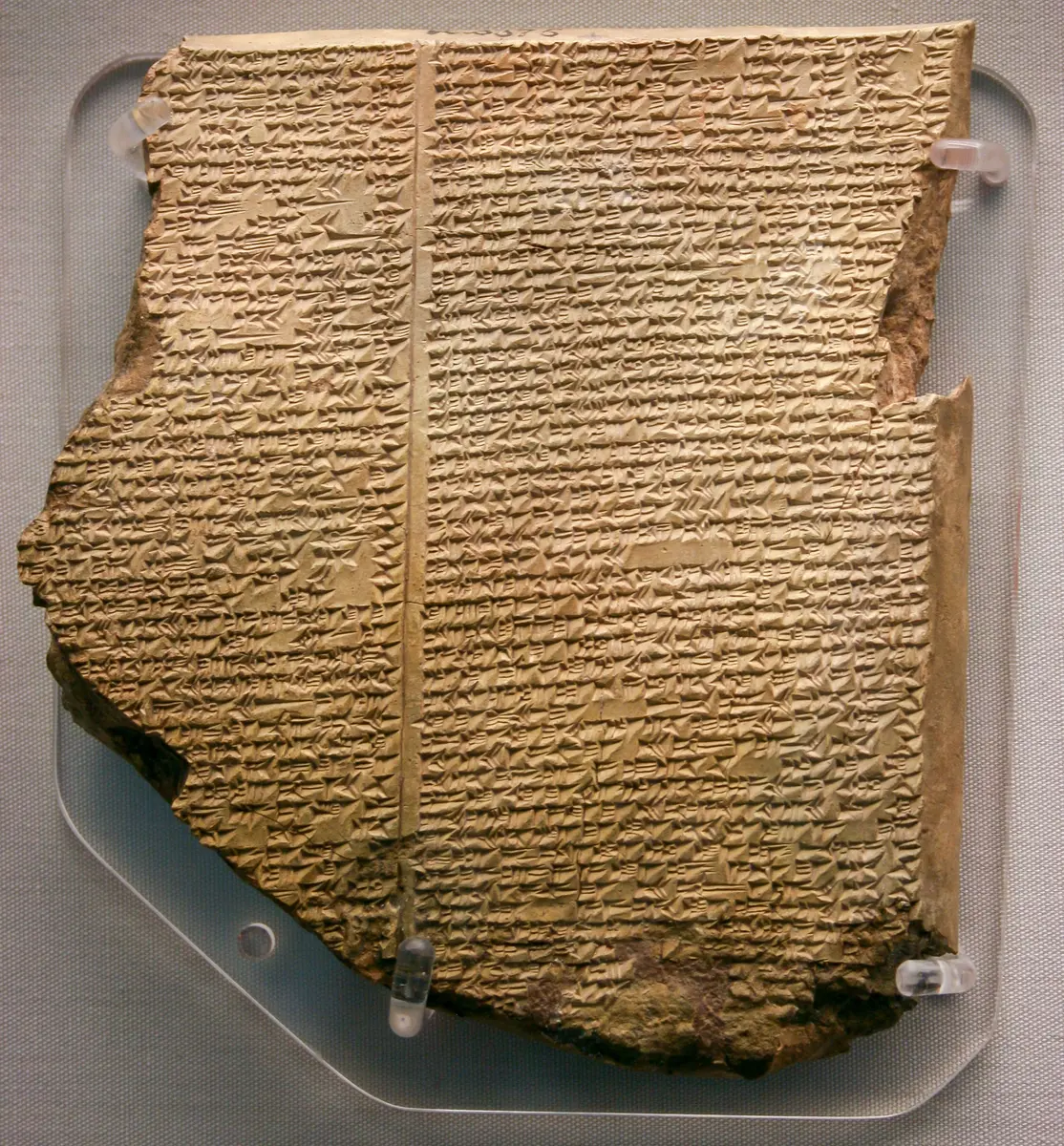
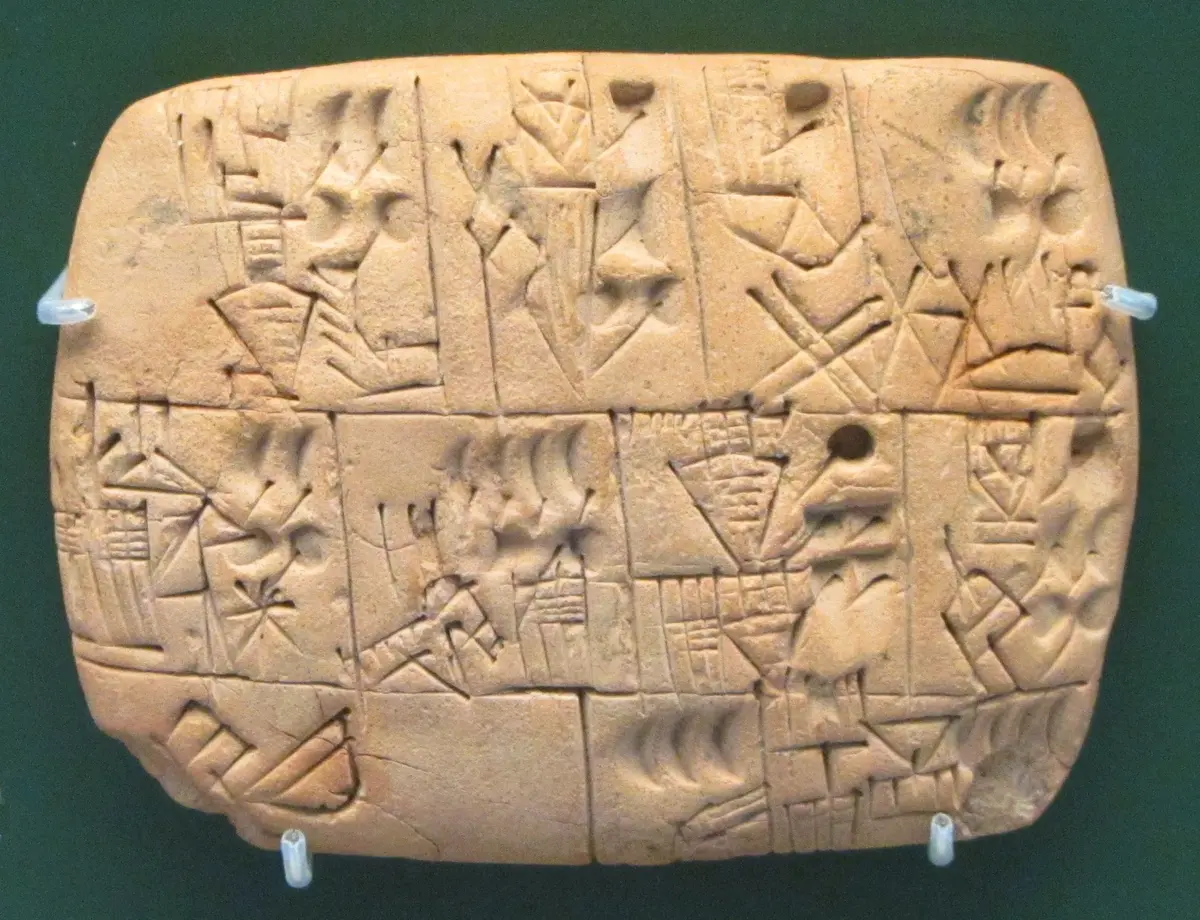
Writing began in southern Iraq in the second half of the fourth millennium BCE, in the city of Uruk. Uruk had become the largest settlement in the world: about 250 hectares, with perhaps 20,000 to 50,000 people, its life run from the great temple estates of its sacred precinct, the Eanna of the goddess Inanna. Those estates handed out grain, beer, animals and cloth to thousands of workers and needed to know who had received what. Some time between about 3350 and 3200 BCE (3200 is the conventional date) their officials began to draw small pictures of goods, people and offices on pads of wet clay, next to numbers pressed in with a round stylus. These tablets, called proto-cuneiform, are the oldest writing known. German archaeologists dug about five thousand of them out of the rubbish fills of the Eanna between 1928 and 1976; about six thousand are known today, and nine in ten of them are accounts.
Writing did not come from nowhere. For thousands of years people in the Middle East had kept count with small clay tokens. By about 3500 BCE accountants at Uruk and at Susa in western Iran sealed tokens inside hollow clay balls and rolled their seals over the outside, sometimes pressing the tokens into the surface first; soon they flattened the clay into tablets that carried only numbers and seal impressions. The archaeologist Denise Schmandt-Besserat argued that the signs of writing grew straight out of the shapes of the tokens. Other specialists accept that tokens, seals and number tablets came first, but doubt that individual signs can be traced to individual tokens. What Uruk added was a whole system: about nine hundred signs, at least five ways of counting (one of them in sixties, the root of our sixty minutes and 360 degrees), and lists of words for training scribes. The oldest, the Standard Professions List of about 140 officials and trades, was copied with little change for nearly a thousand years.
In the earliest phase, which scholars call Uruk IV, the signs were drawn as curved pictures. In the next, Uruk III, about 3100 BCE, they became simpler and were pressed in with a reed cut to a triangular point, the first step towards the wedges that later gave the script its name, cuneiform, from the Latin for 'wedge'. Tablets of this kind soon appear at Jemdet Nasr and other towns of central Iraq, and at Susa scribes made a script of their own, proto-Elamite. These early texts hold no stories, laws or letters, and a sign was only rarely used for its sound alone, as in a rebus; writing that follows the spoken language closely came only after about 2600 BCE. Egypt began to write at almost the same moment: bone and ivory tags with signs from a royal tomb at Abydos are dated between about 3320 and 3200 BCE. Whether Sumer was really first is therefore open, and many scholars now count Egypt's writing as a separate invention, while others still see the idea travelling from Mesopotamia.
Writing is the line between prehistory and history: from now on people could leave records in their own words. Cuneiform was used for more than three thousand years, until the first century CE, and was adapted to languages that have nothing to do with Sumerian, among them Akkadian, Elamite and Hittite. Because clay survives where papyrus and wood rot, Mesopotamia is one of the best-recorded civilizations of the ancient world. The Sumerians later told their own story of how it began: in a poem, Enmerkar, a legendary king of Uruk, presses his words into clay because his messenger cannot remember a long message. In fact writing began as bookkeeping, and the much simpler alphabet came almost two thousand years later.
What happened
- 3500 BCE
About this time accountants at Uruk and at Susa begin to seal small clay tokens inside hollow clay balls and roll their seals over the outside; some press the tokens into the surface first, so the contents can be checked without breaking the ball.
Susa, south-west Iran: clay envelopes, number tablets and, from about 3100 BCE, its own proto-Elamite script - 3400 BCE
Flat tablets marked only with numbers and seal impressions take the place of the envelopes at Susa, Uruk and other towns of the Uruk world: records of quantities, but not yet of words.
Susa, south-west Iran: clay envelopes, number tablets and, from about 3100 BCE, its own proto-Elamite script - 3350 BCE
About this time, in the Eanna, the temple precinct of the goddess Inanna at Uruk, officials start drawing signs for goods, people and offices beside the numbers: tags for baskets and jars and short accounts, the first proto-cuneiform tablets (the phase scholars call Uruk IV).
The Eanna, Uruk: the temple precinct of the goddess Inanna, where the first tablets were written and later thrown away - 3320 BCE
In Egypt a ruler is buried at Abydos in tomb U-j with nearly two hundred small bone and ivory tags carrying numbers and signs, the oldest Egyptian writing known; scholars still debate whether Egypt invented writing by itself.
Umm el-Qa'ab, Abydos, Egypt: tomb U-j, where the oldest Egyptian writing was found, about as old as Uruk's - 3200 BCE
A scribe at Uruk copies the Standard Professions List, about 140 titles of officials and trades beginning with the city's highest office: writing is taught from word lists from the start, and this one will be copied for nearly a thousand years.
The Eanna, Uruk: the temple precinct of the goddess Inanna, where the first tablets were written and later thrown away - 3100 BCE
In the next phase, Uruk III, the signs are simplified and pressed with a reed cut to a triangular point, the start of the wedge shapes of cuneiform; accounts grow longer, such as Kushim's record of some 135,000 litres of barley over 37 months.
Uruk (Warka): the city where the oldest writing was found, the largest settlement in the world about 3300 BCEA scribe records daily rations of beer for workers with a jar for beer and a head eating from a bowl for 'ration': the economy of Uruk paid its people in grain, bread and beer, and writing kept count.
Uruk (Warka): the city where the oldest writing was found, the largest settlement in the world about 3300 BCEWriting spreads across Babylonia: tablets of the Uruk III kind are written at Jemdet Nasr, Tell Uqair and Khafajah, among them a calculation of the areas of five fields from their lengths and widths.
Jemdet Nasr: a town in central Iraq where tablets of the Uruk III kind show writing spreading, about 3100 BCEAt Susa, scribes create a script of their own, proto-Elamite, possibly inspired by Uruk's; it has still not been fully deciphered.
Susa, south-west Iran: clay envelopes, number tablets and, from about 3100 BCE, its own proto-Elamite script