The Phoenician alphabet
“Around 1050 BCE the Phoenician cities fixed 22 consonant letters; their traders spread them, and Greek, Latin, Hebrew, Arabic and most of the world's alphabets descend from them.”
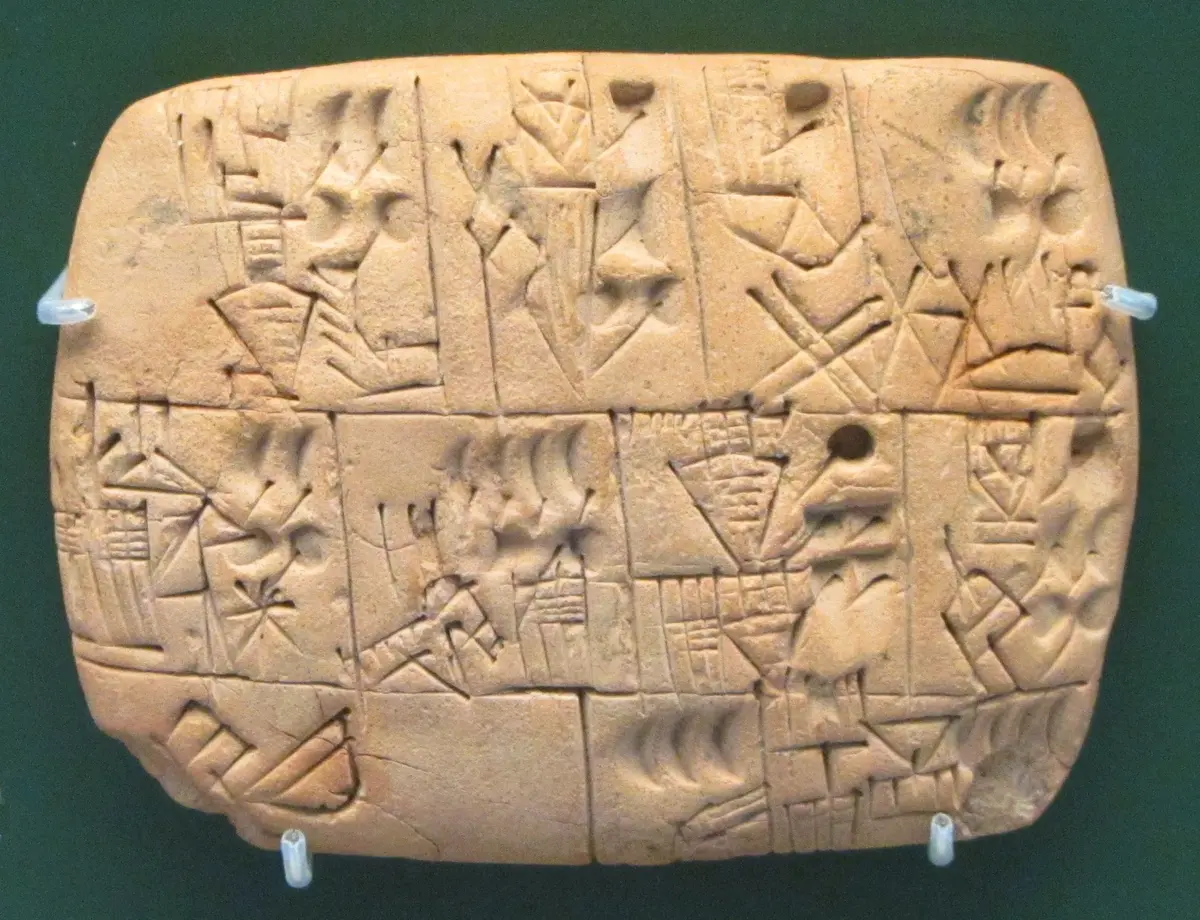
The Phoenician alphabet is the set of 22 letters that the trading cities of the Levant coast, Byblos, Tyre and Sidon in today's Lebanon, had settled on by about 1050 BCE. Each letter stood for one consonant, vowels were not written, and lines ran from right to left. Egyptian hieroglyphs and Mesopotamian cuneiform needed hundreds of signs; two dozen letters were far easier to learn, and Phoenician merchants carried them wherever they traded. Almost every alphabet in use today, from Greek, Latin and Cyrillic to Hebrew and Arabic, descends from it.
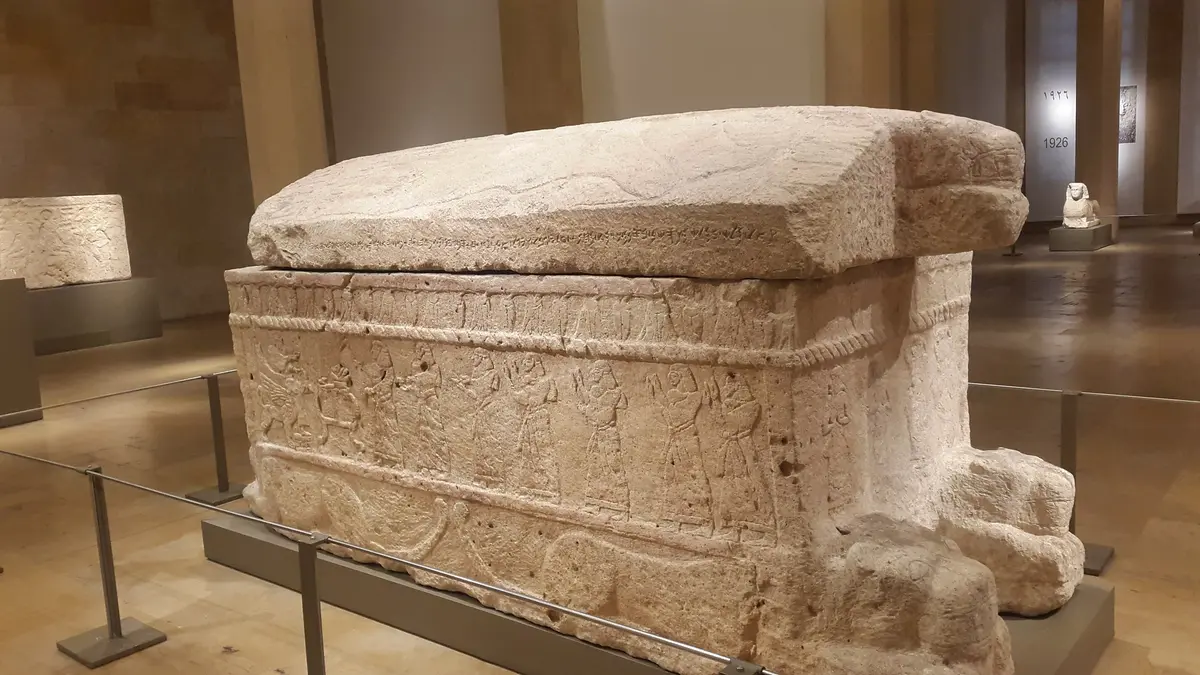
The idea itself was older. Early in the second millennium BCE (the dates are debated), Semitic-speaking workers in Egypt's world, at the turquoise mines of Serabit el-Khadim in the Sinai and at Wadi el-Hol near Thebes, borrowed small pictures from hieroglyphs and used each one for the first sound of its name in their own language: a hand, kaph, stood for k. Over the following centuries these letters spread through Canaan and lost their pictures, and at Ugarit on the Syrian coast scribes even wrote an alphabet of 30 signs in cuneiform wedges. Around the turn of the first millennium, in the Phoenician cities, the shapes and the direction of writing became fixed. The oldest long text in the finished script is the epitaph on the stone coffin of King Ahiram of Byblos, of about 1000 BCE; in the 10th century Elibaal, king of Byblos, had his own dedication cut into a statue of the Egyptian pharaoh Osorkon I.
Neighbours took the 22 letters over without adding any. The Gezer calendar, a list of the farming months, and the victory stone of King Mesha of Moab (about 840 BCE) are written in close sister scripts, the ancestors of Old Hebrew; the Arameans' version became the parent of the later Hebrew square script and, through further steps, an ancestor of Arabic. Around 830 BCE Kulamuwa, king of Sam'al in what is now southern Turkey, wrote his royal inscription in Phoenician itself, which had become a common written language of the region. Pressed for tribute by Assyria, whose kings received it in ships from Tyre and Sidon, the Phoenicians traded further west: Tyre founded Carthage, by tradition in 814 BCE, and the Nora Stone in Sardinia is the oldest Phoenician inscription found outside the homeland.
In the 8th century BCE the Greeks learned the letters. Herodotus says that the Phoenicians brought them, that the Greeks changed their shapes a little and still called them 'Phoenician letters'. Greek kept the order and most names, alpha from aleph, beta from bet, but used some of the signs for vowels, so that vowels were written as well as consonants. A line of verse scratched on a wine jug from Athens (about 740 BCE) and three lines on a cup from Pithekoussai in the Bay of Naples (about 725) are among the oldest Greek writing. Through the Greek alphabet the letters reached the Etruscans and the Romans in Italy, and so the Latin alphabet of this page.
The script itself lived on in Phoenicia until about the 1st century BCE and, as Punic, in Carthage's world until about the 3rd century CE. Then it was forgotten, until in 1758 the French scholar Jean-Jacques Barthélemy read it again with the help of two marble pillars from Malta inscribed in Phoenician and Greek. Through Aramaic its descendants also travelled east: scholars trace India's Devanagari and Bengali back to the same West Semitic alphabet, though some argue for an Indian origin of their ancestor, Brahmi. Few inventions have reached so far: outside China and Japan, most of the world's major languages are written in letters descended from the ones the Phoenicians fixed three thousand years ago.
What happened
- 1050 BCE
By about now the letters have settled in the Phoenician cities: 22 signs, one for each consonant of the Phoenician language, written from right to left in fixed shapes. Hebrew and Aramaic speakers will take over the same 22 signs without adding any.
Byblos (Gebal): the royal cemetery with Ahiram's coffin, and the 10th-century inscriptions of its kings - 1000 BCE
At Byblos the epitaph of King Ahiram is cut along the lid of his stone coffin, the oldest long text in the finished Phoenician alphabet (dated to about 1000 BCE or the 11th century; some argue for an earlier date).
Byblos (Gebal): the royal cemetery with Ahiram's coffin, and the 10th-century inscriptions of its kings - 950 BCE
At Gezer someone scratches the months of the farming year on a small limestone tablet in an early Canaanite form of the alphabet, the southern sister of Phoenician (usually dated to the 10th century BCE).
Gezer: where the calendar tablet was found - 920 BCE
Elibaal, king of Byblos and son of Yehimilk, has a Phoenician dedication to the Lady of Byblos cut into a statue of the pharaoh Osorkon I (reigned 924–889 BCE), one of a series of 10th-century royal inscriptions at Byblos.
Byblos (Gebal): the royal cemetery with Ahiram's coffin, and the 10th-century inscriptions of its kings - 859 BCE
Shalmaneser III of Assyria reaches the Mediterranean and receives 'the tribute of the ships of the men of Tyre and Sidon', a scene later hammered into the bronze bands of his gates at Balawat. Assyria's demands push the Phoenicians to trade ever further west.
Tyre: the island city that sent tribute to Assyria by ship and founded Carthage - 840 BCE
King Mesha of Moab sets up a black basalt stele at Dhiban with 34 lines in a Phoenician-type alphabet, telling how he took back Moabite lands from Israel.
Dhiban (Dibon), Jordan: where King Mesha's stele was found in 1868 - 830 BCE
Kulamuwa, king of Sam'al in southern Turkey, carves his royal inscription in the Phoenician language and alphabet, by now a common written language among the kingdoms of the eastern Mediterranean.
Zincirli Höyük (Sam'al), Turkey: Kulamuwa's inscription in Phoenician - 814 BCE
Settlers from Tyre found Carthage, Kart hadašt, the 'new city', in North Africa: the traditional date, from the Greek historian Timaeus; radiocarbon puts the oldest finds in the last quarter of the 9th century.
Carthage: Tyre's 'new city' in North Africa, home of the Punic script - 800 BCE
At Nora in Sardinia a Phoenician inscription is cut into a stone block, the oldest Phoenician text yet found outside Phoenicia (of the 9th or 8th century BCE).
Nora, Sardinia: the Nora Stone, the oldest Phoenician inscription found outside the homeland - 740 BCE
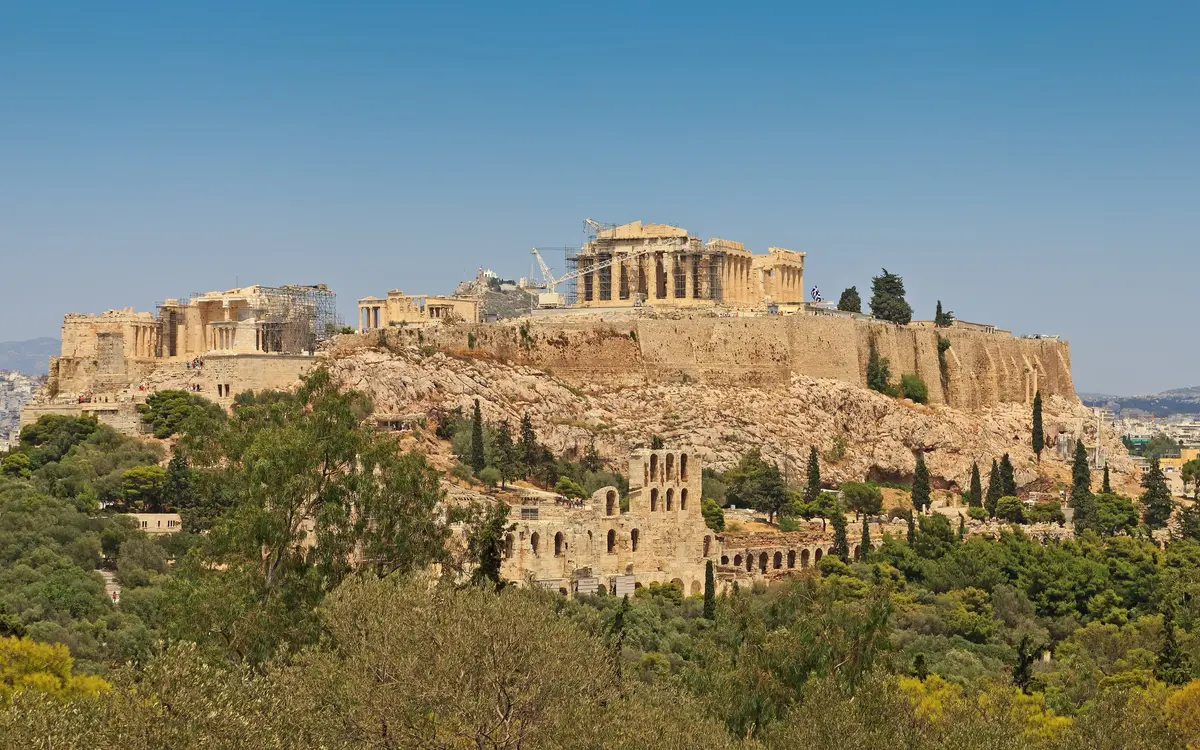
In Athens a line of verse is scratched on a wine jug later buried in the Dipylon cemetery, one of the oldest pieces of writing in the new Greek alphabet, which uses some Phoenician letters for vowels.
The Kerameikos by the Dipylon gate, Athens: the wine jug with one of the oldest Greek alphabetic inscriptions - 725 BCE
At Pithekoussai on Ischia, the Euboean trading post where Phoenicians also lived and wrote, a cup inscribed with three lines of Greek verse alluding to Nestor's cup in the Iliad is buried in a grave. Through the Greeks the alphabet will reach the Etruscans and the Romans.
Pithekoussai (Ischia): the Euboean trading post where Nestor's Cup was found