Homer's Iliad and Odyssey
“Two Greek epics credited to a poet called Homer and probably composed in the 8th or 7th century BCE: the Iliad, on the anger of Achilles at Troy, and the Odyssey, on Odysseus's long voyage home.”
The Iliad and the Odyssey are two long Greek poems, the oldest works of European literature, both written in the six-beat line called the hexameter. The Iliad, 15,693 lines, tells one episode of the Greek siege of Troy: the anger of Achilles, the best fighter in the Greek army, who quarrels with King Agamemnon and refuses to fight until the Trojan prince Hector kills his friend Patroclus. Achilles then kills Hector and drags the body behind his chariot, and in the last book he gives it back to Hector's old father, King Priam. The Odyssey, 12,109 lines, follows Odysseus, king of the small island of Ithaca, through ten years of wandering after the war, past the Cyclops, the witch Circe and the Sirens, to his return home in disguise and his revenge on the suitors who have taken over his house and are pressing his wife Penelope to marry again. Each poem was later divided into 24 books.
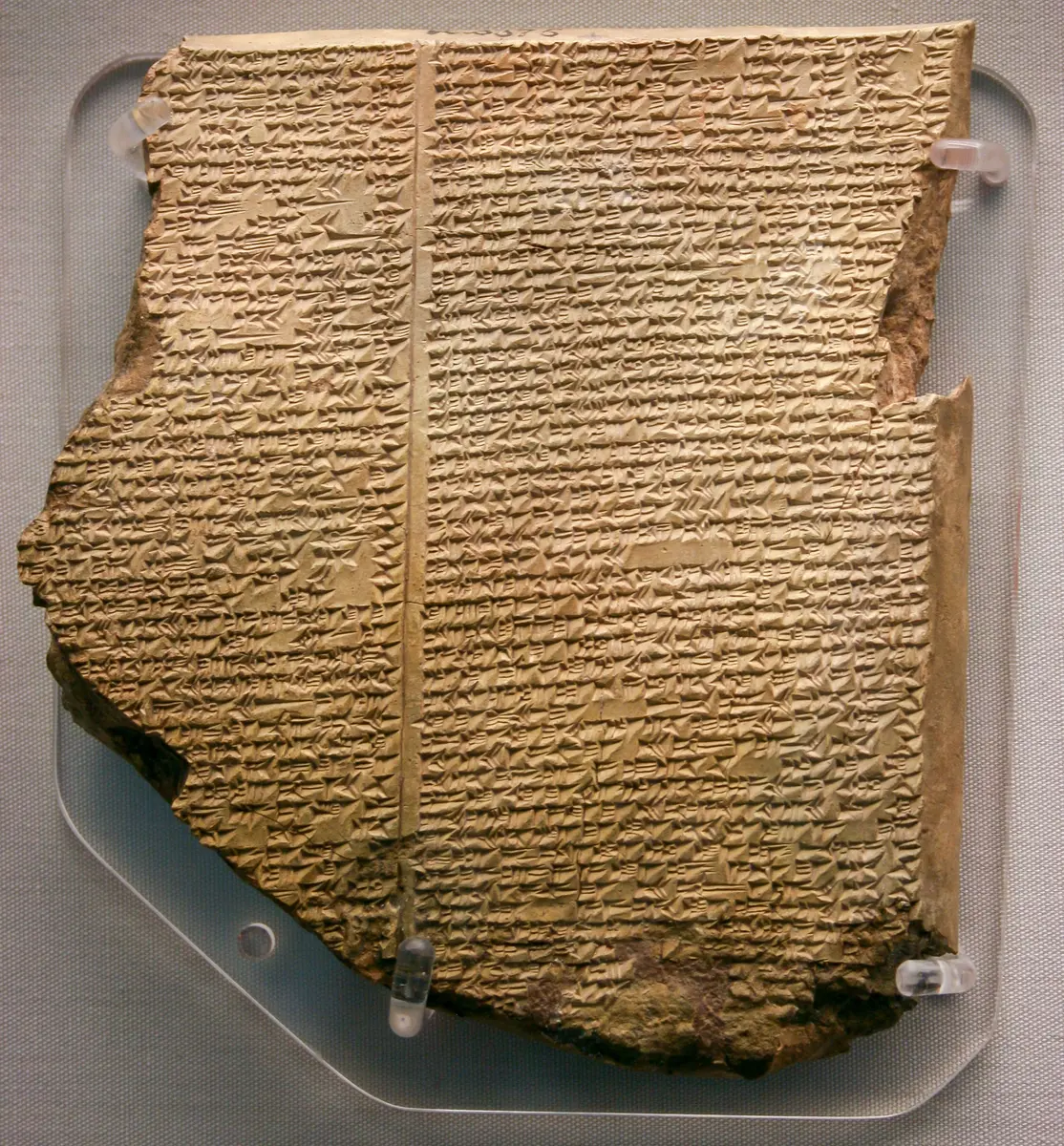
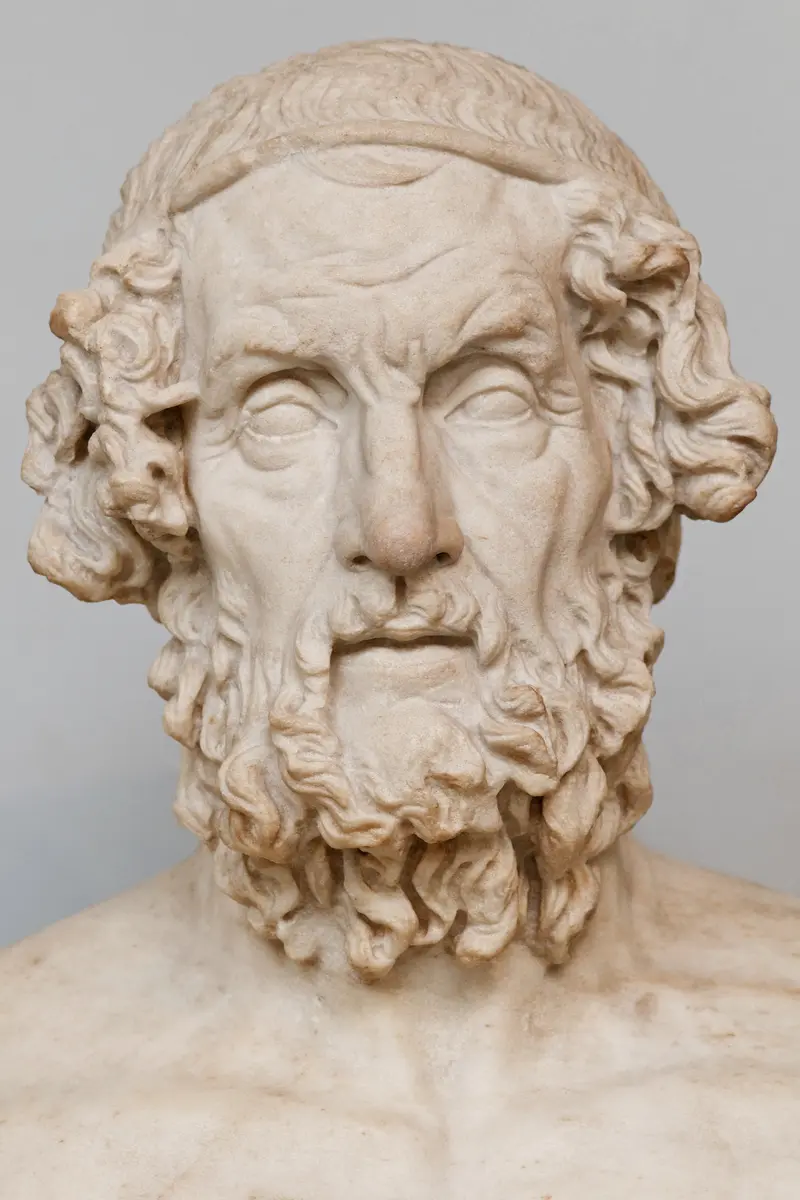
The Greeks called the poet Homer and pictured him as old and blind. Several cities claimed him, Smyrna and Chios above all, and on Chios a guild of reciters, the Homeridae, said they were his descendants; nothing more is known of him, and whether one poet made both poems has been argued since antiquity. The poems grew out of a long tradition of sung poetry: in the 1920s and 1930s the American scholar Milman Parry showed, by comparing them with the oral epic singers of Yugoslavia, that their repeated phrases are the working tools of poets who composed as they performed. What 'Homer' added was size and design, poems far too long for one evening, built to a plan. Their language and the things they mention point to the 8th or early 7th century BCE: Britannica's account, by the Cambridge scholar G. S. Kirk, puts the Iliad near the middle of the 8th century and the Odyssey near its end, others date both later, and Herodotus, in the 5th century, thought Homer had lived no more than 400 years before his own time. The Greek alphabet, adapted from the Phoenician, was coming into use in these same decades, and some of the oldest inscriptions, from about 730 BCE, are already in Homer's metre; whether the poet wrote, dictated or only sang is not known.
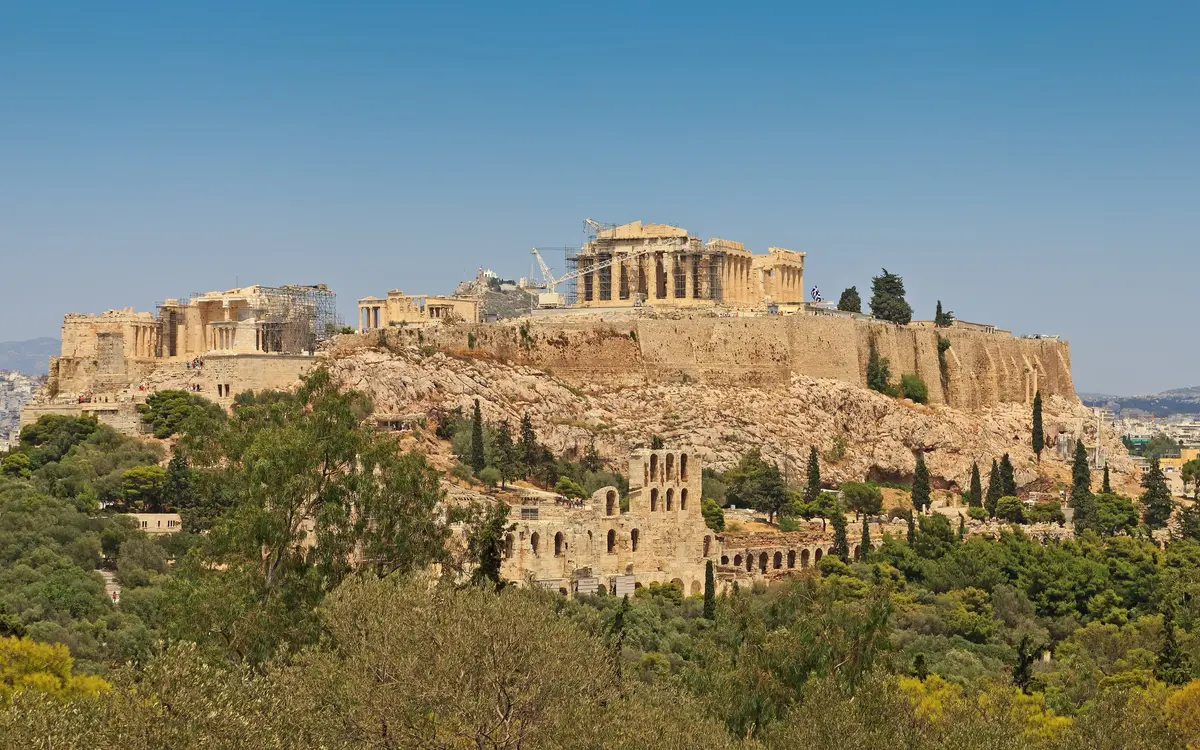
The story is set in a heroic age long before, at the end of the Bronze Age, but it mixes old memories with the poet's own world: Phoenicians trade across the sea, and soldiers sometimes fight in close ranks. The poems spread fast. Toward the end of the 8th century a cup buried on Ischia, off Naples, carried a joke in Homer's metre about 'Nestor's cup', cults of the Homeric heroes sprang up, and scenes from the epics began to appear on pots: by the 670s and 660s potters were showing the blinding of the Cyclops and the wooden horse. Professional reciters, the rhapsodes, performed the poems at festivals, and in the 6th century Athens made a complete recitation, man after man in relay, part of its great festival, the Panathenaia, which may have fixed the first standard text. Scholars at Alexandria, above all Aristarchus in the 2nd century BCE, edited it; Byzantine scribes copied it with their notes, as in the 10th-century manuscript called the Venetus A; Greek scholars brought it to Renaissance Italy, and the first printed edition appeared in Florence in 1488.
For the Greeks Homer was the basis of education. They learned the poems by heart, read them as a guide to the gods, to conduct and even to practical life, and saw them as a bond between all Greeks: Herodotus said that Homer and Hesiod had given the Greeks their gods, and Alexander the Great reportedly slept with a copy of the Iliad under his pillow. Virgil's Aeneid followed their pattern in Latin, and through Rome, Byzantium and Renaissance Italy they became the founding poems of Western literature, translated again and again. Modern scholarship began with them too: Friedrich August Wolf's Prolegomena of 1795 opened the 'Homeric question' of who made them and how, and in 1871 Heinrich Schliemann, persuaded by Frank Calvert that the mound of Hisarlik in north-west Turkey was Troy, began to dig there. The anger of Achilles, the wooden horse and the long way home are still retold, and the poems' subjects, rage and grief, war and coming home, have never gone out of date.
What happened
- 750 BCE
About now, on the most widely held modern view, the Iliad takes shape in the Greek cities of Ionia on the coast of Asia Minor: a poem of monumental length, built from a long tradition of shorter heroic songs.
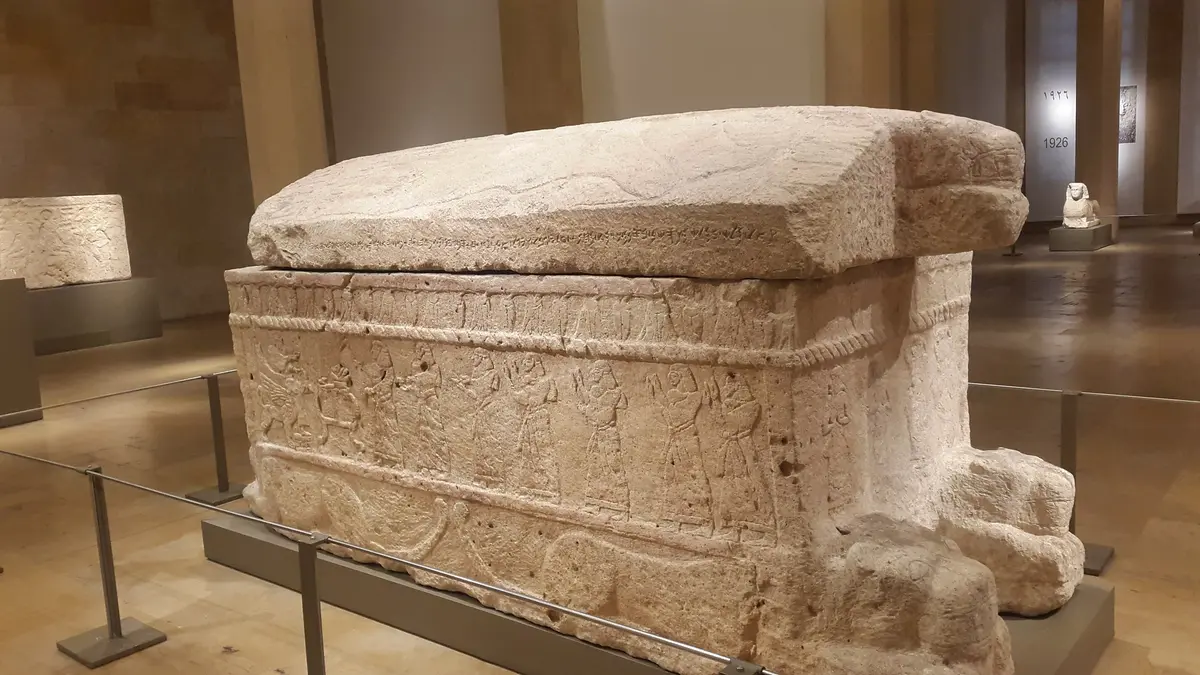
Old Smyrna (Bayrakli, Izmir): with Chios, the city that claimed Homer most strongly in antiquity - 730 BCE
The oldest Greek alphabetic inscriptions to survive date from about now, and a few already contain lines in Homer's metre; if the Iliad was made after 750, its poet could have used writing, though whether he did is still argued.
- 720 BCE
A drinking cup from the eastern Aegean is buried in a cremation grave at Pithekoussai, the Greek trading post on Ischia. Scratched on it, partly in hexameters, is a boast that it is 'Nestor's cup', a joke on the great cup of the old king in the Iliad.
Pithekoussai (Lacco Ameno, Ischia): the Greek trading post where Nestor's cup was buried, with lines in Homer's metre, about 720 BCE - 710 BCE
Toward the end of the century cults of the Homeric heroes spring up in Greece, and scenes from the epics begin to appear on painted pots.
- 700 BCE
About now the Odyssey takes shape, perhaps modelled on the Iliad as a deliberate companion; ancient and modern readers have wondered whether it is by the same poet.
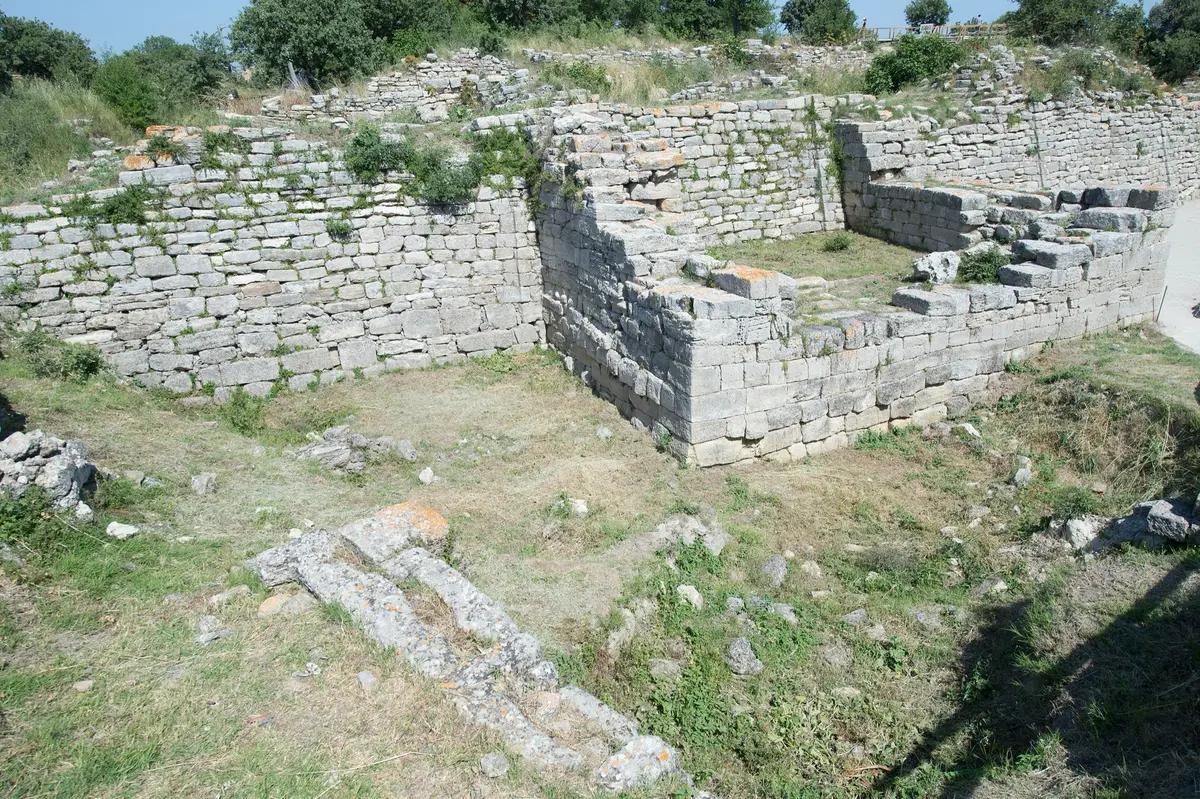
Ithaca: the island kingdom of Odysseus, to which the Odyssey brings him homeThe mound of Troy, empty since about 950 BCE, is occupied again as a sanctuary, as it would remain until about 330 BCE.
Troy (Hisarlik): the city besieged in the Iliad, a ruin when the poems were made, a sanctuary again from about 700 BCEHesiod, after Homer the oldest Greek poet, composes his poems in the same metre and poetic language not long after this date; the Greeks would always name the two together.
- 670 BCE
A potter working on the Cyclades decorates a great storage jar, later found on Mykonos, with the Trojan horse and the sack of Troy, one of the earliest pictures of the horse.
Mykonos: where the great storage jar with the Trojan horse was found, now in the island's Archaeological Museum - 660 BCE
In Athens the Polyphemos Painter decorates a huge funerary jar with Odysseus and his men blinding the Cyclops; it is later used at Eleusis as the coffin of a boy of about ten.
Eleusis: where the amphora with the blinding of the Cyclops was found, now in its Archaeological Museum - 650 BCE
By the middle of the century the first quotations from Homer appear: poets such as Archilochus, Callinus and Tyrtaeus borrow his phrases and his metre for poems of their own.