The Late Bronze Age collapse
“Around 1200 BCE the Hittite empire, Ugarit and the Mycenaean palaces fall within a few decades and Egypt barely beats off the Sea Peoples in 1177 BCE: the first dark age, out of which the Iron Age Mediterranean grew.”
Around 1200 BCE the connected world of the eastern Mediterranean came apart within about two generations. For three centuries the great kings of Egypt, the Hittites in Anatolia, Babylon, Assyria and the smaller kingdoms between them had written to each other as 'brothers', married each other's daughters and traded copper from Cyprus, tin from the east, grain, oil, ivory and glass by ship along the coasts: the cargo of the Uluburun wreck off Turkey, sunk about 1320 BCE, carried copper and tin ingots in the ten-to-one ratio that makes bronze, with glass, ivory and goods from a dozen lands. The palaces of Mycenaean Greece, with their scribes writing Greek in Linear B, belonged to the same world. Then, in a few decades, the Hittite capital Hattusa was abandoned and burned, the port of Ugarit on the Syrian coast was destroyed and never resettled, the palaces of Mycenae, Tiryns and Pylos burned to the ground and were never rebuilt, and Egypt fought for its life in the Nile Delta.
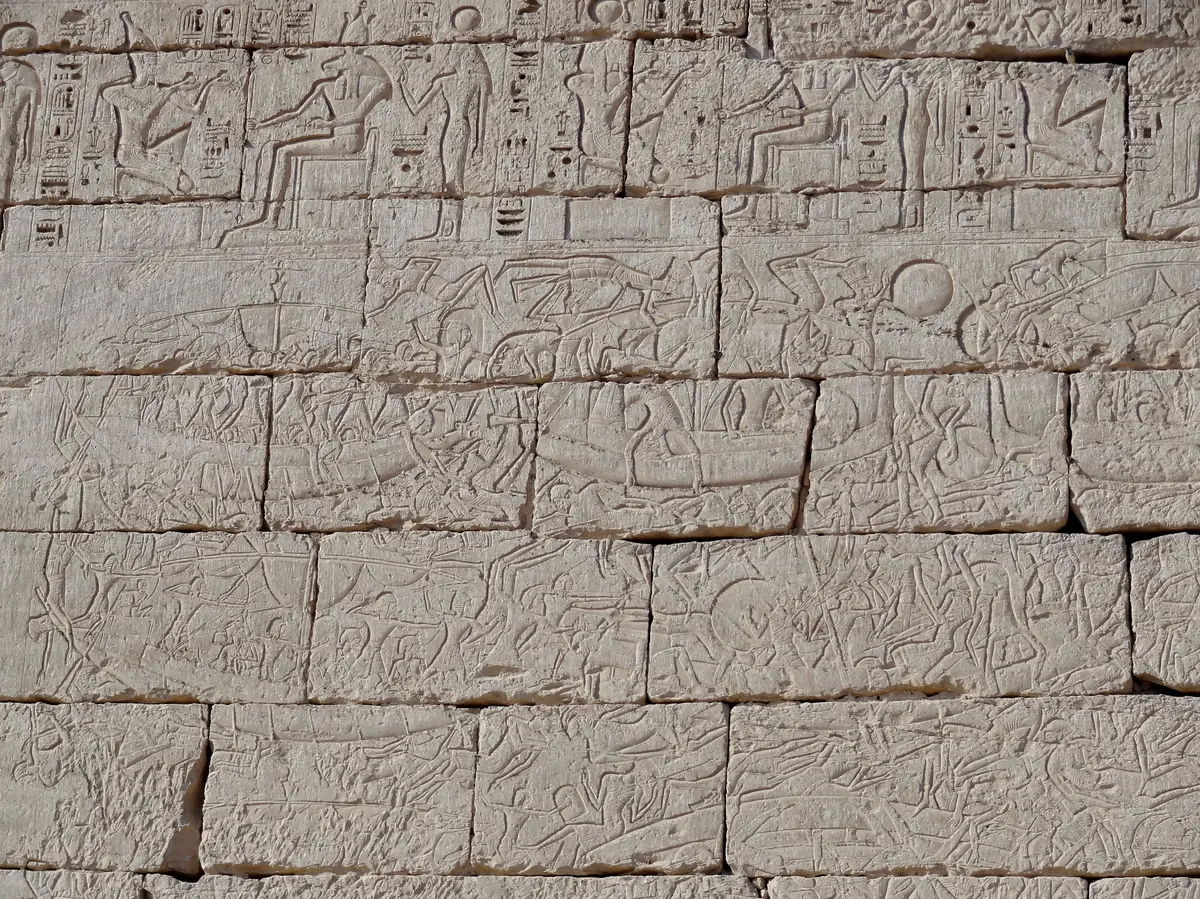
The one side that recorded the crisis is Egypt. In the fifth year of Merneptah, about 1209 BCE, Libyans attacked the western Delta with allies the Egyptians called peoples 'of the sea'. A generation later the groups the texts name Peleset, Tjeker, Shekelesh, Denyen and Weshesh came by land down the coast of Syria and Palestine and by sea into the Delta. In his eighth year, about 1177 BCE, Ramesses III stopped the land army in southern Palestine and trapped the ships in the river mouths; he had the sea battle carved on the wall of his temple at Medinet Habu, the only picture of a naval battle from the ancient Near East, and it is from these reliefs that the 'Sea Peoples' got their modern name in 1855. Egypt survived, but it lost its hold on Syria and Palestine, where the Peleset settled on the coast between Gaza and Mount Carmel and became the Philistines of the Bible. At home the tomb-builders of Deir el-Medina went on strike for their rations in year 29, the first recorded strike in history, and Ramesses III was murdered in a palace plot.
Why so many states fell at once is still argued. The Sea Peoples were long blamed for everything; most historians now think they were as much a result as a cause, refugees and raiders set moving by the same troubles. The letters found at Ugarit show a city whose troops were away serving the Hittites while pirates burned its coast; the last tablets at Pylos list watchers posted along the shore and rowers called up, and bronze collected to make arrowheads. There is evidence of a long drought and of earthquakes, and a trading system in which every palace depended on every other could not stand the loss of several links at once. Eric Cline's book 1177 B.C. calls it a 'perfect storm'. Even inland Babylon was not spared: there the Kassite dynasty ended about 1155 BCE when the Elamite king Shutruk-Nahhunte sacked the city and carried its monuments, among them the stele of Hammurabi's law code, off to Susa.
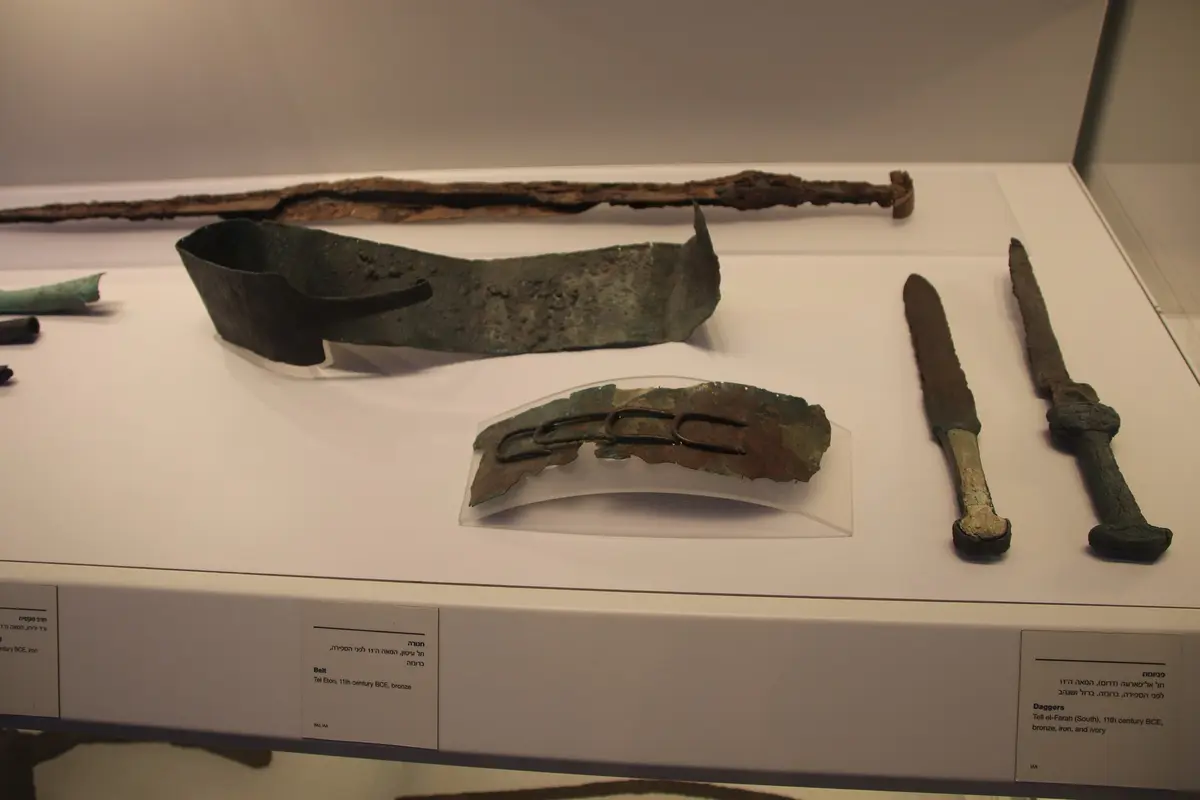
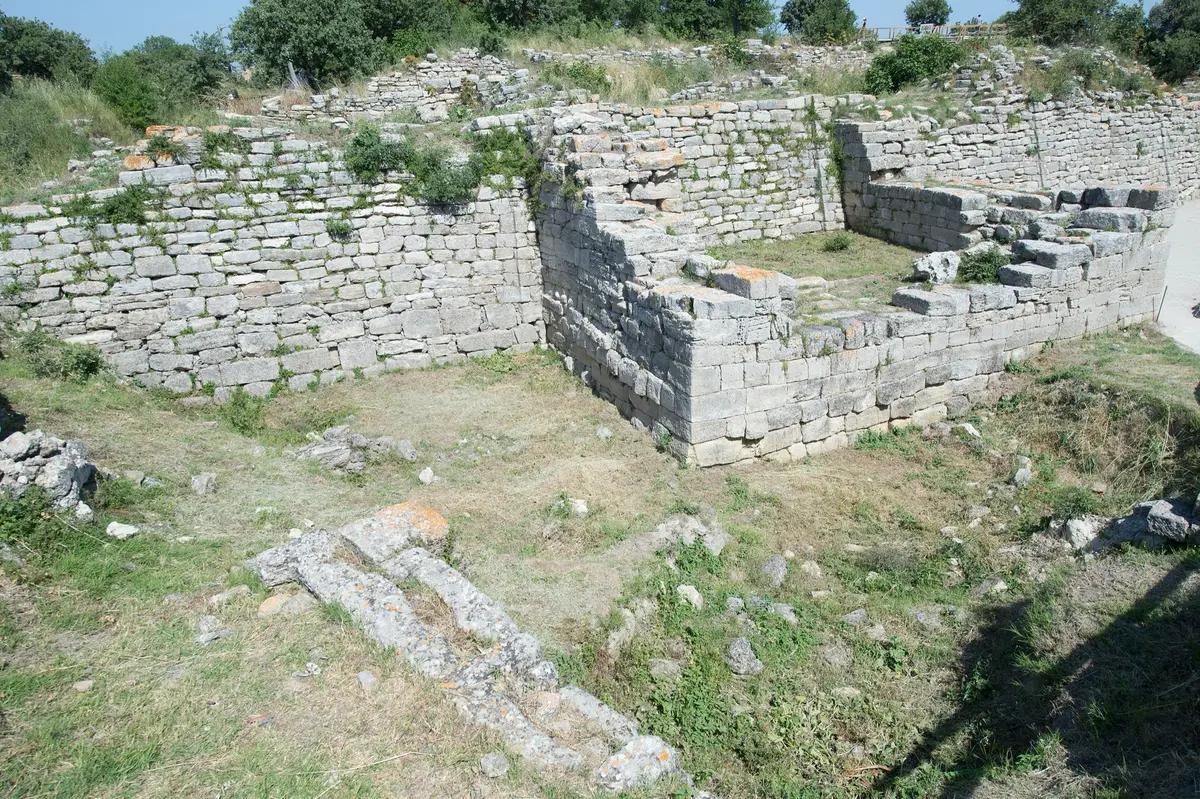
What followed was poorer and more local. In Greece the palaces, the scribes and the art of writing itself disappeared for four centuries, and the Greeks who later heard Homer sing of Agamemnon's Mycenae and the siege of Troy were remembering this lost world as legend. In Anatolia and Syria small Neo-Hittite and Aramaean states took the empire's place; on the Levantine coast the Phoenician cities and the peoples of Israel and Philistia grew up in the space Egypt had left; and with tin hard to get, smiths turned more and more to iron, so that the end of the Bronze Age is also the beginning of the Iron Age. The collapse matters because it shows how a prosperous, interconnected world can fail quickly, and because almost everything in the classical Mediterranean, from the Greek alphabet to the kingdoms of the Bible, grew out of the wreckage.
What happened
- 1209 BCE
Year 5 of Merneptah: Libyans, joined and armed by groups the Egyptians call peoples of the sea (Ekwesh, Teresh, Lukka, Sherden, Shekelesh), threaten Memphis and Heliopolis; at dawn west of the Delta the aged king's archers shoot for six hours and nearly 9,400 of the enemy die. He has four victory texts carved, one the stele that names Israel for the first time.
- 1200 BCE
At Pylos the scribes of the palace's last year list watchers posted along the coast ('Thus the watchers are guarding the coast', tablet An 657), call up some 600 rowers, and collect bronze from the temples to forge arrowheads and spear points.
Pylos, the Palace of Nestor at Epano Englianos: burned just before 1200 BCE, its last tablets baked in the fireThe palace of Pylos burns; its unbaked clay tablets are fired hard in the blaze and survive to be found by Blegen in 1939. It is never rebuilt.
Pylos, the Palace of Nestor at Epano Englianos: burned just before 1200 BCE, its last tablets baked in the fireThe palaces of Mycenae and Tiryns burn to the ground at the end of the period archaeologists call LH IIIB; neither is rebuilt, though people go on living in both citadels for another century.
Mycenae: the citadel of the Lion Gate, whose palace burned about 1200 BCE and was never rebuilt- 1190 BCE
Ugarit's last letters: the king's troops are away in Hittite service while pirates, among them the Shikala, raid and burn his coast; the letters lie in the palace archive when the end comes.
Ugarit (Ras Shamra), the trading port of the Syrian coast: destroyed about 1185 BCE and never resettledIn Egypt Setnakht ends years of disorder and founds the 20th dynasty; he reigns about two years.
- 1187 BCE
Ramesses III, Setnakht's son, becomes king of an Egypt only just recovered from its troubles.
- 1185 BCE
Ugarit is destroyed: palace, harbour and much of the city burn, and the site is never settled again. The Hittite empire that protected it is itself falling.
Ugarit (Ras Shamra), the trading port of the Syrian coast: destroyed about 1185 BCE and never resettled - 1182 BCE
Year 5 of Ramesses III: a coalition of Libyan tribes invades the western Delta and is soundly beaten.
- 1180 BCE
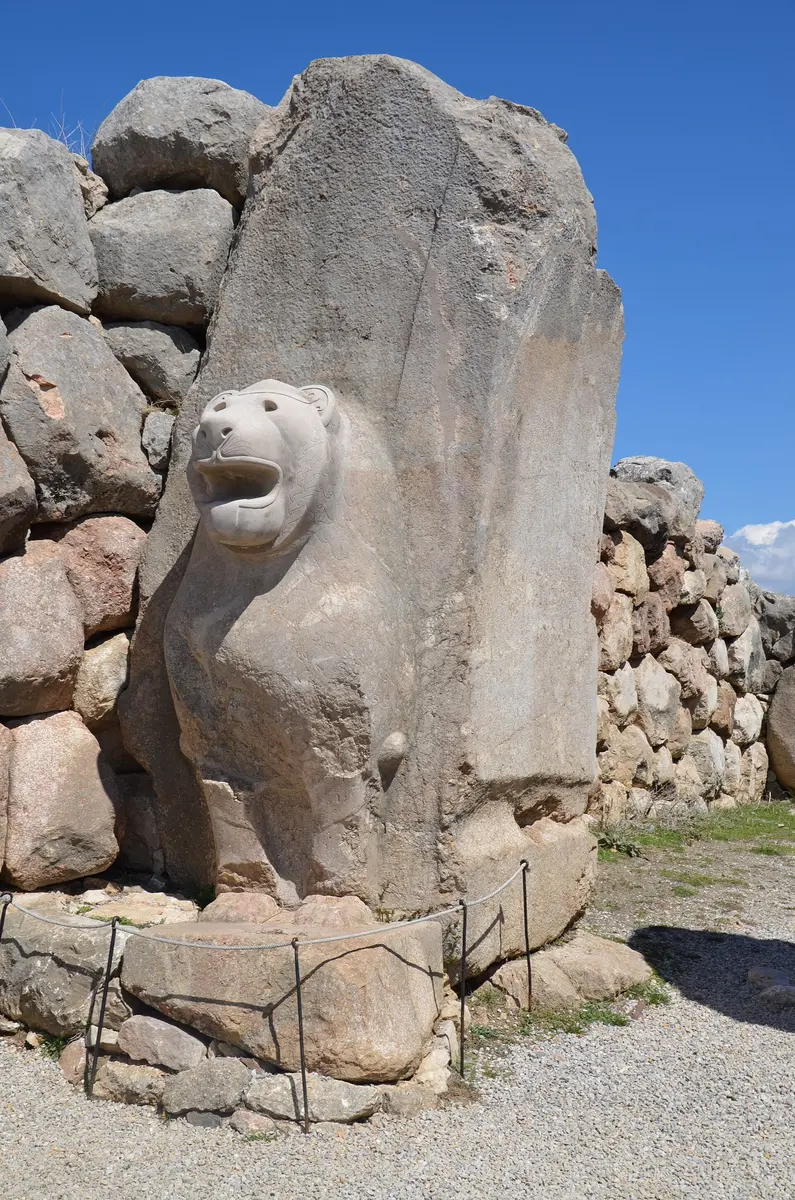
Hattusa, the Hittite capital, is abandoned and burned, and the empire of the Hittites, Egypt's rival at Kadesh two generations before, disappears; small successor states in Syria and the Phrygians in Anatolia take its place.
Hattusa (Boğazköy), capital of the Hittite empire: abandoned and burned about 1180 BCE - 1177 BCE
Year 8 of Ramesses III: the Peleset, Tjeker, Shekelesh, Denyen and Weshesh come by land down the Levantine coast and by sea. The Egyptian army checks the land force in southern Palestine and the fleet traps the ships in the Delta waterways; the king carves the battles on his temple at Medinet Habu.
Medinet Habu, western Thebes: the temple of Ramesses III, whose walls carry the land and sea battles of year 8, c. 1177 BCE - 1175 BCE
Two of the defeated peoples settle on the coast of Palestine between Gaza and Mount Carmel; the Peleset become the Philistines of the Bible, and Egypt's claim to rule Syria and Palestine is finished.
- 1174 BCE
Year 11: a new Libyan coalition infiltrates the western Delta; Ramesses III defeats it after capturing its chief, his third and last great war.
- 1170 BCE
With the wars over, Ramesses III completes his temple, palace and town at Medinet Habu, whose walls carry the record of the Sea Peoples' war and the captives in feathered headdresses.
Medinet Habu, western Thebes: the temple of Ramesses III, whose walls carry the land and sea battles of year 8, c. 1177 BCE - 1158 BCE
Year 29 of Ramesses III: the tomb-builders of Deir el-Medina, their rations eighteen days late, pass the guard posts shouting 'we are hungry' and sit down behind the temple of Thutmose III, the first strike on record; the vizier has to intervene.
Deir el-Medina, the tomb-builders' village at Thebes: the first recorded strike, year 29 of Ramesses III, c. 1158 BCE - 1156 BCE
Ramesses III dies at Thebes, killed in an attempted coup hatched in his harem; the kings who follow him are weak and Egypt's hold on Canaan fades.
Medinet Habu, western Thebes: the temple of Ramesses III, whose walls carry the land and sea battles of year 8, c. 1177 BCE - 1155 BCE
The Elamite king Shutruk-Nahhunte and his son Kutir-Nahhunte sack Babylon and end the Kassite dynasty that had ruled it for four centuries; the stele of Naram-Sin and the law code of Hammurabi are carried off to Susa, where the French found them in 1901–02.
Babylon: the Kassite dynasty ends about 1155 BCE when the Elamites sack the city and carry its monuments to Susa - 1150 BCE
By about 1150 the Greek world has shrunk: refugees have fled to Athens, which was not destroyed, to the islands and to the coast of Asia Minor; the palaces stand in ruins, Linear B writing is forgotten, and Mycenae suffers a second fire within the citadel soon after. The Dark Age has begun.
Mycenae: the citadel of the Lion Gate, whose palace burned about 1200 BCE and was never rebuilt