The Iron Age begins
“Around 1200 BCE, as the Bronze Age world collapsed, smiths in the eastern Mediterranean began making tools and weapons of smelted iron; by about 600 BCE iron was the everyday metal.”
The Iron Age began when the peoples of the eastern Mediterranean and the Near East started to make their everyday tools and weapons of smelted iron instead of bronze. The change began around 1200 BCE and took about six centuries: by about 600 BCE iron was the common working metal from Anatolia and the Levant to Greece, Assyria and central Europe. Iron itself was not new. Egyptians hammered beads out of meteorite iron around 3300 BCE, and in 1925 Howard Carter found an iron dagger with a gold handle lying on the thigh of the boy king Tutankhamun, buried in the 14th century BCE; in 2016 its nickel content showed that this blade, too, came from a meteorite. Smiths in Anatolia were smelting small amounts of iron from ore soon after 2000 BCE, as finds at Kaman-Kalehöyük show, but for centuries iron stayed a rare treasure: Assyrian merchants of that time valued it at up to forty times its weight in silver. In the 13th century the Hittite king Hattusili III wrote to an Assyrian king that his store had no 'good iron' just then, and sent him a single iron blade. Historians once read such letters as proof of a Hittite iron monopoly; that idea has been given up.
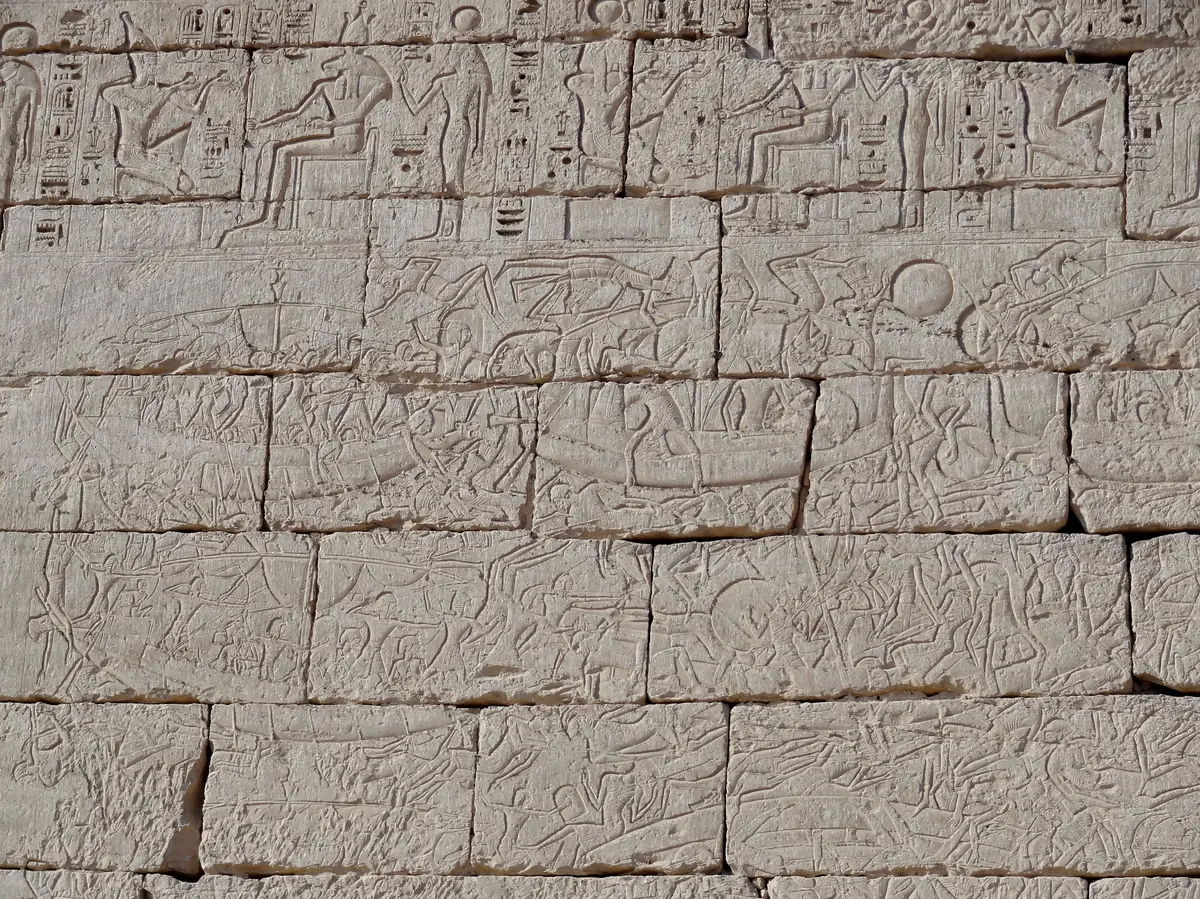
Around 1200 BCE the palace world of the Late Bronze Age fell apart. The Hittite empire collapsed and its capital, Hattusa, was destroyed; Ugarit, a rich trading port on the Syrian coast, was burned and never lived in again; and in his eighth year, about 1177 BCE, the pharaoh Ramesses III fought off the 'Sea Peoples' and had the battle carved on his temple at Medinet Habu. Bronze is copper mixed with about a tenth of tin, and tin often came from far away, perhaps from as far as Central Asia. Scholars long thought that the collapse cut the tin routes and forced smiths to turn to iron, whose ore is found almost everywhere. Archaeology has not confirmed a tin shortage, since the bronzes of the time hold as much tin as before, so many now see iron as a metal that the small new states and their local smiths could make for themselves, at first alongside bronze and later instead of it.
Ancient smiths could not melt iron. They heated ore with charcoal in a small clay furnace, a bloomery, and got a spongy lump of iron and slag, the bloom, which they hammered while hot. Plain iron is no harder than good bronze; it becomes steel when it takes up carbon from the charcoal, and harder still when it is quenched in water, and early smiths sometimes managed both, though not reliably. Cyprus and the southern Levant led the way: a 12th-century dagger from Kition has an iron blade held by bronze rivets, and most of the 11th- and 10th-century Cypriot iron objects that have been tested contain carbon, which makes them a kind of steel. In Greece bronze grew scarce and iron spread between about 1025 and 950 BCE, and around 950 BCE a warrior at Lefkandi on Euboea was buried with his iron sword and spearhead. In the 10th and 9th centuries iron was smelted at Tell Hammeh in Jordan and worked at Philistine Gath; the Bible remembers a time when the Israelites had no smiths and had to go down to the Philistines to sharpen their ploughshares. The Phrygian citadel of Gordion, burned around 800 BCE, was full of iron tools, and the Assyrian kings stored iron in huge quantities at Sargon II's new capital, Khorsabad.
Sea trade, led by the Phoenicians, carried the new metal west across the Mediterranean. In central Europe a rich salt-mining community at Hallstatt in the Austrian Alps flourished from the 8th century BCE and gave its name to the early Iron Age of the region, about 800 to 450 BCE; its great cemetery was dug up by Johann Georg Ramsauer in the 19th century. Egypt, which had prized meteorite iron, took up smelted iron late, mostly after the Assyrian invasions of the 7th century. Iron-smelting reached China from the West through Central Asia by the 8th century BCE, and Chinese smiths then invented something new: by the early 5th century BCE they were casting iron in moulds. In West Africa, the Nok culture of central Nigeria smelted iron from about the middle of the first millennium BCE; whether it learnt the craft from the north or invented it is still debated. This entry stops around 600 BCE, when iron had become the everyday metal of the Near East, the Mediterranean and central Europe; its later spread across Africa and Asia is a story of its own.
Iron ore is everywhere, so once people knew how to smelt it, metal no longer depended on rare tin and long trade routes. Over the centuries iron became the metal of farming and of war, and some writers say it put weapons 'in the hands of the masses' for the first time, though archaeologists now stress how slowly and unevenly the change came. The steel of those first bloomeries is the ancestor of the metal of railways, ships and skyscrapers. And the name itself is modern: in 1836 the Danish scholar Christian Jürgensen Thomsen published his division of the past into a Stone Age, a Bronze Age and an Iron Age, a scheme archaeologists still use.
What happened
- 1200 BCE
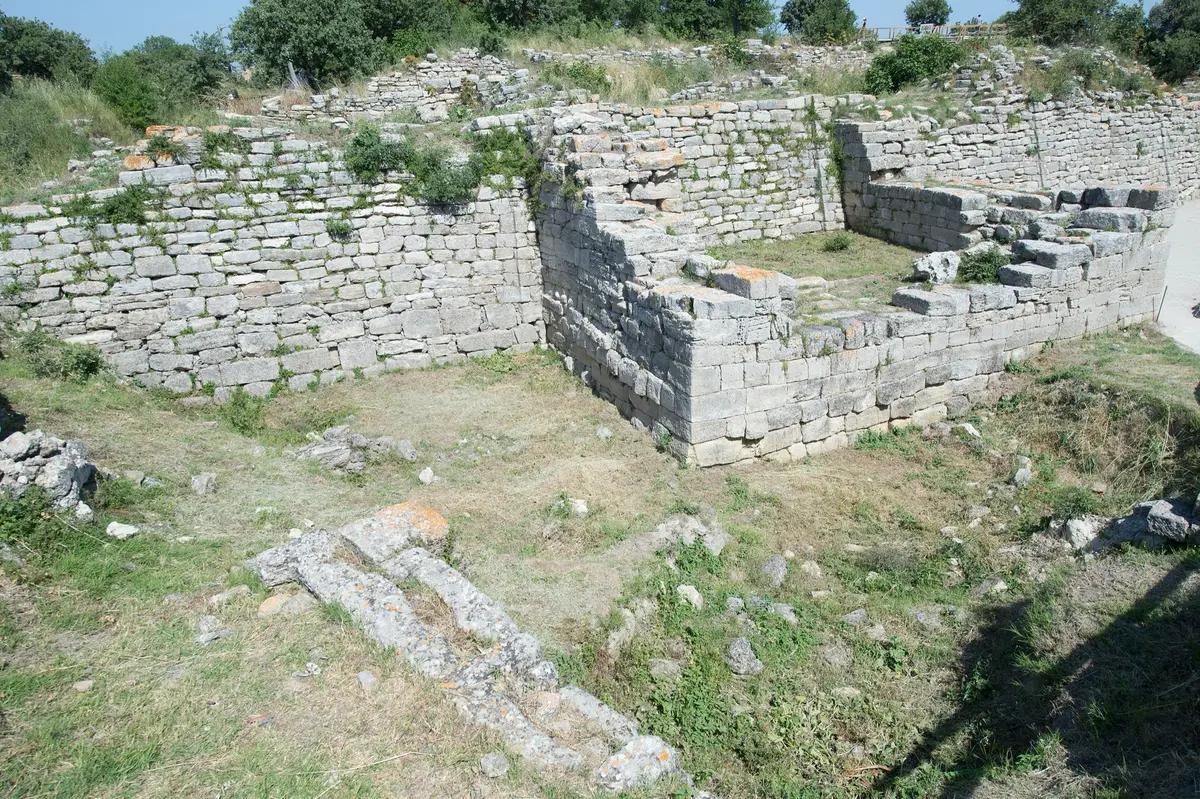
The Hittite empire collapses and its capital, Hattusa, is destroyed and abandoned; the kings who once sent iron blades to other kings as precious gifts are gone.
Hattusa, capital of the Hittite empire: destroyed and abandoned around 1200 BCEUgarit, the great trading port of the Syrian coast, writes of raids from the sea in its last letters; its palace, harbour and much of the city are destroyed and never lived in again.
Ugarit (Ras Shamra), Syria: the trading port destroyed around 1200 BCE- 1177 BCE
In the eighth year of Ramesses III, Egypt's army and fleet defeat the 'Sea Peoples' at the edge of the Nile Delta; the king has the sea battle carved on his temple at Medinet Habu.
Medinet Habu, Thebes: Ramesses III's temple with the naval battle against the Sea Peoples - 1150 BCE
In Cyprus a smith fixes an iron blade to its handle with bronze rivets, a dagger later buried at Kition: one of the iron weapons that now appear more and more often in the eastern Mediterranean.
Kition (Larnaca), Cyprus: an iron dagger with bronze rivets, 12th century BCE - 1050 BCE
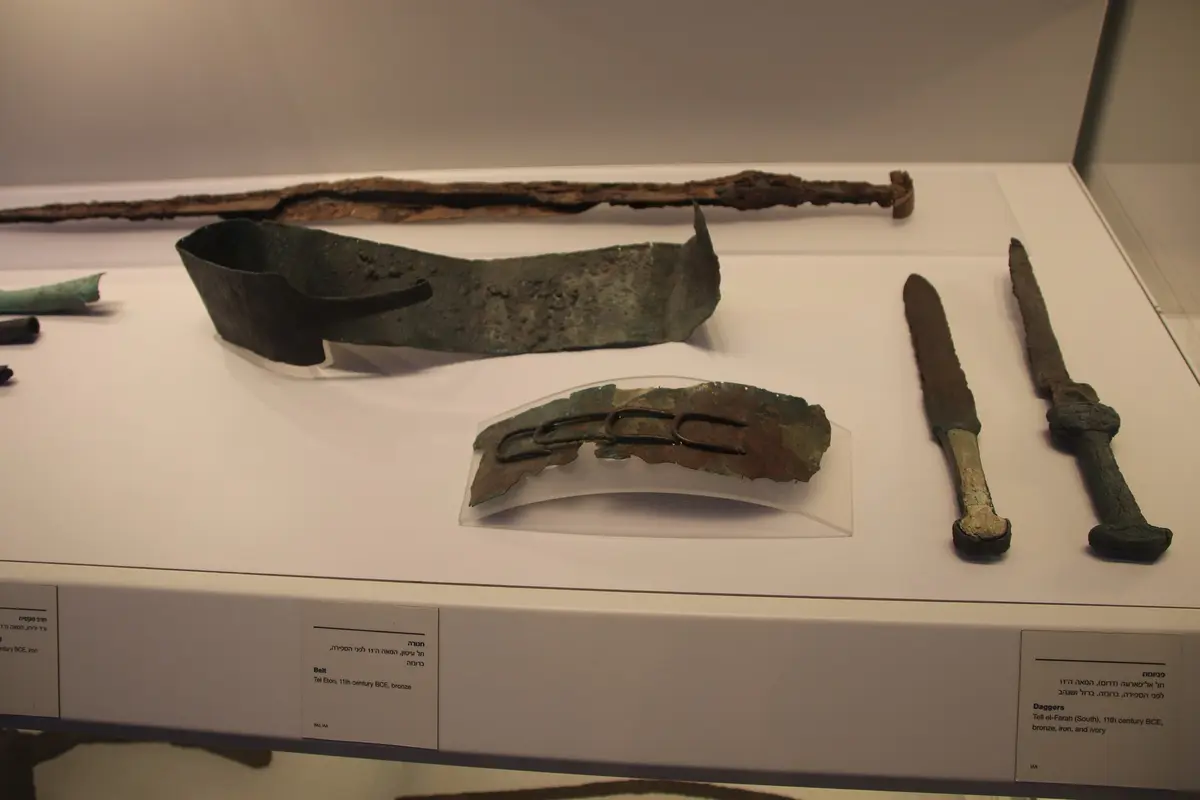
In graves at Tell el-Far'ah (South), in the southern Levant, daggers of bronze and daggers of iron are buried side by side; in Cyprus most of the iron objects of this century and the next that have been tested contain carbon, a kind of steel, and iron blades decorated with gold and silver go into the tombs of Palaepaphos-Skales.
Tell el-Far'ah (South): daggers of bronze and of iron in 11th-century BCE graves - 1000 BCE
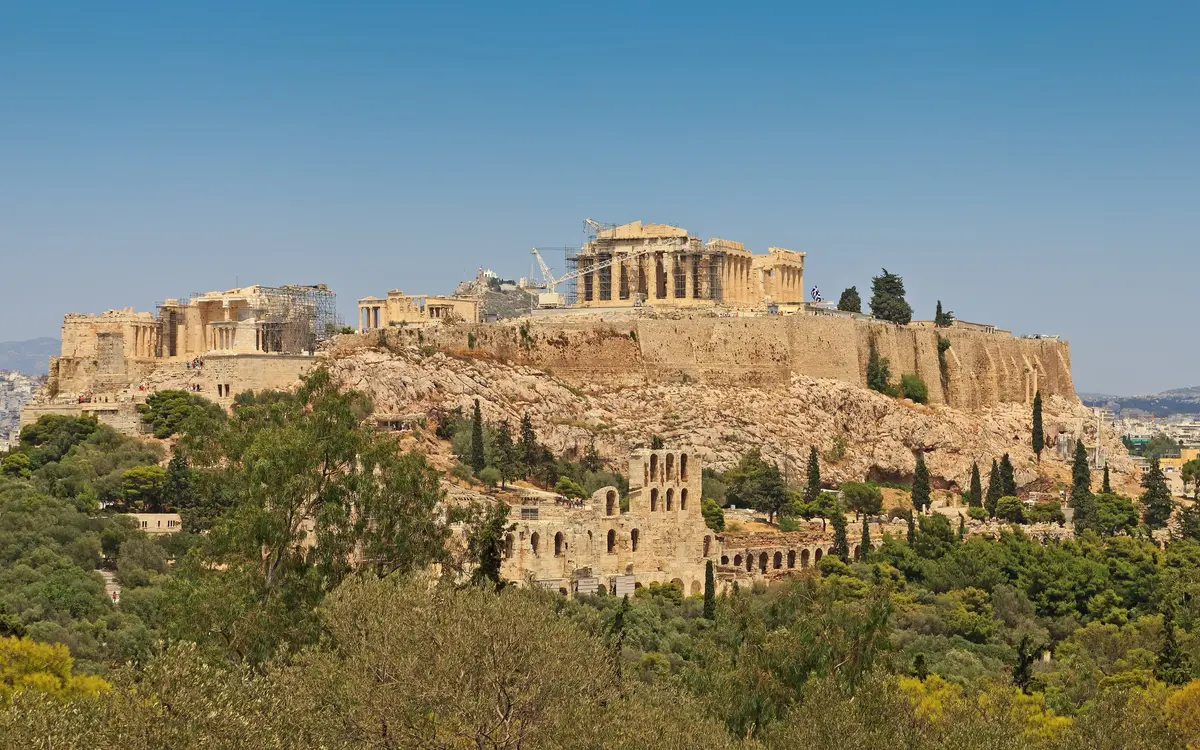
In Greece bronze grows scarce and iron spreads, between about 1025 and 950 BCE: Athenians are now buried with iron swords in the Kerameikos cemetery.
Kerameikos cemetery, Athens: iron swords in Greek graves of the Dark Age - 950 BCE
At Lefkandi on Euboea a warrior's ashes are laid in a Cypriot bronze amphora with his iron sword, spearhead and whetstone, beside a woman with gold jewellery and four horses, under a building 50 metres long.
Lefkandi, Euboea: a warrior buried with his iron sword around 950 BCE - 900 BCE
At Tell Hammeh in the Jordan Valley smelters make iron season after season, perhaps 50 to 100 kilograms a year: the most complete early iron-smelting site known.
Tell Hammeh, Jordan Valley: iron smelted here in the 10th–9th centuries BCEAt Tell es-Safi, Philistine Gath, smiths work iron and bronze in the same workshop. The Bible later remembers a time when the Israelites had no smiths and had to go down to the Philistines to sharpen their ploughshares (1 Samuel 13:19–22).
Tell es-Safi (Philistine Gath): an iron and bronze workshop of the 10th–9th centuries BCE- 800 BCE
Fire destroys the Phrygian citadel of Gordion; its burned buildings are full of iron tools and weapons, while bronze tools are rare.
Gordion, Phrygia: a citadel burned around 800 BCE, full of iron toolsSalt mining at Hallstatt in the Alps revives, and a rich Iron Age community grows there whose graves will give their name to Europe's early Iron Age, about 800 to 450 BCE.
Hallstatt, Austria: the salt-mining community that named Europe's early Iron AgeIron-smelting, a technique developed in the West, reaches China by way of the peoples of Central Asia; Chinese smiths use it for luxury swords and knives with gold, jade and bronze fittings.
- 721 BCE
Sargon II becomes king of Assyria; his new palace city at Khorsabad will hold iron in huge quantities, stored by an empire that now arms and equips itself with iron.
Khorsabad (Dur-Sharrukin): Sargon II's capital, where iron was stored in huge quantities - 650 BCE
Assyrian armies invade Egypt, and in their wake smelted iron at last comes into common use there, centuries after the Egyptians had prized iron from meteorites.
- 600 BCE
By about 600 BCE iron is the everyday metal from Anatolia to Greece and Mesopotamia: at Kerkenes in central Anatolia, a city of the 7th and 6th centuries, the farm tools, nails and arrowheads are iron.
Kerkenes, central Anatolia: a city of the 7th–6th centuries BCE where iron tools were common