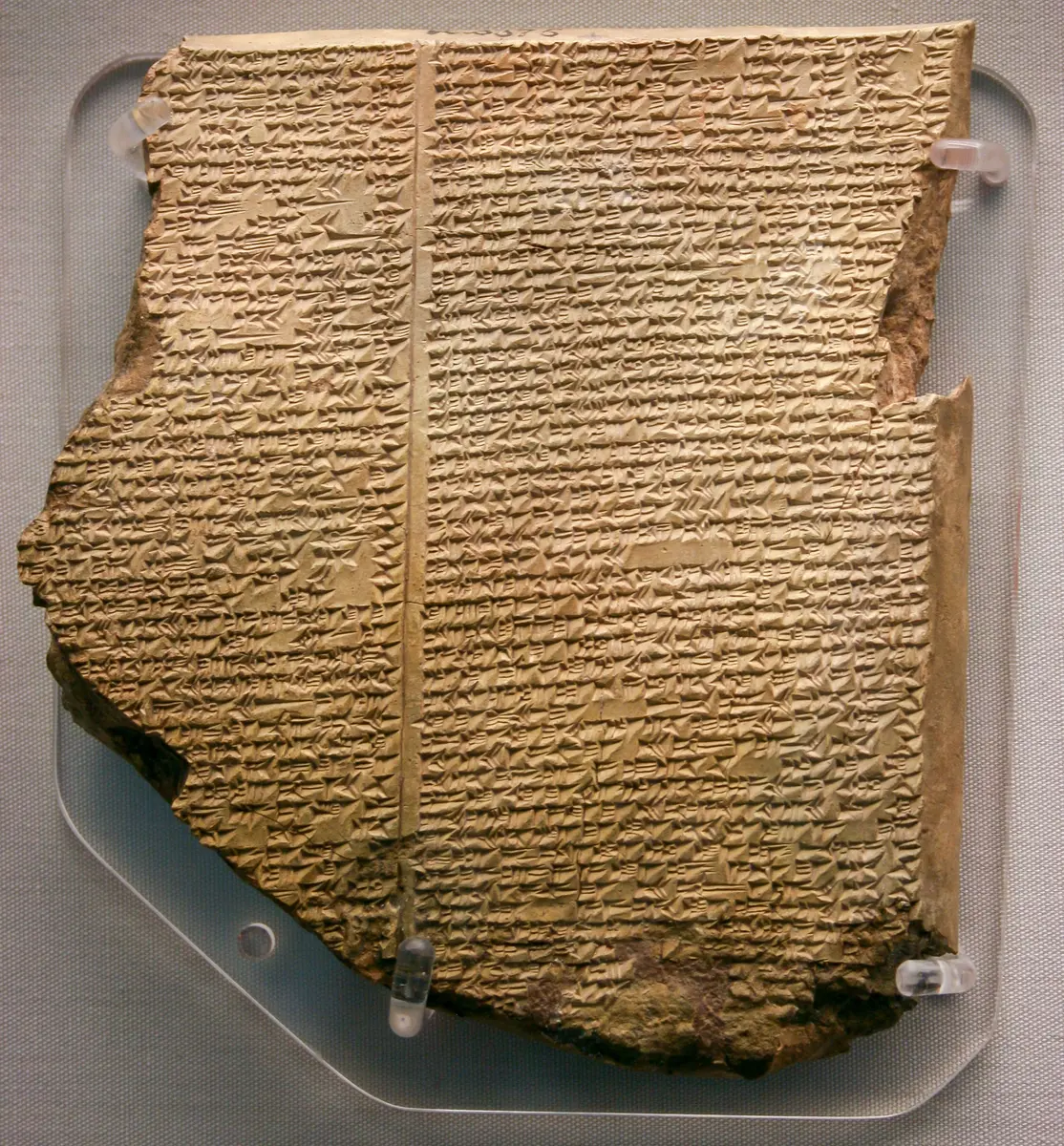
The Epic of Gilgamesh
“The oldest great poem: Gilgamesh, king of Uruk, loses his friend Enkidu, seeks eternal life, hears the story of the Flood and comes home mortal; written on clay from about 2100 BCE, read again in 1872.”
The Epic of Gilgamesh is the oldest great story the world still has: a poem in Akkadian, the language of Babylon and Assyria, about Gilgamesh, king of Uruk in southern Iraq, 'two-thirds of him god but a third of him human'. Its classic form runs to about 3,000 lines on eleven clay tablets, with a twelfth added as an appendix. In it the king begins as a tyrant who wears out his own people. The gods make a wild man, Enkidu, to match him. Tamed by the woman Shamhat, Enkidu comes to Uruk, wrestles the king and becomes his closest friend. Together they cross the mountains to kill Humbaba, the guardian of the Cedar Forest, and slay the Bull of Heaven that the goddess Ishtar sends after Gilgamesh rejects her. The gods decide that one of them must pay, and Enkidu sickens and dies.
Terrified of dying in his turn, Gilgamesh wanders to the edge of the world to find Uta-napishti, the one man the gods made immortal. Uta-napishti tells him how the gods once sent a flood to wipe out mankind, and how he rode it out in a great boat, ran aground on Mount Nimush and let out a dove, a swallow and a raven to look for dry land. He cannot give Gilgamesh eternal life, and a plant that restores youth is carried off by a snake while the king bathes. Gilgamesh comes home empty-handed and shows the boatman the walls of Uruk in the same words with which the poem began: what lasts is what a person builds.
The poem grew for more than a thousand years. A king called Gilgamesh may have ruled Uruk around 2700 BCE, but nothing from his lifetime survives, and by the middle of the third millennium he was worshipped as a god. Around 2100 BCE Sumerian songs about him were sung at the court of King Shulgi of Ur, who called Gilgamesh his brother; five of these poems survive in copies made by student scribes about 1800 BCE, when a poet writing in Akkadian also joined the tales into one epic, 'Surpassing all other kings'. In the late second millennium the epic was read from the Hittite capital Hattusa to Megiddo in Canaan and translated into Hittite and Hurrian, and a scholar remembered as Sin-leqi-unninni, probably in the twelfth century BCE, shaped the version that opens 'He who saw the Deep' and turns the adventures into a meditation on death and wisdom.
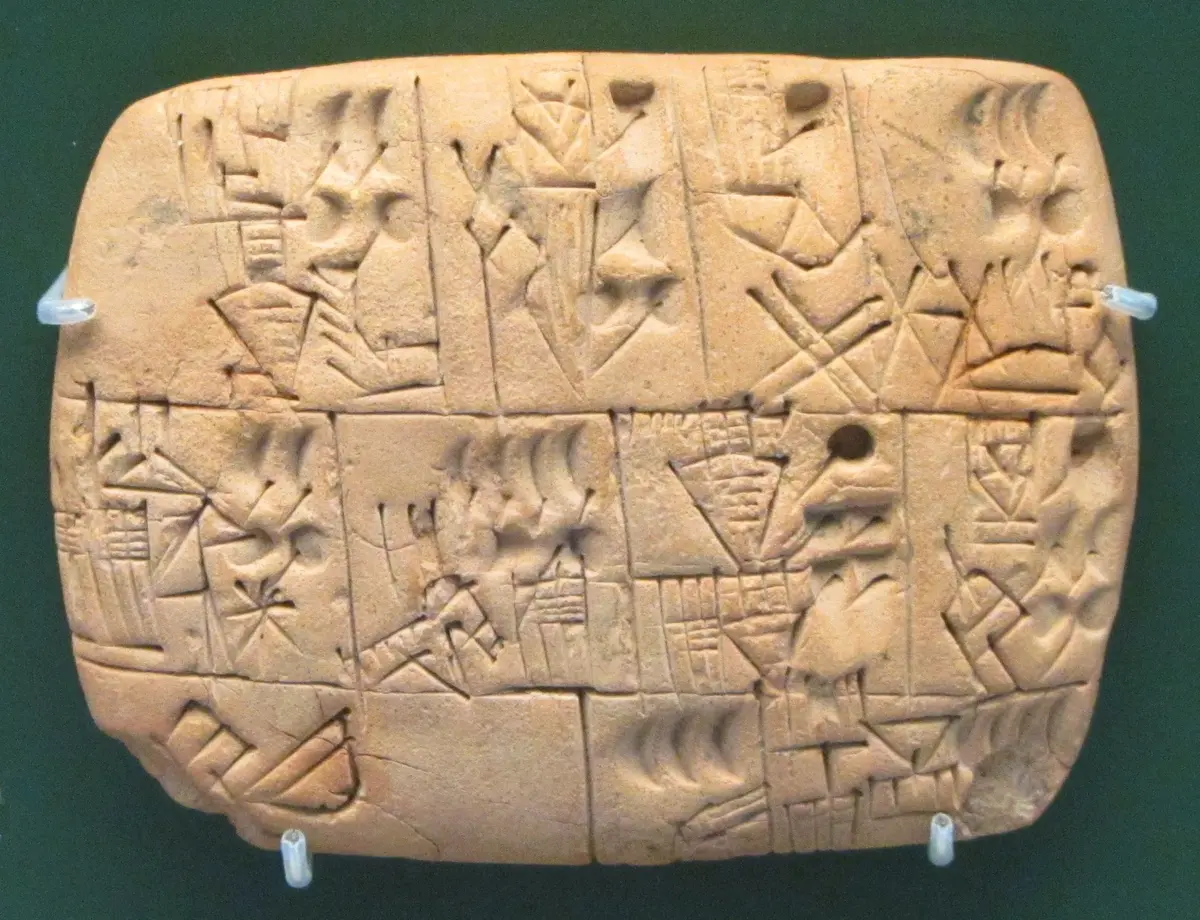
Its fullest copies come from Nineveh, where King Ashurbanipal, who ruled Assyria from 669 or 668 BCE, gathered tens of thousands of tablets. When the Medes and Babylonians sacked the city in 612 BCE, the tablets were buried in the burnt palaces until Austen Henry Layard and Hormuzd Rassam dug them out in the 1850s and shipped them to the British Museum. There George Smith, a former banknote engraver who had taught himself cuneiform, found the flood story on the eleventh tablet and read it to the Society of Biblical Archaeology on 3 December 1872, with the prime minister, William Gladstone, in the audience. A flood story older than Noah's was a sensation: the Daily Telegraph paid for Smith to dig at Nineveh, where in May 1873 he found a missing piece of it. He read the hero's name as 'Izdubar', and died at Aleppo in 1876, aged 36.
The poem is still being completed. A broken tablet in the Sulaymaniyah Museum, published in 2014 by Farouk Al-Rawi and Andrew George, filled the Cedar Forest with birdsong, tree-crickets and shrieking monkeys; a tablet of Gilgamesh's dreams, smuggled into the United States and bought for the Museum of the Bible, was forfeited in 2021 so that it could go back to Iraq. What keeps the epic alive is its subject: a powerful man who loses his friend, cannot accept that he too must die, and learns that no one escapes it. It is the first great work about friendship and grief, and its flood story, older than the one in Genesis, startled its first modern readers in 1872.
What happened
- 2100 BCE
Under the Third Dynasty of Ur, King Shulgi (about 2094-2047 BCE), who claims Gilgamesh's father Lugalbanda as his own and Gilgamesh as his brother, keeps scholars at Ur and Nippur; Sumerian songs about Bilgames, as Gilgamesh is called in Sumerian, are sung at his court.
Ur: the capital of the Third Dynasty, where King Shulgi had Sumerian songs of Gilgamesh sung at court - 1800 BCE
A clay prism of the Sumerian King List names 'Gilgamesh, whose father was a phantom, the lord of Kulaba' among the kings of Uruk, with a reign of 126 years.
Student scribes in the Old Babylonian schools copy five Sumerian poems about Gilgamesh: his victory over Akka of Kish, the expedition against Huwawa in the cedar mountains, the Bull of Heaven, Enkidu's journey to the Netherworld and the death of Gilgamesh. They are separate stories, not yet one epic.
Nippur: the scribal centre where students copied the Sumerian Gilgamesh poems around 1800 BCEA poet writing in Akkadian joins the tales into one epic, 'Surpassing all other kings'. Two of its tablets, now in Philadelphia and New Haven, tell how Enkidu learns to eat bread, comes to Uruk and wrestles Gilgamesh, and how the two become friends and plan to fight Huwawa.
- 1700 BCE
As the cities of the south are abandoned at the end of the eighteenth century BCE, Nippur among them, the scribal academies close; the Gilgamesh poems live on in the north and, later, abroad.
Nippur: the scribal centre where students copied the Sumerian Gilgamesh poems around 1800 BCE - 1300 BCE
The epic is at the height of its popularity: it is copied at the Hittite capital Hattusa, where it is also translated into Hittite and Hurrian, at Emar and Ugarit in Syria and at Megiddo in Canaan.
Hattusa: the Hittite capital, where the epic was copied in Akkadian and translated into Hittite and Hurrian - 1200 BCE
A tablet copied at Ugarit on the Syrian coast already opens with the first line of the later standard version, 'He who saw the Deep'.
Ugarit: a copy that already opens 'He who saw the Deep', made before the city's fall - 1150 BCE
A Babylonian scholar remembered as Sin-leqi-unninni, probably in the twelfth century BCE, shapes the classic version, 'He who saw the Deep', in which Enkidu becomes Gilgamesh's friend and double and the king's adventures become a lesson about death, wisdom and good rule.
- 750 BCE
The oldest surviving manuscripts of the standard version are written in Assyria in the eighth century BCE. Before the century ends, sculptors of Sargon II set colossal heroes clutching lions at the throne room of Khorsabad, figures later often, but uncertainly, called Gilgamesh.
- 668 BCE
Ashurbanipal becomes king of Assyria (in 669 or 668 BCE). In his palaces at Nineveh he gathers tablets of every kind; more than 30,000 have been found.
Nineveh (the mound of Kuyunjik): Ashurbanipal's library, buried in 612 BCE and dug up in the 1850s - 650 BCE
Scribes at Nineveh copy the 'Series of Gilgamesh' for Ashurbanipal's library, among them the eleventh tablet with Uta-napishti's story of the Flood.
Nineveh (the mound of Kuyunjik): Ashurbanipal's library, buried in 612 BCE and dug up in the 1850s - 612 BCE
The Babylonians and the Medes besiege Nineveh for three months in the summer and sack it. The palaces burn and the library's tablets lie buried in the ruins of Kuyunjik until Layard and Rassam dig them out in the 1850s.
Nineveh (the mound of Kuyunjik): Ashurbanipal's library, buried in 612 BCE and dug up in the 1850s