Michelangelo
“The Florentine sculptor, painter and architect who carved the Pietà and the David, painted the Sistine Chapel ceiling and the Last Judgment, and designed the dome of St Peter's.”
Michelangelo Buonarroti was a Florentine sculptor, painter, architect and poet, held in his own lifetime to be the greatest living artist and ever since one of the greatest of all time. Before he was thirty he had carved the Pietà in St Peter's and the David in Florence; in his thirties he painted the ceiling of the Sistine Chapel, a generation later the Last Judgment on its altar wall, and in old age he designed the dome of St Peter's. He still thought of himself above all as a sculptor. He was also the first artist whose life was written and printed while he was alive, twice over: by the painter Giorgio Vasari in 1550 and by his assistant Ascanio Condivi in 1553.
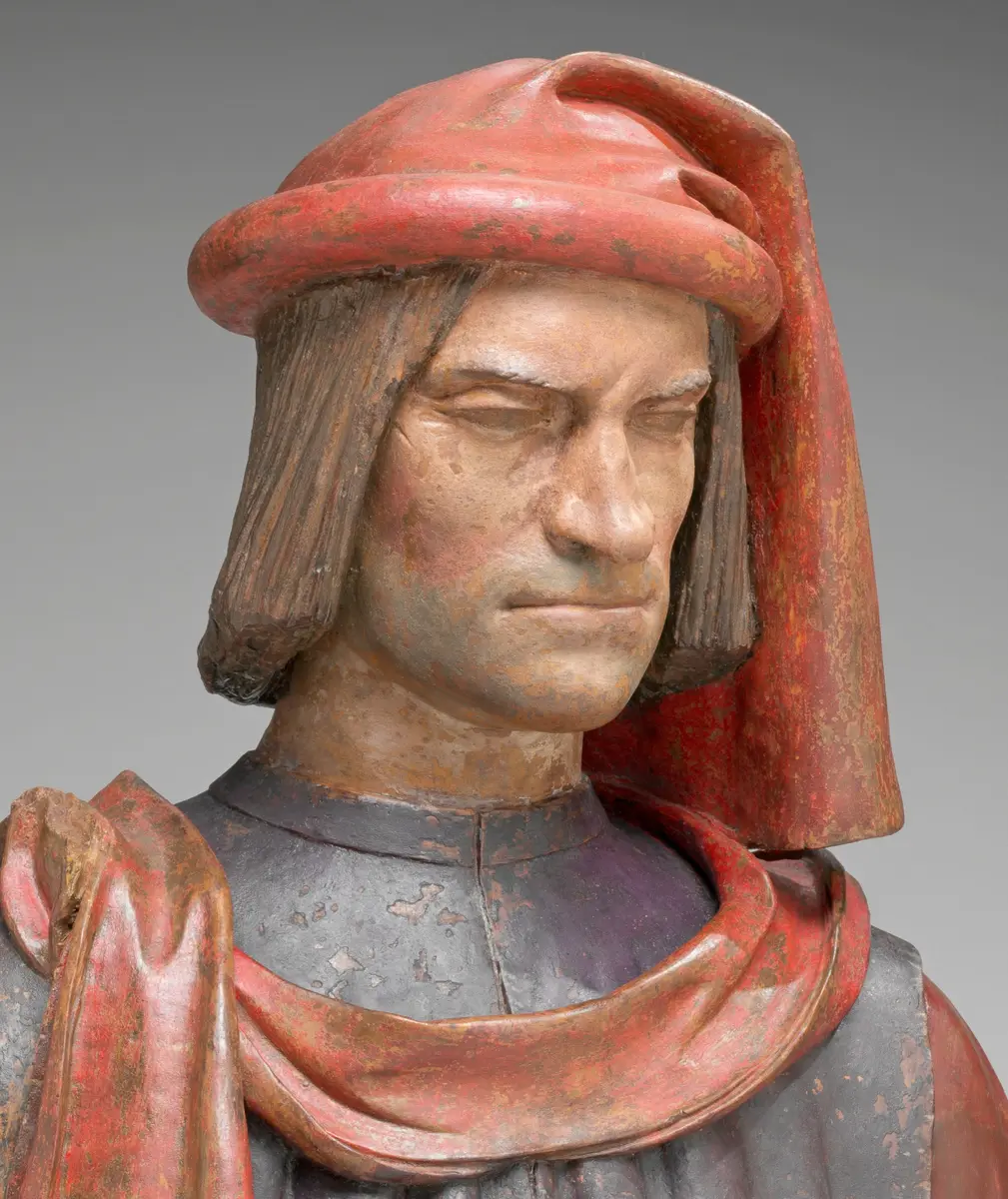
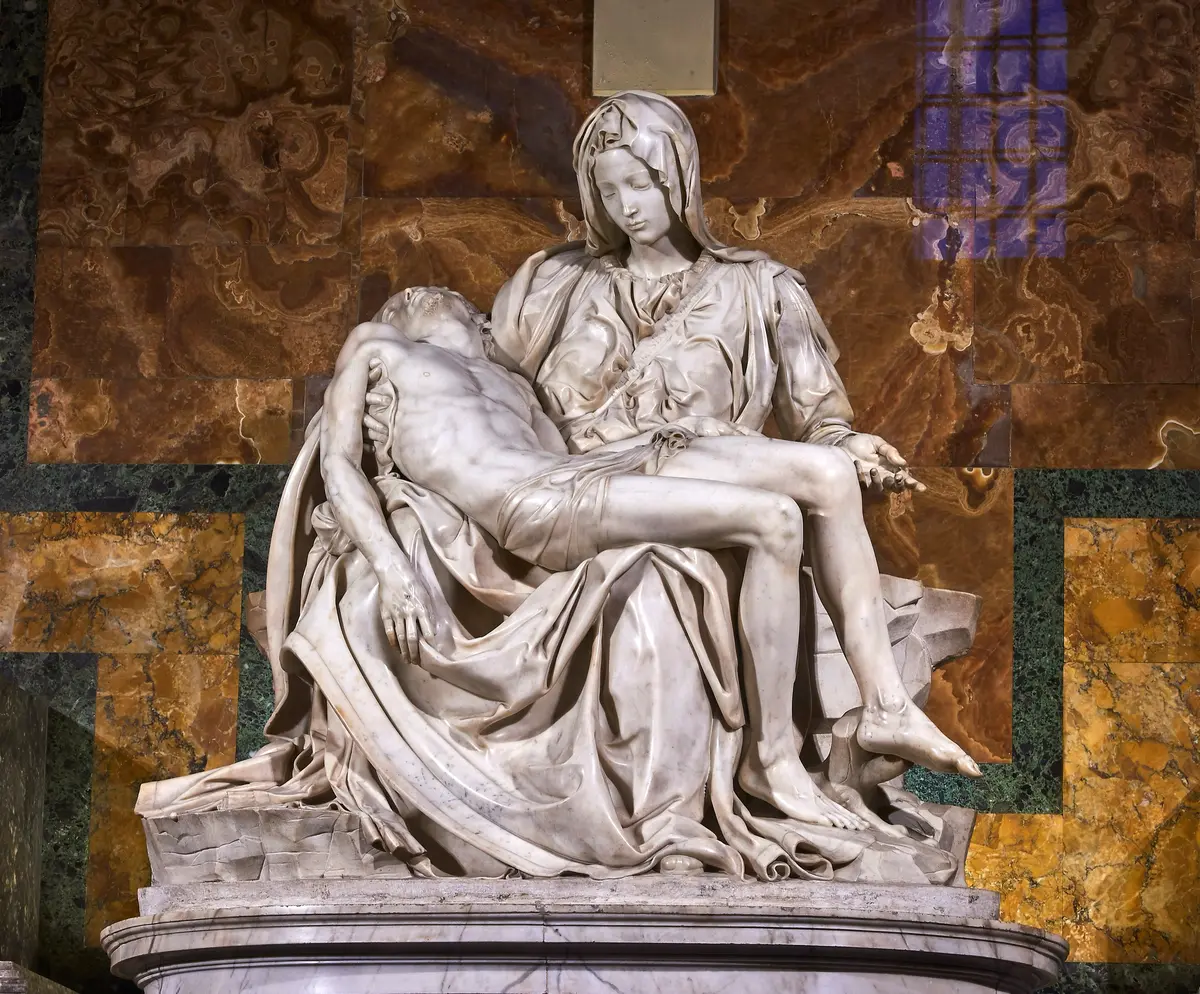
He was born on 6 March 1475 at Caprese, a hill village in Florentine territory, where his father, from an old Florentine family that had lost its wealth, was serving as the town's administrator; a few months later the family was back in Florence. At thirteen, after overcoming his father's objections, he was apprenticed to the painter Domenico Ghirlandaio, but within a year he had moved into the circle of Lorenzo de' Medici, the city's ruler, where he could study the Medici collection of ancient Roman sculpture. When the Medici were driven out in 1494 he left for Bologna and then Rome. There the Pietà of 1498–99, the dead Christ lying in his mother's lap, carved for a French cardinal from a single block of Carrara marble, made his name; it is the only work he ever signed. Back in Florence he carved the David out of a huge block left half-worked some forty years before, and in 1504 the republic set it up in front of its town hall as its emblem.
In 1505 Pope Julius II called him to Rome to make him a tomb with forty large statues. The project, which Michelangelo called the tragedy of the tomb, dragged on for forty years and ended in 1545 as a much smaller monument in the church of San Pietro in Vincoli, around his Moses. Julius set him instead to paint the ceiling of the Sistine Chapel, which he did from 1508 to 1512, standing on a scaffold and craning his neck, as he complained in a comic poem: nine scenes of Genesis from the Creation to Noah, framed by seven prophets, five sibyls and nude youths. For the two Medici popes, Leo X and Clement VII, he worked in Florence on their family church of San Lorenzo, building the New Sacristy with its Medici tombs and the Laurentian Library, whose stair hall is often called the first work of Mannerist architecture. Yet when the Medici were thrown out again in 1527 he took the republic's side and designed the city's fortifications for the siege that ended with its surrender in 1530.
In 1534, at fifty-nine, he left Florence for Rome and never came back. There he painted the Last Judgment on the Sistine altar wall from 1536 to 1541, a storm of naked bodies around Christ the judge that was as fiercely attacked as it was admired; after his death many of its nudes were painted over. In his last decades he wrote much of his poetry, wrote letters of passionate attachment to the young nobleman Tommaso de' Cavalieri, found a friend and inspiration in the poet Vittoria Colonna, designed the square on the Capitoline Hill and, from 1546, ran the rebuilding of St Peter's, the church whose cost, raised partly by selling indulgences, had helped to set off Luther's Reformation. Its dome, which he designed and built up to the drum, was raised after his death. He was still carving a last Pietà a few days before he died in Rome on 18 February 1564, aged 88. His nephew had the body carried secretly to Florence, packed as merchandise, and he was buried in Santa Croce, the church of his family.
No artist before him had been called divine in his lifetime, and the modern idea of the artist as a genius set apart from ordinary people begins with him. His powerful, twisting bodies became the chief source of the Mannerist style and shaped generations of painters and sculptors. Because he and his family kept nearly every paper he touched, his letters, contracts, poems and even grocery bills survive in their thousands, and he is better documented than any artist of his time. Several of his works rank among the most famous in existence: the David is still the prime image of the Renaissance ideal of perfect humanity, and the Creation of Adam on the Sistine ceiling has become an icon far beyond art.
What happened
- 1475
Born at Caprese, a village in Florentine territory where his father is serving as the town's administrator; within a few months the family is back in Florence.
Caprese: by tradition the house where he was born in 1475, now the museum of his birthplace- 1488
At thirteen, after overcoming his father's objections, he is apprenticed for three years to the painter Domenico Ghirlandaio; he leaves after one and is taken under the wing of Lorenzo de' Medici, the ruler of the city, studying the ancient sculptures of the Medici collection.
- 1492
Lorenzo de' Medici dies in the spring; the marble Battle of the Centaurs Michelangelo has been carving for Lorenzo's circle is left unfinished.
- 1494
The Medici are driven out of Florence; before the turmoil ends he leaves for Bologna, where he carves three small figures for the shrine of St Dominic.
- 1496
He goes to Rome and carves the Bacchus for a garden, his first large statue to survive.
- 1498
The French cardinal Jean de Bilhères commissions the Pietà for his tomb chapel in old St Peter's; Michelangelo, 23, carves it from one block of Carrara marble and signs it, the only work he ever signs.
St Peter's Basilica, Vatican: his Pietà (1498–99), and the dome he designed as the basilica's architect from 1546 - 1501
Back in Florence, the cathedral works give him the giant block abandoned forty years before, for 400 ducats: it will become the David.
Florence, his home town: the Galleria dell'Accademia, where the David stands today- 1504
A committee of artists, Leonardo and Botticelli among them, decides that the finished David will stand at the entrance of the Palazzo Vecchio, as the symbol of the republic.
The David is unveiled in front of the Palazzo Vecchio.
Florence, his home town: the Galleria dell'Accademia, where the David stands today- 1505
By February he has drawn at least part of the cartoon for the Battle of Cascina, a mural the republic commissioned the autumn before for its council hall, as a companion to Leonardo's Battle of Anghiari. Then Pope Julius II summons him to Rome to make a vast tomb, a commission that will dog him for forty years, and the mural is never painted.
- 1506
Believing that the architect Bramante has turned the pope against the cost of the tomb, he leaves Rome; Julius makes Florence send him back, and at Bologna he casts a colossal bronze statue of the pope, which the citizens pull down in 1511. In Florence about now he paints the Holy Family for Agnolo Doni.
- 1508
Julius II commissions him to paint the ceiling of the Sistine Chapel, the chapel Julius's uncle Sixtus IV had restored and decorated some thirty years before.
The Sistine Chapel, Vatican: his ceiling (1508–12) and the Last Judgment on the altar wall (1536–41) - 1510
Working from the entrance towards the altar, he finishes the first half of the ceiling, and the work pauses, perhaps for a year, while no payments come. In a comic sonnet to a friend he mocks the goitre the work has given him, and sketches himself painting the vault above his head.
The Sistine Chapel, Vatican: his ceiling (1508–12) and the Last Judgment on the altar wall (1536–41) - 1511
Working on the half nearer the altar, he draws in red chalk the studies for the Libyan Sibyl.
- 1512
The ceiling is finished in October; on the Feast of All Saints Julius II celebrates Mass in the chapel to inaugurate it.
The Sistine Chapel, Vatican: his ceiling (1508–12) and the Last Judgment on the altar wall (1536–41)- 1513
Julius II dies and most of the money for his tomb goes with him; under a new, smaller contract Michelangelo carves the Moses, about 1513–15.
- 1516
Pope Leo X, Lorenzo de' Medici's son, wants a marble façade for San Lorenzo, the Medici church in Florence; Michelangelo spends four years on it, and it comes to nothing.
- 1519
After the deaths of the two young Medici heirs, Giuliano in 1516 and Lorenzo in 1519, he begins the New Sacristy of San Lorenzo, the family's funeral chapel, with tombs for both.
- 1524
Pope Clement VII, another Medici, has him design the Laurentian Library beside the church.
- 1527
The sack of Rome drives Pope Clement out and Florence restores its republic; Michelangelo sides with it and designs the fortifications for the siege that ends with the city's surrender in 1530. He is pardoned and goes back to the Medici tombs.
- 1534
At 59 he leaves Florence for Rome, never to see his city again; his father has died in 1531, and Clement VII dies this year. In Rome he writes letters of strong attachment to the young nobleman Tommaso de' Cavalieri.
- 1536
Commissioned by Clement VII at the end of 1533 and kept on by Paul III, he begins the Last Judgment on the altar wall of the Sistine Chapel, painting over earlier frescoes.
The Sistine Chapel, Vatican: his ceiling (1508–12) and the Last Judgment on the altar wall (1536–41) - 1541
The Last Judgment is finished in the autumn; it causes a sensation and is as much attacked as praised for its nudes.
The Sistine Chapel, Vatican: his ceiling (1508–12) and the Last Judgment on the altar wall (1536–41) - 1545
The tomb of Julius II is finally set up, much reduced, in San Pietro in Vincoli, with the Moses at its centre.
- 1546
He becomes chief architect of St Peter's and designs its dome, which he builds up to the drum.
St Peter's Basilica, Vatican: his Pietà (1498–99), and the dome he designed as the basilica's architect from 1546 - 1550
Giorgio Vasari's Lives of the artists ends with Michelangelo, the only living artist in the book, as the summit of art.
- 1553
His assistant Ascanio Condivi publishes a Life of Michelangelo, probably based on the artist's own words, which shows him as he wished to be seen.
- 1559
In Florence, Bartolomeo Ammannati builds the staircase of the Laurentian Library from Michelangelo's model.
- 1564
Still carving the Rondanini Pietà days before, he dies in Rome, aged 88, and is buried in Santi Apostoli; his nephew Leonardo has the body carried secretly to Florence as merchandise, and on 11 March it reaches Florence and lies in state in Santa Croce, where his ancestors lie and where he is buried.
Santa Croce, Florence: the church of his family, where he is buried in a tomb designed by Vasari