The Medici Bank opens in Florence
“In 1397 Giovanni di Bicci de' Medici moved his bank from Rome to Florence; living on the pope's money and on bills of exchange, it became the largest bank of its century and fell with the Medici in 1494.”
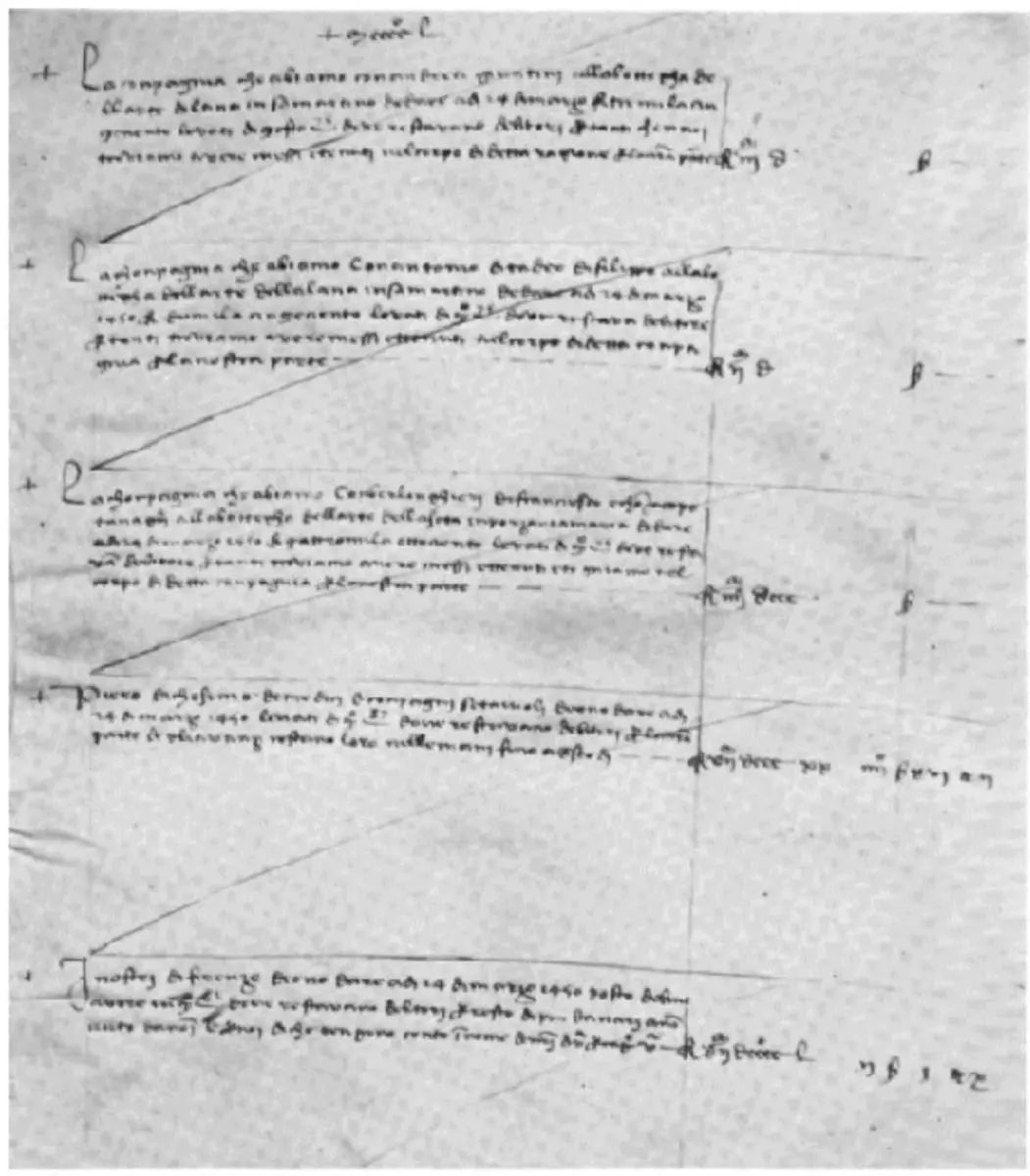
In 1397 Giovanni di Bicci de' Medici, a Florentine who had been running a bank in Rome for the papal court, moved his headquarters home to Florence. On 26 March he formed a partnership with Benedetto de' Bardi, who stayed in charge of the office in Rome, and Gentile Buoni, with a capital of 10,000 gold florins, 5,500 of them his own. On 7 April he registered the new firm with the Arte del Cambio, the guild of bankers and money-changers he had joined in 1386, and on 1 October the Florence office began to trade. Raymond de Roover, the historian who rebuilt the bank's story from its own account books, takes 1397 as its founding date. It lasted almost a hundred years, until the Medici were driven out of Florence in November 1494.
The Church forbade usury, any interest on a loan, so the bank did not lend at interest openly. It earned on the exchange of money between cities instead: a merchant received florins or ducats in one place and paid back in another currency, months later, at a rate that hid the interest. A bill drawn in Venice in July 1463 shows how it worked: the borrowers took 500 ducats from the Medici there and, when the bill came back unpaid from London, owed 535 ducats six months later, about 14 per cent a year. The best customer was the pope. The papacy collected money all over Europe and needed bankers to move it; the Medici office that followed the papal court earned more than half of the bank's profits between 1397 and 1420, and its manager was usually the pope's Depositary General, who held the funds of the papal treasury. The bank also traded in English wool, silk and alum, and ran wool and silk workshops in Florence.
The Medici Bank was not one company but a group of partnerships. Each branch was a separate firm with its own capital and its own books; the Medici partnership in Florence put up most of the money, and the branch manager was a junior partner paid with a share of the profit, so that in law the losses of one branch were not the debts of another. De Roover saw in this the forerunner of the modern holding company. Branches opened in Venice in 1402, Geneva in 1426, Bruges in 1439, London and Avignon in 1446 and Milan in 1452, beside the office in Rome, Pisa and, at times, Naples. Under Giovanni's son Cosimo, who took over with his brother Lorenzo in 1420 and ruled Florence from behind the scenes after 1434, it became the largest bank of its time: in March 1451 the partners put 72,000 florins into it. Its profits made the Medici the richest family in Florence and paid for the Medici palace, the church of San Lorenzo, the friary of San Marco and the artists and scholars Cosimo gathered around him.
The decline began with the death of the general manager Giovanni Benci in 1455 and quickened after Cosimo's in 1464. His son Piero ordered an audit and cut back credit; his grandson Lorenzo the Magnificent admitted that he did not understand the business and left it to Francesco Sassetti, who let branch managers lend to princes: in London to Edward IV during the Wars of the Roses, in Bruges, through Tommaso Portinari, to Charles the Bold, Duke of Burgundy. London was given up in the 1470s, with 51,533 florins written off; in 1473 privateers from Danzig took one of the galleys run by the Bruges branch; and after the Pazzi conspiracy of 1478 Pope Sixtus IV seized the Medici's property in Rome. Bruges and Venice were wound up in 1480. When Piero di Lorenzo fled Florence on 9 November 1494, ahead of the French army of Charles VIII, all Medici property was confiscated, and the bank, already close to bankruptcy, did not survive.
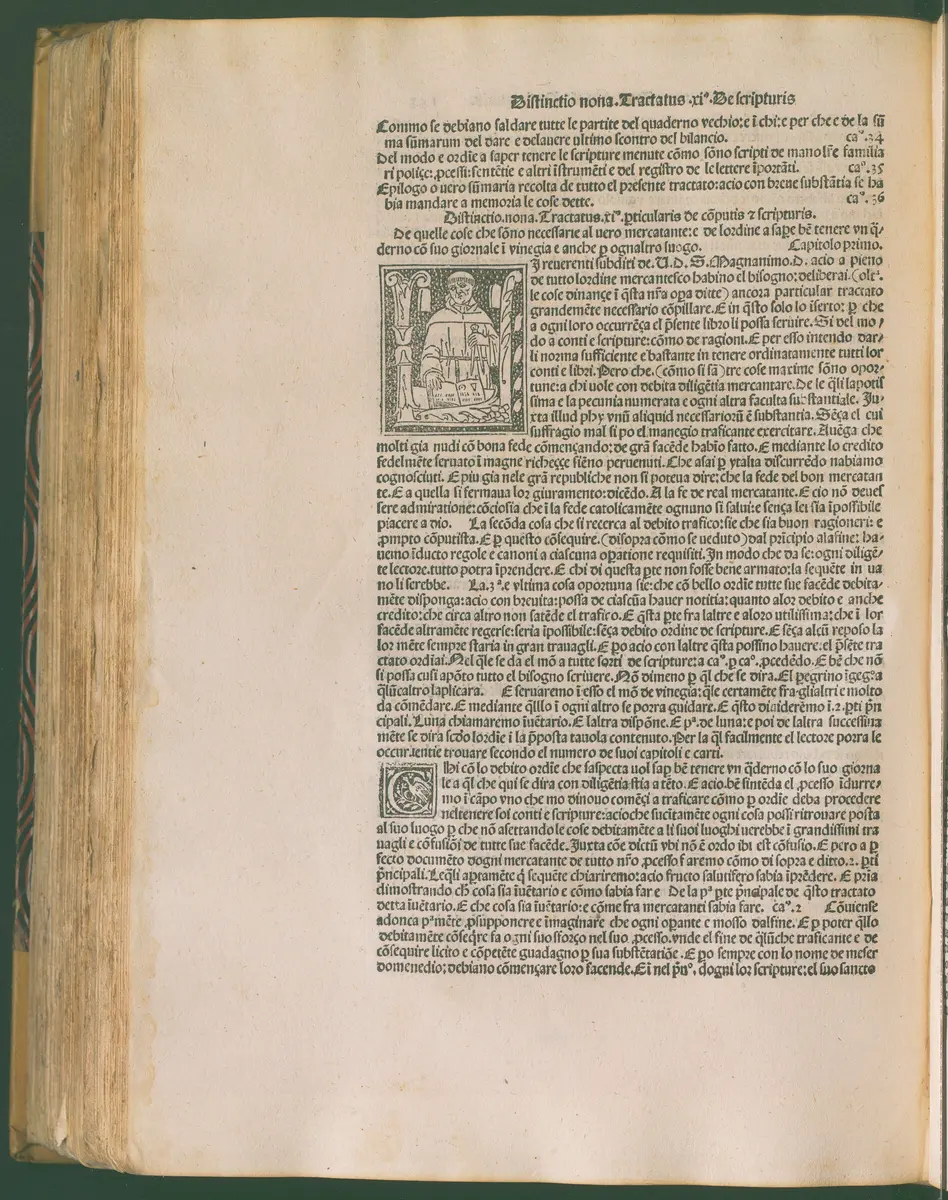
The Medici Bank matters for two reasons. After Francesco Datini's firm in Prato it is the best-documented business of the Middle Ages: its secret ledgers, found in 1950 in a mislabelled bundle in the Florence archives, its contracts and its letters show how international banking worked while lending at interest was forbidden, with partnerships, bills of exchange, correspondents abroad and books kept in double entry, the method Luca Pacioli printed in 1494, the year the bank fell. And its money built the power of a family that went on to give the Church popes and Florence its dukes, and paid for much of the art of the early Renaissance. De Roover's verdict was sober: the Medici invented little, and certainly not the bill of exchange, as legend has it; they used the best methods of their day, and they failed, like many firms since, when the people at the top stopped controlling the people in the branches.
What happened
- 1397
Giovanni di Bicci de' Medici forms a new partnership for a bank in Florence with Benedetto de' Bardi and Gentile Buoni, with a capital of 10,000 florins, 5,500 of them his own. The first entries of the bank's secret ledger record it.
Via Porta Rossa at Via dell'Arte della Lana, by the Mercato Nuovo: the Medici's Tavola, their bank for Florentine customers, in the Cavalcanti house on this cornerGiovanni reports the new firm to the Arte del Cambio, the bankers' and money-changers' guild he joined in 1386.
Via Porta Rossa at Via dell'Arte della Lana, by the Mercato Nuovo: the Medici's Tavola, their bank for Florentine customers, in the Cavalcanti house on this cornerGiovanni moves his headquarters from Rome to his home city and the Florence office begins to trade; Benedetto de' Bardi stays in charge of the branch at the papal court. De Roover takes this move as the founding of the Medici Bank.
Via Porta Rossa at Via dell'Arte della Lana, by the Mercato Nuovo: the Medici's Tavola, their bank for Florentine customers, in the Cavalcanti house on this corner- 1402
A branch opens in Venice, with Neri Tornaquinci, who has worked there as the bank's agent since 1398, as its first manager.
Venice: a Medici branch from 25 March 1402; Cosimo's place of exile in 1433–1434- 1415
The Council of Constance deposes Pope John XXIII (Baldassare Cossa, now counted an antipope), a faithful client of the Medici. Their Roman branch has followed the papal court to the council, and young Cosimo represents the bank there; years later the Medici, as Cossa's executors, have his tomb built in the Baptistery.
The Baptistery of Florence, with the tomb of John XXIII that the Medici paid for as his executors- 1419
The Arte del Cambio, the bankers' guild, commissions from Lorenzo Ghiberti a bronze Saint Matthew for its niche on Orsanmichele.
Orsanmichele: the guilds' church, where the bankers' guild set up Ghiberti's Saint Matthew - 1420
After the death of the general manager Benedetto de' Bardi, Giovanni di Bicci withdraws from business: the new contract, with Ilarione de' Bardi as general manager and a capital of 24,000 florins, is in the names of his sons Cosimo and Lorenzo.
- 1426
The bank starts a partnership in Geneva, the city of the great fairs where Europe's bankers settle their bills, with Michele di Ferro and Giovanni Benci.
Geneva: the fair city where the Medici had a branch from 1426- 1429
Giovanni di Bicci de' Medici dies; Cosimo, to whom he has been handing over the running of the bank since 1420, now leads it.
- 1433
Cosimo is arrested by his enemies of the Albizzi faction and barely escapes a death sentence; he is banished to Padua and Venice.
Venice: a Medici branch from 25 March 1402; Cosimo's place of exile in 1433–1434- 1434
Cosimo is recalled to Florence; from now on he rules the city from behind the scenes, without holding its highest office.
- 1439
A branch is founded in Bruges, the great market of Flanders, as a limited partnership with Bernardo Portinari.
Hof Bladelin, Bruges: the house of the Medici branch from 1466- 1444
Michelozzo begins the new Medici palace on Via Larga for Cosimo; the bank's central office will work from its counting room.
Palazzo Medici, Via Larga (now Via Cavour): Cosimo's palace from 1444, where the bank's central office kept its counting room - 1446
Branches are founded in London, with Gerozzo de' Pigli as manager, and in Avignon, with Giovanni Zampini.
Lombard Street, London: the street of the Italian bankers, where the Medici's London branch did business from 1446 - 1451
A new partnership is formed with a capital of 72,000 florins, three quarters from the Medici and one quarter from the general manager Giovanni Benci. The bank is at its height: the Tavola in Florence, branches in Pisa, Rome, Venice, Avignon, Bruges, Geneva and London, two wool workshops and a silk workshop.
Palazzo Medici, Via Larga (now Via Cavour): Cosimo's palace from 1444, where the bank's central office kept its counting room- 1455
Giovanni Benci, the general manager who led the bank's great expansion, dies in mid-July; de Roover dates the start of its gradual decline from his death.
Duke Francesco Sforza gives Cosimo a house in Via dei Bossi for the Milan branch, founded in 1452; Michelozzo rebuilds it as a palace for the bank.
Via dei Bossi, Milan: the house Francesco Sforza gave Cosimo for the Milan branch in 1455- 1463
In London the notary William Slade protests a bill of exchange for 500 ducats that the Medici in Venice had bought on 20 July: the London payer refuses it, and the Venetian borrowers will owe 535 ducats, the interest hidden in the exchange rates.
Lombard Street, London: the street of the Italian bankers, where the Medici's London branch did business from 1446- 1464
Cosimo dies at Careggi. His son Piero orders a survey of the business, which probably shows it weaker than believed, and cuts back credit; a wave of Florentine bank failures follows from November.
- 1466
Tommaso Portinari, the new manager in Bruges, persuades Piero to buy the Hof Bladelin, one of the finest houses in the city, for 7,000 Rhenish florins, to impress the court of Burgundy.
Hof Bladelin, Bruges: the house of the Medici branch from 1466New articles make Lyon, with its fairs, the seat of the old Geneva branch.
Lyon: the seat of the Geneva branch from 1466, one of the last three branches still working in 1494The Medici Bank joins the company that mines the pope's new alum deposits at Tolfa, near Civitavecchia, and with its branches in Flanders and England takes over the sale of the alum abroad, paying the papal treasury two ducats a cantar.
Rome: the branch that followed the papal court, the bank's greatest source of profit- 1469
A new contract with Tommaso Portinari forbids him to lend to Charles the Bold, Duke of Burgundy, and orders him to wind up the Burgundian galleys; the order is not carried out.
Hof Bladelin, Bruges: the house of the Medici branch from 1466Piero de' Medici dies. His sons Lorenzo, later called the Magnificent, and Giuliano are too young and Lorenzo has no interest in business; the general manager Francesco Sassetti becomes all-powerful.
- 1471
The new pope, Sixtus IV, gives the post of Depositary General back to the Medici: Giovanni Tornabuoni, their manager in Rome, again holds the papal treasury's money, and soon complains that the pope spends beyond his means.
Rome: the branch that followed the papal court, the bank's greatest source of profit - 1472
With Edward IV owing far more than he can repay, the Medici decide to withdraw from London; the Bruges branch is later made to take over the London branch's debts.
Lombard Street, London: the street of the Italian bankers, where the Medici's London branch did business from 1446 - 1473
Off Gravelines, privateers from Danzig under Paul Beneke attack two Burgundian galleys run by the Bruges branch and capture one, with its alum, silks and Angelo Tani's altarpiece by Memling.
- 1478
In the Pazzi conspiracy Giuliano de' Medici is murdered and Lorenzo wounded. Sixtus IV seizes all Medici property in Rome and refuses to pay the papal treasury's debt to the bank; Lorenzo cuts loose from the Portinari and winds up the Bruges and Milan branches, and the London losses, 51,533 florins, are written off.
Rome: the branch that followed the papal court, the bank's greatest source of profit- 1480
A final settlement with Tommaso Portinari ends the Bruges branch; Venice is wound up the same year.
Hof Bladelin, Bruges: the house of the Medici branch from 1466- 1485
The Lyon branch is in trouble: its manager, Lionetto de' Rossi, is called back to Florence and arrested on arrival.
Lyon: the seat of the Geneva branch from 1466, one of the last three branches still working in 1494 - 1490
Francesco Sassetti dies of a stroke on 30 or 31 March, after admitting to Lorenzo that his policy had been mistaken.
- 1492
Lorenzo the Magnificent dies at his villa of Careggi; his son Piero takes over the family and its failing bank.
- 1494
As the French army of Charles VIII marches on Florence, Piero di Lorenzo de' Medici flees the city.
Charles VIII enters Florence. All Medici property is confiscated and handed to receivers; the bank, virtually bankrupt, with only its branches in Lyon, Rome and Naples still working, does not survive.
Palazzo Medici, Via Larga (now Via Cavour): Cosimo's palace from 1444, where the bank's central office kept its counting room