The Spanish flu pandemic
“The influenza of 1918–19 that killed tens of millions, more than the First World War by most counts, striking young adults hardest, in three waves that went round the world in a year.”
The Spanish flu was the influenza pandemic that went round the world in three waves between the spring of 1918 and the summer of 1919, with a milder fourth wave in some countries early in 1920. It was caused by an H1N1 influenza A virus with genes of bird origin. About a third of the world's people, some 500 million, fell ill, and the US Centers for Disease Control puts the dead at 50 million at least; estimates run from about 17 million to 100 million, and even the lowest is close to the toll of the First World War. It was not Spanish. Spain was neutral in the war and its newspapers were not censored, so when they reported the epidemic openly in May 1918 the rest of the world gave the disease Spain's name.
Where it began is still argued. The first recorded outbreak was at Camp Funston, an army training camp at Fort Riley in Kansas, where a cook reported sick one morning in March 1918 and about a hundred soldiers had followed him by noon; the historian John Barry traces it further back, to Haskell County in western Kansas in January, while others point to the British army base at Étaples in France or to northern China. The war spread it. Hundreds of thousands of American soldiers crossed the Atlantic every month, and the spring wave, mild and hardly noticed, followed them through the camps and to the front. In the second half of August a far deadlier form broke out almost at the same moment in three busy ports, Brest in France, Freetown in Sierra Leone and Boston, and from September to November it swept the world.
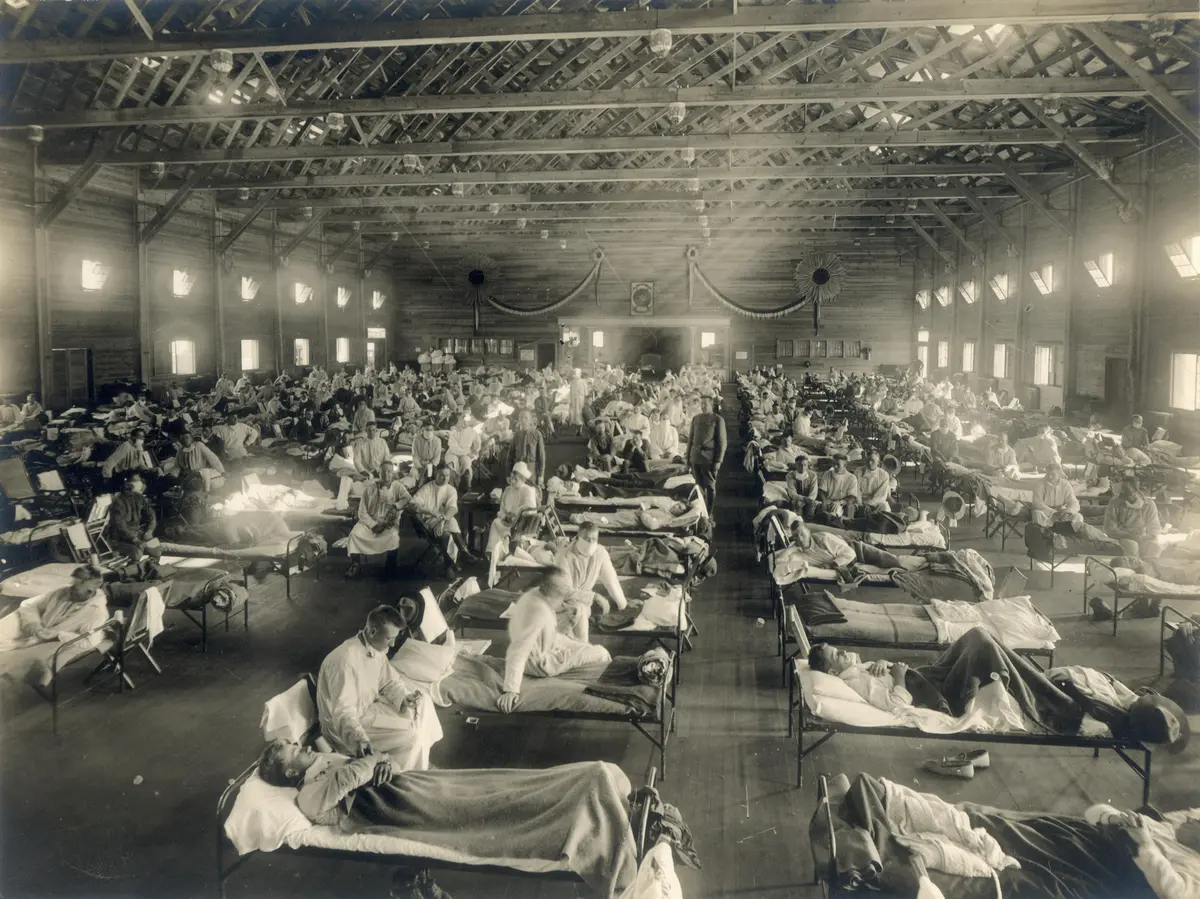
That autumn wave did most of the killing, and it killed the young: men and women of 20 to 40, normally the safest age, died in their thousands, often within a few days, their lungs filling with fluid. Most of them died of the bacterial pneumonia that followed the flu, and there were no antibiotics and no vaccine; no one had yet even seen the virus. In the United States, where some 675,000 died, 195,000 died in October 1918 alone. Cities used the only tools they had: they closed schools, theatres and churches, banned crowds and in some places ordered everyone to wear a gauze mask. Timing mattered. Philadelphia let 200,000 people watch a war-bond parade on 28 September and closed down only on 3 October, and it lost twice as many people for its size as St Louis, which closed two days after its first cases. Remote places suffered worst: Western Samoa lost more than a fifth of its people after a ship from Auckland landed the sick in November, while American Samoa, closed by quarantine, lost no one.
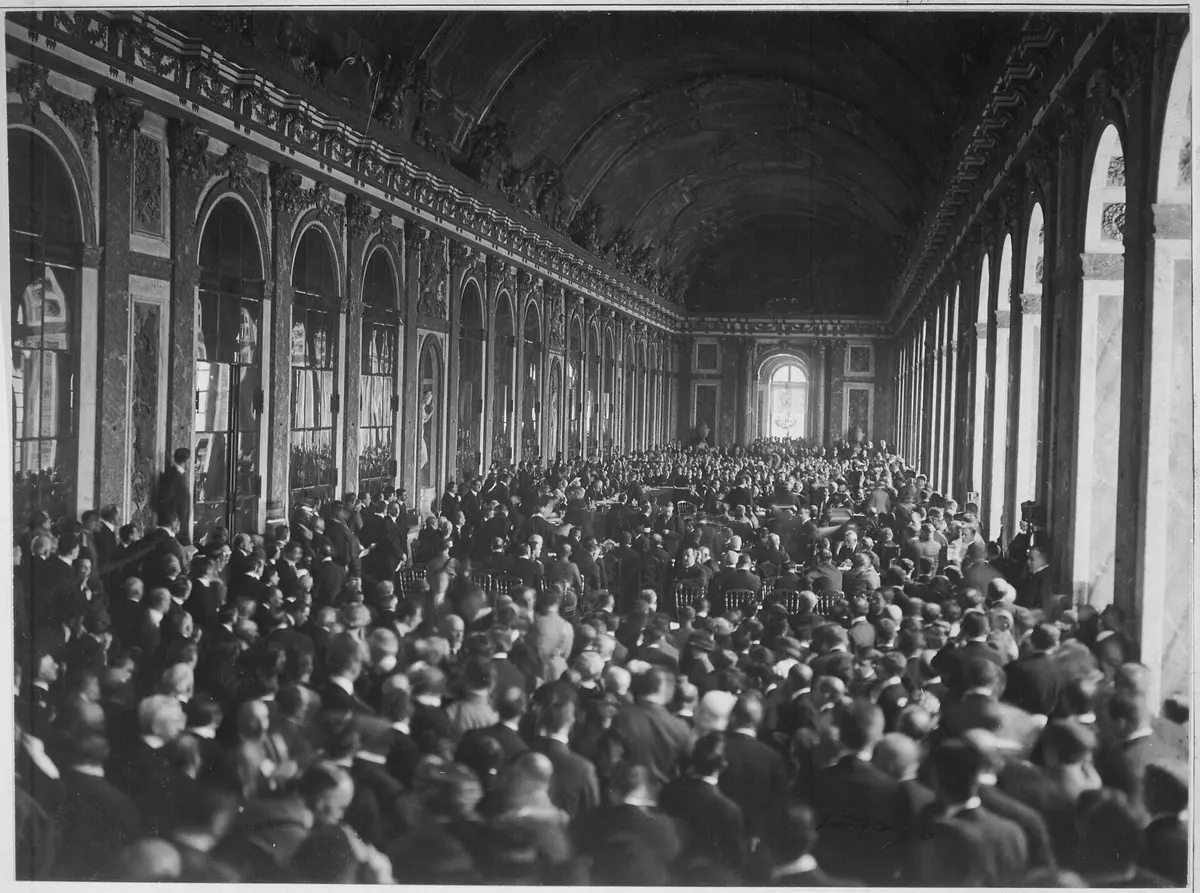
The armistice crowds of November spread it again, and a third wave in the winter and spring of 1919 killed many more; it even reached the peace conference in Paris, where President Wilson fell ill in April, perhaps with the flu. By the summer it was over in most places. In the United States it lowered life expectancy by about twelve years and left 50,000 orphans in Pennsylvania alone; India lost at least 12.5 million people. Yet it was soon pushed out of memory by the war; the US National Archives calls it an oddity of history that it has been left out of the teaching of American history.
The virus itself was found again only at the end of the century. Scientists read its genes from the preserved lungs of soldiers who died in 1918 and of a woman buried in the frozen ground of Brevig Mission in Alaska, and in 2005 the CDC rebuilt the living virus in a sealed laboratory and found that it was the combination of all eight of its genes that made it so deadly. Its descendants still circulate as ordinary seasonal flu. Its lessons, act early, keep people apart, cover the face, were taken out and argued over again in 2020, and the Spanish flu remains the measure against which every new pandemic is judged.
What happened
- 1918
At Camp Funston, an army training camp at Fort Riley in Kansas, the cook Albert Gitchell reports sick one morning and by noon about a hundred soldiers have followed: the first recorded outbreak. Within three weeks more than 1,100 men are in hospital.
Camp Funston, Fort Riley, Kansas: the first recorded outbreak, in March 1918 (the origin is contested: Haskell County in Kansas, Étaples in France and northern China are also proposed)The US Public Health Reports carry the first mention of the new influenza: 18 severe cases and three deaths in Haskell County, Kansas, 300 miles west of Funston, where the historian John Barry later places its start, in January.
Hundreds of thousands of American soldiers now cross the Atlantic every month, and the mild spring wave spreads through the camps and armies of Europe. Spain, neutral and uncensored, reports its epidemic openly, and the world starts calling it the Spanish flu.
In the second half of August a far deadlier form of the flu breaks out almost at once in three Atlantic ports busy with troops and supplies: Brest in France, Freetown in Sierra Leone and Boston.
Freetown, Sierra Leone: one of three ports, with Brest and Boston, where the deadly second wave broke out in August 1918Influenza breaks out among the sailors of the Navy's Receiving Ship at Commonwealth Pier in Boston; by mid-September nearly 2,000 of the 21,000 sailors in the Boston area are sick, and the disease is spreading into the city.
Commonwealth Pier, Boston: the Navy's Receiving Ship, where the second wave reached America on 28 August 1918Camp Devens, the army camp west of Boston, is overwhelmed: by the end of the month, the CDC says, it has counted more than 14,000 cases and 757 deaths. In Boston, Red Cross women make gauze masks for the soldiers in camp.
Commonwealth Pier, Boston: the Navy's Receiving Ship, where the second wave reached America on 28 August 1918Some 200,000 Philadelphians line Broad Street for the Fourth Liberty Loan parade, though the city's first civilian cases were reported eleven days before. Within days the city's hospitals are full.
Philadelphia: the Liberty Loan parade of 28 September 1918 and one of the worst-hit cities in the United StatesThe same day the US Public Health Service under Surgeon General Rupert Blue publishes its advice on 'Spanish influenza', 'three-day fever' and 'the flu' as a supplement to its Public Health Reports; the Red Cross reprints it for the public.
The deadliest month: about 195,000 Americans die of the flu in October alone. Doctors and nurses are short because so many are with the army; the Red Cross appeals for volunteers, and hospitals hang sheets between the beds.
Pennsylvania orders theatres, saloons and other places of amusement closed from midnight, and Philadelphia shuts its schools and churches: too late, for it becomes the worst-hit large city in the country after Pittsburgh.
Philadelphia: the Liberty Loan parade of 28 September 1918 and one of the worst-hit cities in the United StatesSt. Louis, whose first civilian cases were reported two days before, closes its schools, theatres and churches and bans gatherings at once; over the autumn it loses half as many people for its size as Philadelphia.
Oakland turns its Municipal Auditorium into an emergency hospital; actresses thrown out of work by the closures and the city's teachers train as volunteer nurses.
Seattle's mask order comes into force: no one may ride a streetcar or enter a shop without a mask, and those who refuse are arrested. San Francisco has made masks compulsory too.
The steamer Talune from Auckland lands passengers at Apia in Western Samoa, six of them seriously ill with influenza. Within two months more than a fifth of the Samoans, about 8,500 people, are dead, while American Samoa, closed by a quarantine, loses no one.
Apia, Western Samoa: the Talune landed the flu here in November 1918, and more than a fifth of the Samoans diedThe war ends. The crowds celebrating the armistice spread the flu again, and the soldiers going home carry it with them.
In the Inuit village of Brevig Mission in Alaska, 72 of the 80 adults die in five days, from 15 to 20 November. They are buried in a mass grave in the permafrost, where the virus will be found again in 1997.
- 1919
A third wave rises in the winter and spring of 1919 and kills many more; London's deaths peak again in February. San Francisco brings back compulsory masks on 17 January.
In Paris, where the peace with Germany is being negotiated, President Woodrow Wilson collapses; some historians think he was weakened by the influenza still raging in the city. By the summer the third wave has died away.