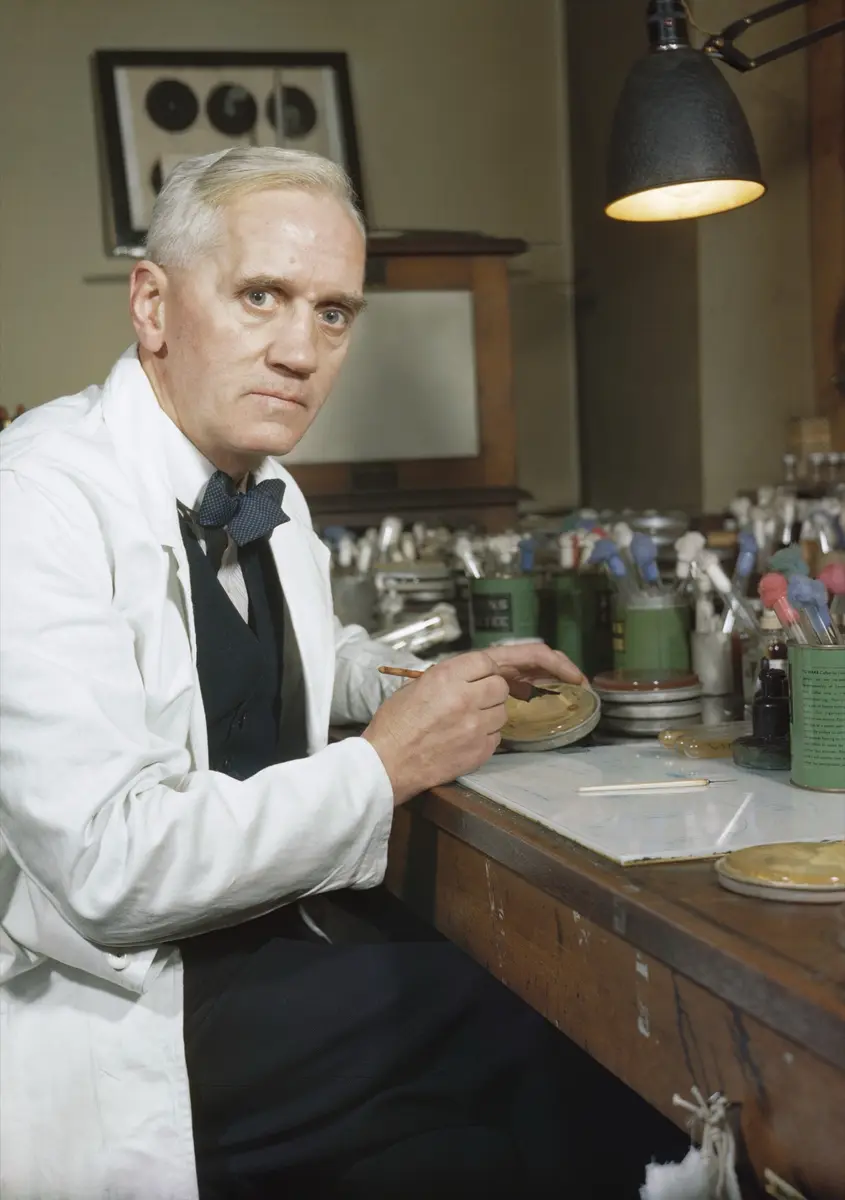
Fleming discovers penicillin
“In 1928 Alexander Fleming saw a stray mould kill bacteria on a dish in his London lab; Florey's Oxford team made penicillin a medicine in 1940–41, and wartime mass production made it the first great antibiotic.”
On 3 September 1928 Alexander Fleming, a 47-year-old Scottish bacteriologist, came back from his summer holiday to his small laboratory in the Inoculation Department of St Mary's Hospital in Paddington, London. Among the dishes of Staphylococcus bacteria he had left on his bench, one had been spoiled by a mould, and around the mould the bacterial colonies had turned clear and were dissolving. Fleming kept the dish, grew the mould, a Penicillium, and found that the 'mould juice' it released into broth stopped many of the bacteria that cause boils, sore throats, pneumonia, meningitis and diphtheria, while it did no harm to white blood cells, a mouse or a rabbit. He named the substance penicillin and described it in the British Journal of Experimental Pathology in June 1929.
Then penicillin waited ten years. It was unstable, and Fleming, a bacteriologist working without chemists, could not purify or concentrate it: his young assistants Stuart Craddock and Frederick Ridley failed, and so did the biochemist Harold Raistrick's group in London three years later. Fleming used it mainly to sort bacteria on his culture plates and as a local antiseptic, and never tested whether it could cure an infected animal. He kept the mould alive and gave dried cultures of it to colleagues and friends as keepsakes.
The change came in Oxford. In 1939, as the Second World War began, Howard Florey, the Australian head of the Sir William Dunn School of Pathology, and Ernst Chain, a biochemist who had fled Nazi Germany, took penicillin up with a team that included Norman Heatley and Edward Abraham. They grew the mould in bedpans, milk churns and ceramic pots that Heatley designed, and Heatley built the apparatus that extracted it. On 25 May 1940 eight mice were given a deadly dose of streptococci; the next morning the four that had also received penicillin were alive and the four others dead. The Lancet published the results on 24 August 1940. On 12 February 1941 Albert Alexander, a police constable gravely ill with a spreading infection, became the first patient treated, at the Radcliffe Infirmary. He began to recover, but the tiny supply ran out and he died on 15 March; other patients, given enough, were cured.
Britain at war could not make the drug in quantity, so in July 1941 Florey and Heatley flew to the United States. At the Department of Agriculture's laboratory in Peoria, Illinois, Andrew Moyer raised the yield tenfold by feeding the mould corn-steep liquor, and in 1943 a strain found on a mouldy cantaloupe from a Peoria market proved to grow well in deep, stirred tanks. Drug companies, pressed and supplied by the government, built factories: Pfizer opened the first large deep-tank plant in Brooklyn on 1 March 1944, and 2.3 million doses were ready for the D-Day landings in June. American output rose from 21 billion units in 1943 to more than 6.8 trillion in 1945, and from 15 March 1945 Americans could get it from an ordinary pharmacy. In 1945 Dorothy Hodgkin in Oxford confirmed the molecule's structure by X-ray crystallography.
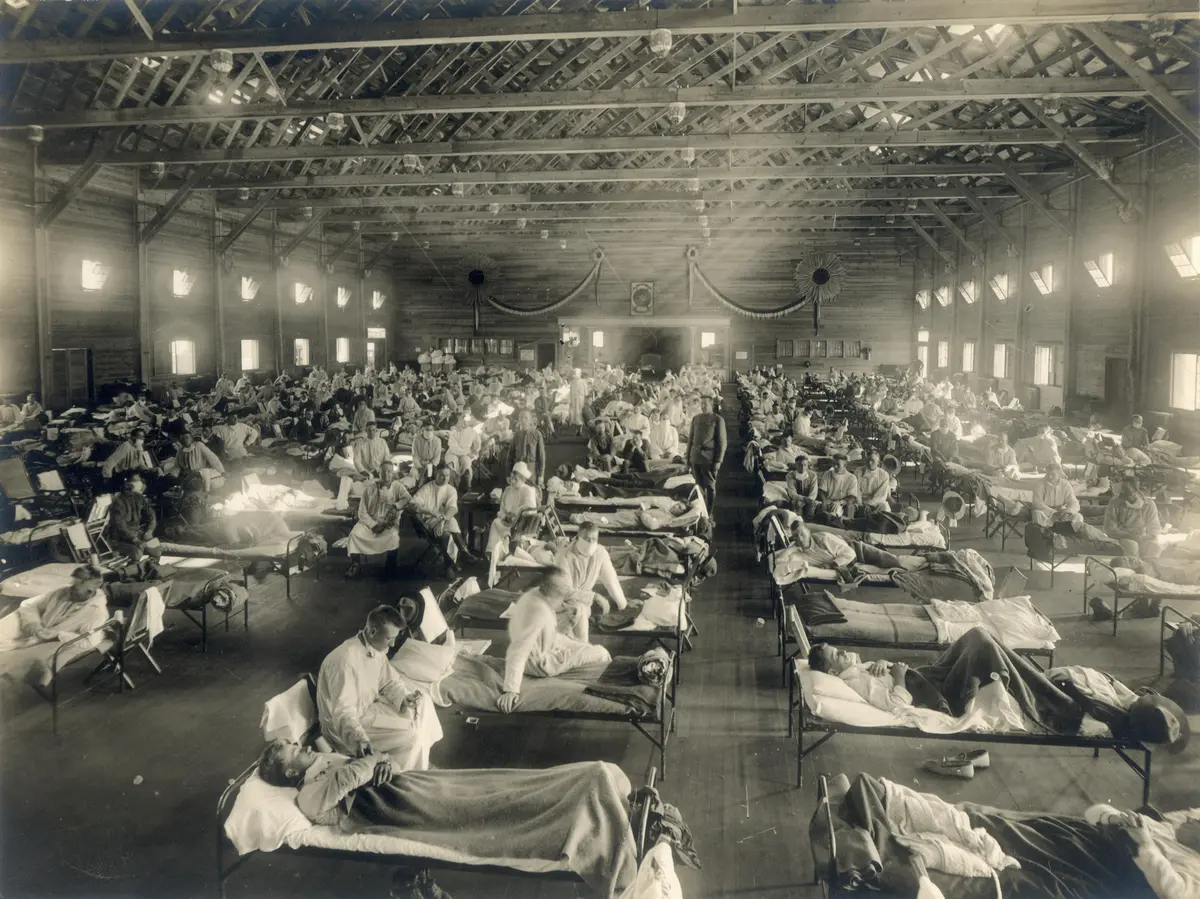
On 10 December 1945 Fleming, Florey and Chain shared the Nobel Prize in Physiology or Medicine. Newspapers made Fleming, with his lucky dish, the hero of the story, although the Oxford team had turned his observation into a medicine. Penicillin opened the age of antibiotics: blood poisoning from a scratch, infected wounds, pneumonia, gonorrhoea and syphilis became curable, among them the bacterial pneumonia that had killed most victims of the 1918 flu. In his Nobel lecture the next day Fleming warned that people who took too little of the drug would teach microbes to resist it; antibiotic resistance is now one of medicine's great worries.
What happened
- 1928
Back from his summer holiday, Fleming sorts the dishes of Staphylococcus he had left on the bench of his laboratory at St Mary's. On one of them a mould has grown, and around it the bacterial colonies have turned clear and are dissolving. He keeps the dish, photographs it and grows the mould.
Fleming's laboratory at St Mary's Hospital, Paddington, London: where he found the mouldy dish on 3 September 1928, today the Alexander Fleming Laboratory Museum- 1929
Fleming sends his paper to the British Journal of Experimental Pathology, which prints it in June. The mould's broth, which he calls penicillin, stops many disease-causing bacteria and harms neither white blood cells nor animals; but his assistants Stuart Craddock and Frederick Ridley cannot purify it, and the paper's main use for it is sorting bacteria in the laboratory, as its title says.
Fleming's laboratory at St Mary's Hospital, Paddington, London: where he found the mouldy dish on 3 September 1928, today the Alexander Fleming Laboratory Museum- 1935
Penicillin remains a laboratory curiosity. Fleming keeps the mould alive and gives dried cultures of it, mounted in small cases, to colleagues and friends: this year one goes to Douglas Macleod, a colleague at St Mary's.
Fleming's laboratory at St Mary's Hospital, Paddington, London: where he found the mouldy dish on 3 September 1928, today the Alexander Fleming Laboratory Museum - 1939
At the Sir William Dunn School in Oxford, Howard Florey and Ernst Chain, who had decided in 1938 to study antibacterial substances made by microbes, start work on penicillin, which Chain found in Fleming's paper. From October the biochemist Norman Heatley joins them.
The Sir William Dunn School of Pathology, Oxford: where Florey, Chain, Heatley and their colleagues purified penicillin and tested it on mice, 1939–41- 1940
Two mice are injected with penicillin that Chain and Edward Abraham have extracted, at a far higher dose than Fleming had used. They stay well: the drug has passed its first test of safety.
The Sir William Dunn School of Pathology, Oxford: where Florey, Chain, Heatley and their colleagues purified penicillin and tested it on mice, 1939–41Florey's team gives eight mice a deadly dose of streptococci and treats four of them with penicillin. Heatley watches over them; by the next morning the four untreated mice are dead and the four treated mice alive.
The Sir William Dunn School of Pathology, Oxford: where Florey, Chain, Heatley and their colleagues purified penicillin and tested it on mice, 1939–41The Lancet publishes the Oxford team's report that penicillin protects mice against deadly infections. To make enough for patients, the Dunn School becomes a factory: the mould grows in bedpans, milk churns and Heatley's ceramic vessels, tended by 'penicillin girls'.
The Sir William Dunn School of Pathology, Oxford: where Florey, Chain, Heatley and their colleagues purified penicillin and tested it on mice, 1939–41- 1941
Albert Alexander, a police constable gravely ill with a septic infection, becomes the first patient treated with penicillin, at the Radcliffe Infirmary. Within days he recovers strikingly; the doctors even recover penicillin from his urine to give it again.
The former outpatients building of the Radcliffe Infirmary, Oxford: where Albert Alexander became the first patient treated with penicillin on 12 February 1941The supply runs out and Albert Alexander dies. Of the six patients in the first trial, four make a complete recovery, and the results are published in August.
The former outpatients building of the Radcliffe Infirmary, Oxford: where Albert Alexander became the first patient treated with penicillin on 12 February 1941With British industry absorbed by the war, Florey and Heatley fly from Lisbon to New York to find American help, with support from the Rockefeller Foundation; Heatley writes the Oxford method out from memory on the plane, because the censor has sealed his notebooks.
Florey and Heatley reach the Department of Agriculture's Northern Regional Research Laboratory in Peoria, Illinois. Heatley stays on, and within weeks Andrew Moyer raises the yield by growing the mould on lactose and corn-steep liquor, a waste product of corn milling: ten times as much penicillin.
The Northern Regional Research Laboratory, Peoria, Illinois: where Florey and Heatley arrived on 14 July 1941 and the Department of Agriculture learned to mass-produce penicillinTen days after Pearl Harbor, at a government meeting in New York, the heads of Merck, Squibb, Pfizer and Lederle hear of Peoria's results, and George Merck says that if the results hold up, industry will make the kilogram of penicillin Florey has asked for.
- 1942
In New Haven, Connecticut, Ann Miller becomes the first patient treated with penicillin made under the American government programme, supplied by Merck.
- 1943
In the Peoria laboratory's worldwide search for better moulds, a strain found on a mouldy cantaloupe from a Peoria market proves the best of all in deep, stirred tanks; improved with X-rays and ultraviolet light, it becomes the parent of the strains used in industry.
The Northern Regional Research Laboratory, Peoria, Illinois: where Florey and Heatley arrived on 14 July 1941 and the Department of Agriculture learned to mass-produce penicillinThe War Production Board takes charge of penicillin, chooses 21 companies, gives them first call on building materials and controls every dose they make; posters urge the builders of the new plants on.
- 1944
Pfizer opens the first large penicillin factory, a rebuilt ice plant on Marcy Avenue in Brooklyn with fourteen tanks of 7,500 gallons, where the mould grows submerged in stirred and aerated broth.
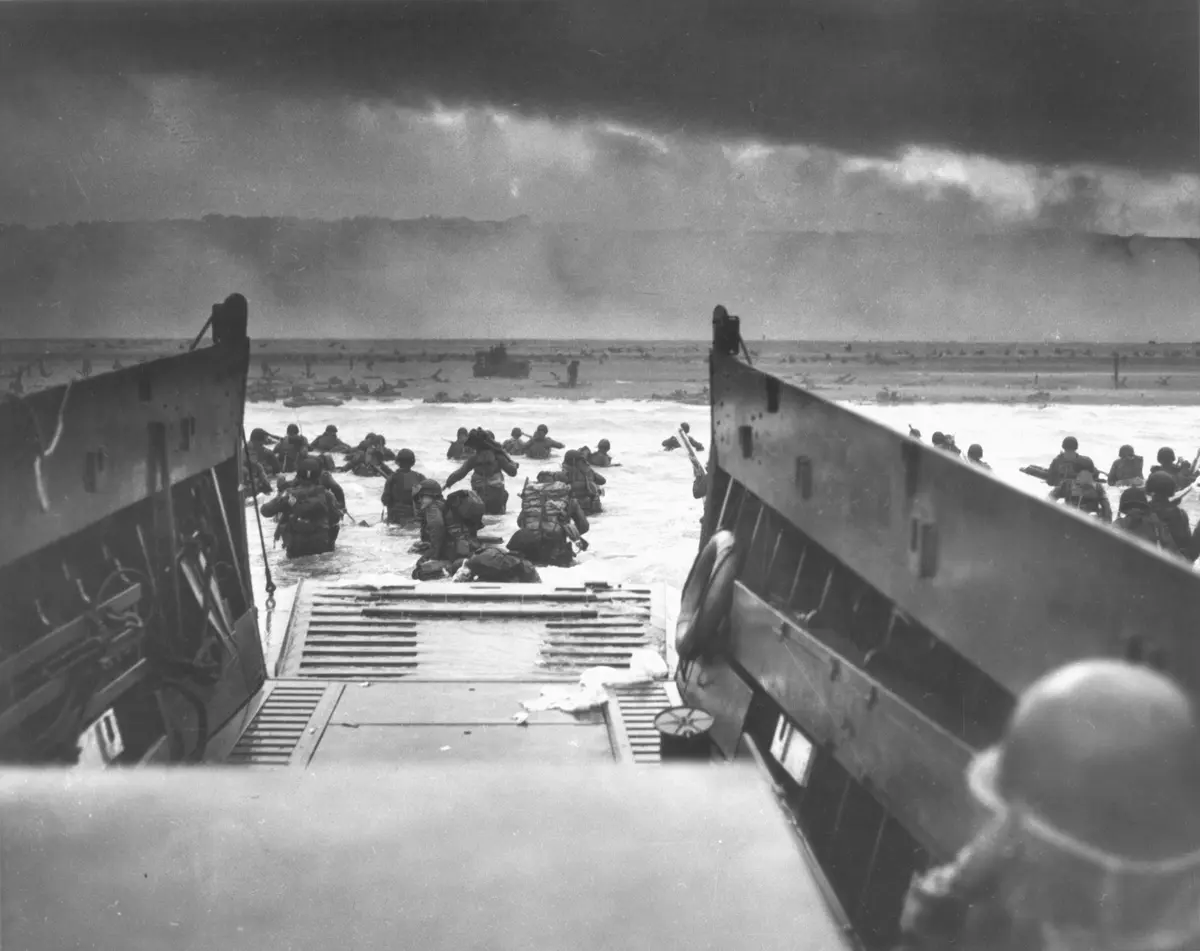
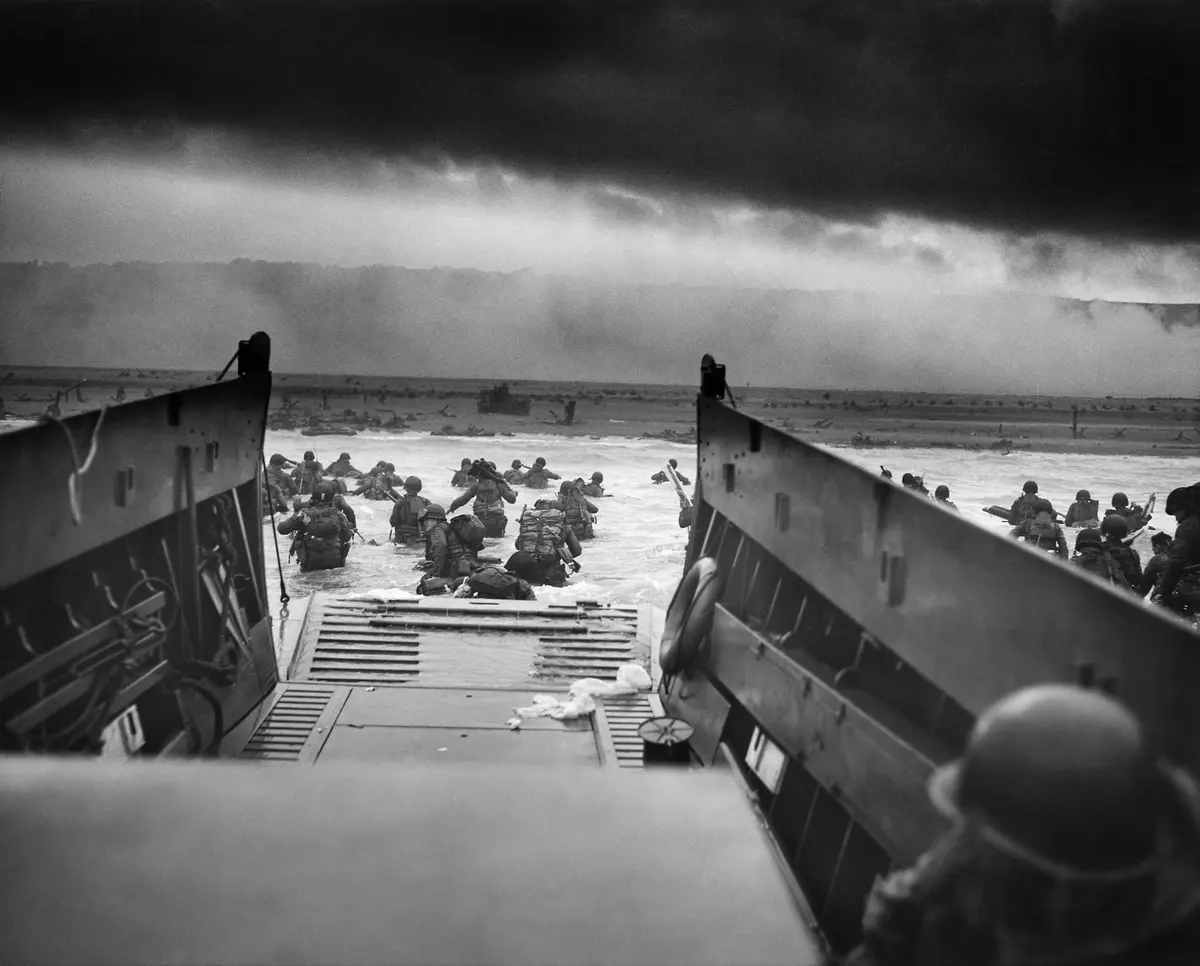
On D-Day the Allied armies land in Normandy with penicillin for their wounded: 2.3 million doses had been made ready, and most of the penicillin that goes ashore comes from Pfizer's Brooklyn plant.
- 1945
The United States lifts its controls: penicillin is now sold through ordinary pharmacies, and US output this year passes 6.8 trillion units, against 21 billion in 1943.
In Stockholm, King Gustaf V presents the Nobel Prize in Physiology or Medicine to Fleming, Chain and Florey 'for the discovery of penicillin and its curative effect in various infectious diseases'.
Stockholm: where Fleming, Florey and Chain received the Nobel Prize on 10 December 1945 and Fleming gave his lecture the next dayIn his Nobel lecture Fleming tells how the unwanted mould contaminated his plate, and warns that people who underdose themselves will make microbes resistant: 'If you use penicillin, use enough.'
Stockholm: where Fleming, Florey and Chain received the Nobel Prize on 10 December 1945 and Fleming gave his lecture the next day