The Treaty of Versailles
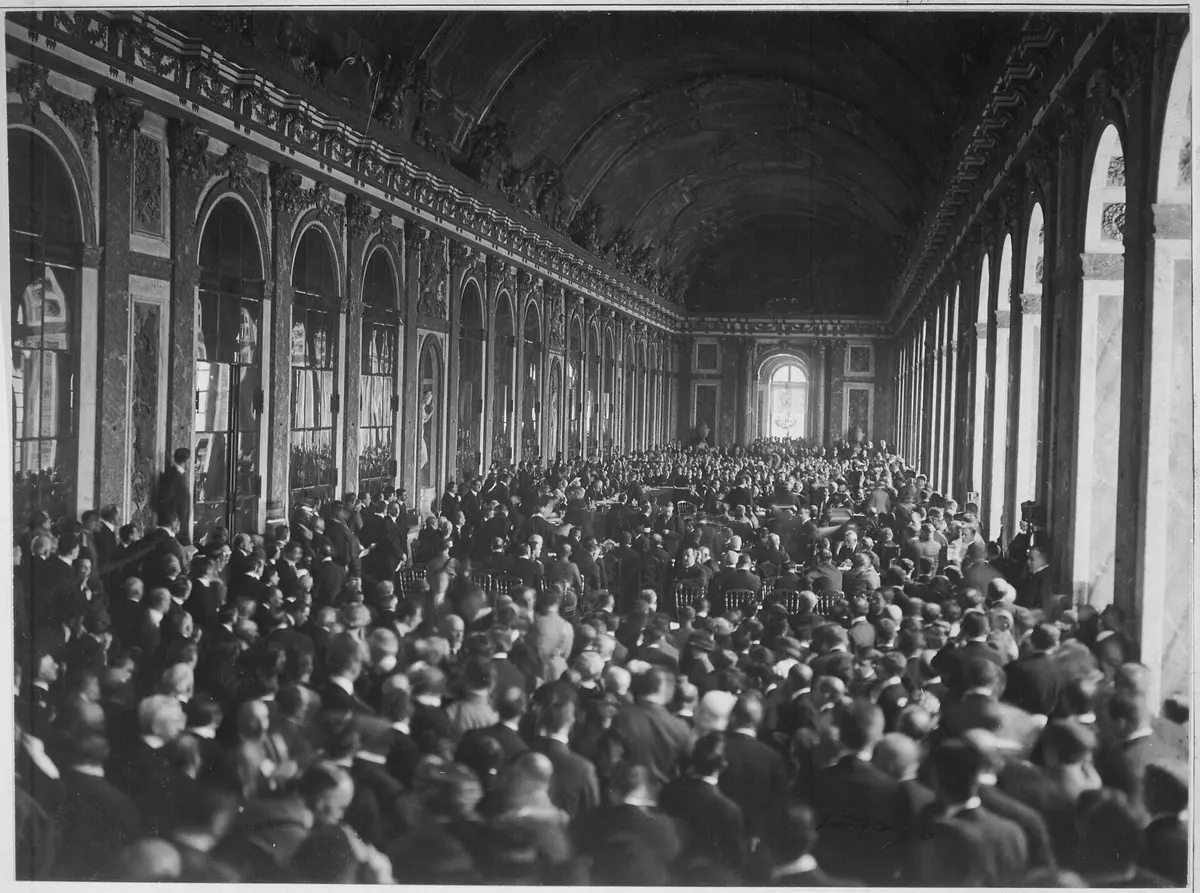
“Signed on 28 June 1919 in the Hall of Mirrors at Versailles, the peace that ended World War I blamed Germany, cut its army and borders, demanded reparations and created the League of Nations.”
The Treaty of Versailles was the peace that the victors of the First World War made with Germany. The guns had fallen silent with the armistice of 11 November 1918, but the war was only suspended until a treaty was signed. On 18 January 1919 delegates of nearly thirty Allied and associated nations opened a peace conference in Paris, at the French Foreign Ministry on the Quai d'Orsay; the defeated powers and Bolshevik Russia were left out. The big decisions fell to four men, the 'Big Four': Woodrow Wilson of the United States, Georges Clemenceau of France, David Lloyd George of Britain and, with less weight, Vittorio Orlando of Italy. On 7 May the terms were handed to the Germans at the Trianon Palace hotel in Versailles, with no talks allowed, only written replies. On 28 June 1919, five years to the day after the murder of Archduke Franz Ferdinand at Sarajevo, two German ministers signed in the Hall of Mirrors of the Palace of Versailles, the room where the German Empire had been proclaimed in 1871.
The treaty ran to 440 articles. Its first part was the Covenant of the League of Nations, Wilson's plan for a world body whose members would guarantee each other's borders and settle their quarrels peacefully. The rest dealt with Germany. It lost about a tenth of its land and people in Europe: Alsace-Lorraine went back to France, small districts to Belgium, and most of West Prussia and Posen to a reborn Poland, whose 'corridor' to the Baltic cut East Prussia off from the rest of the country. Danzig became a free city, the coal-rich Saar was placed under the League with its mines given to France, and votes were to decide northern Schleswig, parts of East Prussia and Upper Silesia. All the colonies were taken. The army was cut to 100,000 men, with no general staff, tanks, submarines or air force, and the Rhineland was to be occupied for fifteen years and kept free of troops and forts. In Article 231 Germany accepted responsibility for all the loss and damage of a war 'imposed upon them by the aggression of Germany and her allies', and on that basis it owed reparations; the total was left to a commission, which in 1921 set it at 132 billion gold marks.
To the Germans it was a Diktat, a dictated peace that broke the promise of Wilson's Fourteen Points, on which they had asked for the armistice. Philipp Scheidemann, head of the new republic's government, asked what hand would not wither that signed it. The Allies changed little and set a deadline, with invasion as the alternative. Scheidemann's cabinet resigned; on 21 June the crews of the German fleet interned at Scapa Flow, in Orkney, sank their own ships rather than hand them over; and on 22 and 23 June the National Assembly, sitting in the theatre at Weimar, gave way. In Washington the Senate, led by Wilson's rival Henry Cabot Lodge, feared that the League's promise to defend every member would let others decide when America went to war, and on 19 November 1919 it rejected the treaty. The treaty came into force without the United States on 10 January 1920, the day the League of Nations came into being.
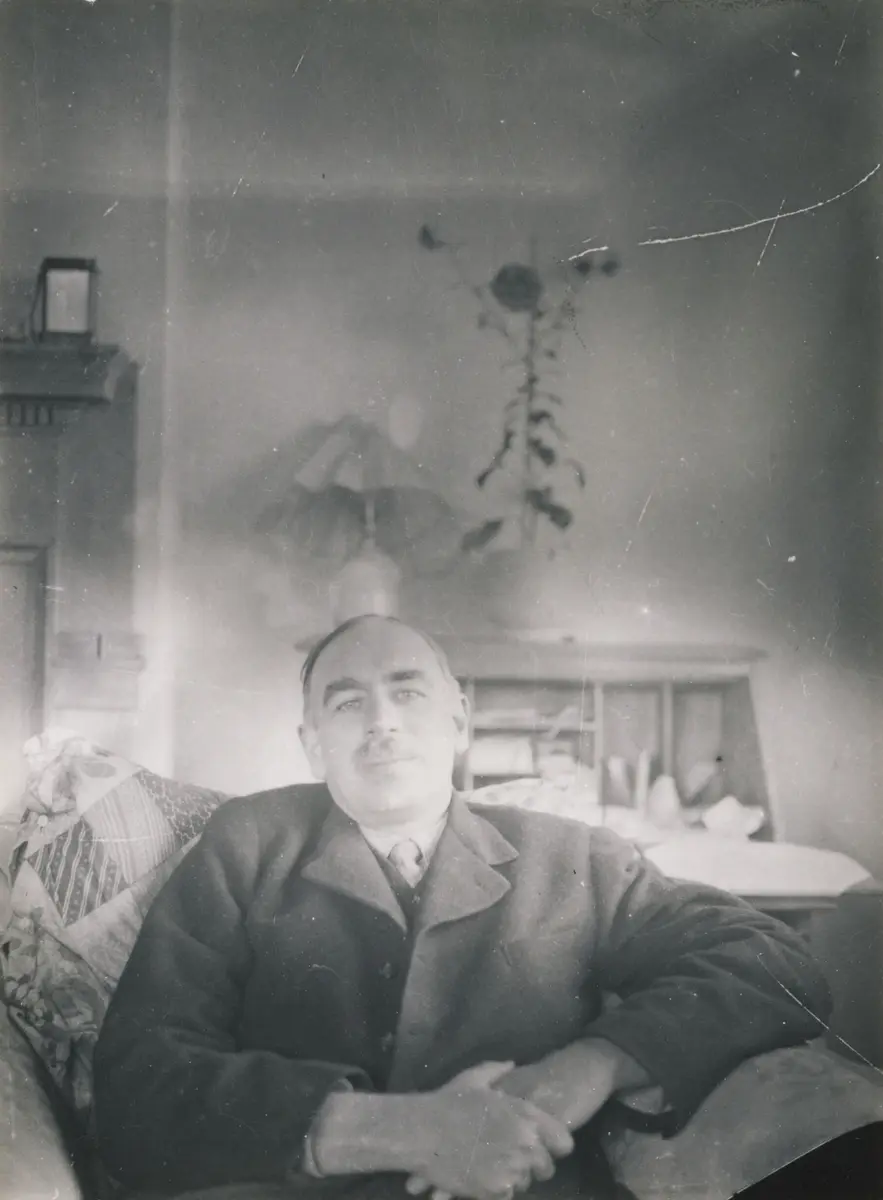
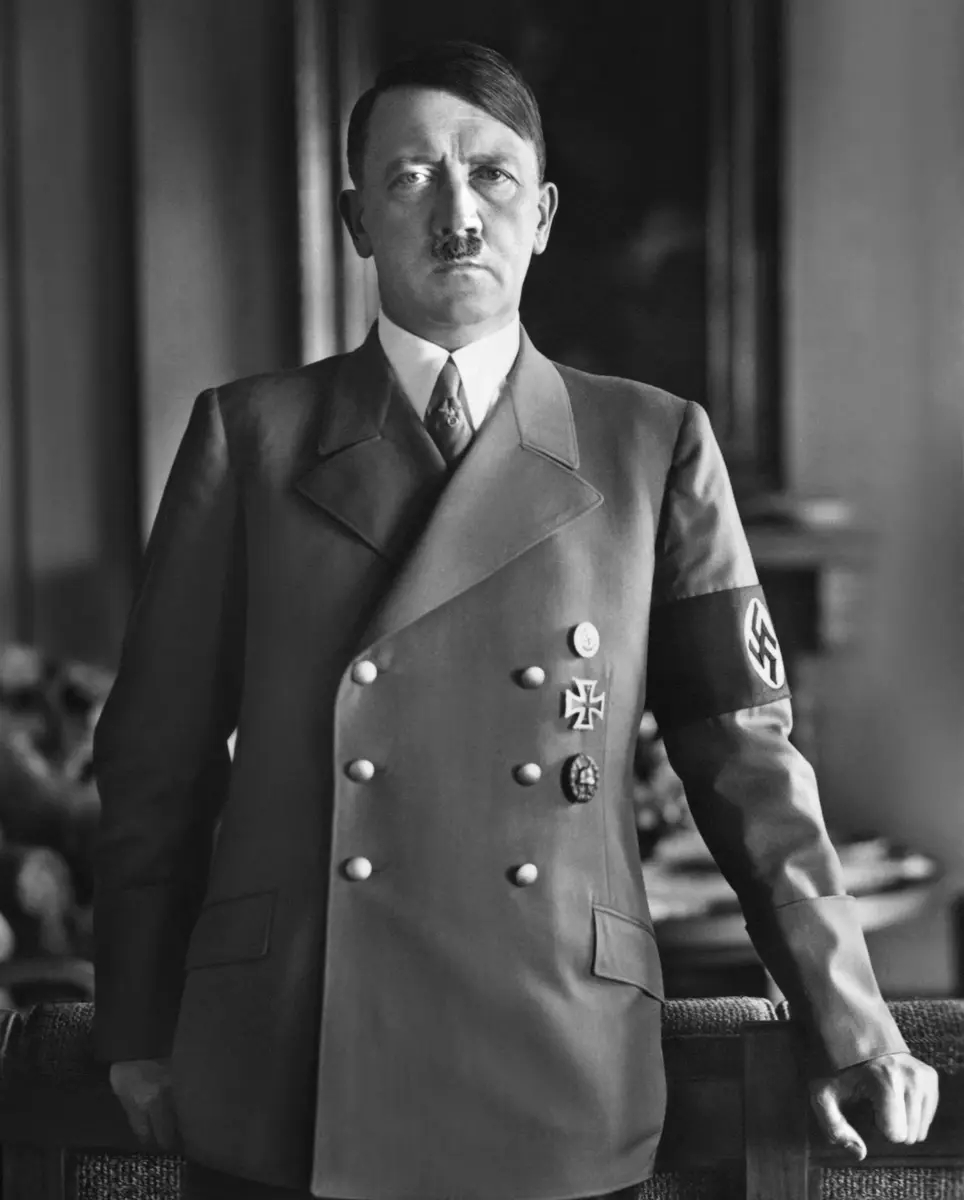
Few peace treaties have been blamed as much. Within months the British economist John Maynard Keynes, who had left the conference in disgust, called it a 'Carthaginian peace' that would ruin Europe, and his best-seller fixed the view that held for decades: a treaty too harsh to be accepted and too weak to be enforced, whose humiliation fed the myth that Germany had been 'stabbed in the back', helped Hitler to power and led to the Second World War. Historians such as Margaret MacMillan now tell a more complicated story: much of the treaty was softened in Germany's favour in the 1920s, Germany joined the League, and it took the Great Depression and twenty years of choices to bring war again. Yet its war-guilt clause, its reparations and its new map of Europe shaped the century, and the League it founded was the forerunner of the United Nations.
What happened
- 1919
- 3:00 p.m.
In the Peace Rooms of the French Foreign Ministry, President Raymond Poincaré opens the conference, reminding the delegates that on this very day 48 years earlier the German Empire was proclaimed at Versailles. On Wilson's proposal, seconded by Lloyd George, Clemenceau becomes its president.
The French Foreign Ministry on the Quai d'Orsay, Paris: the peace conference opened in its Clock Room on January 18, 1919, held its full sessions there and adopted the Covenant of the League of Nations there on April 28 - 3:30 p.m.
At the third full session Wilson reads out the draft Covenant of the League of Nations, written by a commission he chairs: 'not a straitjacket but a vehicle of life'.
The French Foreign Ministry on the Quai d'Orsay, Paris: the peace conference opened in its Clock Room on January 18, 1919, held its full sessions there and adopted the Covenant of the League of Nations there on April 28 With the work dragging, the leaders of the four great powers, Wilson, Clemenceau, Lloyd George and Orlando, begin to meet on their own as the Council of Four, the small inner circle that settles the German treaty.
- 3:00 p.m.
A full session adopts the revised Covenant of the League of Nations, with Geneva as the League's seat. Japan's call to write the equality of nations and the fair treatment of their peoples into it has failed.
The French Foreign Ministry on the Quai d'Orsay, Paris: the peace conference opened in its Clock Room on January 18, 1919, held its full sessions there and adopted the Covenant of the League of Nations there on April 28 - 3:00 p.m.
At the Trianon Palace hotel in Versailles Clemenceau hands the terms to the German delegation led by Count Brockdorff-Rantzau: 'The hour has struck for the weighty settlement of our accounts.' There will be no talks, only written replies within fifteen days. Brockdorff-Rantzau answers that to admit Germany alone was guilty of the war would be a lie.
The Trianon Palace hotel, Versailles: here Clemenceau handed the terms of peace to the German delegation on May 7, 1919 Before the National Assembly, meeting that day in Berlin, the head of government Philipp Scheidemann calls the treaty unacceptable and asks what hand would not wither after putting such chains on itself and on Germany.
The German delegation sends back its counter-proposals, a long written protest against the terms; the Allies reject nearly all of them.
John Maynard Keynes, the British Treasury's official representative at the conference, gives up his post, having lost hope that the terms will change; he goes home to write a book against them.
The Allies answer the German objections with a few changes and an ultimatum: accept the treaty within days, or the armistice ends and their armies march into Germany.
Divided over whether to sign, Scheidemann's government resigns; the Social Democrat Gustav Bauer takes over at short notice.
At Scapa Flow, in Orkney, Rear Admiral Ludwig von Reuter gives the signal in the late morning, and the crews of the German fleet interned there since November open the valves. The British notice only at noon; most of the ships go to the bottom before they can be seized.
Scapa Flow, Orkney: the anchorage where the German fleet was interned from November 1918 and sank itself on June 21, 1919Sitting in the theatre at Weimar, the National Assembly votes 237 to 138 to sign, but without accepting Article 231 on war guilt and Article 227 on putting the Kaiser on trial.
The German National Theatre, Weimar: the National Assembly met in this theatre in 1919 and here, on June 22 and 23, agreed to sign the treatyClemenceau refuses any conditions and gives Germany 24 hours. Without a roll call the Assembly declares that its vote covers an unconditional signature, and the government tells Paris it yields to overwhelming power.
The German National Theatre, Weimar: the National Assembly met in this theatre in 1919 and here, on June 22 and 23, agreed to sign the treaty- 3:00 p.m.
In the Hall of Mirrors Clemenceau opens the session at three. The German ministers Hermann Müller and Johannes Bell sign first, then the Allied delegates, nation by nation; at ten to four it is over. Outside, crowds fill the courtyards and gardens.
The Palace of Versailles: in its Hall of Mirrors, where the German Empire had been proclaimed in 1871, the treaty was signed on June 28, 1919 Back in Washington, Wilson lays the treaty before the Senate, where the Republican majority led by Henry Cabot Lodge wants reservations, above all to Article 10, the League's promise to defend its members.
The United States Capitol, Washington: the Senate rejected the treaty here on November 19, 1919Touring the country to win the people over to the League, Wilson speaks at Pueblo, Colorado, and collapses from exhaustion; soon after a stroke leaves him half-paralysed.
The Senate votes on the treaty with Lodge's fourteen reservations and without them, and rejects it both times: for the first time in its history it turns down a peace treaty.
The United States Capitol, Washington: the Senate rejected the treaty here on November 19, 1919Keynes's The Economic Consequences of the Peace comes out in London. Calling the treaty a 'Carthaginian peace' that will ruin Europe, it becomes a best-seller.
- 1920
With Germany and three of the principal Allied powers having ratified, the first record of ratifications is drawn up in Paris and the treaty comes into force; the League of Nations comes into existence the same day.