Genghis Khan
“The Mongol chief Temüjin who united the steppe tribes, was proclaimed Genghis Khan in 1206 and conquered northern China and Central Asia before he died on campaign in 1227.”
Genghis Khan was born Temüjin, probably in 1162 (other sources say 1155 or 1167), beside the Onon River in north-eastern Mongolia. His father Yesügei was a chief of the Borjigin clan of the Mongols and his mother Hö'elün a woman Yesügei had carried off from the Merkit tribe. When the boy was about nine his father was poisoned by Tatars, and the clan abandoned the widow and her children, who lived for years on roots and fish. Temüjin killed his half-brother Behter in a quarrel, was taken prisoner by the rival Taychiut and escaped in his wooden collar, and drew his first companions to him by force of personality. He married Börte, the bride his father had chosen for him, and when Merkit raiders carried her off he won her back with the help of two allies: Toghril, khan of the Kereit, his father's sworn brother, and his own boyhood friend Jamukha.
His rise to mastery of the steppe was slow. His friendship with Jamukha turned into rivalry, and in about 1187 Jamukha defeated him; he may then have spent years in the service of the Jin emperors of northern China. Back in strength from 1196, he destroyed his rivals one by one: the Tatars, his father's killers, in 1202; Toghril, who turned against him, in 1203; the Naiman in 1204; and finally Jamukha, handed over by his own men. Unlike earlier steppe chiefs he broke up the defeated tribes, killed their nobles and gave their people to his loyal companions, many of them men of humble birth. In 1206 an assembly of all the tribes proclaimed him Genghis Khan, a title whose meaning is debated ('universal ruler' is the usual guess). He organised every fighting man into units of ten, a hundred, a thousand and ten thousand under commanders chosen for their loyalty, and had the Mongol language written down for the first time, in the script of the Uyghurs.
Then he turned on the settled states around the steppe. He forced the Tangut kingdom of Xi Xia to submit in 1209–10, invaded the Jin empire of northern China in 1211 and took its capital Zhongdu, today's Beijing, in 1215. When the governor of Otrar massacred a Mongol trade caravan in 1218 and the shah of Khwarazm killed his envoy, he led his army west: Bukhara and Samarkand fell in 1220, Urgench, Merv, Nishapur and Herat in 1221, and he chased the shah's son Jalal al-Din to the banks of the Indus. Cities that surrendered were spared; those that resisted were destroyed, their people killed or driven ahead of the army against the next town, and the irrigation canals of Khwarazm were ruined. He came home to Mongolia in 1225 and set out once more against Xi Xia, which had refused him troops. He died during that campaign in August 1227; his body was carried back and buried in a secret place, by tradition on or near the sacred mountain Burkhan Khaldun.
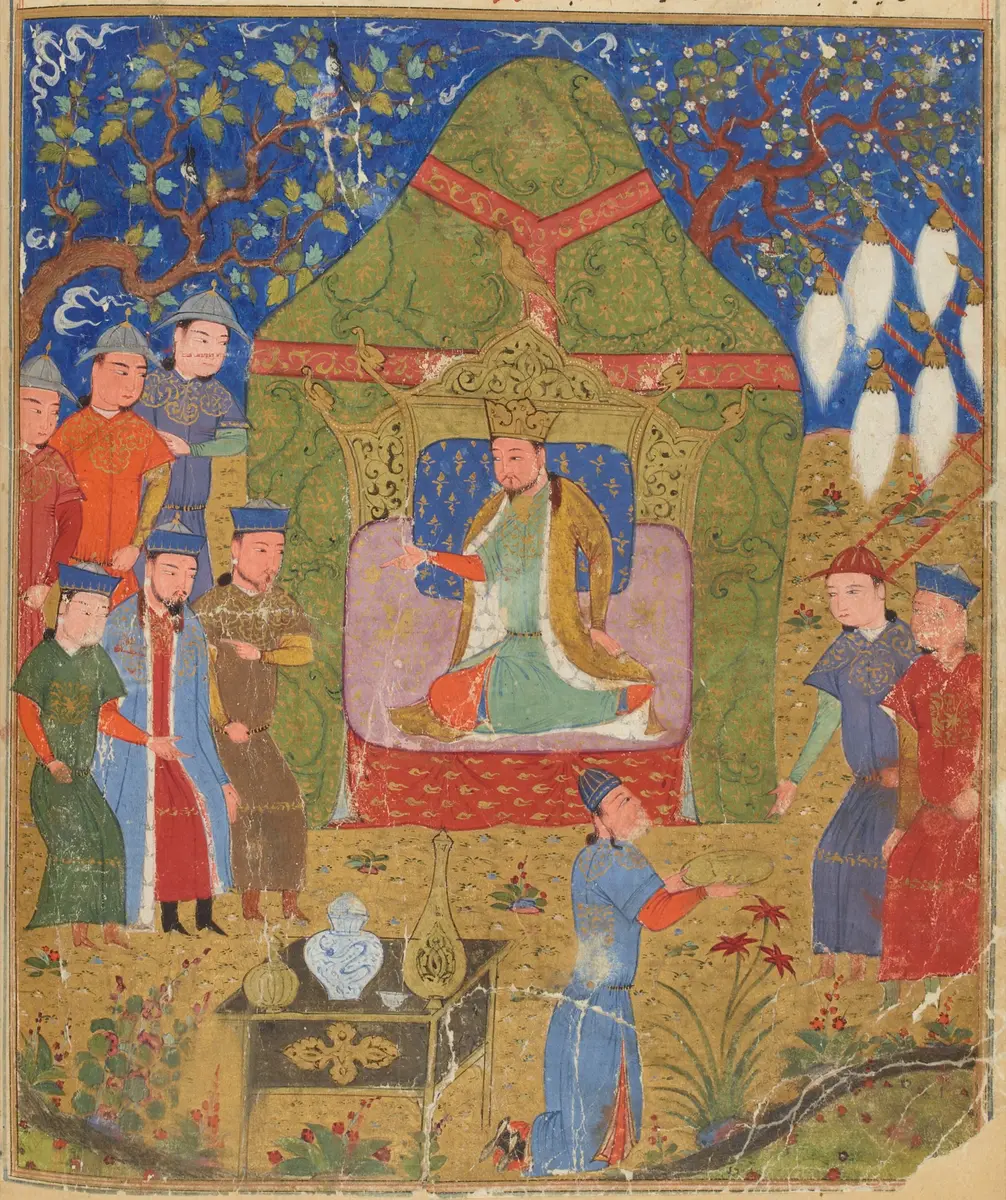
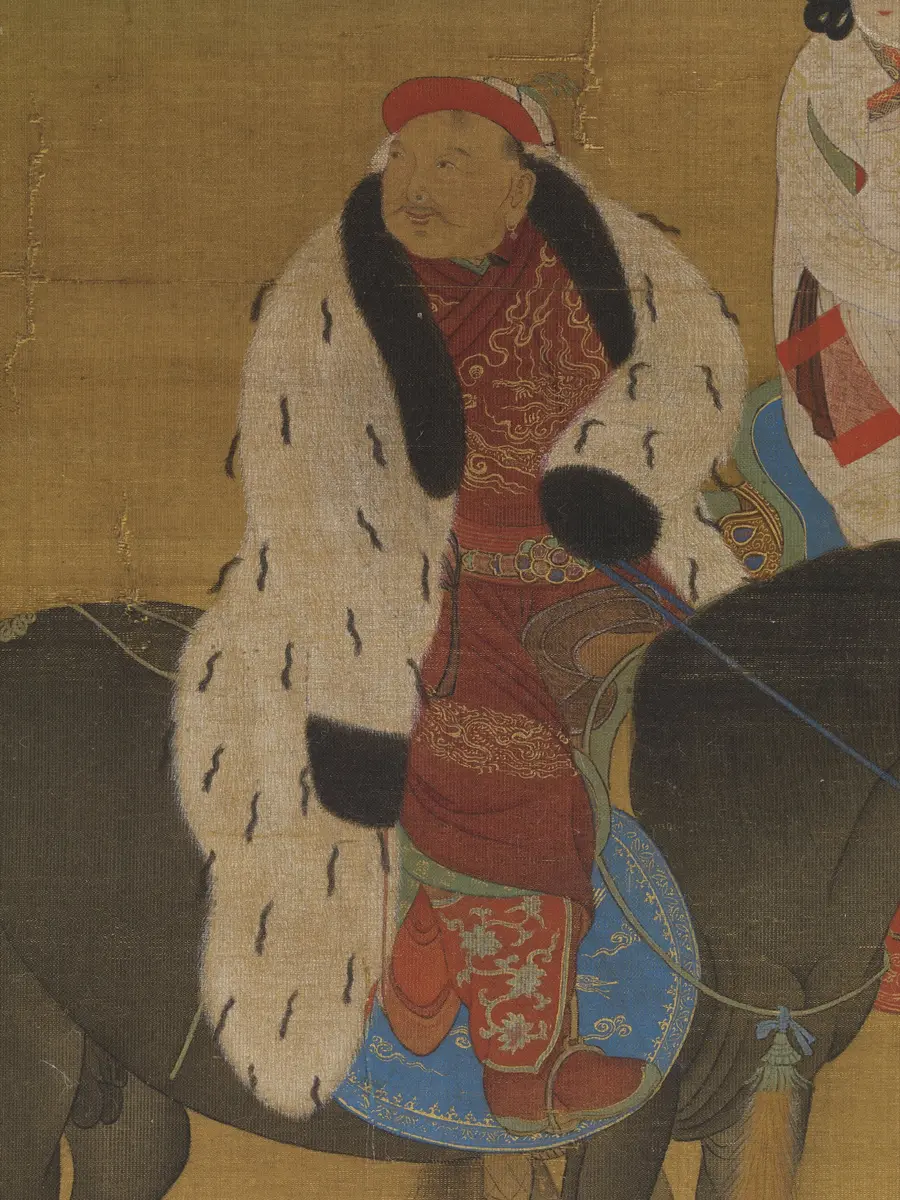
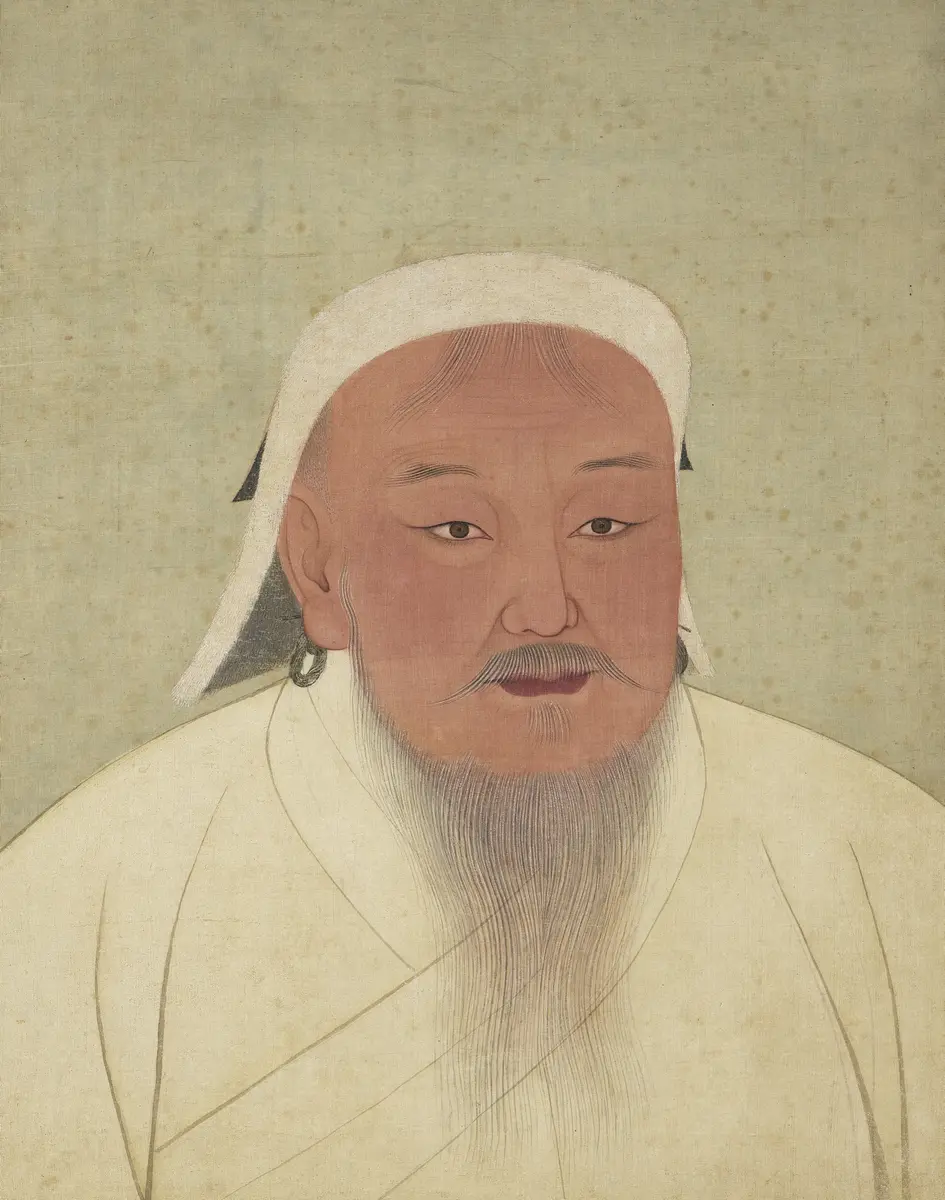
No portrait of him made in his lifetime survives. What we know comes from the Secret History of the Mongols, written for his family after his death, and from the chronicles of the peoples he conquered, Chinese, Persian and Arab, who wrote of him with horror. He listened to advice from his mother, his wives and men of many faiths, protected merchants and craftsmen, freed monasteries and temples from tax, and summoned an old Taoist master, Changchun, across Asia to ask him about long life. His sons and grandsons, Ögedei and Kublai above all, built on his conquests the largest land empire in history. In Mongolia he is honoured as the founding father of the nation; elsewhere he is remembered above all for the millions killed in his wars.
What happened
- 1162
Born Temüjin, probably in 1162, the eldest son of Yesügei, a chief of the Borjigin clan of the Mongols, and his wife Hö'elün, at Delüün Boldog on the Onon. He is said to have come into the world holding a clot of blood in his fist.
Delüün Boldog by the Onon, Dadal: the place the Secret History names as his birthplace, about 1162 - 1171
About nine years old, he is betrothed to Börte, daughter of an Onggirat chief; riding home, Yesügei is poisoned by Tatars and dies. The clan abandons Hö'elün and her children, who live by the Onon on roots and fish.
- 1178
About now he marries Börte. In the hard years before he has killed his half-brother Behter, escaped from the Taychiut in a wooden collar and won his first companion, Bo'orchu. Soon after the wedding Merkit raiders carry Börte off while he hides on Burkhan Khaldun; Toghril of the Kereit and his friend Jamukha bring armies and win her back, and she bears a son, Jochi.
Burkhan Khaldun, in the Khentii mountains where the Onon and the Kherlen rise: his refuge from the Merkit, sacred mountain, and by tradition his grave - 1187
His followers have made him khan of the Mongols, and his friendship with Jamukha has broken. In about 1187 Jamukha beats him at Dalan Baljut and boils seventy prisoners alive; Temüjin may spend the next years in the service of the Jin emperors of northern China.
- 1196
With Toghril he joins a Jin campaign against the Tatars, his father's killers; the Jin emperor makes Toghril a prince (wang, hence Ong Khan) and gives Temüjin a lesser title.
- 1202
He crushes the Tatars and kills every male taller than the axle of a cart, taking the children into his own people.
- 1203
Toghril turns on him and routs him in a surprise attack; at Baljuna he swears loyalty with the few men left to him, regroups and destroys the Kereit, whose people he shares out among the Mongols. Toghril is killed while fleeing.
- 1204
At Chakirmaut in the Altai he defeats the Naiman, the last great tribe against him; their khan is killed and many of his men fall from the cliffs in the night. A Uyghur scribe of the Naiman court, taken into his service, begins to write Mongol in the Uyghur script.
- 1206
Jamukha, betrayed by his own companions, has been put to death. An assembly of all the tribes near the source of the Onon proclaims Temüjin Genghis Khan; he organises the people into units of ten, a hundred, a thousand and ten thousand under commanders loyal to him alone.
Burkhan Khaldun, in the Khentii mountains where the Onon and the Kherlen rise: his refuge from the Merkit, sacred mountain, and by tradition his grave - 1209
He leads his first great invasion against the Tangut kingdom of Xi Xia and besieges its capital Zhongxing; a dam meant to flood the city bursts and floods his own camp in January 1210, but the king submits, pays tribute and gives him a daughter.
The royal tombs of Xi Xia outside Zhongxing (Yinchuan), the Tangut capital he besieged in 1209–10 and whose kingdom he was destroying when he died in 1227 - 1211
He invades the Jin empire of northern China, rides through its frontier defences and destroys a great Jin army at Badger Mouth in August.
- 1214
Camped before the walls of Zhongdu with a sick and hungry army, he lets the Jin buy him off with gold, silk, horses and a princess and rides home; the Jin court then moves south to Kaifeng.
Zhongdu, the Jin capital (now Beijing): bought off before its walls in 1214, surrendered to his army in 1215- 1215
Treating the move as a breach of the peace, he sends his army back: Zhongdu, today's Beijing, surrenders and is sacked. His general Muqali is left to carry on the war in China.
Zhongdu, the Jin capital (now Beijing): bought off before its walls in 1214, surrendered to his army in 1215 - 1218
The governor of Otrar, a town of the shah of Khwarazm, kills the merchants of a Mongol caravan of some 450 men as spies; the shah beheads the envoy sent to demand justice. Genghis Khan prepares for war.
- 1220
Leaving his sons to besiege Otrar, he crosses the Kyzylkum desert and surprises Bukhara. The town surrenders on 10 February; he preaches in its mosque that he is the punishment of God, his army storms the citadel and the town burns. Samarkand falls the next month.
The Ark of Bukhara: the citadel his army stormed in February 1220, after he had preached to the townspeople in their mosque- 1221
On the Indus he destroys the army of the shah's son Jalal al-Din, who escapes by riding his horse into the river. That year his sons destroy Urgench, Merv, Nishapur and Herat.
- 1222
In the Hindu Kush he receives the Taoist master Changchun, who has crossed Asia at his invitation, and questions him about long life and good government.
- 1225
After withdrawing from Central Asia, leaving garrisons behind, he is back in Mongolia and prepares to punish Xi Xia, which refused him troops for the war in the west.
- 1226
His last campaign: the cities of Xi Xia are taken and sacked one after another, and in December a Tangut army is destroyed by the frozen Yellow River. Out hunting that winter, he falls from his horse and never fully recovers.
The royal tombs of Xi Xia outside Zhongxing (Yinchuan), the Tangut capital he besieged in 1209–10 and whose kingdom he was destroying when he died in 1227 - 1227
He dies in the Tangut lands, of a cause no one recorded for certain; his death is kept secret until the Xi Xia capital surrenders and is massacred the next month. His body is carried to Mongolia and buried in a hidden grave, by tradition on or near Burkhan Khaldun.
The royal tombs of Xi Xia outside Zhongxing (Yinchuan), the Tangut capital he besieged in 1209–10 and whose kingdom he was destroying when he died in 1227