Elsa Schiaparelli
“The Italian-born Paris couturière who put Surrealist art on clothes (the Lobster dress with Dalí, the shoe hat), made 'shocking pink' her own and closed her house in 1954.”
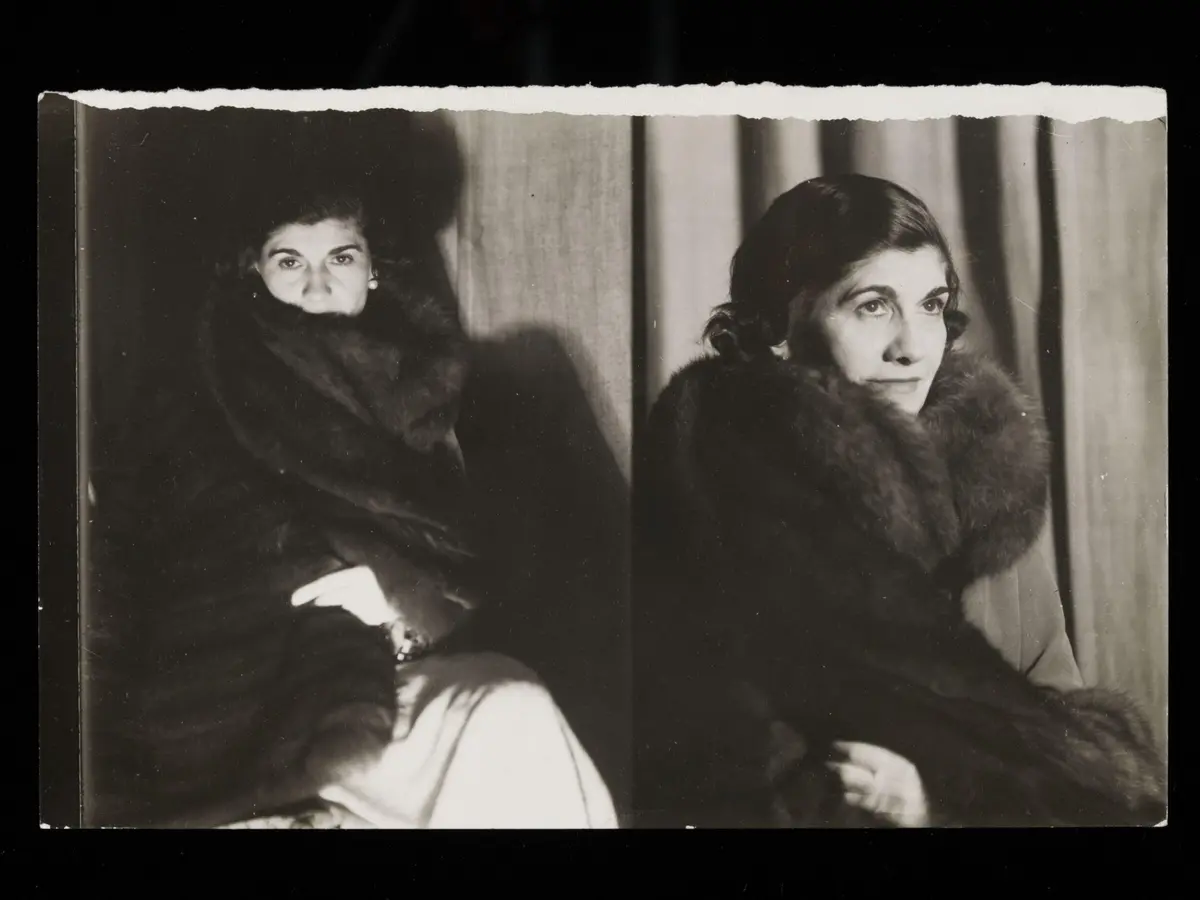
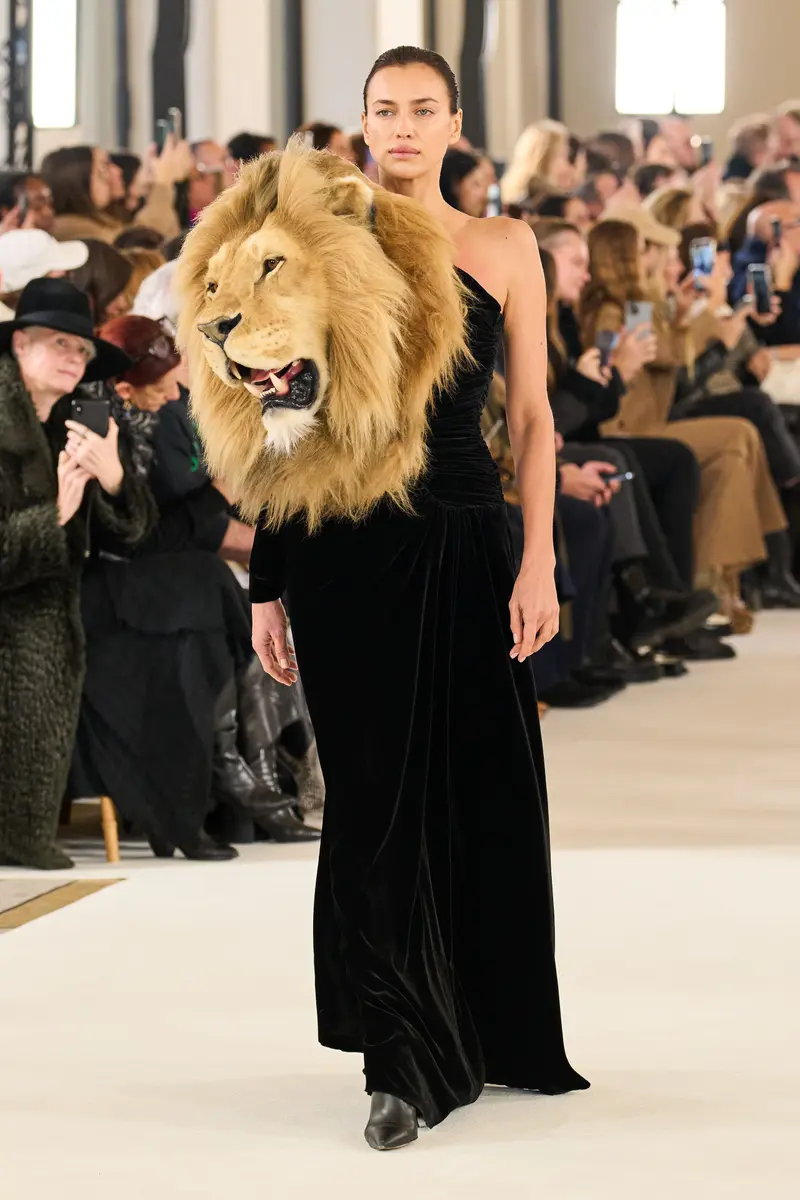
Elsa Schiaparelli was an Italian-born couturière who turned Paris fashion into a playground for artists. She ran her own house from 1927 to 1954, first on the rue de la Paix and then, from 1935, at 21 Place Vendôme. She is remembered for clothes that made people look twice: a sweater with a bow knitted into it, a hat shaped like a shoe, a gown printed with a lobster, a perfume called Shocking, and a hot pink she made her own. Her great rival Coco Chanel is said to have called her 'that Italian artist who makes clothes'.
She was born in Rome on 10 September 1890, in the Palazzo Corsini, where her scholar father ran a library; her uncle Giovanni was a famous astronomer. A first book of poems shocked her family, and she left Italy at 23. She married in London in 1914, followed her husband to New York in 1916, had a daughter, Gogo, in 1920, and came back to Paris on her own in 1922. Friends from the Dada and Surrealist circle, and the designer Paul Poiret, pushed her towards fashion although she had no training and could not even knit.
Her breakthrough was a hand-knitted sweater with a trompe-l'oeil bow in 1927. Through the 1930s she added sportswear, evening dress, visible zips, new synthetic cloths and clothes with themes, from the Circus to the Zodiac. She worked with artists as few couturiers had: Salvador Dalí gave her the Lobster dress, the Tears dress and the shoe hat; Jean Cocteau drew embroideries for her; Alberto Giacometti helped shape the salon and the buttons; Christian Bérard drew her collections; Leonor Fini designed the bottle of Shocking. By 1934 she was on the cover of Time.
The war broke the spell. She sailed for New York in July 1940, lived there until 1945, and came back to a Paris that wanted Christian Dior's soft, full New Look instead of her sharp wit. Her last collection was shown on 3 February 1954 and her salon closed on 13 December 1954, after years of poor sales. She wrote her memoir, Shocking Life, and lived on between Paris and a house in Tunisia until she died in Paris on 13 November 1973, aged 83.
Her name outlived the dresses. Her archive and the right to the name were bought in the 2000s by the Italian businessman Diego Della Valle (the V&A dates the purchase to 2006, other accounts to 2007), and the house was relaunched, with a salon again at 21 Place Vendôme from 2012 and official haute couture status from 2017. Daniel Roseberry has been its creative director since 2019, and the house plans to celebrate its centenary in 2027. None of that is part of her own life, but it shows how much her idea of fashion as art still sells.
What happened
- 1890
Elsa Luisa Maria Schiaparelli is born in Rome, in the Palazzo Corsini, where her father Celestino, a scholar, runs a library. Her uncle Giovanni, the astronomer, will later tell her that the beauty marks on her cheek form the Big Dipper, which she makes her lucky sign.
Palazzo Corsini, Via della Lungara, Trastevere, Rome: where she was born on 10 September 1890; her father ran a library housed in the palace- 1911
A book of poems about love, mysticism and sensuality alarms her family. Her father sends her to a convent, and she is taken home again after a hunger strike.
- 1913
At 23 she leaves Italy and her family's plans for her. She spends ten days in Paris, then goes to London, where she hears a lecture on magic and the soul by Wilhelm Wendt de Kerlor.
- 1914
She marries Wendt de Kerlor, the lecturer on magic and the power of the soul whom she had heard in London.
- 1916
The couple move to the United States, first to New York and then to Boston. In New York she meets Gabrielle Buffet-Picabia, Man Ray and others of the avant-garde.
- 1920
Her daughter Maria Luisa Yvonne Radha, called Gogo, is born. Her husband soon leaves, and she is left to bring the child up alone.
- 1922
After the marriage ends she returns to Europe with Gogo and settles in Paris, among the Dada and Surrealist circle. Paul Poiret becomes her mentor and encourages her to design.
- 1925
She becomes the designer of Maison Lambal, a small Paris dress house owned by an American friend. It is praised, but it closes for lack of money in 1926.
- 1927
She shows her first collection of hand-knitted sweaters with geometric patterns in black and white. French Vogue writes about it the next month.
With money from Charles Kahn, a director of the Galeries Lafayette, she founds her own company and opens at 4 rue de la Paix. Her sign reads 'Schiaparelli Pour le Sport'.
The bow-knot sweater makes her name. A friend's hand-knitted sweater, made by an Armenian knitter, gave her the idea; she draws a white butterfly bow on a black ground, the knitter Aroosiag Mikaëlian works it out in a double-layered stitch, and the third attempt succeeds. She wears it to a smart lunch, and a New York buyer orders forty sweaters and forty skirts.
French Vogue draws the bow-knot sweater on 1 December 1927. The Philadelphia Museum of Art says it called it an 'artistic masterpiece'.
- 1928
Her sports collection grows: bathing suits, beach pajamas, tweed suits, linen dresses, ski clothes. Beach bags unfold into beach blankets, and a zip on a ski sleeve frees the arm. In the same year, the V&A says, she launches her first perfume, S.
- 1931
She adds evening dress to her collections. Her divided tennis skirt, worn by Lili de Álvarez at a London tournament, shocks the tennis world. In the same year she becomes a French citizen.
- 1933
Jean Dunand paints her portrait, in a gown of her Autumn 1933 collection made of her own crepe, Rayesca.
Schiaparelli London Ltd opens at 6 Upper Grosvenor Street, Mayfair. British clients pay less than in Paris, as they avoid import duty on French couture, and she helps found the Fashion Group of Great Britain in 1935.
6 Upper Grosvenor Street, Mayfair, London: Schiaparelli London Ltd, her branch from November 1933 to July 1939- 1934
Time puts her on its cover, with the caption that she 'glorifies the gadget, persecutes the button'. Her Fall 1934 coats had white plastic hands for buttons. The V&A calls her the first female fashion designer on the cover of Time.
- 1935
She moves her salon from the cramped rue de la Paix to the Hôtel de Fontpertuis at 21 Place Vendôme, 98 rooms of salons and workrooms. Jean-Michel Frank modernises the interior, with Alberto Giacometti making lamps and other pieces. On the ground floor she opens the Boutique Schiap, whose windows, dressed with the wooden mannequins Pascal and Pascaline, become a sight of Paris.
Hôtel de Fontpertuis, 21 Place Vendôme, Paris: her couture house from January 1935 until it closed on 13 December 1954 (before that she was at 4 rue de la Paix, a few steps away)- 1936
She works for the first time with Salvador Dalí. Their first designs are suits and jackets with pockets like the drawers of a desk or cabinet, shown in Vogue in September 1936. In the spring she also buys a fur-covered bracelet from Meret Oppenheim; wearing it at the Café de Flore, Oppenheim is inspired to cover a teacup in fur.
- 1937
Shocking pink arrives. The V&A dates the launch of the perfume Shocking, and with it the colour Shocking Pink, to 1937. A magenta blouse sold at Saks Fifth Avenue about 1938 is kept by the Missouri Historical Society as an early example.
Jean Cocteau gives her two drawings. She has them embroidered by Lesage in the Autumn 1937 collection: on a linen jacket, a woman with long golden hair running down the sleeve, and on an evening coat, two profiles that are also a vase of roses. The coat is a trompe l'oeil of the kind Dalí and the Surrealists loved.
The Lobster dress. Dalí draws a lobster, the silk designer Sache prints it on a white organza evening gown with a red waistband, and the huge crustacean runs down the skirt. Wallis Simpson chooses the model for the trousseau she buys from Schiaparelli before her marriage.
Hôtel de Fontpertuis, 21 Place Vendôme, Paris: her couture house from January 1935 until it closed on 13 December 1954 (before that she was at 4 rue de la Paix, a few steps away)Maison Schiaparelli launches the perfume Shocking in a bottle designed by Leonor Fini: a woman's torso, which the V&A says was modelled on the dress form of the actress Mae West, whom Schiaparelli dressed for 'Every Day's a Holiday' that year. The flowers on it are made by Lesage.
Vogue prints Cecil Beaton's photographs of Wallis Simpson in the Lobster dress, taken at the Château de Candé shortly before her marriage on 3 June 1937: eight pages, with two pictures in the lobster dress. The dress becomes the most famous gown of the decade.
- 1938
The Circus collection is shown in the salons at Place Vendôme as a burlesque show, 132 pieces with elephants, horses and acrobats. From it come the Tears dress, with a print of ripped flesh and a veil with real holes, and the Skeleton dress, whose padded ribs and spine are quilted into black crepe; both are made with Dalí.
Hôtel de Fontpertuis, 21 Place Vendôme, Paris: her couture house from January 1935 until it closed on 13 December 1954 (before that she was at 4 rue de la Paix, a few steps away)Christian Bérard, the artist and illustrator, draws the Circus collection for American Vogue ('Circus parade at Schiaparelli's'). His loose, lyrical drawings also bring to life the long 'cigarette' silhouette of her Winter 1939 collection.
- 1939
Her Spring 1939 'Modern Comedy' collection takes its patterns from the Commedia dell'arte: Harlequin's diamonds on felt coats, masks on buttons. zips tipped with tinkling bells and buttons shaped as theatre masks complete the look.
She suddenly closes her London branch. She blames the copyists, and the V&A adds the habit of British clients of delaying their bills and the growing threat of war.
6 Upper Grosvenor Street, Mayfair, London: Schiaparelli London Ltd, her branch from November 1933 to July 1939France and Britain declare war on Germany. Her Winter 1939 'Cash and Carry' suits have big pockets to replace a handbag, and her Spring 1940 collection has 'trench' brown and camouflage-print taffeta.
- 1940
She leaves wartime France for New York, entrusting the Place Vendôme salon to Irène Dana. Her 'American designed wardrobe' lecture tour takes her to some thirty cities.
Whitelaw Reid mansion (Villard Houses), 451 Madison Avenue, New York: where the 'First Papers of Surrealism' show she helped to organise opened on 14 October 1942; she lived in New York from 1941 to 1945- 1941
After a short return to Paris she sails back to New York and stays until the war ends, volunteering for war-relief groups. The FBI watches her as a suspected spy, and closes the investigation for lack of evidence.
Whitelaw Reid mansion (Villard Houses), 451 Madison Avenue, New York: where the 'First Papers of Surrealism' show she helped to organise opened on 14 October 1942; she lived in New York from 1941 to 1945- 1942
Her Paris salon is seized and placed under German administration.
'First Papers of Surrealism' opens in the Whitelaw Reid mansion on Madison Avenue, a benefit for French war relief, with Surrealists who had fled the war. Schiaparelli, with André Breton and Marcel Duchamp, is one of its organisers; Duchamp strings a web of twine through the rooms.
Whitelaw Reid mansion (Villard Houses), 451 Madison Avenue, New York: where the 'First Papers of Surrealism' show she helped to organise opened on 14 October 1942; she lived in New York from 1941 to 1945- 1945
A Cutex advertisement in Modern Screen has her 'interpret' the newest nail-polish shades with a pink turban 'to celebrate the return of Paris'. In the same month, according to the V&A, she returns to Paris from New York.
She presents her first post-war collection. Fashion has changed: women now want the soft, full look that Christian Dior will launch in 1947, and her sharp, witty style is out of date.
- 1947
Hubert de Givenchy, 19, joins her as her first assistant and becomes artistic director of the boutique. The perfume Le Roy Soleil, in a bottle by Dalí made by Baccarat, goes into limited production.
Hôtel de Fontpertuis, 21 Place Vendôme, Paris: her couture house from January 1935 until it closed on 13 December 1954 (before that she was at 4 rue de la Paix, a few steps away) - 1951
She signs licensing deals with American manufacturers for lingerie, menswear, eyewear and other goods. In 1952 she designs costumes for Zsa Zsa Gabor in the film Moulin Rouge, inspired by Toulouse-Lautrec.
- 1954
Her autobiography, Shocking Life, is published, in London by J. M. Dent and in New York by E. P. Dutton, with drawings by Christian Bérard.
The house presents its last couture collection.
The Schiaparelli couture salon closes for lack of success since the war. The perfume business goes on, and she gives her energy to her memoirs.
Hôtel de Fontpertuis, 21 Place Vendôme, Paris: her couture house from January 1935 until it closed on 13 December 1954 (before that she was at 4 rue de la Paix, a few steps away)- 1969
She gives many of her garments to the Philadelphia Museum of Art (accession numbers 1969-232), among them the bow-knot sweater, the Lobster dress and the Cocteau coat; the V&A has gifts from her of 1965 too.
- 1971
Cecil Beaton's exhibition 'Fashion: An Anthology' at the V&A shows the largest display of her work to date, including garments she gave.
- 1973
Elsa Schiaparelli dies in her sleep at her home in Paris, aged 83. She is buried at Frucourt, in the Somme. In 1973 she had given 6,387 collection drawings, made between 1933 and 1953 and bound in 55 albums, to the UFAC, now in the Musée des Arts Décoratifs.
Cemetery of Frucourt, Somme: her grave