The chemise portrait scandal
“In 1783 Vigée Le Brun showed Marie Antoinette at the Paris Salon in a plain white muslin 'chemise' dress; the outcry forced the picture down, but the chemise à la reine became the fashion.”
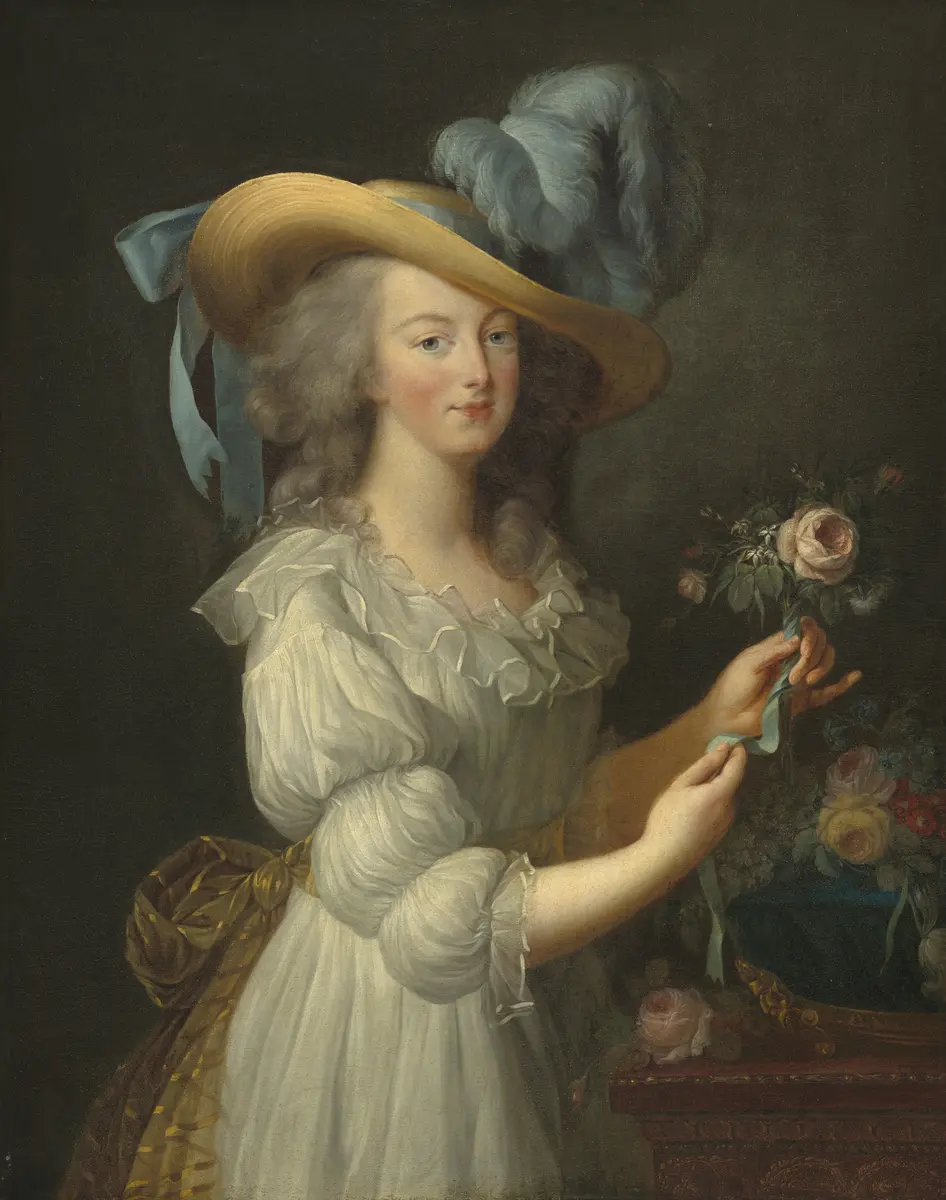
In 1783 Élisabeth Vigée Le Brun, the young Paris portrait painter who was Marie Antoinette's favourite, painted the queen as no queen of France had been painted before. Instead of stiff silk over wide hoops, with lace and jewels, Marie Antoinette wears a loose white muslin dress with puffed sleeves and a ruffled neckline, tied at the waist with a gold-striped sash, and a wide straw hat with blue-grey feathers; she is tying a ribbon round a flower. The dress was the 'gaulle', soon called the chemise à la reine (the queen's chemise): a simple cotton gown she liked to wear at the Petit Trianon, her private retreat in the park of Versailles, away from the rules of court. Her dressmaker Rose Bertin had adapted it to Paris taste, and light white cottons like it were already worn in France's Caribbean colonies.
That spring, with the queen's backing, Vigée Le Brun had been admitted to the Royal Academy of Painting, which allowed her to show at its Salon, the great public exhibition held in the Louvre. The Salon opened on 25 August 1783, and her 'Portrait of the Queen' hung there beside her self-portrait in a straw hat. Many visitors were shocked. To them the queen seemed to have been painted in her chemise, the linen shift worn as underwear, and not dressed as her rank required; and the gown was made of imported cotton rather than the silk woven at Lyon, the pride of French industry. The picture was taken down. Vigée Le Brun quickly painted the same pose again, now in a blue-grey silk gown with lace and pearls, and this 'Marie Antoinette with a Rose' was a success.
The scandal did not stop the fashion; it advertised it. The queen gave the first painting to her friend the Princess of Hesse-Darmstadt in 1783, and the princess's family still owns it; copies, such as the one in the National Gallery of Art in Washington, carried the image further. In 1784 a Paris fashion plate showed the 'Chemise à la Reine' to readers far from the court, and within a few years fashionable women in Paris and London were painted in white muslin with a sash: Madame Lavoisier in Jacques-Louis David's portrait of 1788, Lady Lemon in George Romney's.
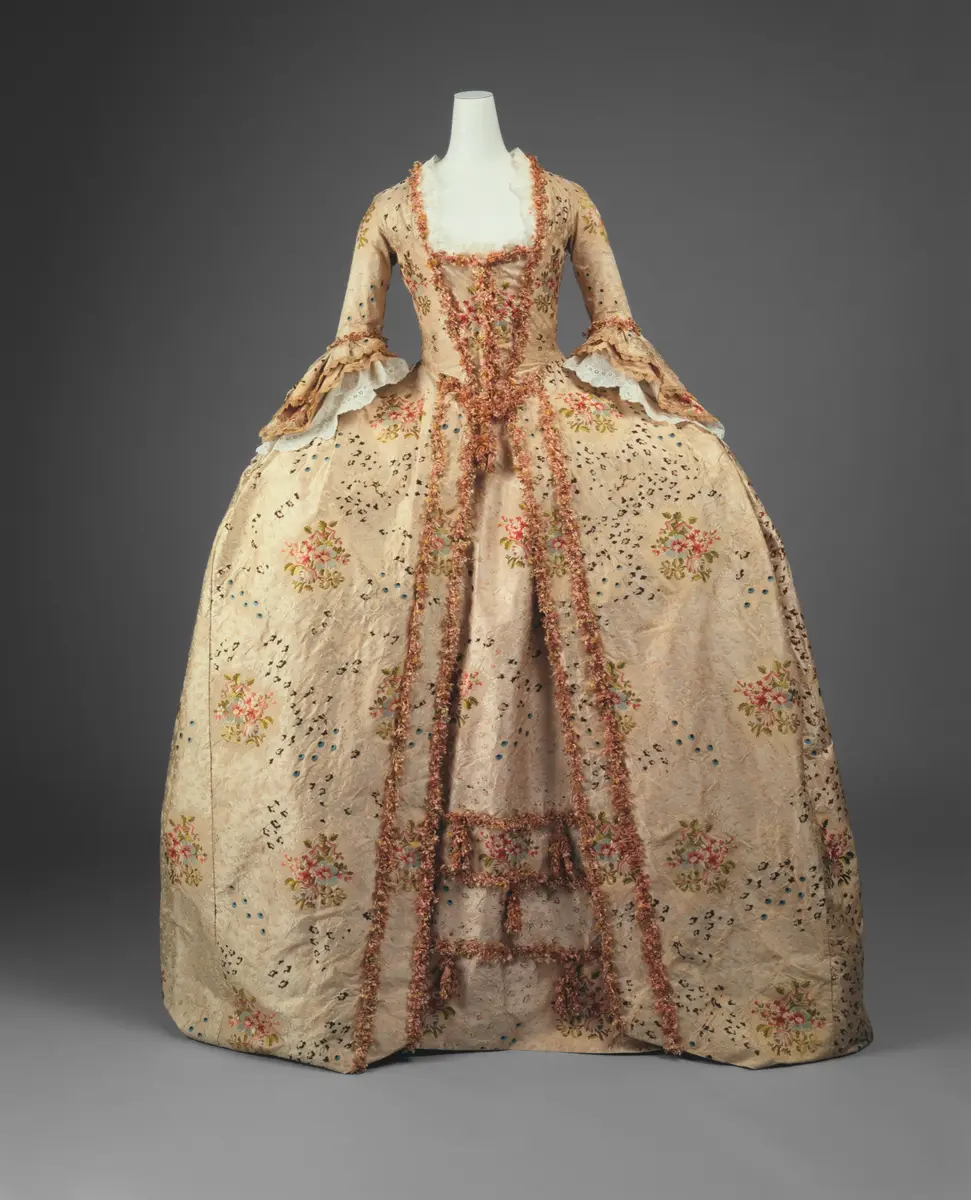
The portrait matters because it shows clothes turning political. The queen's taste for simplicity was read as indecent, as a betrayal of French silk and as a sign of frivolity, a few years before the Revolution made her the most hated woman in France. Yet the plain white dress outlived her: after 1795, now cut with a high waist, light muslin, much of it woven in Bengal, became the standard dress of fashionable women across Europe, and the age of heavy silk gowns was over.
What happened
- 1783
Vigée Le Brun paints Marie Antoinette in her white muslin 'gaulle', the loose dress she wears at the Petit Trianon, with a straw hat and a sash, tying a ribbon round a flower: no queen of France had been shown so informally in an official portrait.
Petit Trianon, Versailles: the queen's private house in the park, where she wore the loose white 'gaulle' away from court etiquetteIn the summer the queen has Richard Mique start the Hamlet in the Trianon gardens, a model village of cottages round an artificial lake, finished in 1786: the same taste for simple country life as the dress.
The Queen's Hamlet, Versailles: the model village Richard Mique began for her in the summer of 1783, finished in 1786The queen gives the original chemise portrait to her friend the Princess of Hesse-Darmstadt, as the plaque on its frame records; it is still owned by the princess's family in Hesse.
Schloss Wolfsgarten, Langen, Hesse: the House of Hesse's lodge, where the original painting, given by the queen to the Princess of Hesse-Darmstadt in 1783, is keptVigée Le Brun and her rival Adélaïde Labille-Guiard are admitted to the Royal Academy of Painting and Sculpture on the same day; Vigée Le Brun gets in through the king and queen's direct intervention, against the director's opposition, and can now show at the Salon.
Salon Carré, Louvre, Paris: the Royal Academy's exhibition room, where the Salon of 1783 opened on 25 August with Vigée Le Brun's portrait of the queenThe Salon opens in the Louvre. Vigée Le Brun's first entry in the booklet is no. 110, 'Portrait de la Reine'; she also shows her self-portrait in a straw hat, Madame Grand and her reception piece, Peace Bringing Back Abundance.
Salon Carré, Louvre, Paris: the Royal Academy's exhibition room, where the Salon of 1783 opened on 25 August with Vigée Le Brun's portrait of the queenDuring the Salon (the day is not recorded) the queen's portrait causes an outcry: visitors say she has been painted in her chemise, her undergarment, not dressed as her rank requires, and in foreign cotton instead of Lyon silk. The picture is taken down, and Vigée Le Brun quickly paints the same pose in a blue-grey silk gown, 'Marie Antoinette with a Rose', which is well received.
Salon Carré, Louvre, Paris: the Royal Academy's exhibition room, where the Salon of 1783 opened on 25 August with Vigée Le Brun's portrait of the queen- 1784
The Gallerie des Modes, the Paris series of fashion plates, publishes a 'Chemise à la Reine' worn with a large drooping straw hat, spreading the queen's dress, under her name, to buyers far from the court.
In England, Georgiana, Duchess of Devonshire, the queen's friend and London's leader of fashion, wears a chemise dress to a concert, bringing the style before the English public.
- 1787
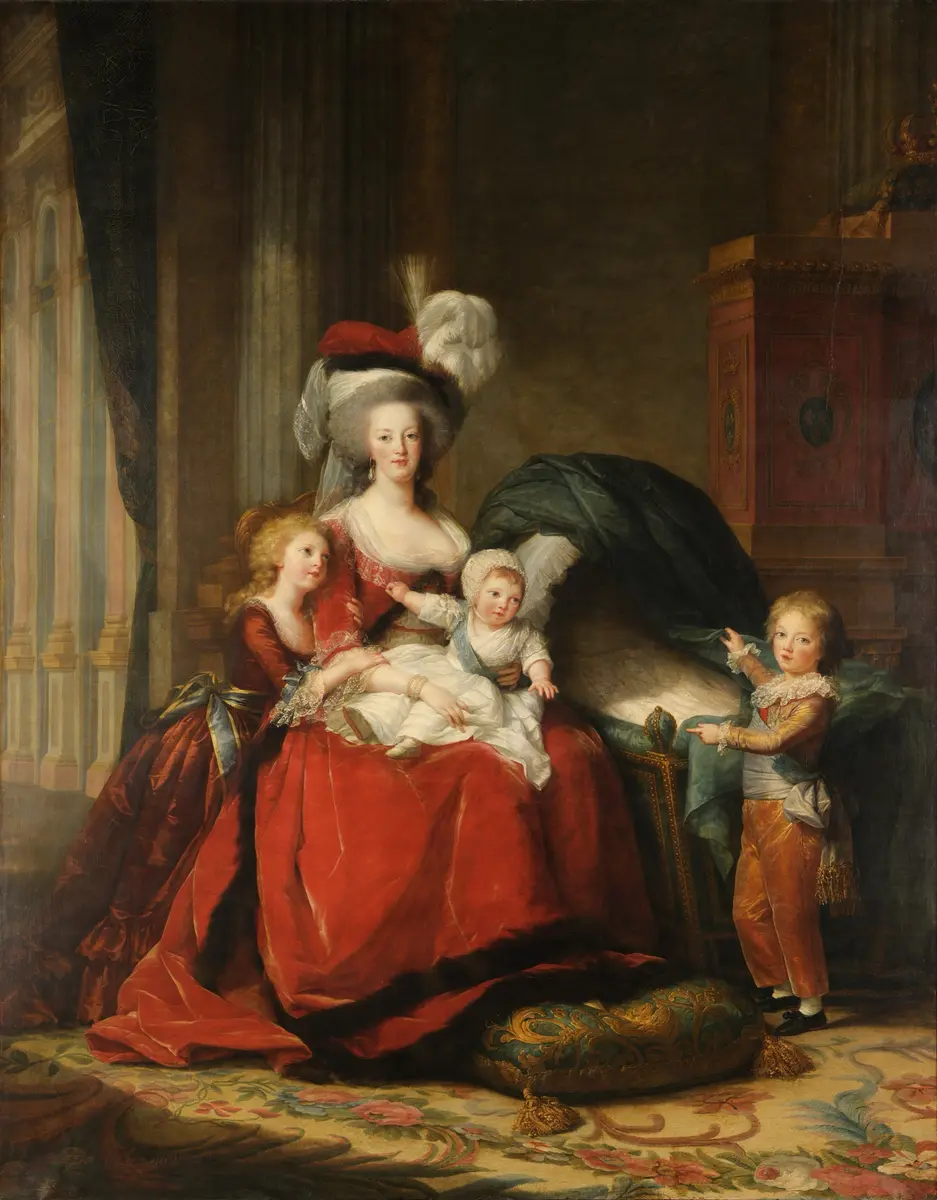
At the Salon of 1787 Vigée Le Brun shows a very different queen: the state portrait of Marie Antoinette with her three children, in velvet, a mother rather than a woman of fashion.
Salon Carré, Louvre, Paris: the Royal Academy's exhibition room, where the Salon of 1783 opened on 25 August with Vigée Le Brun's portrait of the queen - 1788
Jacques-Louis David paints the chemist Antoine Lavoisier and his wife Marie Anne, who wears a white chemise-style dress with a blue sash: five years after the scandal, the queen's informal dress is the fashion of the Paris elite.