Versailles and Rococo fashion
“From Louis XIV's death in 1715 to the Revolution, the French court and Paris dictated Europe's fashion: panniered silk gowns, Rococo flowers, towering hair, and the first fashion magazines.”
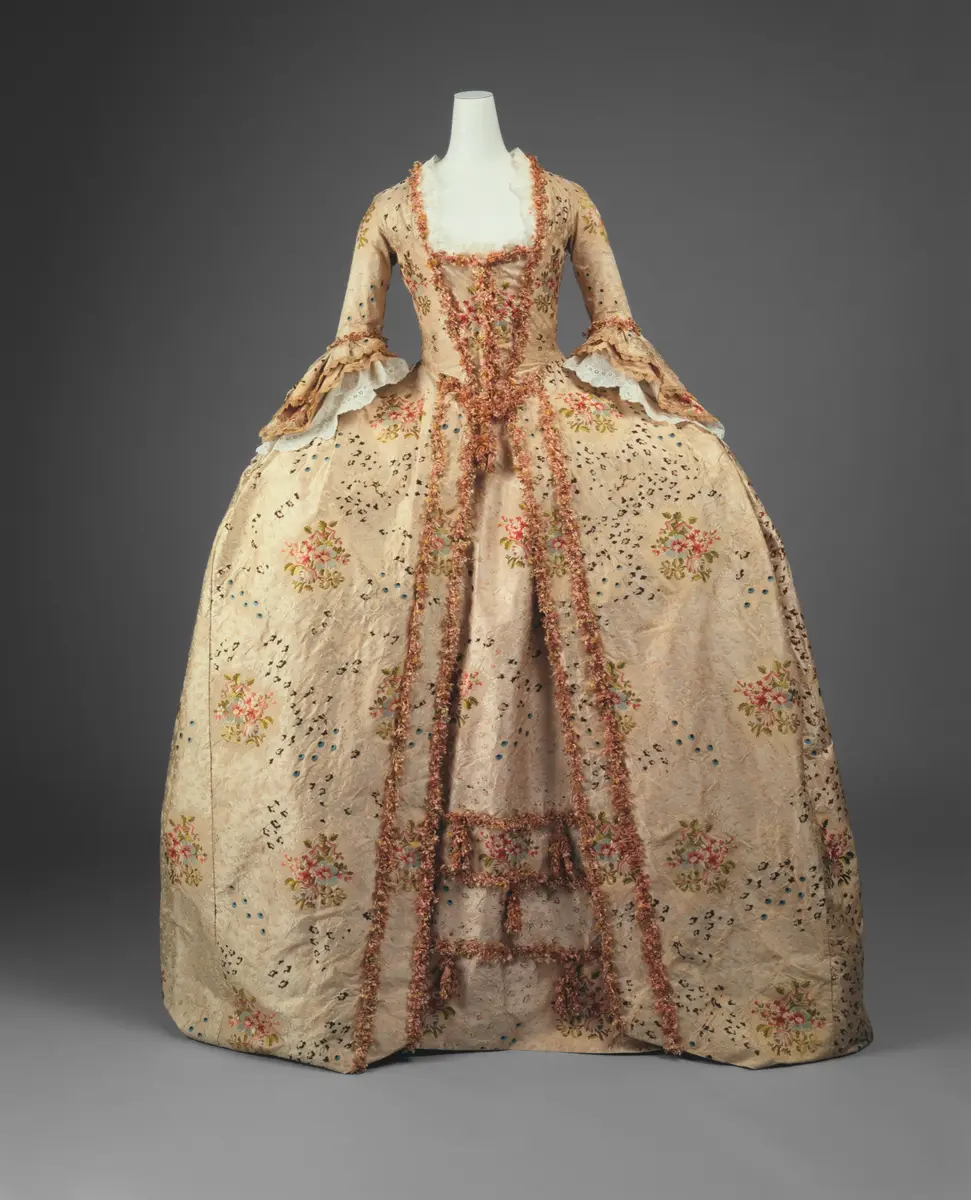
Versailles and Rococo fashion is the name for how the French court and the city of Paris dressed between the death of Louis XIV in 1715 and the Revolution of 1789, the span the fashion historian Aileen Ribeiro used for her standard history of eighteenth-century European dress. In those seventy-four years French taste became the model for every court in Europe. Women wore silk gowns spread sideways over hooped petticoats called panniers, with a tightly laced bodice and, by the 1770s, towering powdered hair; men wore a fitted coat, waistcoat and knee breeches of embroidered silk. The pale colours, curving lines and flowers of the Rococo, a style born in Paris houses as a lighter answer to Louis XIV's grand Versailles, ran through the silks, the embroidery and the trimmings.
The period opened with a loosening. After the old king died, the five-year-old Louis XV's court left Versailles for seven years, and women adopted a loose gown with deep pleats falling from the shoulders at the back, the kind Watteau painted on the shop sign of his dealer Gersaint in 1720. When the court came back to Versailles in 1722 that pleated gown grew into the formal robe à la française, worn over panniers, hooped side-supports that spread the skirts to sometimes outrageous widths. Lyon wove the silks, with patterns changed every season so that a gown showed exactly how up to date its owner was; by the late century about a third of the city lived from the trade. From 1745 Louis XV's mistress, the Marquise de Pompadour, made herself the patron of Rococo taste, and Boucher painted her in a sea of rose-trimmed silk.
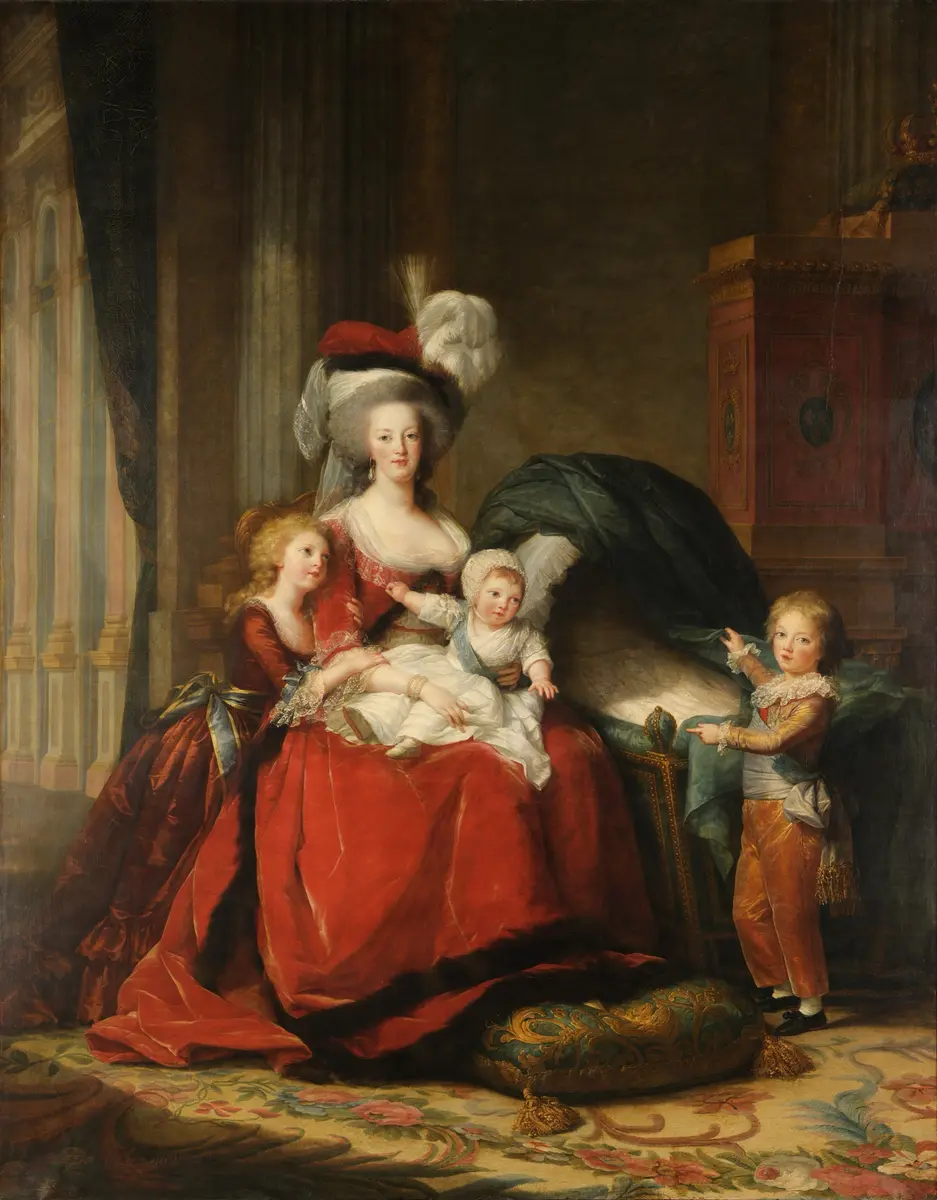
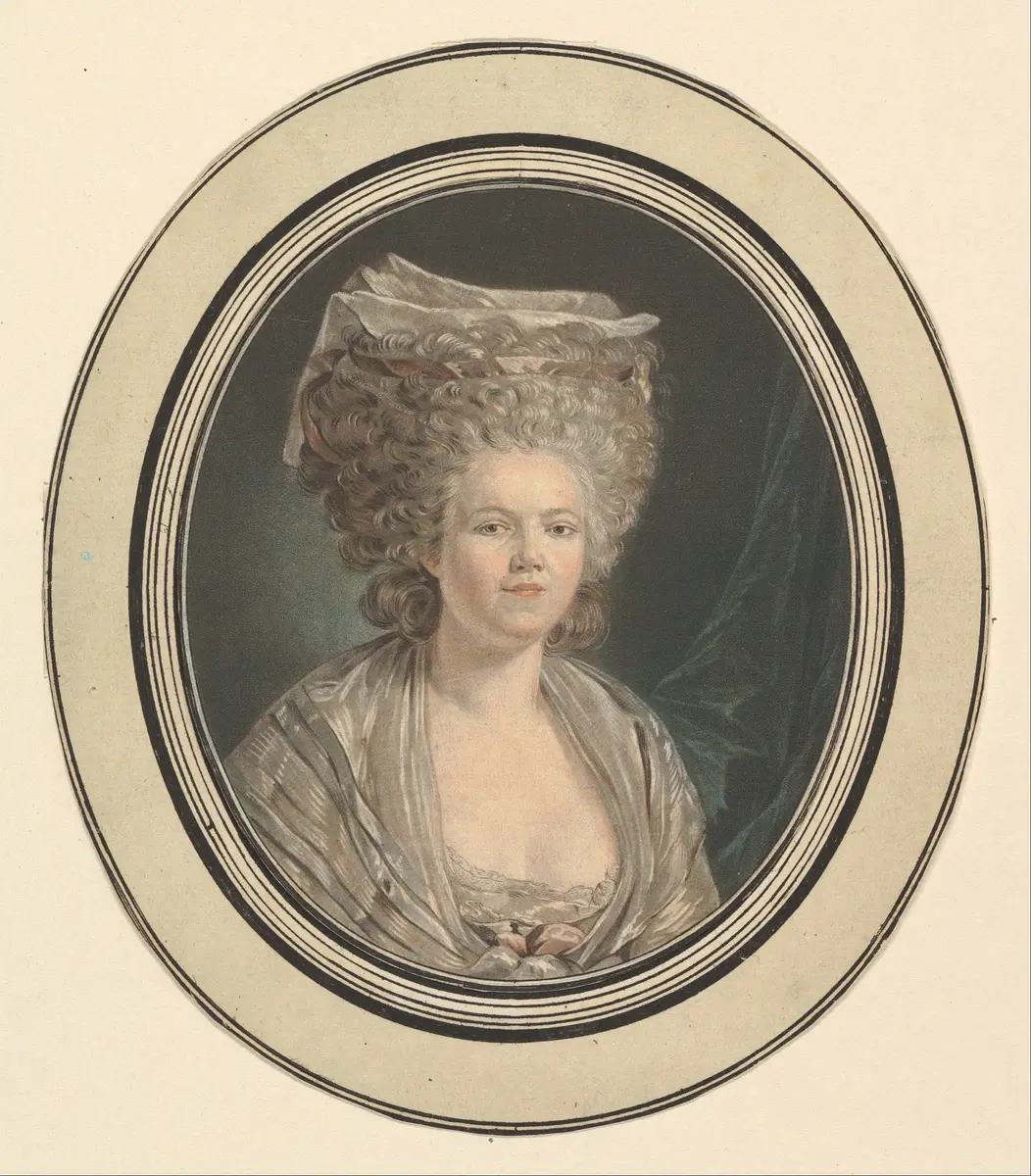
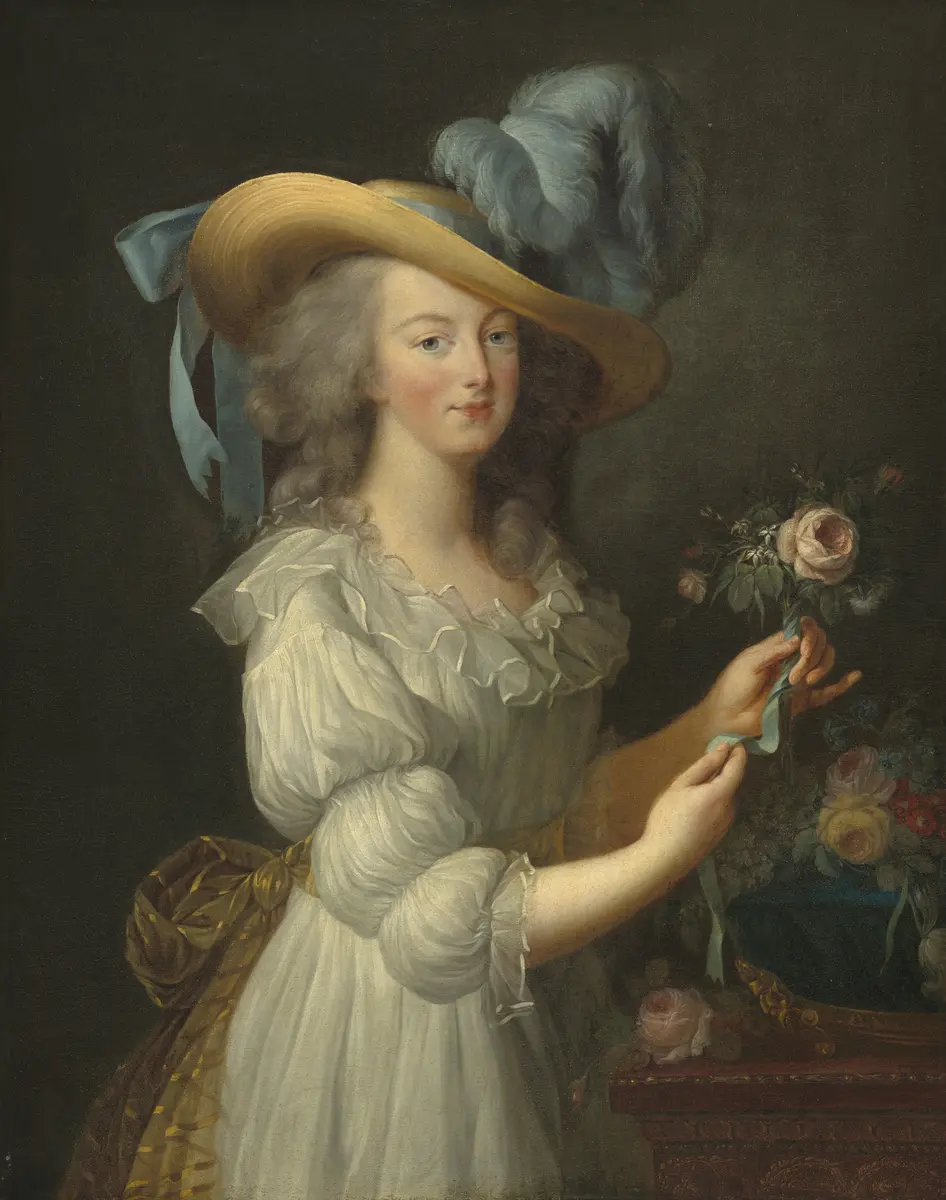
The peak came under Louis XVI and Marie Antoinette, who arrived at Versailles as a bride in 1770 and made dress part of her role as queen. With her marchande de modes Rose Bertin, nicknamed the 'Minister of Fashion', and her hairdresser Léonard, she launched one new fashion after another. These were the years of towering poufs, of the draped robe à la polonaise and, later, of the plain white muslin 'chemise de la reine' she wore at her Trianon, which the elite quickly copied. Fashion now also travelled on paper. The Gallerie des Modes published hand-coloured plates of the new styles from 1778, and the Cabinet des Modes, which first appeared on 15 November 1785, was the first real fashion magazine, sold by subscription in France and abroad. Printed cottons, banned in France since 1686, were allowed again in 1759, and Oberkampf's factory at Jouy turned them into a French luxury of their own.
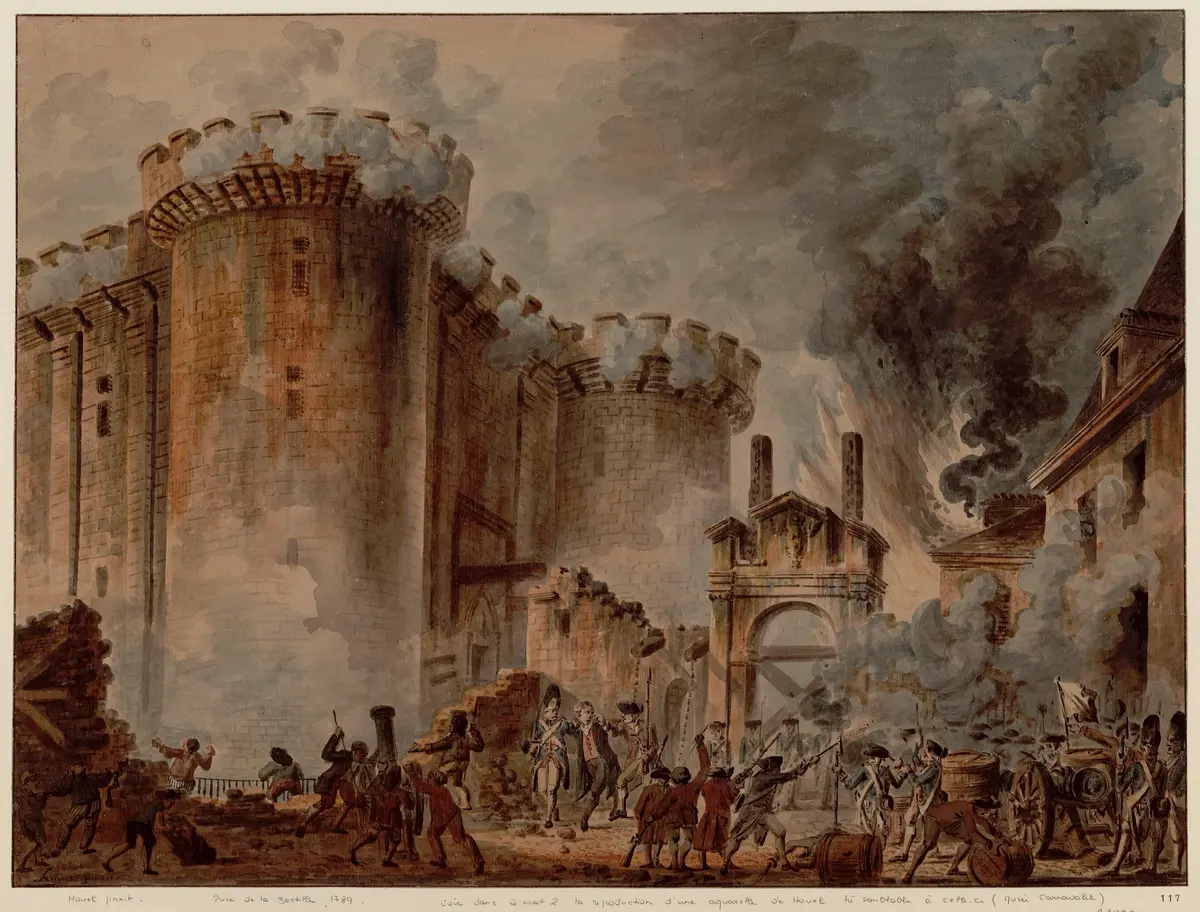
The Revolution ended it. When the Estates-General opened at Versailles on 5 May 1789, the court's dress rules put the clergy in robes, the nobles in plumed hats and cloaks, and the deputies of the Third Estate in plain black, a contrast that made clothes a political sign. On 6 October 1789 the royal family was taken from Versailles to Paris, and the court that had set Europe's fashions was gone; the Revolution severely damaged the Lyon silk trade, and dress turned to the light, high-waisted white cottons of the 1790s. What lasted was the idea the period created: that Paris decides what is in fashion, through its designers, its shops and its fashion press, a belief the Metropolitan Museum describes as an 'assumed supremacy in French taste' that has lingered into our own time.
What happened
- 1715
- 8:15 a.m.
Louis XIV dies at Versailles just after a quarter past eight in the morning, after 72 years on the throne. His great-grandson Louis XV is five; the Regent, the Duke of Orléans, governs, and the court leaves Versailles.
Palace of Versailles: seat of the court from 1682, left after Louis XIV's death in 1715, home again from 15 June 1722 until 6 October 1789 - 1720
Watteau paints a shop sign for his friend the art dealer Gersaint: elegant Parisians browse among the pictures, the women in loose gowns with deep pleats falling from the shoulders at the back, the shape that becomes the robe à la française.
- 1722
After seven years away the court returns to Versailles; twelve-year-old Louis XV is thrilled to go back to the palace where he was born. It stays his residence until his death, and the centre of French court dress until 1789.
Palace of Versailles: seat of the court from 1682, left after Louis XIV's death in 1715, home again from 15 June 1722 until 6 October 1789- 1745
- 11:30 p.m.
The Yew Ball: a masked ball in the Hall of Mirrors for the Dauphin's marriage to the Infanta of Spain runs from half past eleven at night to half past eight in the morning. The queen comes in full court dress, the Dauphin and Dauphine as shepherd and shepherdess, and eight masked figures as clipped yew trees; one of them, taken to be the king, singles out a pretty shepherdess, Jeanne-Antoinette d'Étioles.
Palace of Versailles: seat of the court from 1682, left after Louis XIV's death in 1715, home again from 15 June 1722 until 6 October 1789 Madame d'Étioles is presented at court as the Marquise de Pompadour, Louis XV's official mistress. She lives at Versailles until her death and becomes the great patron of Rococo taste.
Palace of Versailles: seat of the court from 1682, left after Louis XIV's death in 1715, home again from 15 June 1722 until 6 October 1789- 1756
Boucher paints Madame de Pompadour full length in a robe à la française of sea-green silk trimmed with pink roses and bows: the image of Rococo dress at its height, from the woman whose twenty years of influence Britannica calls the 'apogee of taste in France'.
- 1759
France lifts its ban on printed cottons, in force since 1686 to protect the silk industry; until then the English had all but monopolised the fine copperplate-printed cottons.
- 1760
The Swiss-born printer Christophe-Philippe Oberkampf founds his factory at Jouy-en-Josas near Versailles; its printed cottons, designed above all by Jean-Baptiste Huet, become so famous that pictorial prints are still called 'toile de Jouy'.
Jouy-en-Josas: Oberkampf's printed-cotton factory, founded in 1760, which gave 'toile de Jouy' its name - 1763
At Madame de Pompadour's urging, Louis XV commissions a new small palace in the park of Versailles, the Petit Trianon.
Petit Trianon, Versailles: built for Louis XV from 1763 at Madame de Pompadour's urging, given to Marie Antoinette in 1774; her retreat, where she wore the loose 'chemise de la reine' - 1764
Madame de Pompadour dies in her apartment at Versailles, aged 42.
Palace of Versailles: seat of the court from 1682, left after Louis XIV's death in 1715, home again from 15 June 1722 until 6 October 1789- 1770
Marie Antoinette, archduchess of Austria, aged fourteen, marries the Dauphin, the future Louis XVI, in the Royal Chapel at Versailles; the feast opens the new Royal Opera. Her dress will soon set the court's fashions (see her own entry).
Palace of Versailles: seat of the court from 1682, left after Louis XIV's death in 1715, home again from 15 June 1722 until 6 October 1789- 1774
The French government honours the Lyon silk designer Philippe de Lasalle for his removable semple, a loom device that let a pattern be moved from one loom to another without setting it up again, a step towards the Jacquard loom.
Lyon: centre of French luxury silk weaving, where almost 15,000 people lived from the trade by the late eighteenth centuryLouis XV dies at Versailles after a reign of 59 years. The new king, Louis XVI, gives the Petit Trianon to Marie Antoinette, who makes it her private world; there she will wear the loose white 'chemise de la reine' rather than court dress.
Petit Trianon, Versailles: built for Louis XV from 1763 at Madame de Pompadour's urging, given to Marie Antoinette in 1774; her retreat, where she wore the loose 'chemise de la reine'- 1778
The Gallerie des Modes et Costumes Français is under way in Paris: hand-coloured plates of the latest gowns, hats and towering coiffures, issued in numbered cahiers until 1787, which carry Paris fashion to readers who never see the court.
Élisabeth Vigée Le Brun is called to Versailles to paint the queen's state portrait in court dress with wide panniers; she becomes Marie Antoinette's favourite portraitist.
Palace of Versailles: seat of the court from 1682, left after Louis XIV's death in 1715, home again from 15 June 1722 until 6 October 1789- 1785
The first issue of the Cabinet des Modes ou les Modes Nouvelles appears in Paris: eight pages with three hand-coloured engravings, sold by subscription in France and abroad, the first real fashion magazine. It reports on the English redingote, giant muffs, buttons, ribbons and men's hats.
- 1786
After a year the magazine is renamed the Magasin des Modes Nouvelles Françaises et Anglaises, its title now promising English fashions as well as French, with one fold-out plate per issue; it stops abruptly in 1789.
- 1787
Debucourt's colour print of the galleries of the Palais-Royal shows Paris parading its fashions in public: huge hats, muffs and striped coats in the arcades of the Duke of Orléans' palace.
Palais-Royal, Paris: the Duke of Orléans' palace and garden, whose galleries were the city's fashionable promenade and shopping street in the 1780s - 1789
The Estates-General opens at Versailles. Its deputies wear the ceremonial dress set for their order: the clergy in robes, the nobles in plumed hats and cloaks, the Third Estate in plain black with a simple hat. The difference, printed and sold in Paris, makes clothing a political sign at the start of the Revolution.
Hôtel des Menus-Plaisirs, Versailles: where the Estates-General opened on 5 May 1789, its deputies dressed by order of rankAfter the women of Paris march on Versailles, the royal family is taken to Paris. After a century of royal residence the court of Versailles is over, and with it the stage that had set Europe's fashions.
Palace of Versailles: seat of the court from 1682, left after Louis XIV's death in 1715, home again from 15 June 1722 until 6 October 1789