Marie Antoinette
“The Austrian-born last queen of the old French monarchy, who made fashion a royal stage and was guillotined in 1793 as a symbol of everything the Revolution hated.”
Marie Antoinette was the Austrian archduchess who became the last queen of France before the Revolution, a queen whose clothes were read as politics. Born in Vienna on 2 November 1755, a daughter of Empress Maria Theresa and Emperor Francis I, she was married at fourteen to the heir to the French throne, the future Louis XVI, to seal a new alliance between two old enemies. She became queen in May 1774, at eighteen, and was guillotined in Paris on 16 October 1793, at thirty-seven.
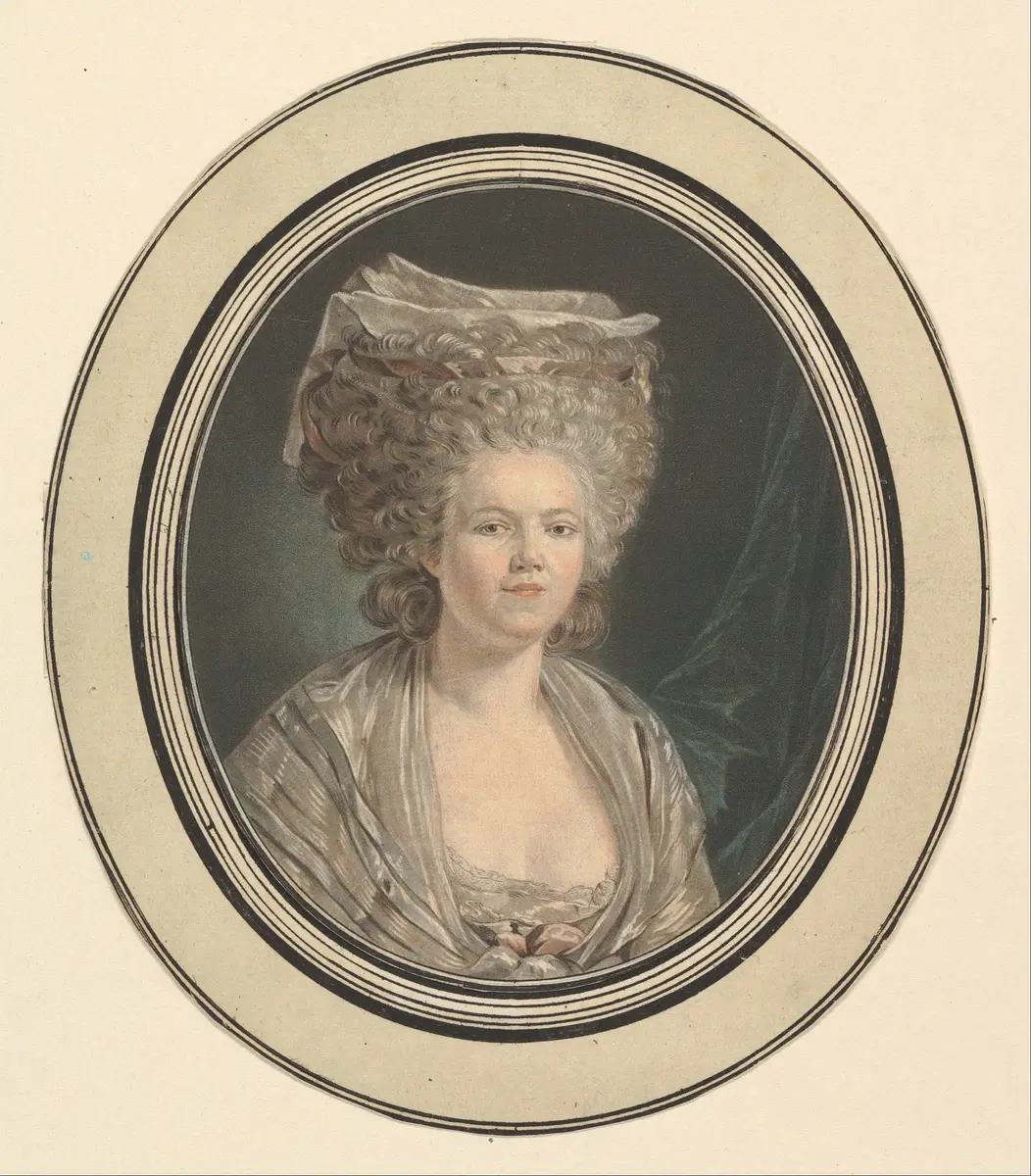
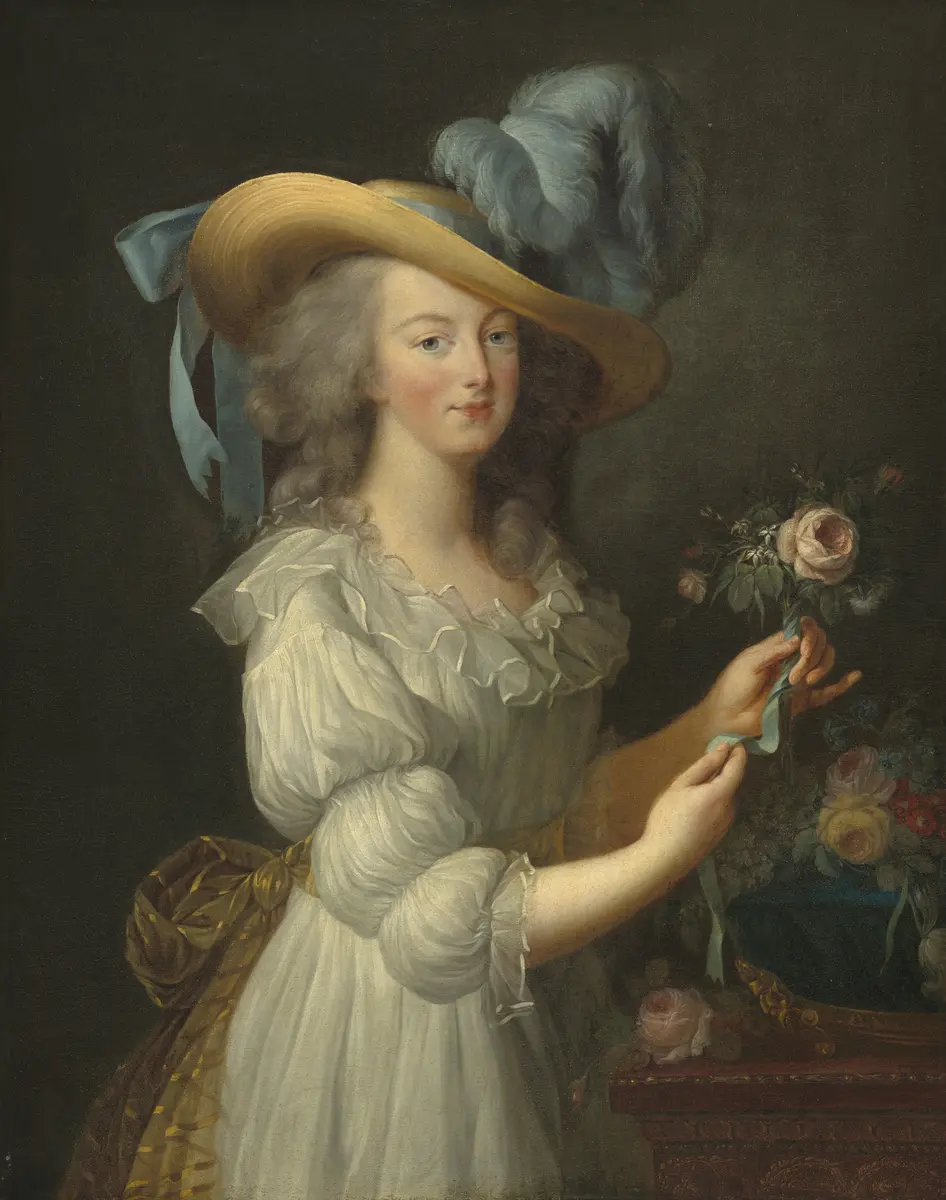
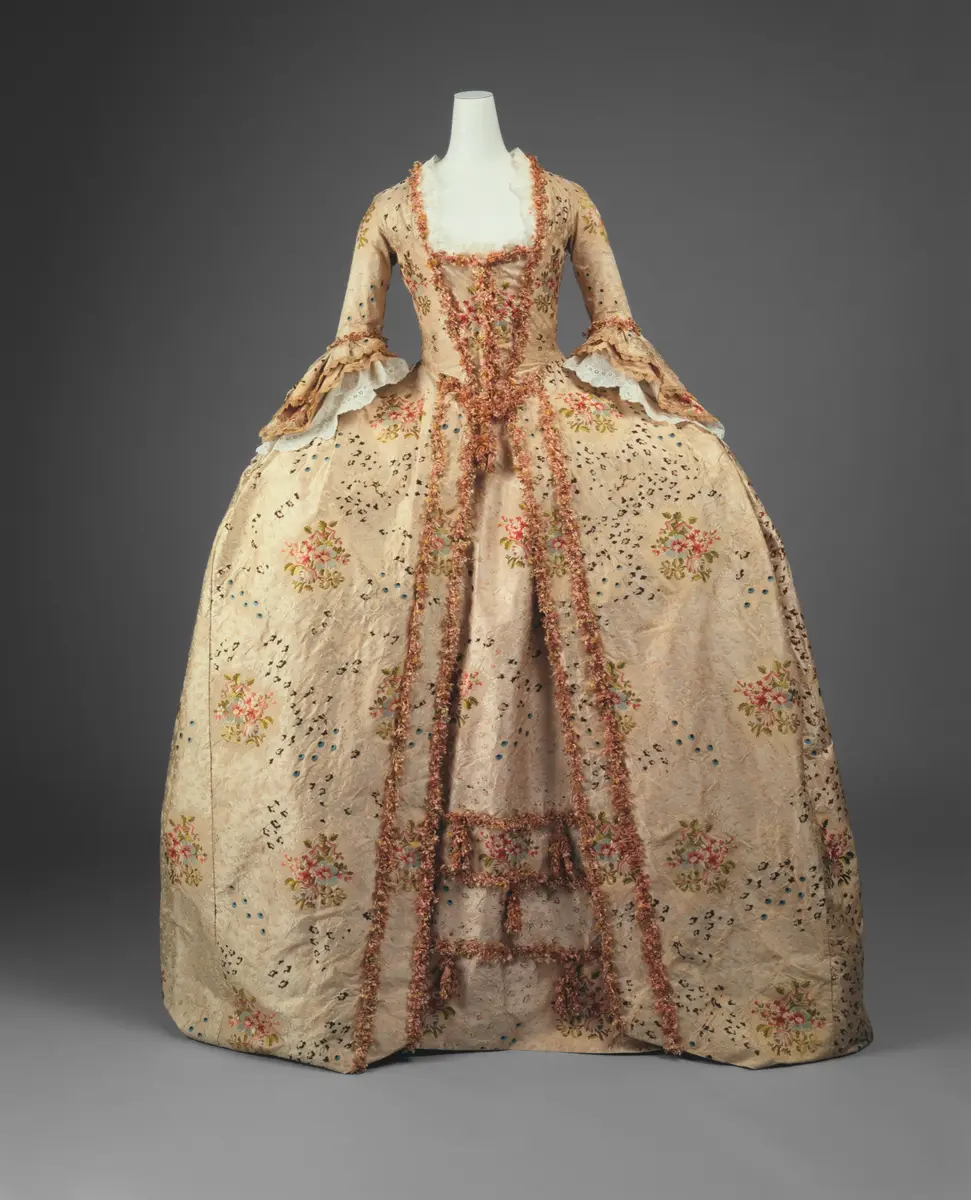
French queens were expected to lead fashion, and she threw herself into the task. With her milliner Rose Bertin, whom courtiers mockingly called the 'Minister of Fashion', and her hairdresser Léonard, she launched one style after another: hair built high with feathers and ornaments, gowns 'à la polonaise' and 'à la turque', and at her private retreat, the Petit Trianon, a loose white muslin dress, the 'chemise à la reine', that the women of the elite soon copied. The formal court gown, the 'grand habit' with its wide hoops and stiff boned bodice, stayed for ceremony; her lady of the wardrobe kept books of fabric swatches of her gowns. Her mother lectured her about it in letters, and the court resented a queen who received a commoner dressmaker in private and set aside the etiquette of Versailles.
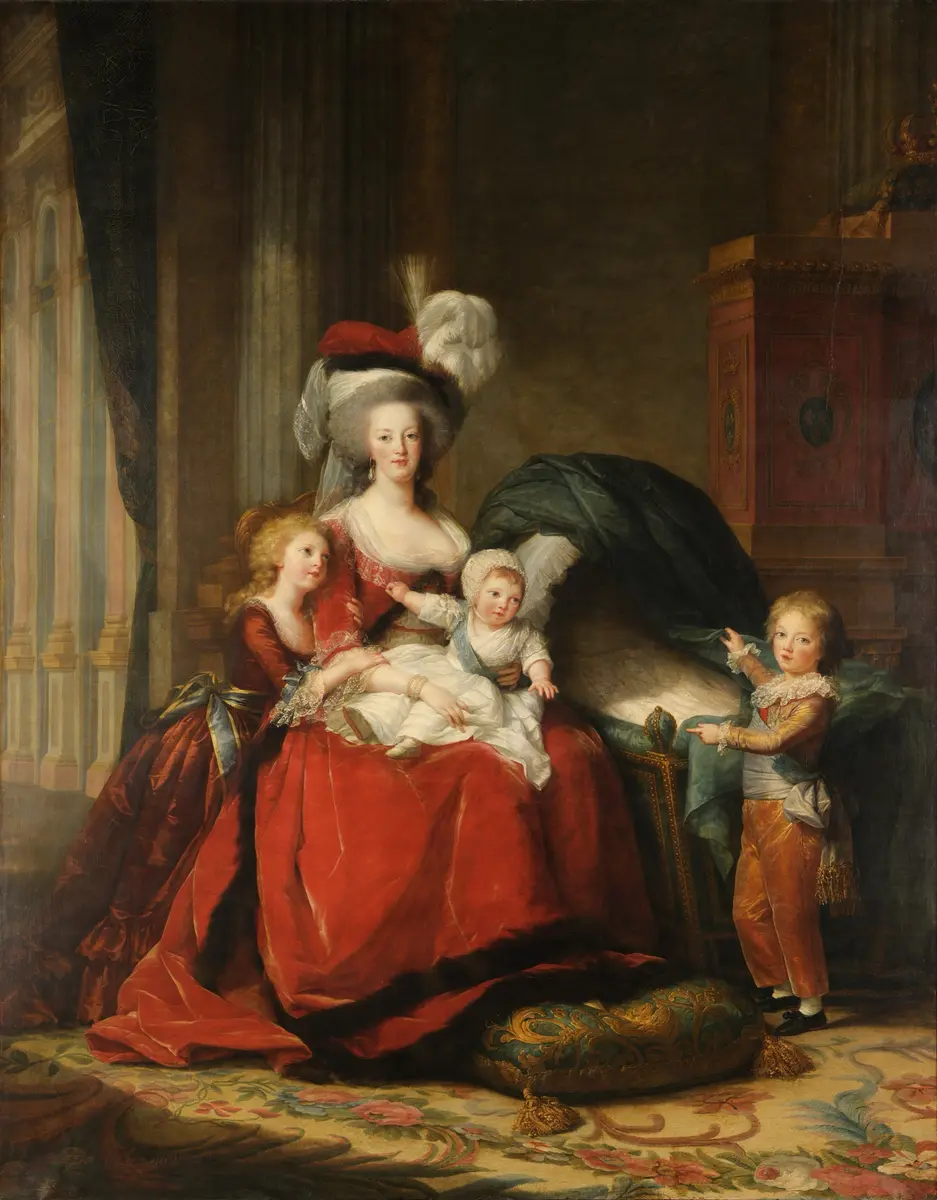
Clothes made her image and then helped to unmake it. Pamphlets and caricatures blamed her spending for the kingdom's debts, though Britannica judges her extravagance a minor cause of the state's financial disorder. The Affair of the Diamond Necklace in 1785, a fraud in which she was the victim, still fixed the picture of a frivolous foreign queen. Portraits were used to answer it: Wertmüller showed her as a mother walking in the Trianon park, and in 1787 Vigée Le Brun painted her in dark 'puce' velvet, almost without jewels, with her children around her.
The Revolution took away her setting piece by piece. In October 1789 a crowd brought the royal family from Versailles to Paris; in June 1791 their flight was stopped at Varennes; in August 1792 the Tuileries palace fell and the family was locked in the Temple. After the king's execution in January 1793 she was moved to the Conciergerie prison, tried before the Revolutionary Tribunal and, on the morning of 16 October 1793, taken through Paris in an open cart, in a plain white dress and cap, her hands tied, to the guillotine on today's Place de la Concorde.
She still stands for both sides of fashion: the power of dress to make a public image, and its danger when that image turns against its wearer. The swatch book of her wardrobe, a bodice said to be hers, a shoe torn from the Tuileries and the many portraits of her survive in Paris, Versailles, Vienna and Stockholm, and her style has been revived again and again, from the Empress Eugénie's museum at the Trianon in 1867 to the costume exhibitions of today.
What happened
- 1755
Maria Antonia, a daughter of Empress Maria Theresa and Emperor Francis I, is born in Vienna.
Hofburg, Vienna: the imperial palace of her childhood, where she was born on 2 November 1755 and married by proxy on 19 April 1770 in its Augustinian Church- 1762
Jean-Étienne Liotard, visiting the imperial court, draws the seven-year-old archduchess in pastel, busy with a lady's netting.
Hofburg, Vienna: the imperial palace of her childhood, where she was born on 2 November 1755 and married by proxy on 19 April 1770 in its Augustinian Church - 1770
She is married by proxy in Vienna to the dauphin Louis-Auguste, grandson of Louis XV, to seal the alliance between France and Austria.
Hofburg, Vienna: the imperial palace of her childhood, where she was born on 2 November 1755 and married by proxy on 19 April 1770 in its Augustinian Church- 1:00 p.m.
Arrived at Versailles that morning, she meets the dauphin in the King's Cabinet at one o'clock and they are married in the Royal Chapel by the Archbishop of Reims; the day ends with a feast in the new Royal Opera, opened for the wedding.
Palace of Versailles: married in the Royal Chapel on 16 May 1770, queen's apartments and court life until 6 October 1789; the Petit Trianon, her private retreat, lies in the park The wedding fireworks on the Place Louis XV in Paris end in a crush that kills 132 people, on the square where she will die.
Place de la Concorde (then Place de la Révolution), Paris: guillotined here on 16 October 1793- 1774
Louis XV dies and she becomes queen before she is twenty; the new king gives her the Petit Trianon, her own house in the park of Versailles.
Palace of Versailles: married in the Royal Chapel on 16 May 1770, queen's apartments and court life until 6 October 1789; the Petit Trianon, her private retreat, lies in the park- 1776
Her court's towering hair and ostrich feathers are copied and mocked across Europe: in London the Darlys publish 'The Preposterous Head Dress, or the Featherd Lady'.
- 1777
Janinet's colour print after Gautier-Dagoty shows the queen in court dress with high, plumed hair, the image of the 'queen of fashion' who works with her milliner Rose Bertin and her hairdresser Léonard.
She moves into the Petit Trianon and remakes its garden, a private world where she can dress simply, away from court etiquette.
Palace of Versailles: married in the Royal Chapel on 16 May 1770, queen's apartments and court life until 6 October 1789; the Petit Trianon, her private retreat, lies in the park- 1778
Élisabeth Vigée Le Brun is called to Versailles to paint her state portrait in white satin court dress; it is sent to her mother in Vienna in February 1779 and hung in the Hofburg.
Palace of Versailles: married in the Royal Chapel on 16 May 1770, queen's apartments and court life until 6 October 1789; the Petit Trianon, her private retreat, lies in the parkAfter the frigate Belle Poule fights an English ship on 17 June, the fashionable wear the 'coiffure à la Belle Poule', with a model ship in the hair.
After eight years of marriage she gives birth to her first child, Marie-Thérèse, 'Madame Royale'.
Palace of Versailles: married in the Royal Chapel on 16 May 1770, queen's apartments and court life until 6 October 1789; the Petit Trianon, her private retreat, lies in the park- 1781
The dauphin Louis-Joseph, the heir France has waited for, is born.
Palace of Versailles: married in the Royal Chapel on 16 May 1770, queen's apartments and court life until 6 October 1789; the Petit Trianon, her private retreat, lies in the park- 1782
Her wardrobe is now run by the comtesse d'Ossun, whose 'Gazette des atours' for 1782 is a book of fabric samples from her gowns, with the names of their makers.
Palace of Versailles: married in the Royal Chapel on 16 May 1770, queen's apartments and court life until 6 October 1789; the Petit Trianon, her private retreat, lies in the park - 1783
Vigée Le Brun's portrait of her in a muslin dress and straw hat, the clothes she wore at Trianon, scandalises the court at the Salon and is replaced by the same pose in silk, holding a rose.
- 1784
In the Queen's Grove at Versailles, a woman posing as the queen meets Cardinal de Rohan at night: the start of the necklace fraud.
Palace of Versailles: married in the Royal Chapel on 16 May 1770, queen's apartments and court life until 6 October 1789; the Petit Trianon, her private retreat, lies in the park- 1785
Wertmüller's portrait of the queen with two children in the Trianon park, in a robe à la turque, her hair dressed by her hairdresser Léonard, is shown at the Salon: an image of the queen as mother.
The crown jewellers Böhmer and Bassenge hand the cardinal a necklace of nearly 650 diamonds, priced at 1.6 million livres, which they believe the queen is buying; it vanishes with the comtesse de La Motte.
Her second son, Louis-Charles, the future Louis XVII, is born.
Palace of Versailles: married in the Royal Chapel on 16 May 1770, queen's apartments and court life until 6 October 1789; the Petit Trianon, her private retreat, lies in the parkAbout to say mass for the king and queen, Cardinal de Rohan is arrested in the Hall of Mirrors; the scandal reaches the street.
Palace of Versailles: married in the Royal Chapel on 16 May 1770, queen's apartments and court life until 6 October 1789; the Petit Trianon, her private retreat, lies in the park- 1786
The Parlement of Paris acquits the cardinal; the queen, though innocent, is left with the blame in public opinion.
- 1787
Vigée Le Brun's portrait of the queen in dark velvet with her children, commissioned after the scandal, goes to the Salon only after the painter's hesitation.
- 1789
The dauphin Louis-Joseph dies, a month after the Estates-General opens at Versailles.
Palace of Versailles: married in the Royal Chapel on 16 May 1770, queen's apartments and court life until 6 October 1789; the Petit Trianon, her private retreat, lies in the parkA crowd, mostly of women, marches from Paris on Versailles while the queen is walking at Trianon.
Palace of Versailles: married in the Royal Chapel on 16 May 1770, queen's apartments and court life until 6 October 1789; the Petit Trianon, her private retreat, lies in the park- 1:25 p.m.
After the crowd has broken into her apartments at six in the morning, the royal family leaves Versailles for Paris, never to return.
Palace of Versailles: married in the Royal Chapel on 16 May 1770, queen's apartments and court life until 6 October 1789; the Petit Trianon, her private retreat, lies in the park - 1791
At night the royal family slips out of the Tuileries palace in disguise to flee towards the eastern frontier.
Recognised on the road, the family is stopped at Varennes on the night of 21 to 22 June.
Varennes-en-Argonne: the royal family's flight was stopped here on the night of 21 to 22 June 1791The king and queen are brought back to Paris under guard.
- 1792
The Tuileries palace is stormed and the monarchy falls; a shoe of the queen's is said to have been snatched back from an insurgent that day.
The family is locked up in the tower of the Temple.
- 1793
Louis XVI is guillotined; she is now 'the widow Capet'.
On the night of 1 to 2 August she is moved alone to the Conciergerie, in clothes from Rose Bertin's shop, Le Grand Mogol, the last she ordered.
Conciergerie, Paris: her prison from the night of 1 to 2 August 1793; she was tried by the Revolutionary Tribunal in the Palais de Justice from 14 OctoberHer trial before the Revolutionary Tribunal opens; it runs for some twenty hours, with more than forty witnesses.
Conciergerie, Paris: her prison from the night of 1 to 2 August 1793; she was tried by the Revolutionary Tribunal in the Palais de Justice from 14 October- 4:30 a.m.
She is sentenced to death and taken back to her cell.
Conciergerie, Paris: her prison from the night of 1 to 2 August 1793; she was tried by the Revolutionary Tribunal in the Palais de Justice from 14 October - 11:00 a.m.
In a white morning dress and a plain cap, her hands tied, she is taken from the Conciergerie in an open cart; Jacques-Louis David sketches her from a window as she passes.
Conciergerie, Paris: her prison from the night of 1 to 2 August 1793; she was tried by the Revolutionary Tribunal in the Palais de Justice from 14 October - 12:15 p.m.
She is guillotined on the Place de la Révolution.
Place de la Concorde (then Place de la Révolution), Paris: guillotined here on 16 October 1793